They Were Given 1990s Windsor-Style Chairs and Turned the Seats Into Comic-Book Portraits


Windsor-style dining chairs from the 1990s have a familiar appearance, with curved wooden backs, narrow spindles, turned legs, and plain seats. Four chairs given to an Imgur creator had that traditional design, but their new owner wanted something different before bringing them into the house.
Instead of painting the entire chairs one color, the owner covered the wooden frames in black and turned the seats into canvases for comic-book portraits. Each chair received a different woman’s face, with colorful hair, bold outlines, and expressions taken from the visual language of pop art.
Imgur creator jarofmoths shared the painting process, from applying a white base to sketching the portraits and finishing the seats with color.
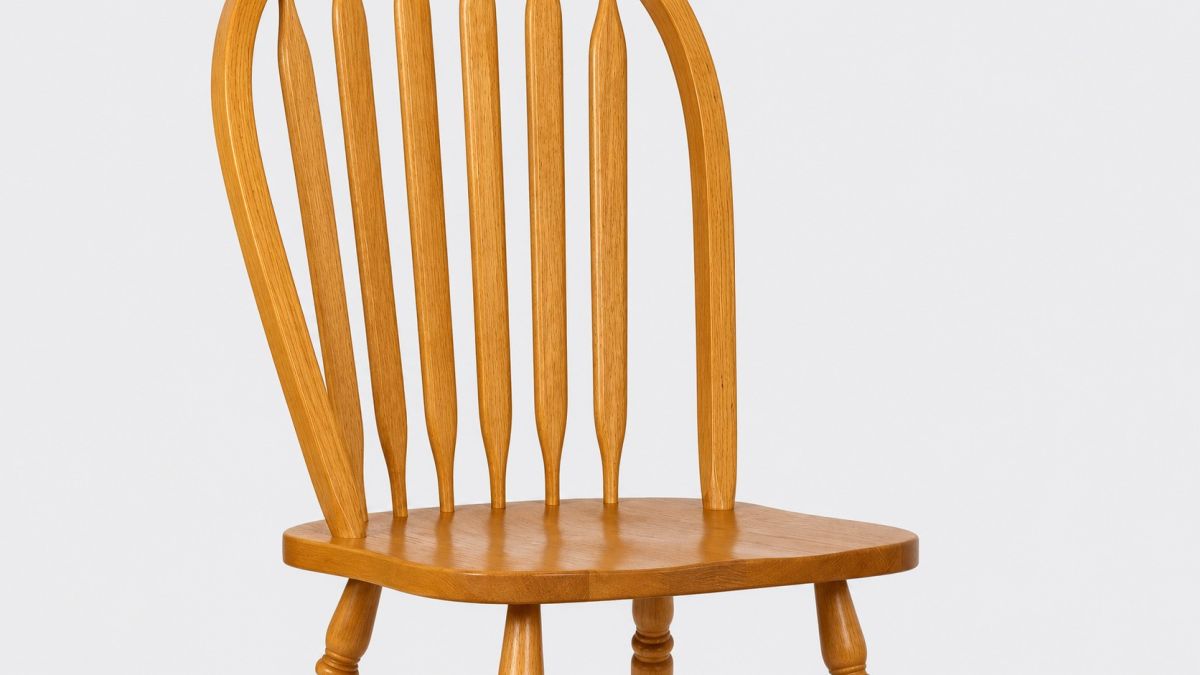
Traditional Oak Chairs From the 1990s
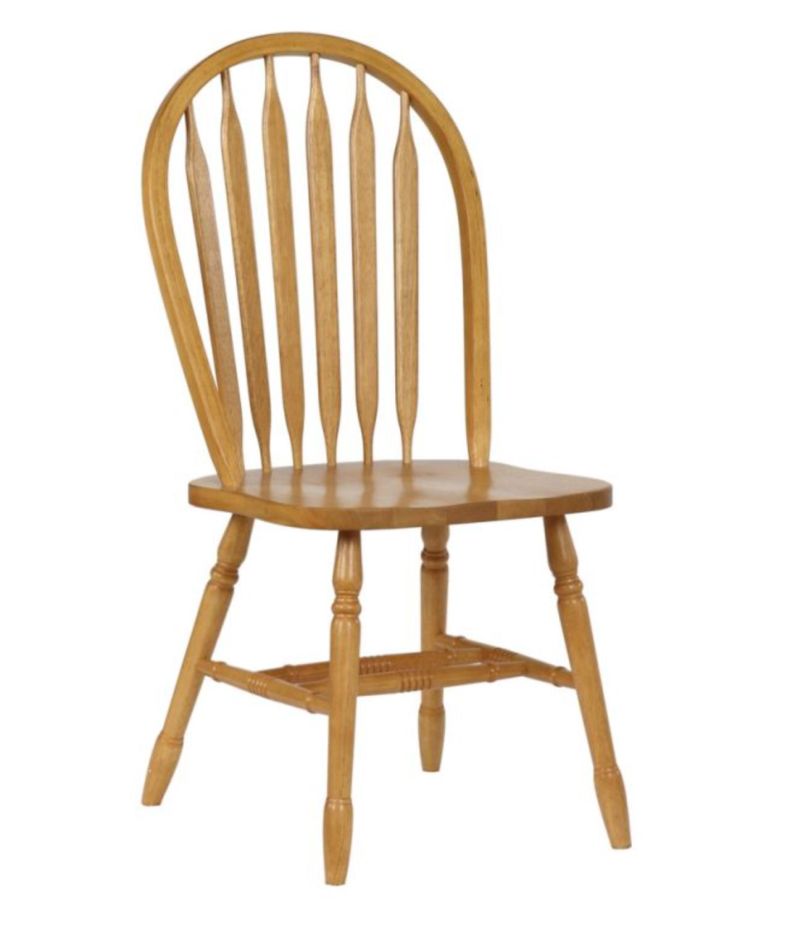
Honey-colored wood covered the original Windsor-style design, including the arched back, shaped spindles, rounded seat, and four turned legs. Wooden stretchers connected the legs beneath the seat.
The chairs had no upholstery or decorative paint, leaving the flat wooden seats open for the owner’s artwork.
Black Paint Replaced the Honey Oak Finish
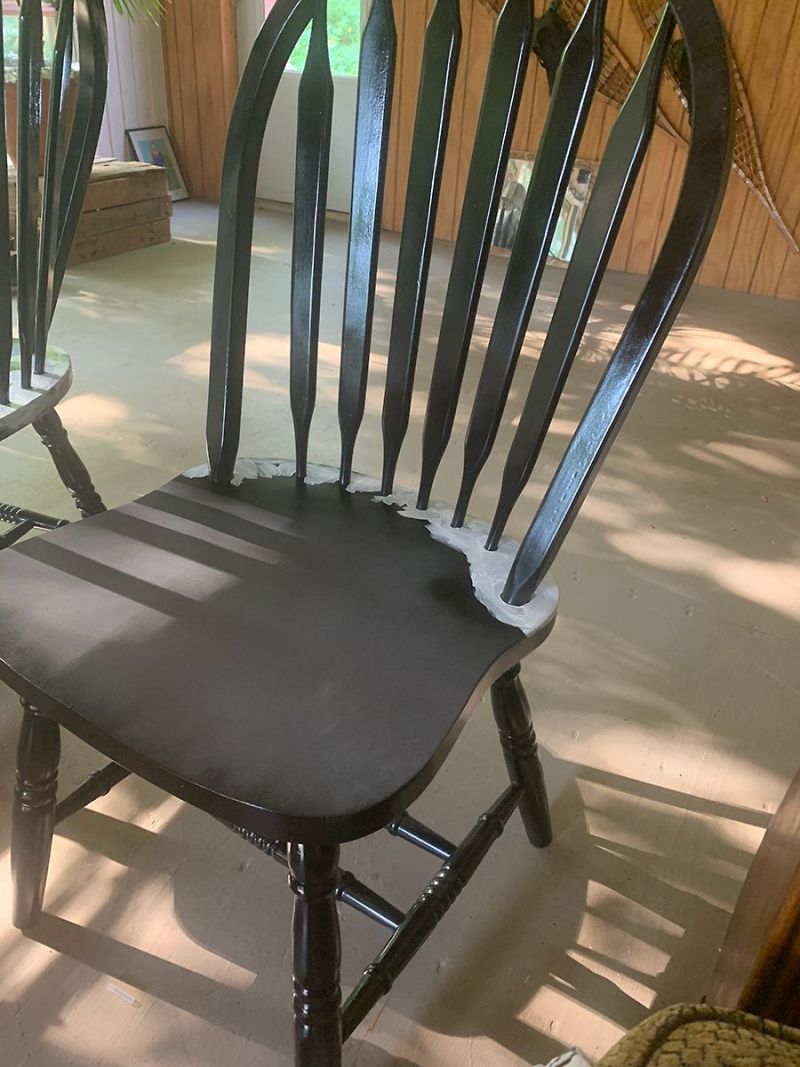
Black paint now covers the arched back, individual spindles, turned legs, and supporting rails. The chair retains its original construction, but the honey-colored wood is no longer visible beneath the dark finish.
The seat also received black paint before the portrait work began. White paint appears around the bases of the spindles, marking the beginning of the new design.
White Paint Reaches Between the Back Spindles
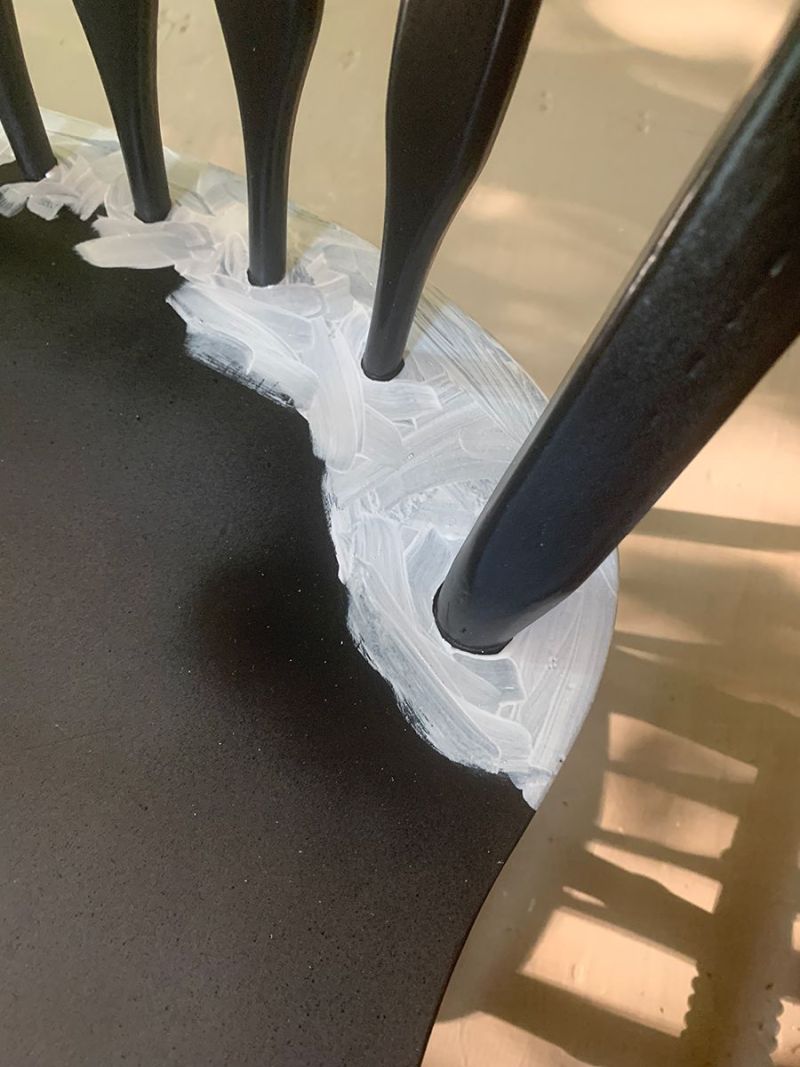
Painting the seat required working around the narrow gaps where the spindles meet the wood. A brush spread white paint across those joints and along the curved rear edge.
The black spindles remained exposed above the seat, creating a boundary between the chair frame and the area reserved for artwork.
White Paint Became the Base for the Portraits
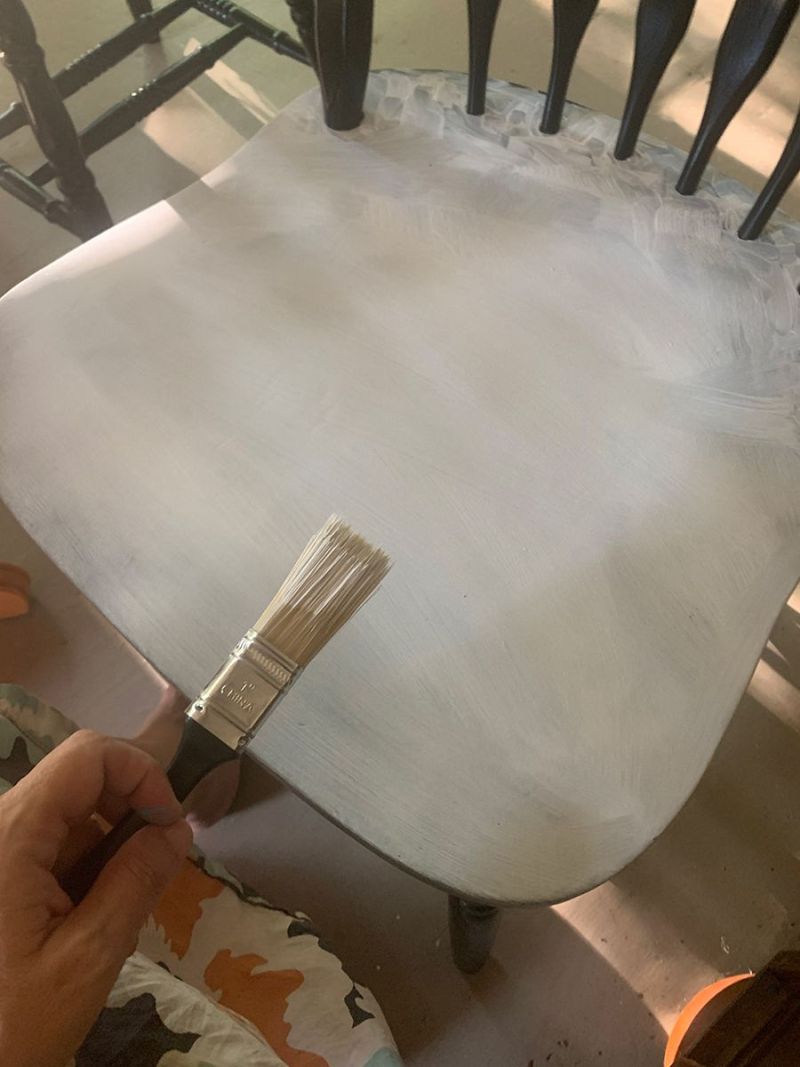
Brush strokes covered the seat from the back spindles toward the rounded front edge, replacing the dark surface with a pale background.
The white base provided a surface for drawing and painting the portraits. The owner kept the turned legs and backrests black, separating the artwork from the rest of each chair.
Pencil Sketches Turned the Seats Into Canvases
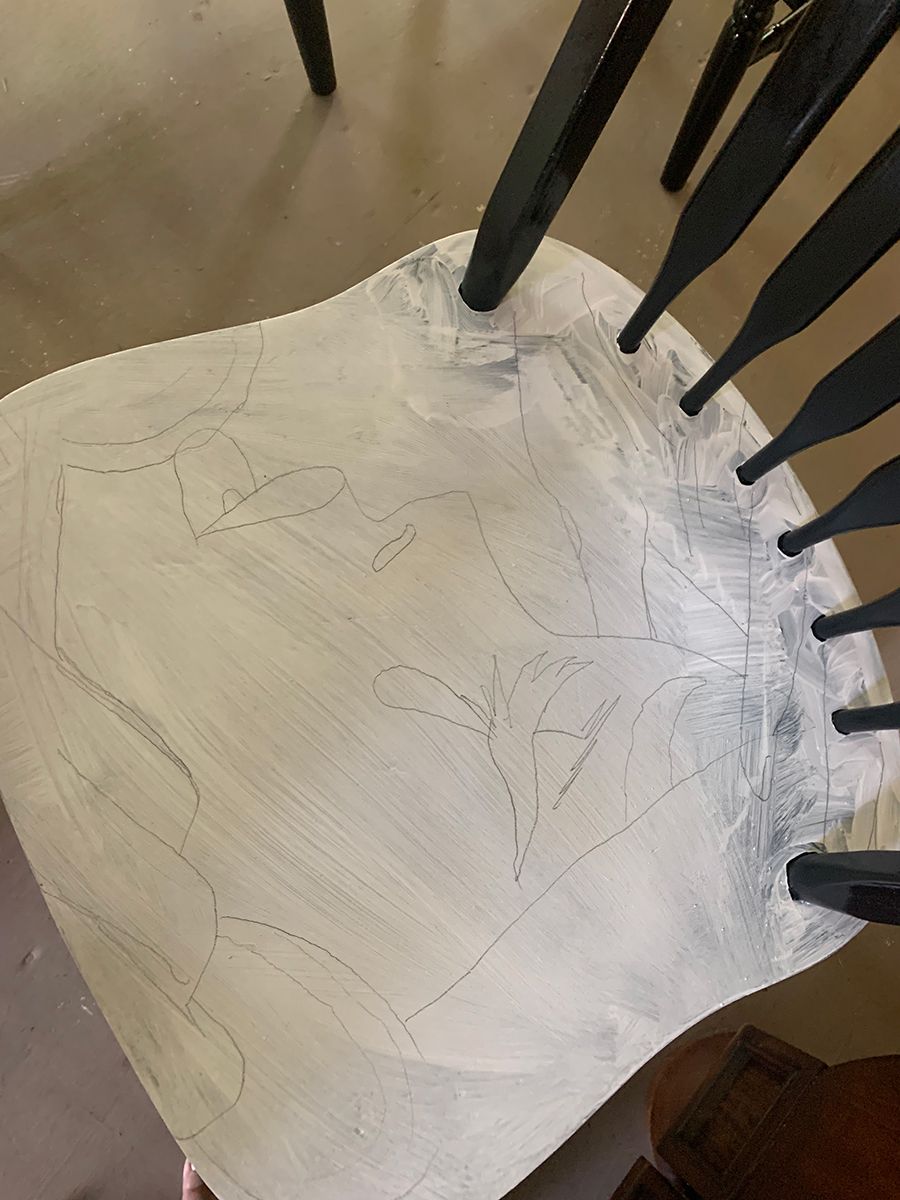
Once the white base was in place, the creator drew a woman’s face across the seat. Pencil lines outlined the eyes, nose, lips, hair, and facial expression, with the drawing extending toward the spindles.
The face occupied most of the seat instead of sitting inside a small central panel. Its placement allowed the artwork to follow the chair’s curved front and rear edges.
Each Chair Received a Different Comic-Book Portrait
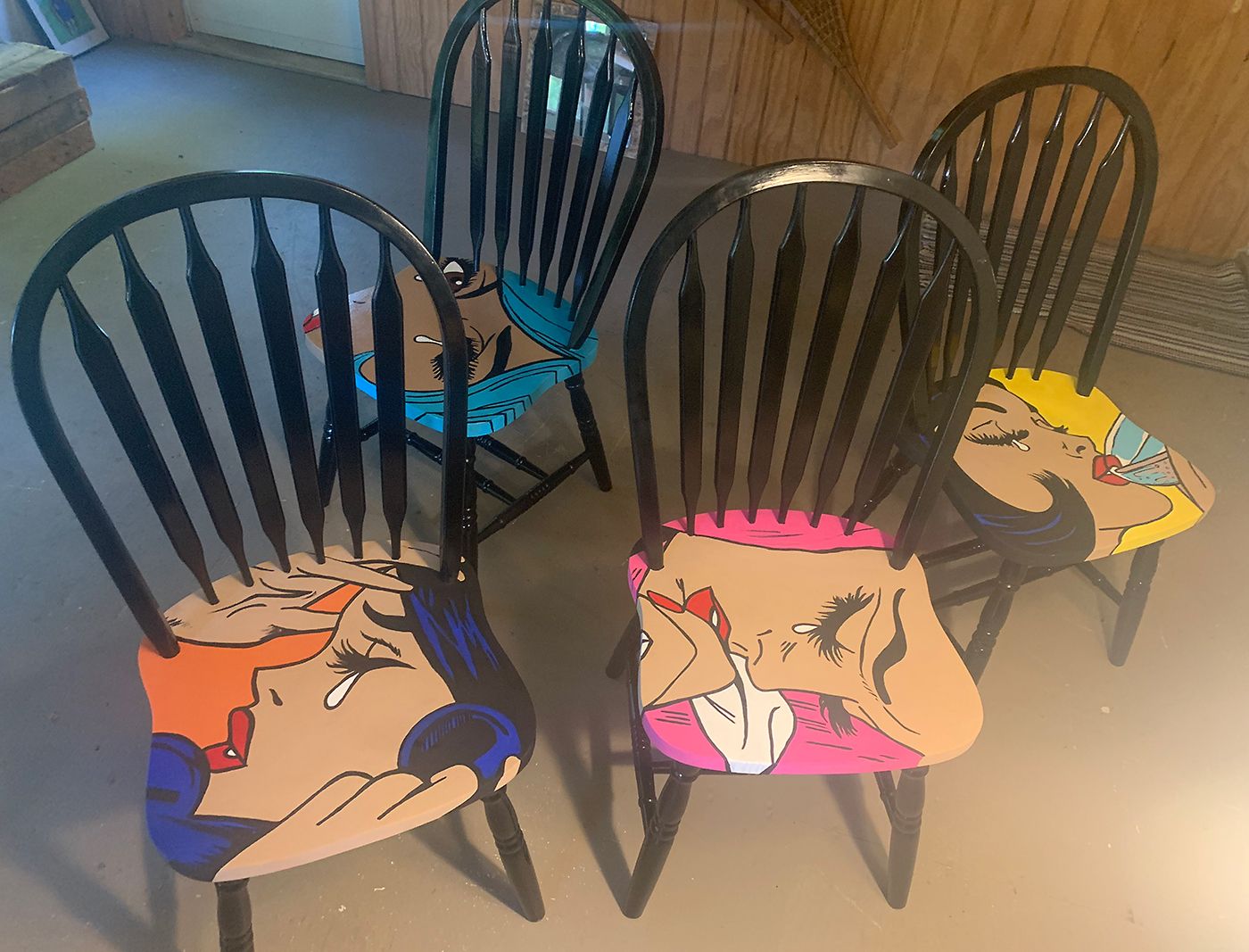
Finished seats show four women rendered in contrasting colors. One has dark blue hair against orange, another has black hair against pink, a third features turquoise hair, and the fourth combines yellow with a dark-haired portrait.
Black outlines define the faces, while red lips, long eyelashes, and white tears appear in the illustrations. The seats differ, but the black Windsor-style frames connect them as a set.
Blue Hair and Pink Backgrounds Change the Same Chair Design
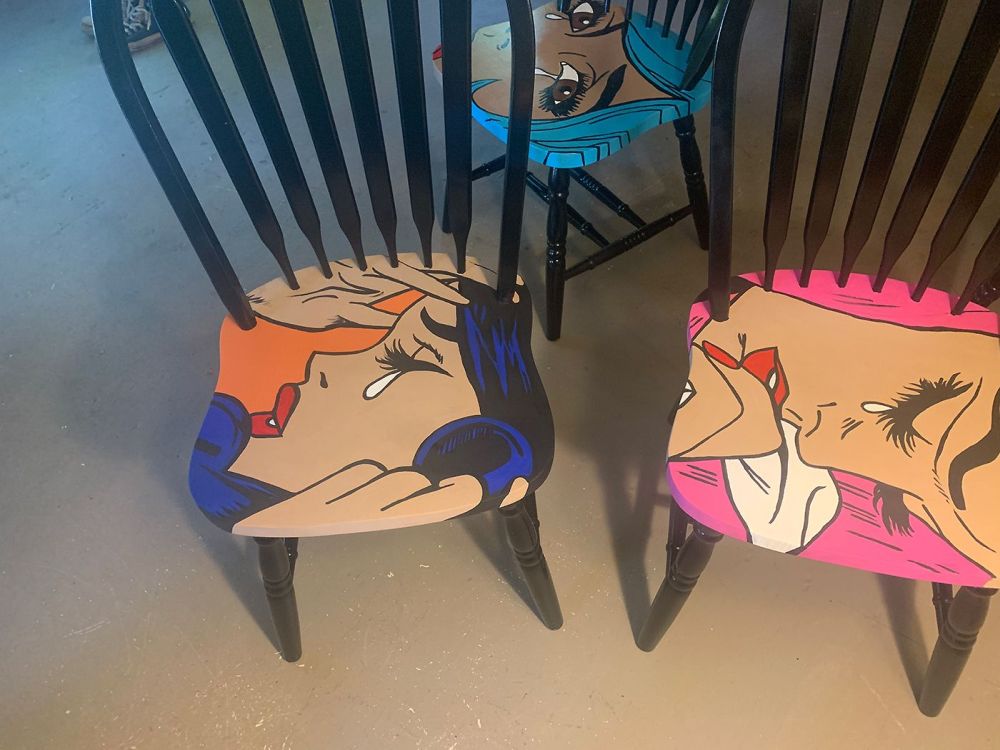
Two of the chairs show how the portraits use different compositions. One woman has blue hair, red lips, and a white tear beneath her eye, with orange filling part of the seat.
Beside it, another portrait uses a pink background, closed eyes, and a white cloth held near the woman’s face. Both drawings extend to the front edges of the seats.
Pink, Yellow, and Black Define Two More Faces
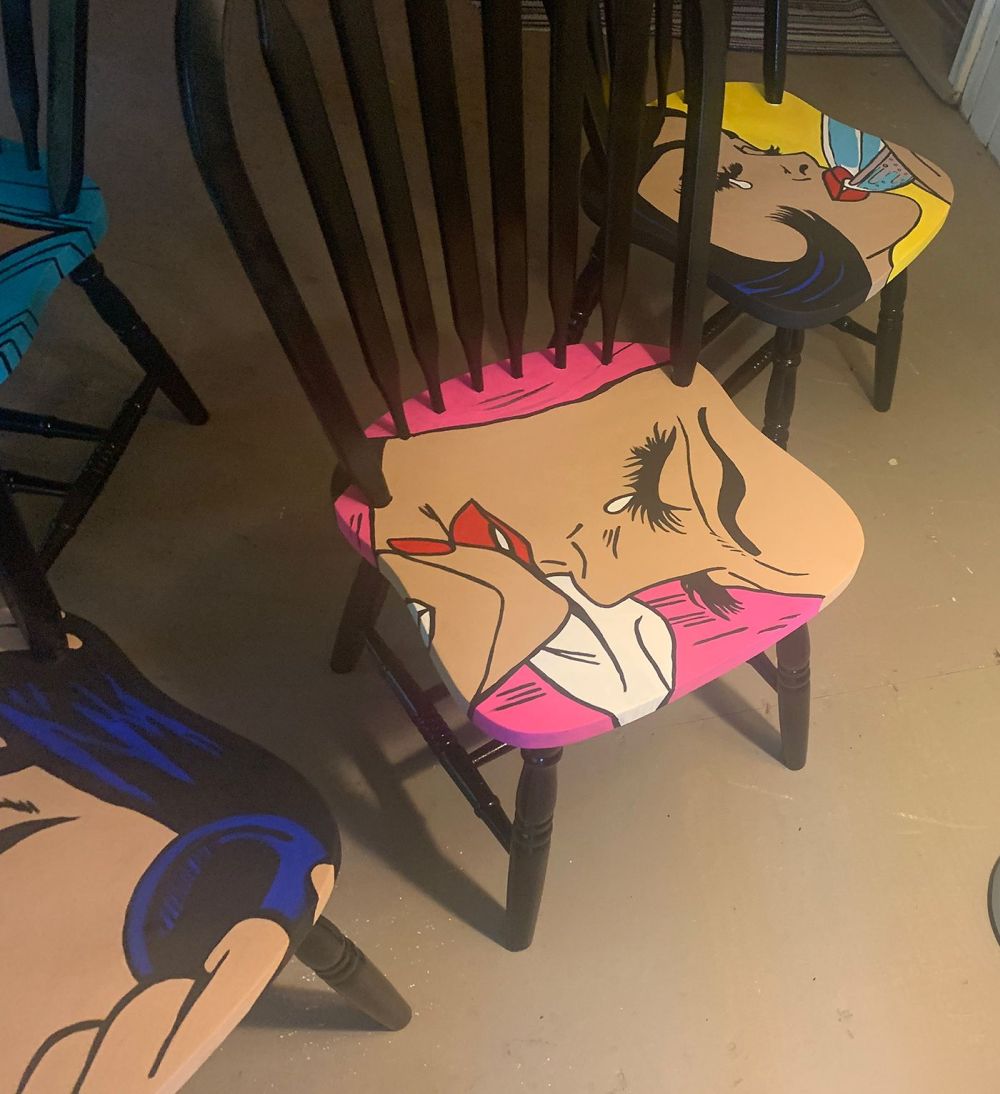
The pink portrait has thick black eyelashes, red fingernails, and a hand raised toward the face. Behind it, another chair features a yellow background and a woman holding a glass near her lips.
The designs use flat color areas and black contour lines rather than painted wood grain or traditional furniture decoration.
Turquoise Hair Covers Another Wooden Seat
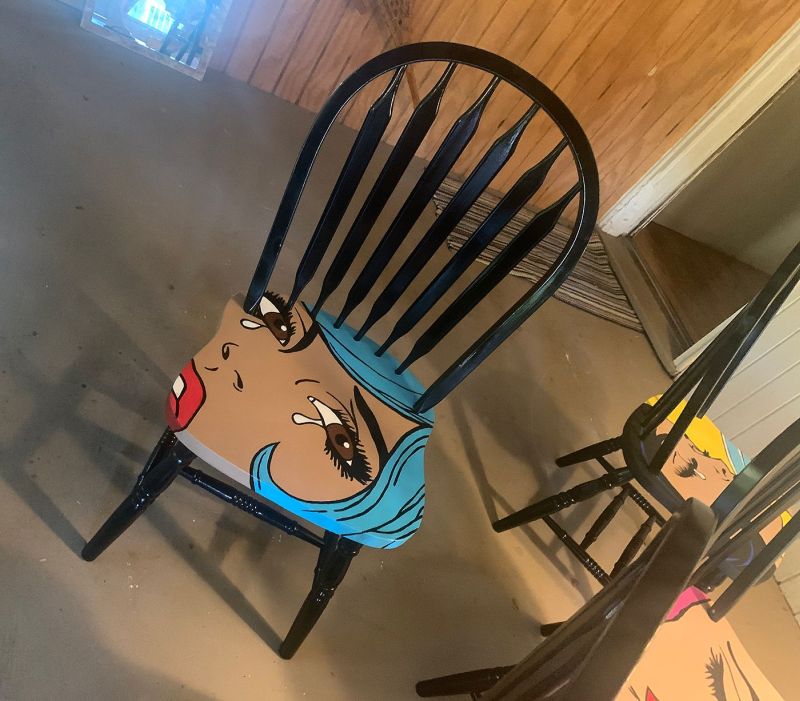
Another portrait features turquoise hair sweeping around a woman’s face. Black outlines separate the hair from her skin, while a white tear falls beneath one eye.
The artwork runs beneath the back spindles and reaches the rounded front of the seat. Black paint remains across the chair legs, supports, and curved back.
A Comic-Book Chair Finds a Place in the House
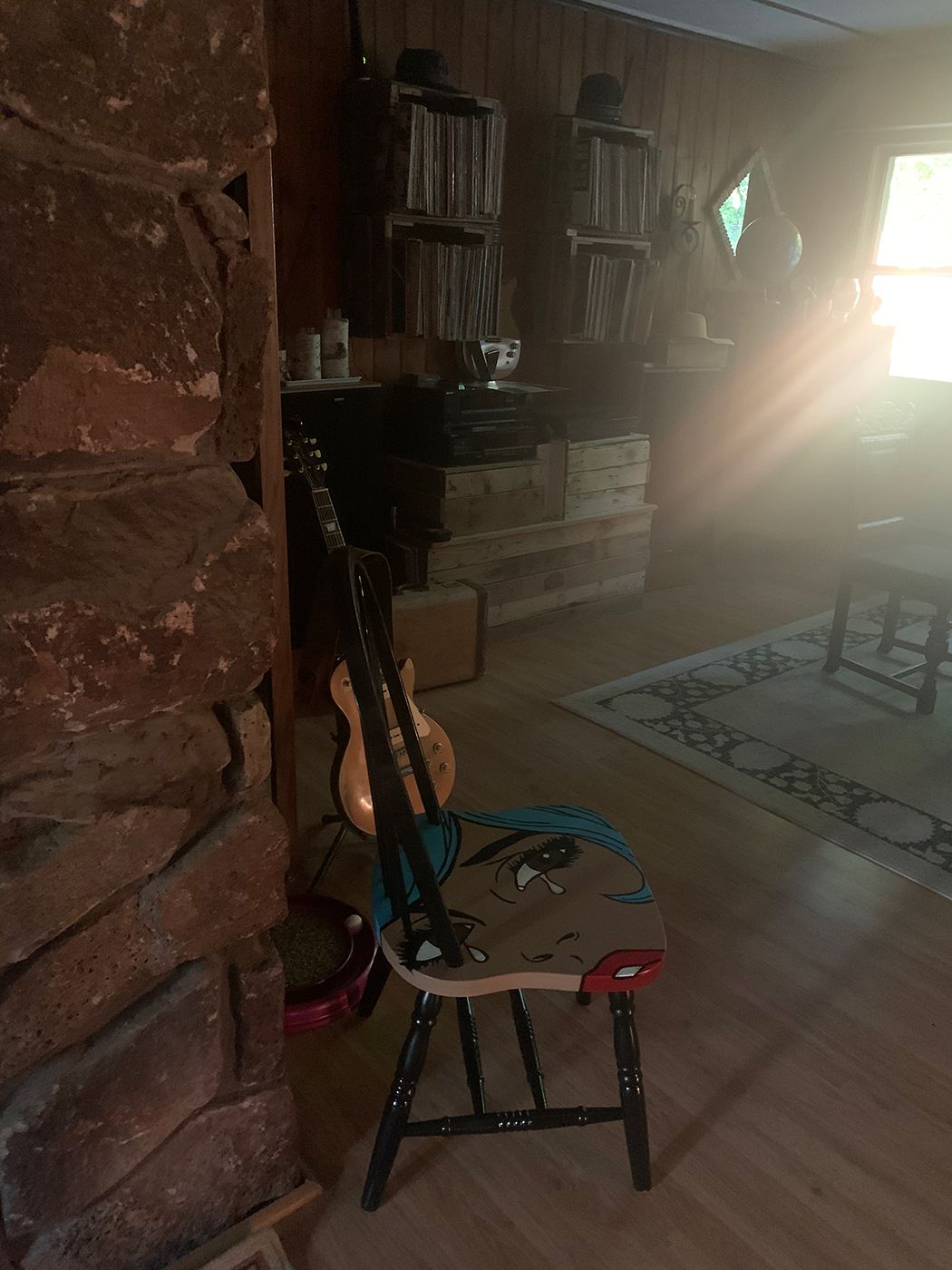
One finished chair sits beside a stone wall and a guitar in the creator’s home. Its turquoise-haired portrait remains visible across the seat, while the black frame stands against the surrounding wood and stone.
The creator reported applying a clear coat after finishing the blue hair, adding a protective layer over the painted design.
What began as a set of ordinary 1990s oak dining chairs became four separate comic-book portraits without changing the wooden frames.
Would you paint faces across traditional Windsor-style chair seats, or keep their original oak finish?
Image credits: Imgur / jarofmoths