Instead of Buying a Kitchen Island, They Turned an Old Wood Buffet Into One That Looks Custom-Built


An old dining room buffet might have enough storage for a kitchen, but turning it into an island takes more than moving it between the cabinets. The height has to work for food preparation, the back needs a finished surface, and the top must handle everyday use.
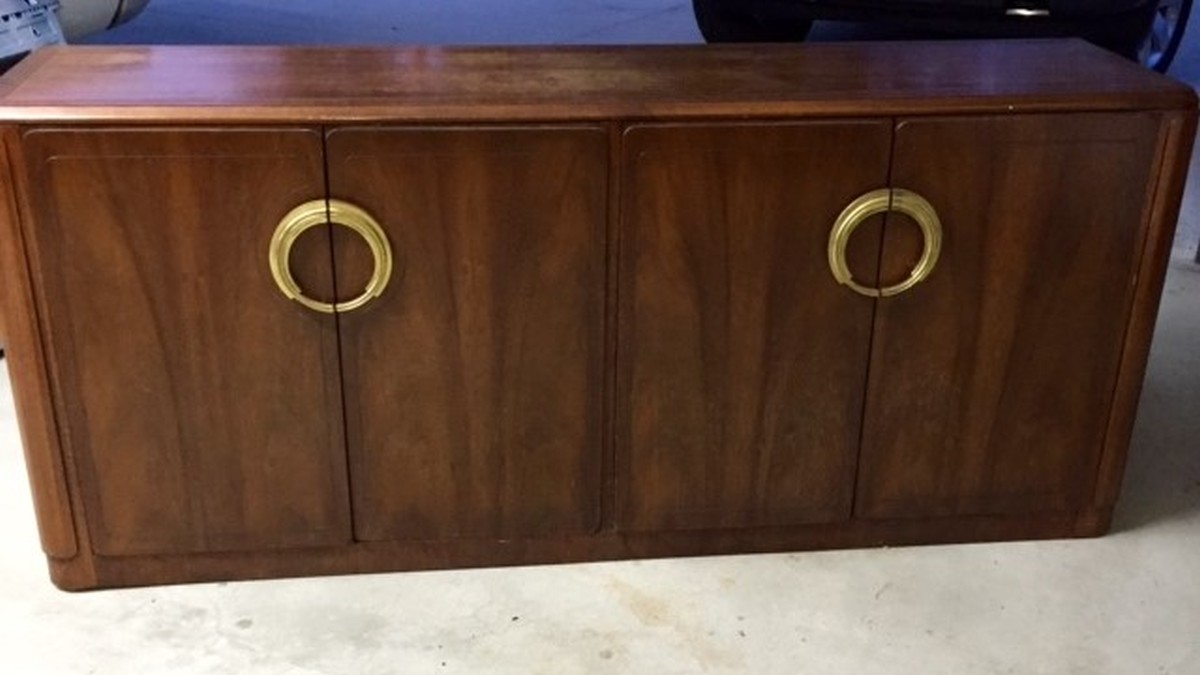
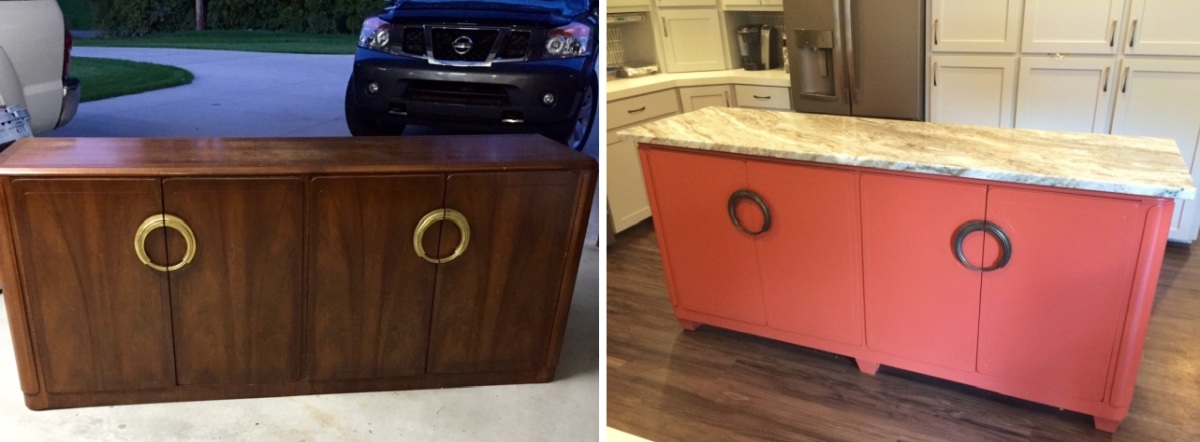
This dark wood buffet already had four doors, a long cabinet body, and large circular brass handles. Instead of replacing it with a manufactured kitchen island, the owners chose a coral finish, a stone countertop, and a shiplap back that matched the rest of their kitchen.
Furniture refinisher Julie Peterson of Simple Redesign completed the transformation for a client, working with designer Mindi Freng. The conversion required six new feet, changes to the cabinet’s back, and a new finish for the original hardware.
The original buffet had the size and storage of a kitchen island
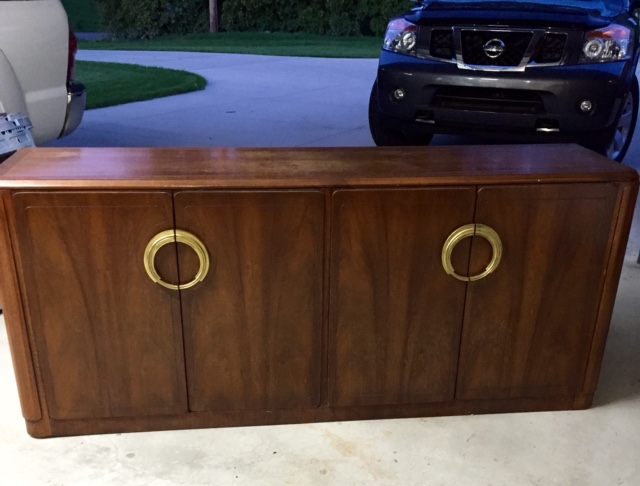
The dark wood cabinet had a broad top, four doors, and two circular brass pulls that opened each pair of doors. Its low profile worked for a dining room, but the height needed adjustment before it could serve as a kitchen work surface.
The cabinet was also heavy, which made moving it between the workshop and the client’s home one of the challenges of the project.
Six new feet raised the cabinet to the right height
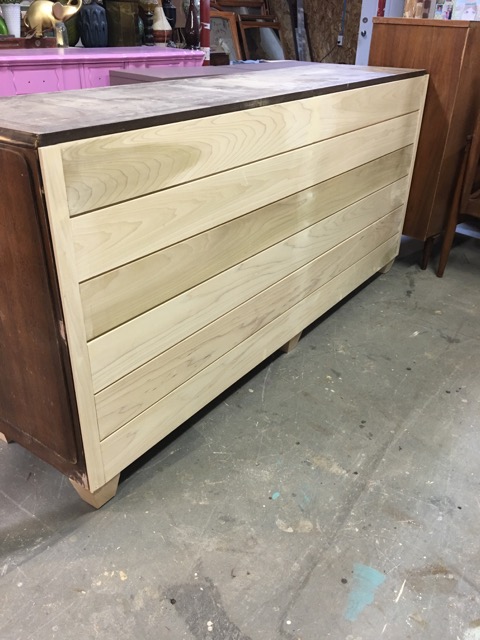
Adding feet brought the buffet closer to kitchen counter height. Because of its length and expected use, the refinisher installed six supports instead of four, with an extra pair beneath the center.
Wooden blocks were added underneath to create mounting points for the foot brackets, allowing the new supports to attach to the existing cabinet.
Shiplap gave the unfinished back a new purpose
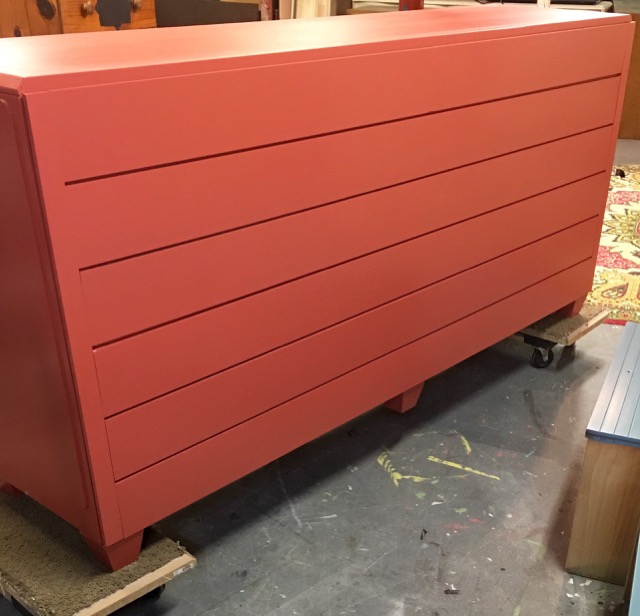
A buffet normally sits against a wall, leaving its back out of sight. Once placed in the center of a kitchen, that surface becomes visible from the opposite side.
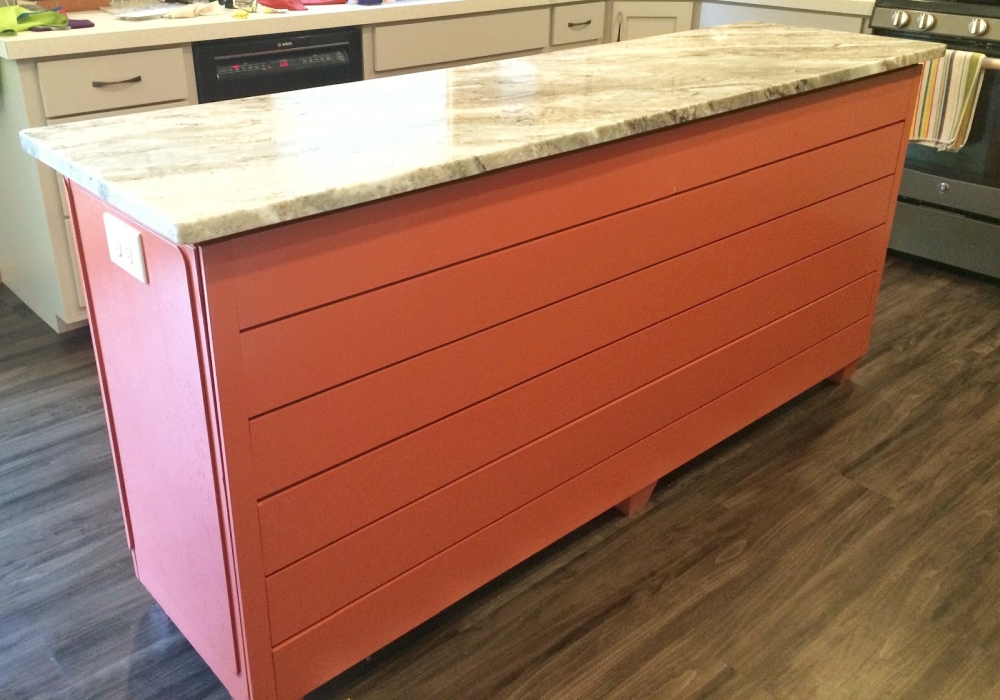
The client’s contractor was installing shiplap near the eating area, so extra boards were ordered for the island. Fitting them into the rear panel created horizontal lines that matched the surrounding design.
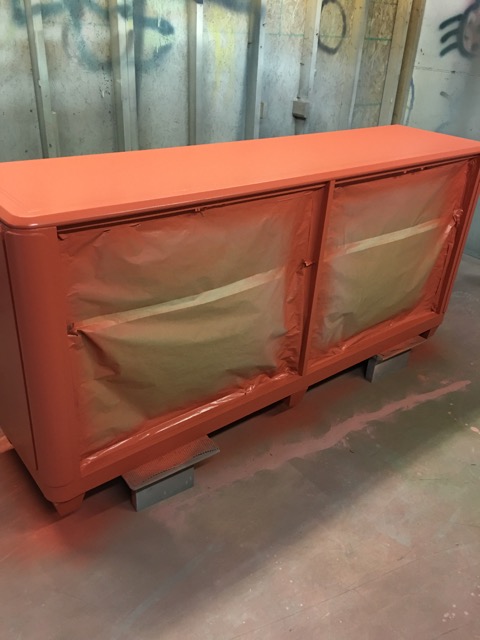
Before the final finish, the cabinet received coral paint across its doors, sides, and top. The back was protected during part of the painting process, while the new feet were finished to match the body.
Coral paint and bronze hardware replaced the brown finish
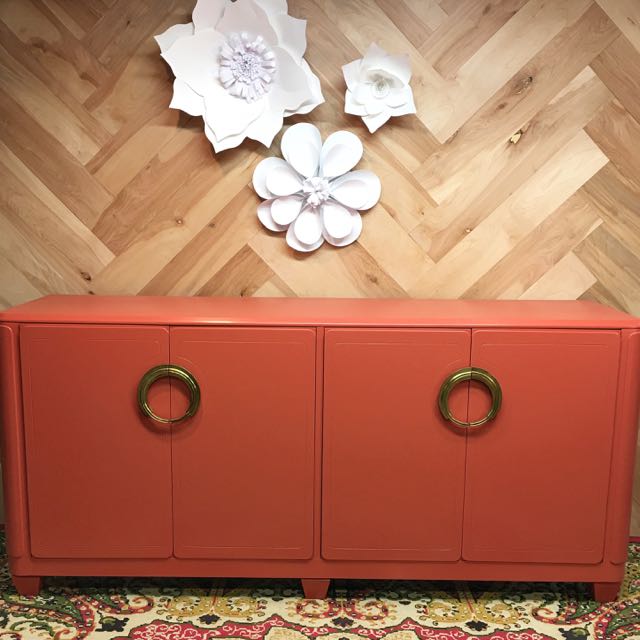
The coral-colored cabinet retained its original door arrangement and circular pulls. Against the new paint, the brass rings became a prominent detail rather than disappearing into the dark wood.
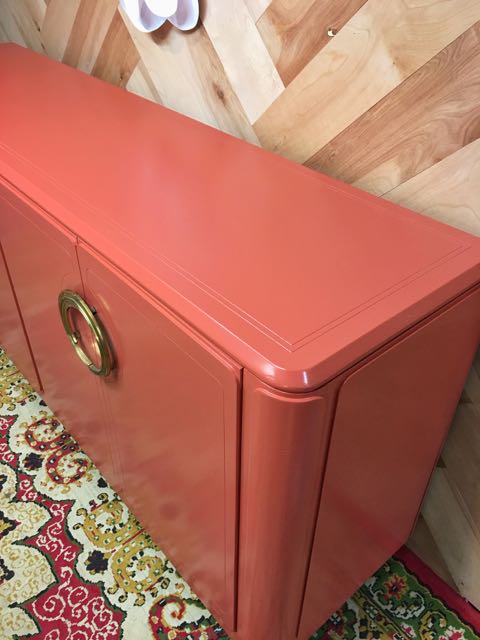
The painted top, rounded corners, and recessed door panels remained visible beneath the finish. Instead of changing the cabinet’s construction, the makeover retained these details and gave them a new color.
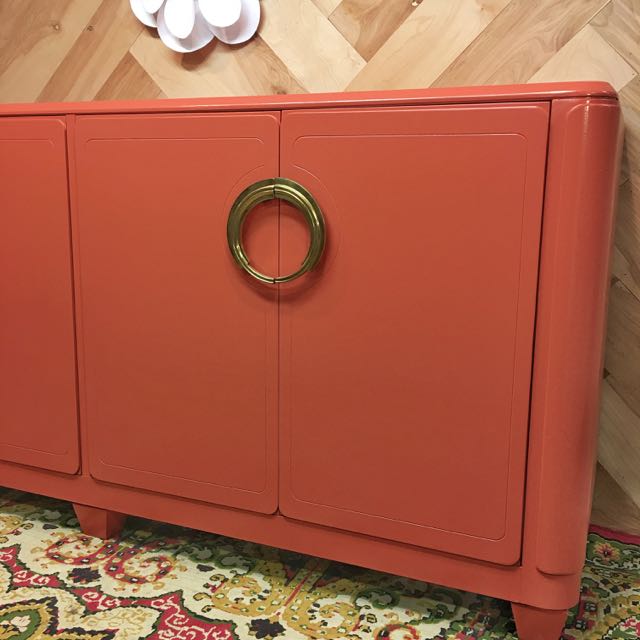
The original handles were brass-plated and showed wear, so they received a darker bronze finish with some brass left visible. The result matched the hardware on the client’s kitchen cabinets.
A stone countertop completed the kitchen island
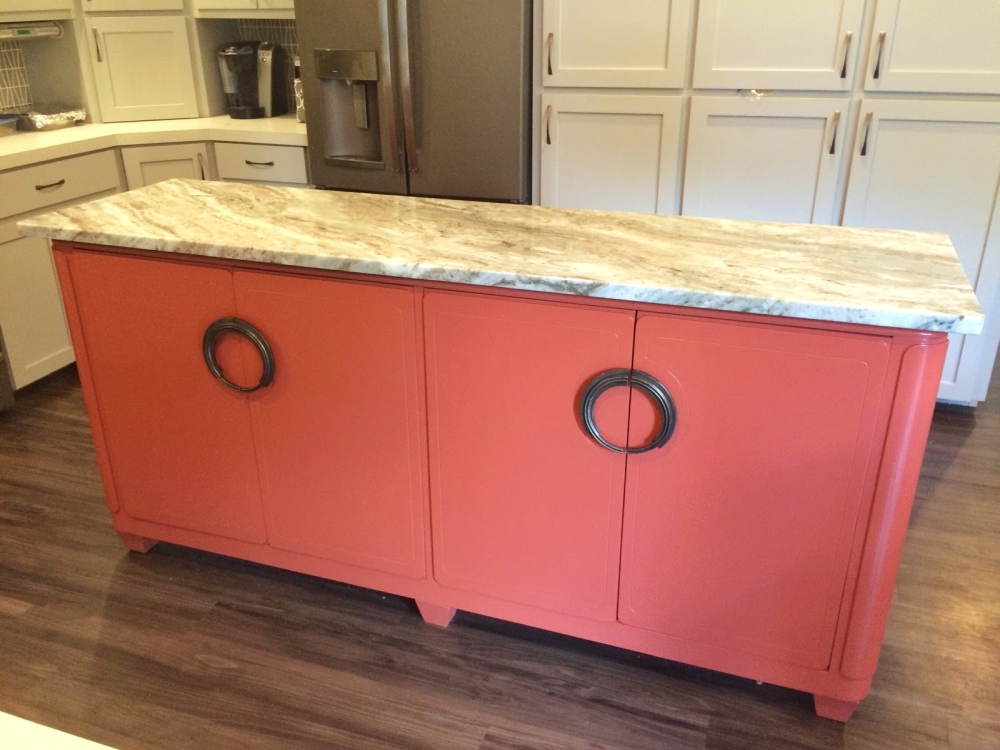
Once installed, the buffet received a stone countertop that extended beyond the cabinet body. The overhang increased the work surface while the cabinet doors remained accessible from the opposite side.
From the back, the horizontal shiplap boards conceal the original buffet construction. Their painted surface connects with the coral sides and gives the island a finished appearance from both directions.
The before-and-after comparison shows the change from a dark wood dining room buffet to a coral kitchen island with stone counters and bronze ring pulls. The original cabinet supplied the storage, while the added feet, finished back, and countertop allowed it to serve a different purpose.
Would you turn an old buffet into a kitchen island or choose a new cabinet built for the space?
Image credits go to @simpleredesign.