Few People Know What the Holes and Forked Tip on This Kitchen Knife Are For


Open the kitchen drawer and you may find a knife that looks unfinished: holes through the blade and two points where a single tip should be. Its shape sets it apart from the knives beside it, yet each feature serves a purpose. The openings help with cutting, while the forked end takes over when the slice is ready to leave the board.
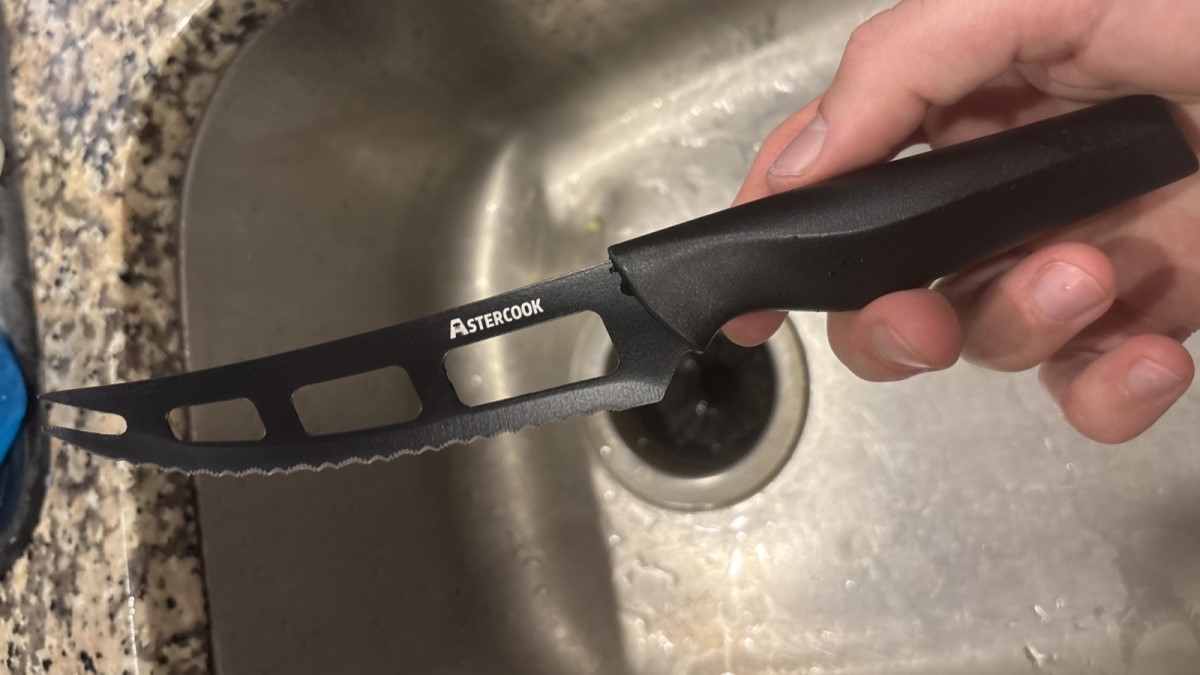
It is a cheese knife, designed to cut and serve with the same utensil. Understanding those two features explains why a solid blade is not always the best choice for the job.
What the holes in the blade do
Soft cheese can cling to the broad sides of a knife as the blade passes through it. The slice sticks, bends, or needs to be pushed off before the next cut.
Cutouts reduce the amount of metal touching the cheese, helping slices release from the blade. WÜSTHOF identifies reduced sticking as the purpose of the holes on its soft-cheese knives.
The cutting edge remains continuous beneath the openings. It makes the slice, while the gaps above reduce contact along the blade’s sides.
Why the tip looks like a small fork
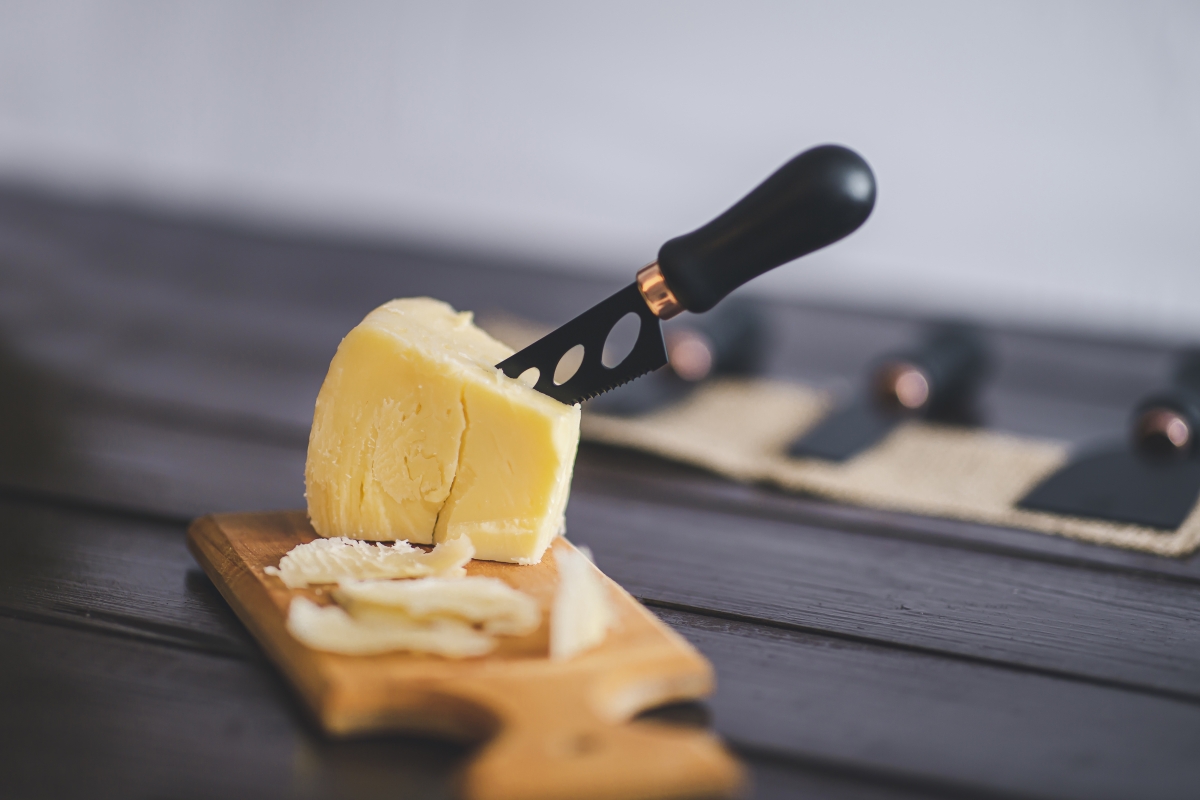
Once a piece has been cut, the two prongs let you pick it up and transfer it to a plate. There is no need to grip the cheese with your fingers or reach for a serving fork.
ZWILLING describes the forked tip on its cheese knife as a serving feature. WÜSTHOF gives the same explanation for its fork-tipped design: the points lift the sliced cheese.
The holes and tip therefore address separate stages of the same task: releasing the slice and moving it from the board.
Which cheese suits the blade
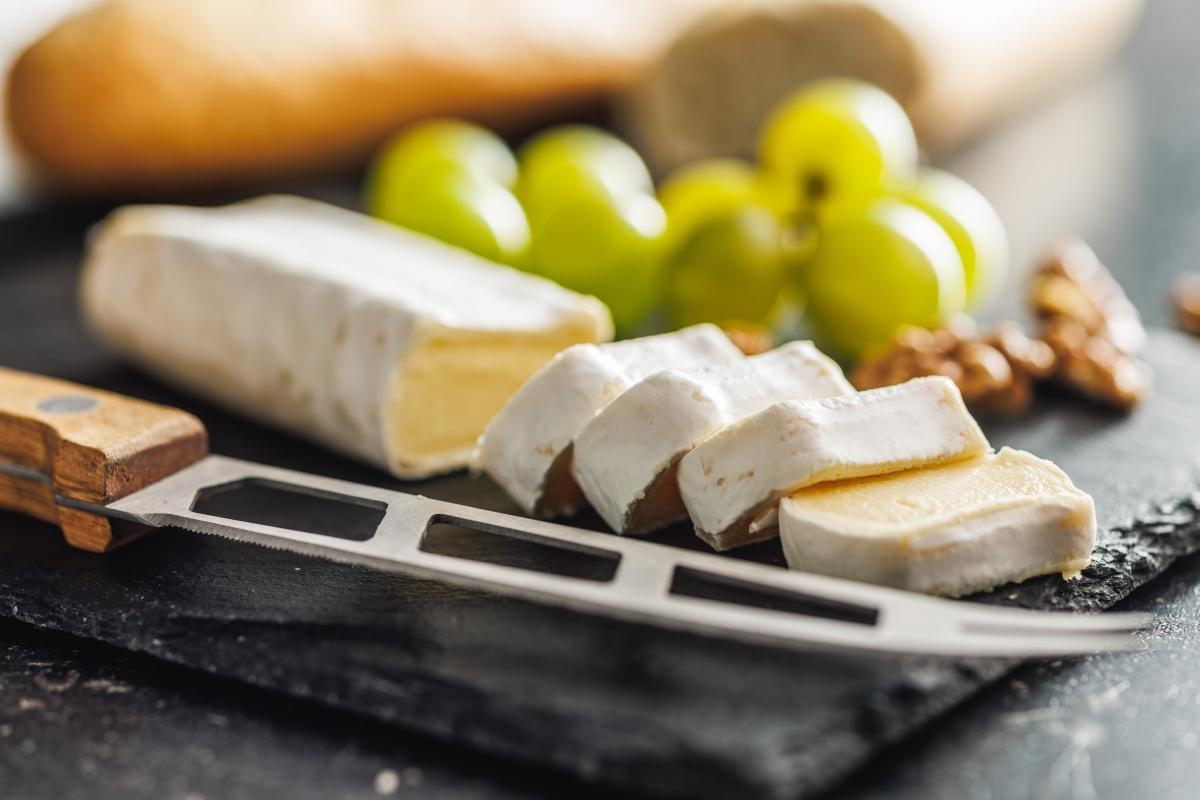
Perforated blades earn their place with cheeses that stick during slicing. A soft-cheese knife is designed around that problem, though the blade’s thickness, edge, and strength also affect what it can cut.
A forked tip alone does not mean a knife is intended for soft cheese. Manufacturers also use serving prongs on sturdier knives for hard and semi-hard varieties. Match the full blade design to the cheese rather than judging it by the tip.
For a dense wedge that resists the blade, switch to a suitable cutter instead of forcing a thin knife through it.
How to use both features
Set the cheese on a stable board and make a controlled slice, keeping your fingers clear of the edge. If the blade is serrated, use a short slicing motion rather than pressing down with force.
After separating the piece, use the prongs to lift it onto a plate. A soft slice may need support underneath to prevent it from tearing.
Those gaps are not missing metal, and the forked end is not an extra cutting edge. Together, they make one utensil handle the cut and the serving step.