Beige Isn’t What Makes a Living Room Boring: What These Neutral Spaces Get Right


You choose a beige sofa, find a rug to match, then pick cushions in the same shade because everything should work together. Yet once the furniture is in place, the room can feel flat, and adding a bright cushion may leave you wondering what is still missing.
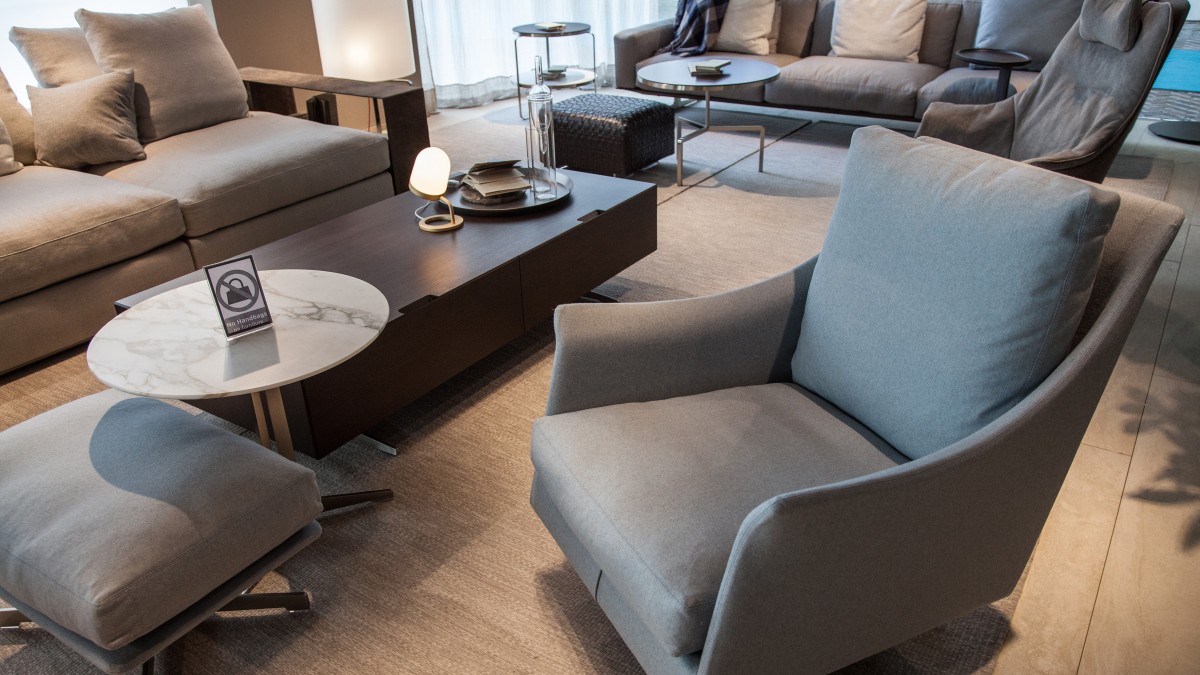
These showroom displays featured in Homedit’s interior design coverage show what happens when neutral pieces stop matching so closely. Cream sofas sit beside dark wood, brown marble cuts through soft upholstery, and woven ottomans bring texture to seating areas that use little bold color.
Before replacing the beige sofa, look at what surrounds it: do the tables, chairs, and rug offer a different shade, shape, or surface? These arrangements show how those choices give neutral furniture something to stand against.
Dark Leather Breaks Up the Pale Upholstery
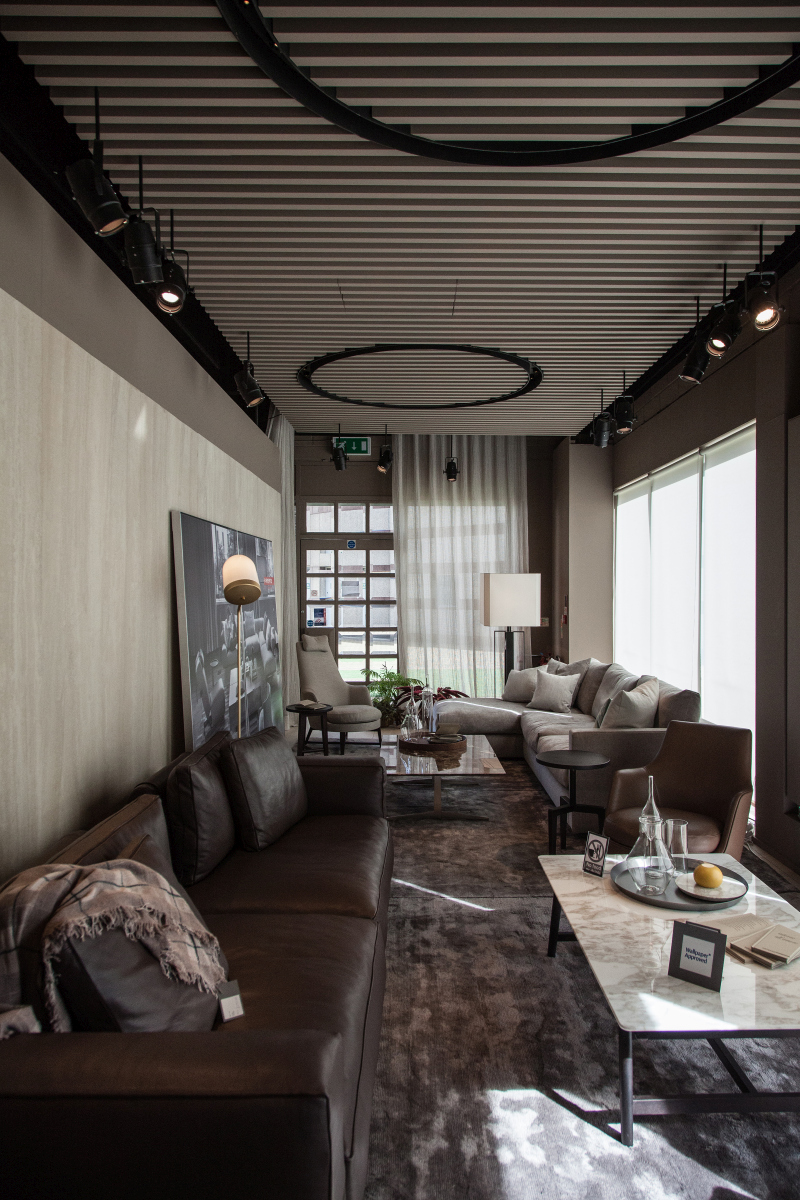
Dark brown leather gives the foreground sofa more visual weight than the gray sectional and beige chair beyond it. Those differences prevent the seating from merging into one pale block, even though the pieces stay within a restrained palette.
Sheer curtains soften the backdrop, while black ceiling fixtures repeat the darker accents overhead. Brown runs through the leather, rug, and tables in different finishes rather than covering every surface in the same shade.
Veined Marble Gives the Seating a Focal Point
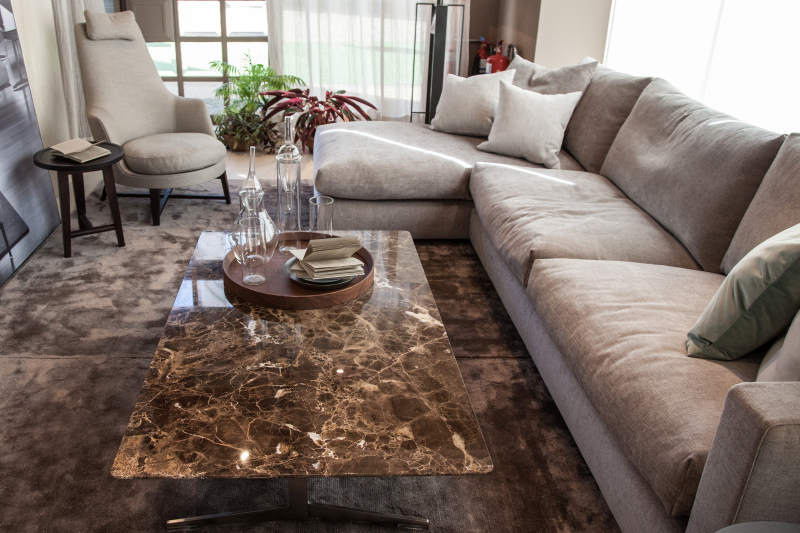
Cream veins cross the brown marble coffee table in front of the greige sectional, creating the strongest markings in the arrangement. Keeping the sofa fabric quiet allows the stone to hold attention without competition from the largest piece of furniture.
Gloss on the tabletop contrasts with the fabric and rug beneath it. That change in surface gives the seating area depth even where the brown and gray tones sit close together.
Chair Shape Matters as Much as Its Color
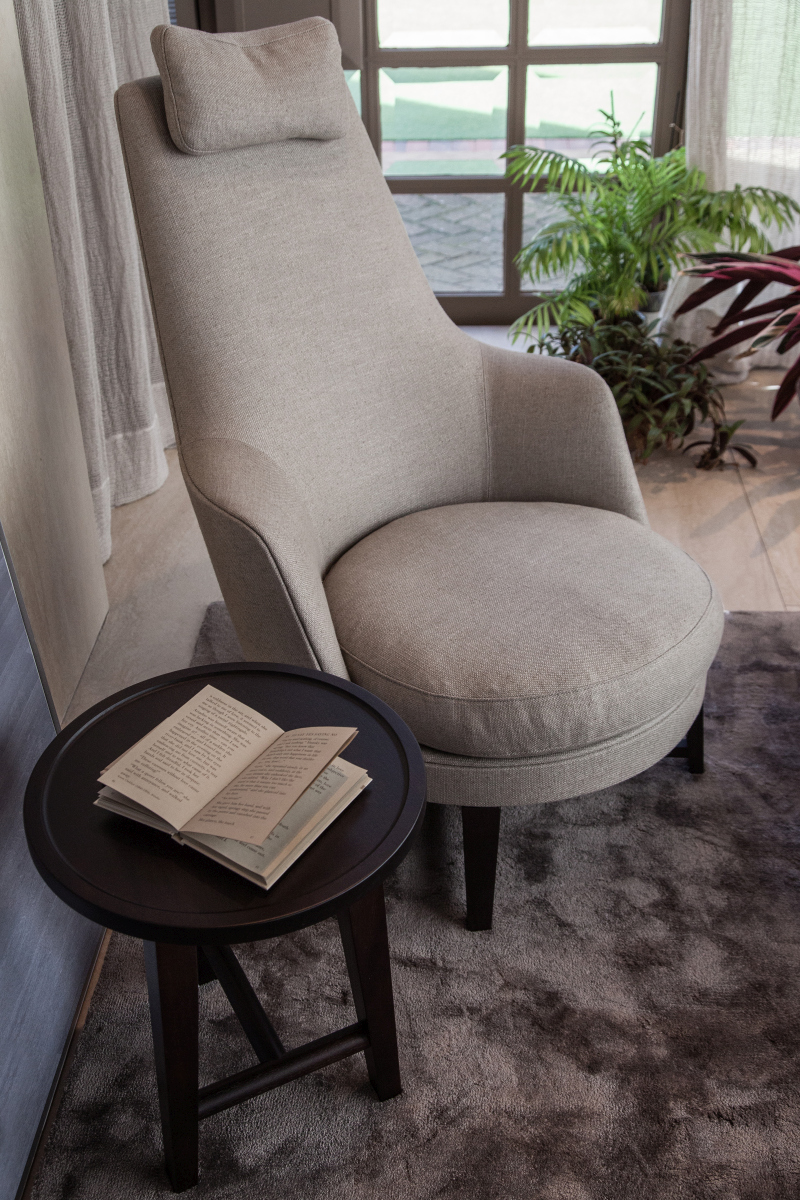
High sides, a head cushion, and a rounded seat give this beige chair a distinct outline. Its enclosing back offers a different silhouette from the low sectional, so matching the general color range does not make the seating feel like a repeated set.
Dark wooden legs and a small round table introduce sharper edges beneath the upholstery. Beside the sheer curtain, the chair adds substance while the fabric at the window lets light pass through.
One Chair Combines Leather, Fabric, and Loose Cushions
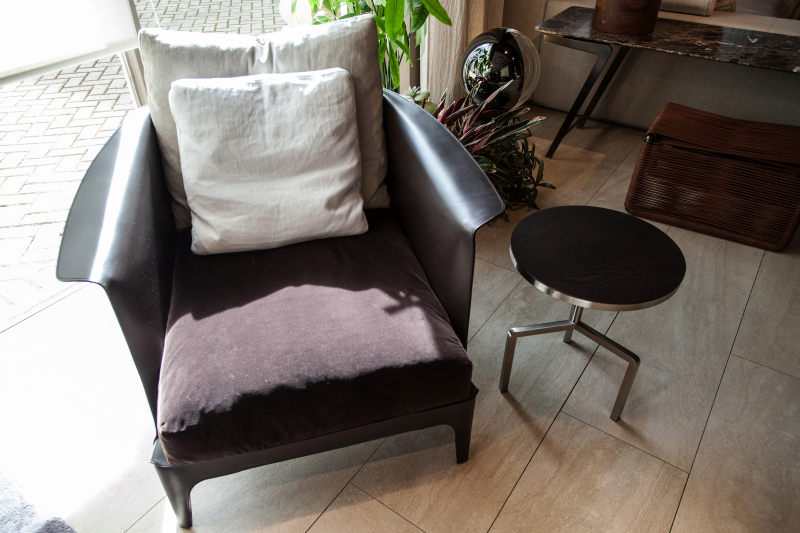
Dark leather wraps the outside of this chair, while brown fabric covers the seat and pale cushions sit against the back. Those materials divide the chair into visible parts without relying on a bright accent.
The leather shell has a firmer outline than the loose cushions it contains. Repeating that contrast at room scale—structured furniture beside softer upholstery—gives a neutral scheme more variety than buying every piece in the same fabric.
The Back of the Sofa Becomes Part of the Arrangement
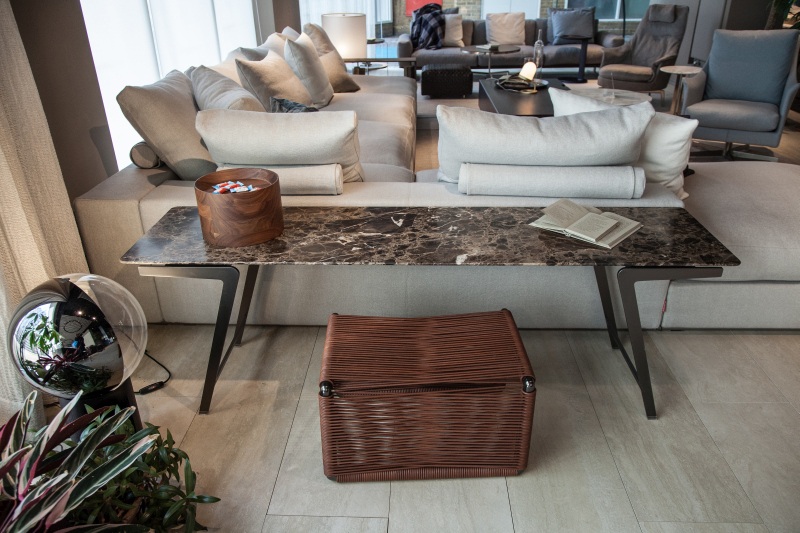
Brown marble brings a distinct finish to the narrow console behind the pale sofa. Its dark angled legs leave space beneath the top, where a cord-wrapped cube stool adds a rougher texture beside the polished stone.
An open book, wooden bowl, and reflective globe lamp give the console different heights and surfaces. Seen from behind, the sofa belongs to a furnished seating area rather than presenting an uninterrupted stretch of upholstery.
Dark Tables Give Pale Modular Seating Definition
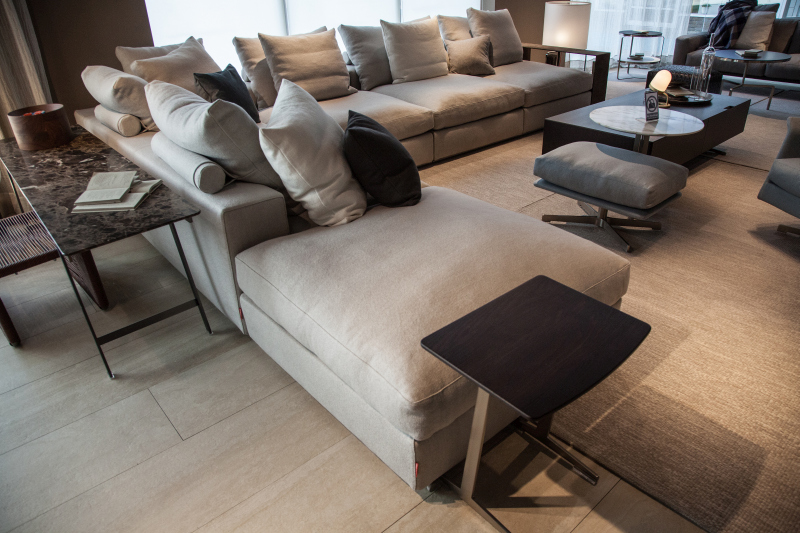
Pale seats, loose back cushions, and cylindrical bolsters form most of this arrangement, with dark wood marking the edges and center. The low rectangular coffee table creates a clear break between the upholstered pieces, while a round marble side table changes both the shape and finish.
Keeping the tables low preserves the view across the seating. Their darker tones provide definition without requiring a tall cabinet or a bold-colored chair to take over the space.
Muted Blue Fits Within the Restrained Palette
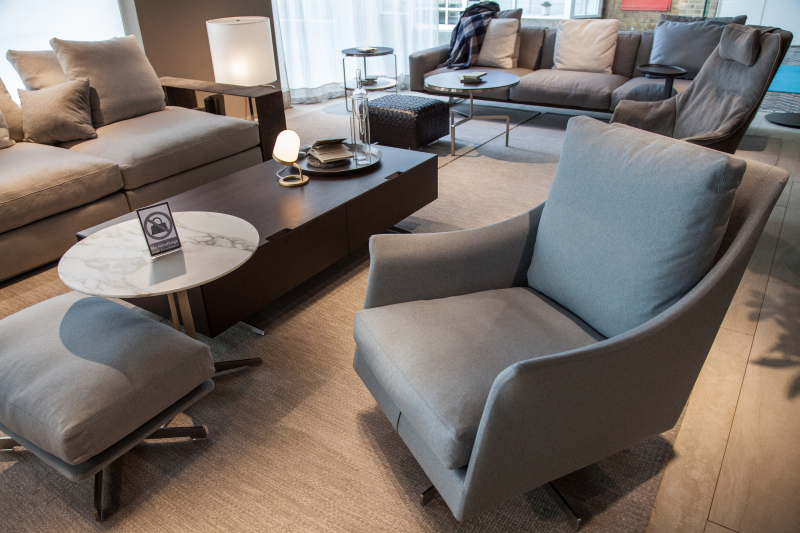
Muted blue on the foreground chair cushion introduces color without overwhelming the gray upholstery around it. Its presence shows that a neutral scheme can accommodate a quiet accent rather than requiring every cushion to be beige.
Gray seating, a pale marble table, and dark wood carry most of the arrangement. The blue has a limited role, while differences in table shape and upholstery keep the wider display from depending on that single accent.
White Upholstery Makes the Woven Ottoman Stand Out
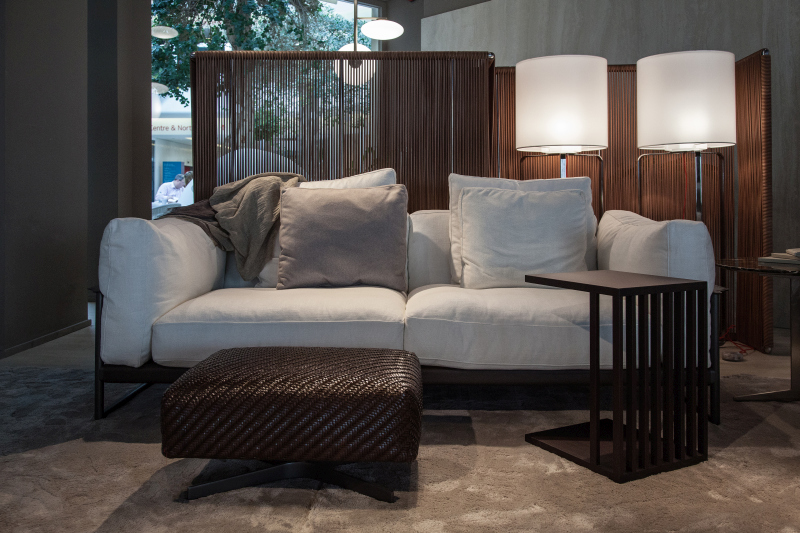
Thick woven strands give the dark brown ottoman a coarse surface against the white sofa. Its broad, rounded form also contrasts with the sofa’s straight base and squared arms, making the pairing distinct through both texture and shape.
Vertical lines in the screen behind the sofa add another scale of detail. White lampshades repeat the upholstery’s light tone, while gray cushions bridge the gap between the pale seating and dark foreground.
Slatted Wood Adds Detail to a Small Side Table
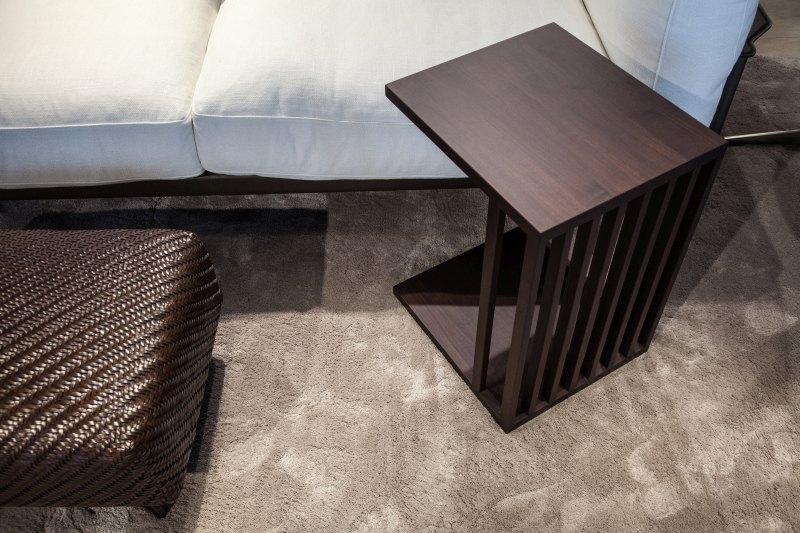
Vertical wooden slats leave narrow gaps through the side of this C-shaped table, breaking up what could have been a solid dark panel. Its top reaches over the sofa edge, bringing a hard surface within reach of the seat.
Beside the woven ottoman, the table repeats brown through a different construction: straight wooden strips against thick curved strands. That distinction gives two dark pieces separate identities without introducing another color.
Would you bring more contrast into a beige living room through dark wood and stone, or through woven furniture and textured upholstery?