Keeping Potatoes in the Dark Isn’t Enough: What to Check Before Putting Them in a Kitchen Cabinet


You put a bag of potatoes in a cupboard, close the door, and assume the darkness takes care of storage. But the bag, the temperature, and the air around those potatoes still matter, even when no sunlight reaches them.
The Instagram creator behind @scscabinets shared these pullouts after clients requested a place for potatoes and onions in their kitchen island. Mesh across the fronts leaves openings for air, while the wooden sides contain the contents.
Pull out the lower drawer and another detail appears beneath the storage space: a mesh insert in the base. That second opening explains the design, though choosing a suitable location still matters as much as choosing the drawer.
Darkness Covers One Part of Potato Storage
Potatoes need a cool, dark, ventilated storage spot. Closing a cupboard door addresses light exposure, but it does not establish whether the space stays cool or allows air to circulate around its contents. Iowa State University Extension recommends a cool, ventilated location, with an ideal temperature of 45–55°F for household storage.
Before setting aside a cabinet, consider heat from nearby appliances and whether the potatoes will remain inside packaging that traps moisture. More cabinet space offers little benefit if the storage conditions stay the same.
Mesh in the Base Leaves Another Opening for Air
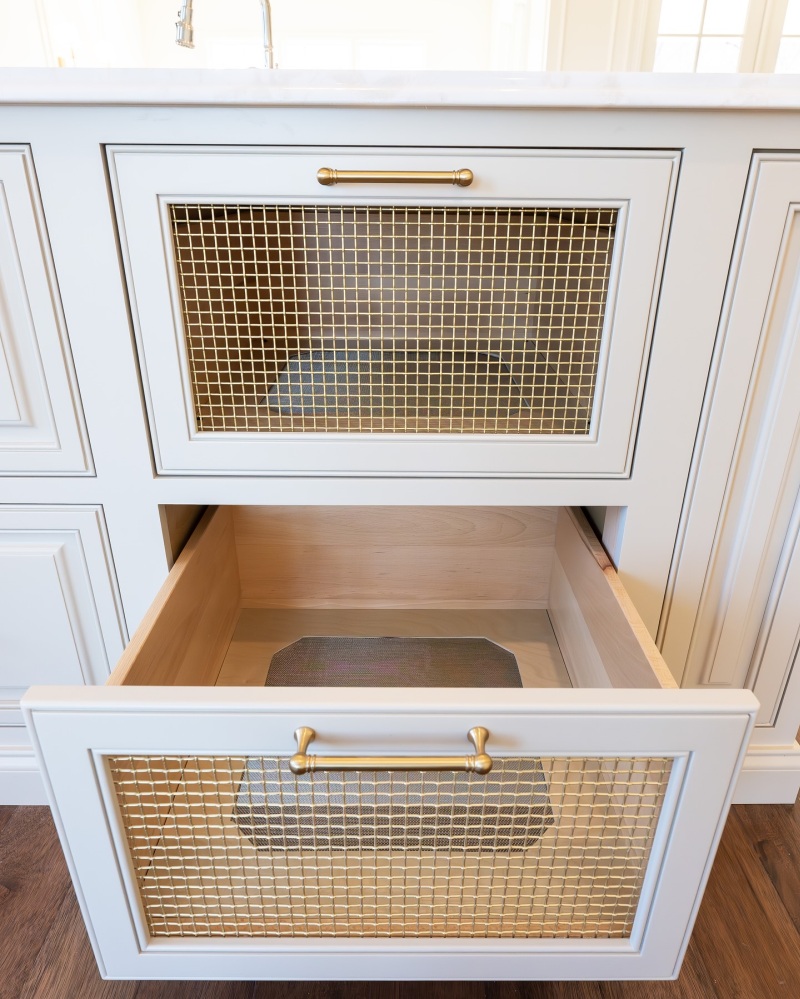
The open lower drawer reveals a mesh-covered cutout within its wooden base. Solid sides contain the contents, while the front grille and bottom insert provide openings that a standard drawer lacks.
Those openings are the useful detail to notice. Covering the base with a solid liner or filling the drawer with sealed bags would obstruct the ventilation the clients requested.
The photographs show empty drawers, so they demonstrate the construction rather than how much produce the pullouts hold or how long it lasts.
Brass Fronts Provide Ventilation but Admit Light
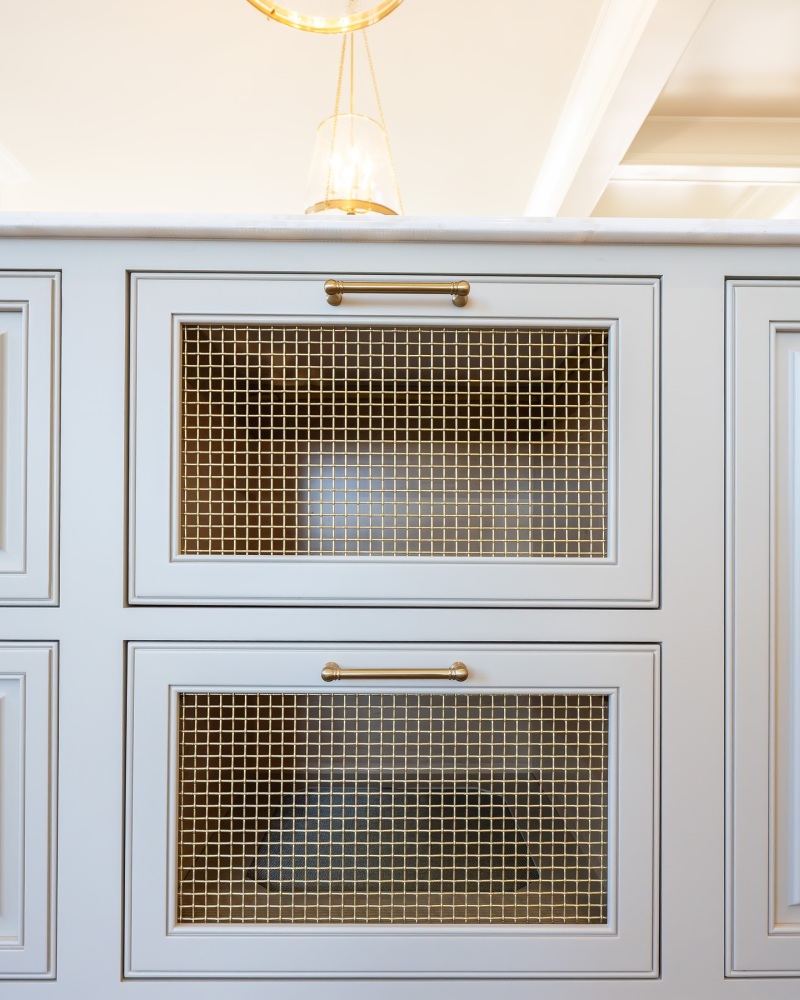
With both drawers closed, the brass grids sit inside painted frames beside solid-panel storage. Matching handles tie the pullouts to the surrounding cabinetry, making their function part of the kitchen’s design.
The open fronts also mean these drawers do not block all light. Although the cabinetmaker describes them as dark storage, their suitability for potatoes depends on how much light reaches the contents through the mesh.
That distinction matters when adapting the idea: a ventilated drawer in a bright position may still need a different location or a breathable, light-blocking container.
Potatoes and Onions Need Separate Storage Locations
The clients requested storage for both vegetables, but separate drawers within one cabinet should not be treated as proof of suitable separation. University of Minnesota guidance advises keeping potatoes away from onions because nearby storage can hasten spoilage.
Use the project as an example of ventilated cabinetry, then choose separate locations for the two crops. Drawer fronts and inserts address airflow; they do not change the storage needs of the food placed inside.
The Cabinet’s Location Still Matters
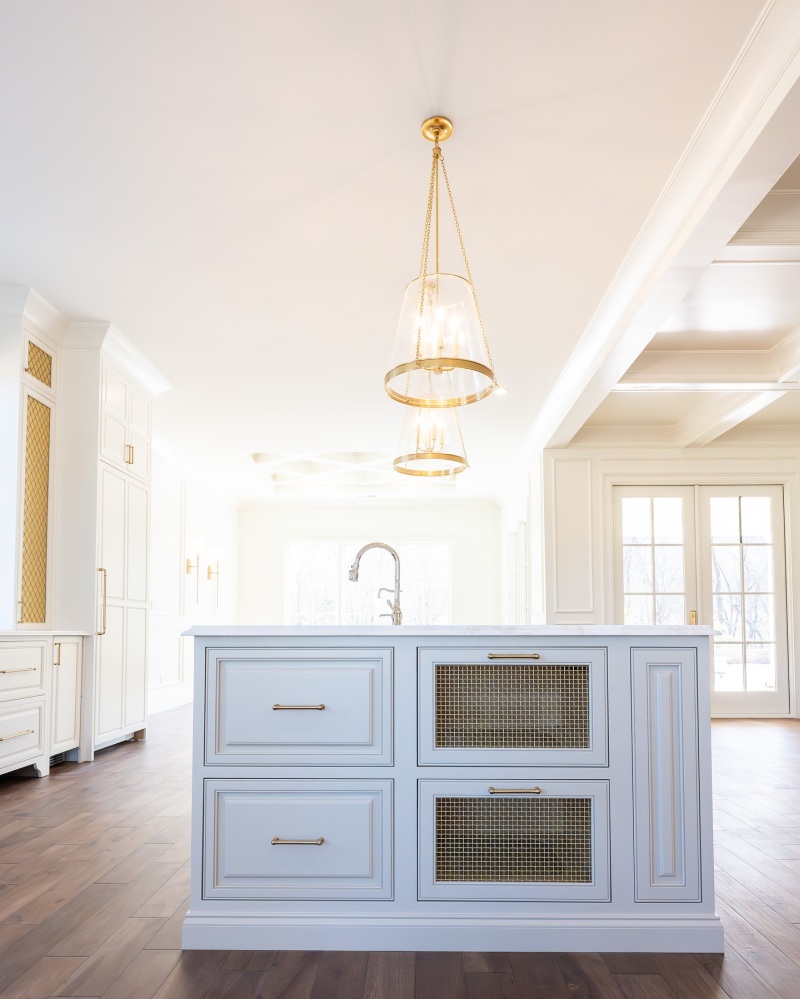
The wider view places the two mesh pullouts beneath the island counter, beside conventional drawers and a narrow cabinet door. They give produce a dedicated place without adding a freestanding basket to the floor or counter.
For a similar setup, check temperature, light exposure, and ventilation before assigning the space to potatoes. You can apply those checks to an existing cupboard and a suitable container without commissioning new cabinetry.
Would you include ventilated produce drawers in a kitchen island, or keep that storage in a separate pantry?
Project and images: SCS Cabinets.