These Statement Lights Make a Basic Ceiling Fixture Look Like an Afterthought


Choosing lighting after the sofa, tables, and cabinets are in place can leave it with one job: making everything else visible. These showroom arrangements give it more influence, using oversized shades, suspended lanterns, and sculptural forms to compete with the furniture for attention.
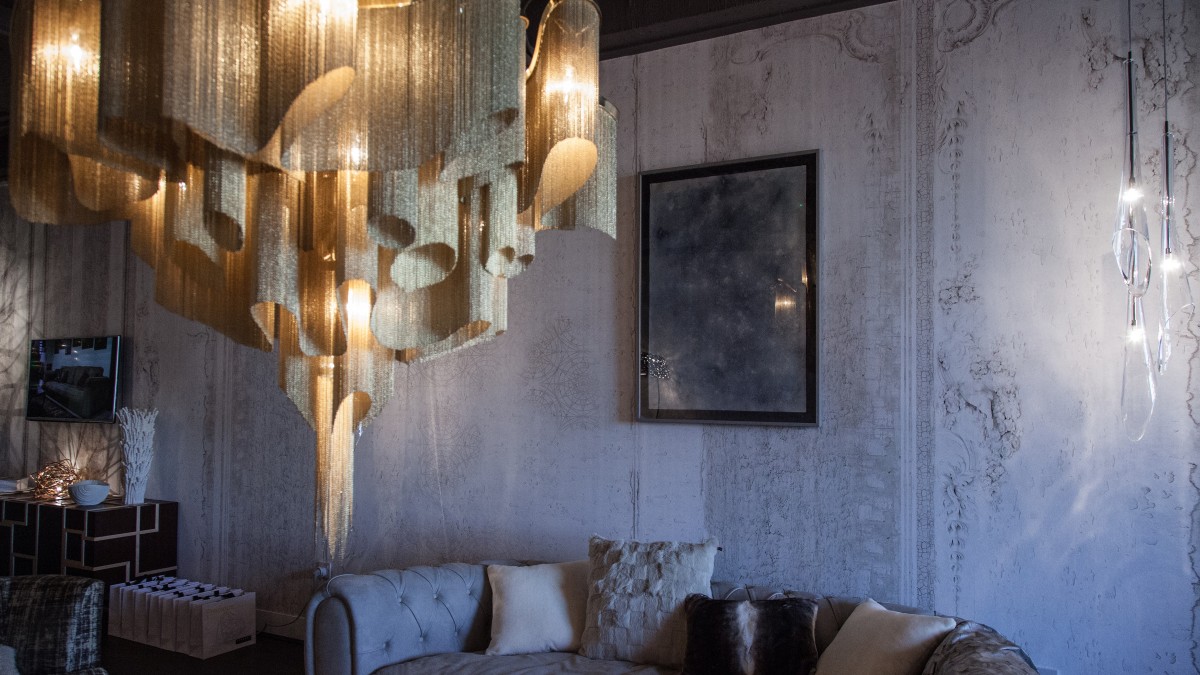
In this selection from Homedit’s interior design photography, a cascading chandelier hangs above a tufted sofa, with gold-toned curves and fine hanging strands forming overlapping layers around the bulbs. Its scale brings detail into the space above the seating, where a small ceiling fixture would leave much of the view empty.
Other designs work closer to the furniture, reaching over a sofa, hanging beside a bed, or casting light across a bare wall. Their shape matters, but so does what happens around them when the lights come on.
Reflective Pieces Break Up the Light Around a Floor Lamp
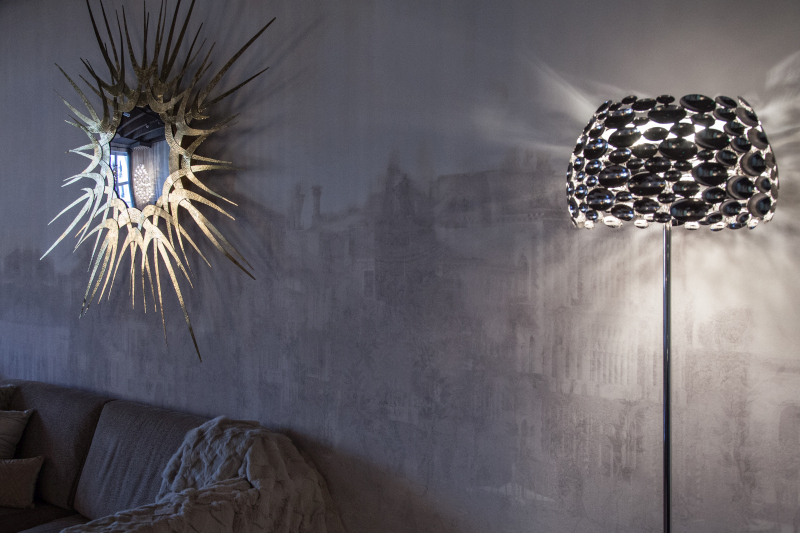
Rows of oval, reflective pieces form a dome around the bulb, leaving gaps that send streaks of light across the wall. Bright edges alternate with dark surfaces, giving the shade depth without relying on a printed fabric.
Beside the sunburst mirror, the lamp creates a second burst of radiating shapes. Its narrow stem keeps the visual weight near the shade, allowing the sofa below to remain separate from the display above it.
Glass Lanterns Hang at Different Heights Above the Island
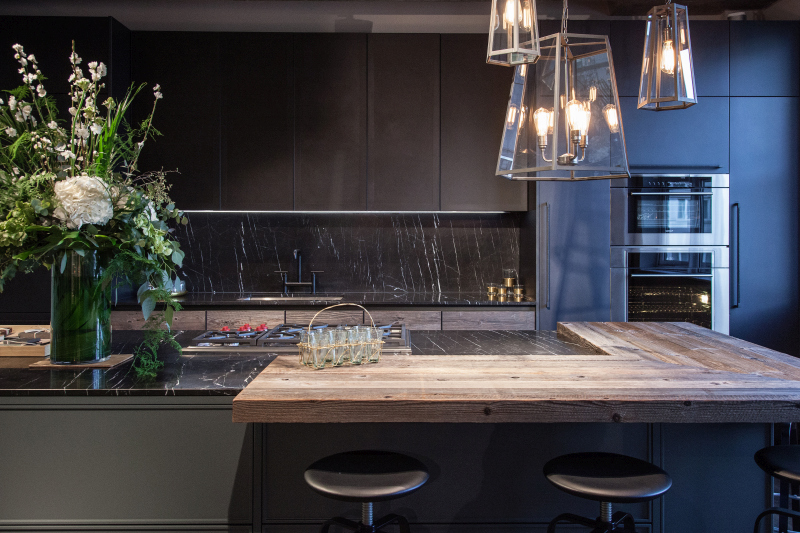
Three lantern pendants vary in size and suspension height, with the largest hanging lower between two narrower fixtures. Their metal frames outline each shape, while clear panels keep the dark cabinets visible behind them.
Exposed bulbs add warm points of light above the island’s stone and wood surfaces. Instead of forming an even row of matching shades, the group brings an uneven silhouette into a kitchen defined by straight cabinet lines.
One Long Pendant Follows the Dining Table
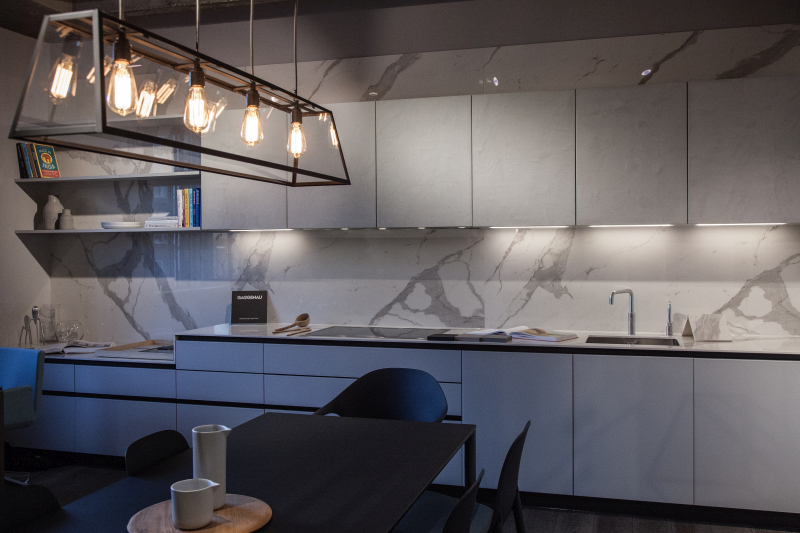
Several bulbs sit within one elongated glass enclosure above the table. Its dark frame stretches across the dining area, giving the group of lights a single outline rather than a series of separate cords and shades.
Undercabinet lighting serves another part of the room, illuminating the veined backsplash and rear counter. Keeping those sources distinct lets the pendant mark the dining space while light remains available along the kitchen work surface.
An Oversized White Shade Rises Above the Seating
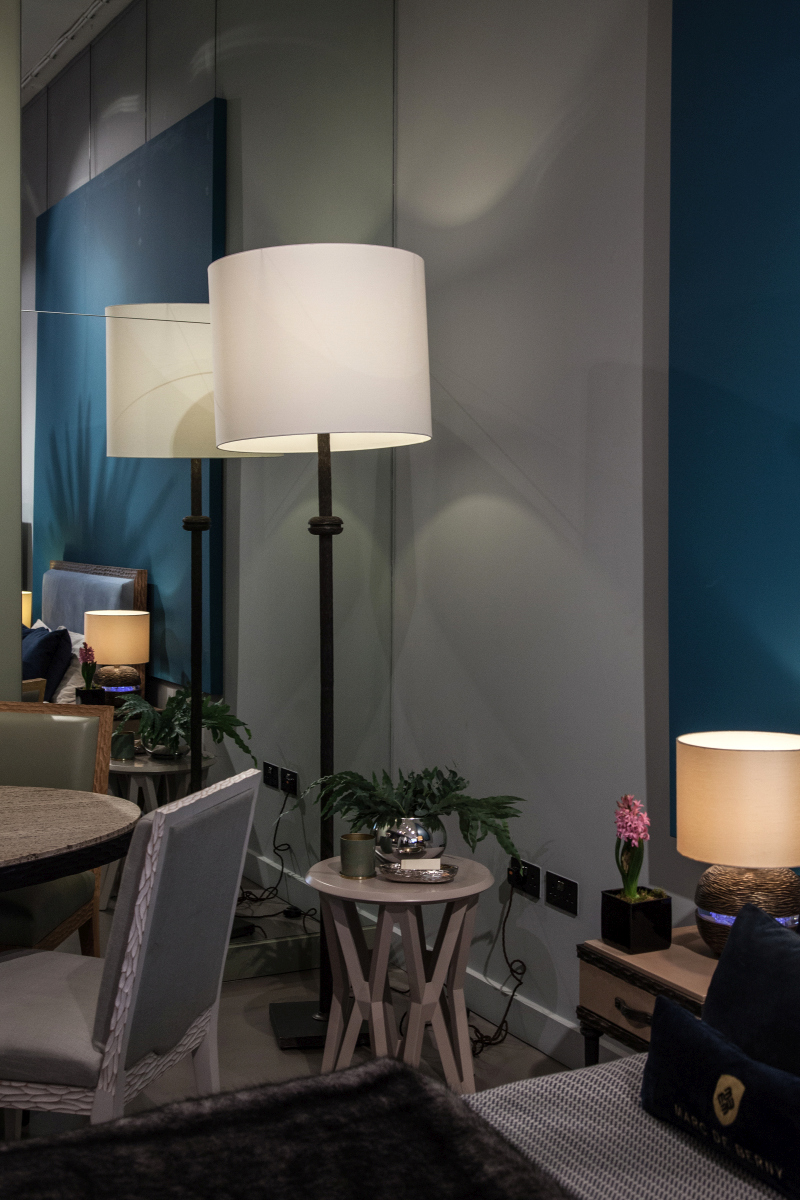
Height gives this floor lamp its presence, with a broad white drum shade mounted on a slender dark stem. Smaller table lamps sit below it, placing illuminated shades at more than one level around the furniture.
Mirrored panels repeat the tall lamp and portions of the seating area. That reflection makes its scale more noticeable, while the plain white shade provides a quiet surface beside the blue wall panels and upholstered chairs.
Black Gloss Gives a Floor Lamp the Weight of Furniture
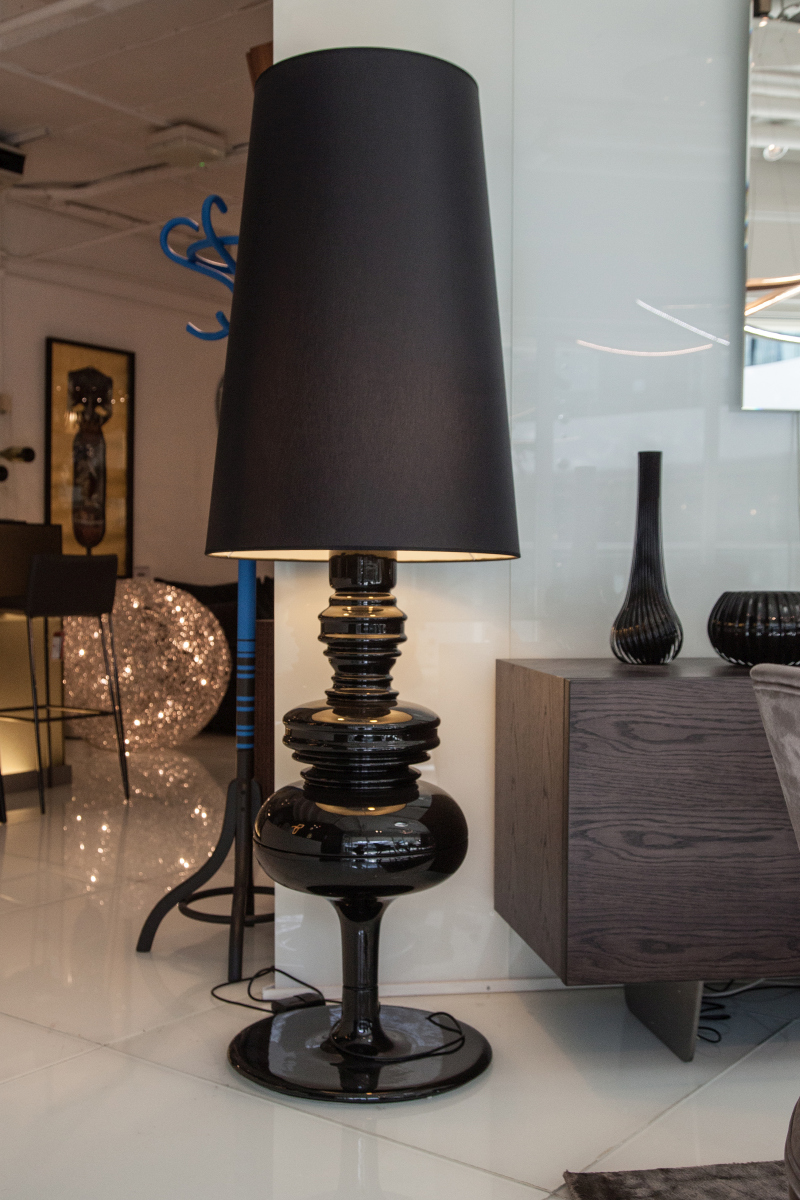
Stacked rounded forms and ridged sections build a substantial base beneath an elongated black shade. Highlights catch the glossy curves, making the lower half of the lamp as prominent as the light source above it.
Its silhouette resembles a tall decorative vessel, with a broad foot anchoring it beside the cabinet. Here, the floor lamp occupies space as a furnishing in its own right, rather than disappearing into a narrow corner.
A Woven Pendant Leaves the Bedside Surface Open
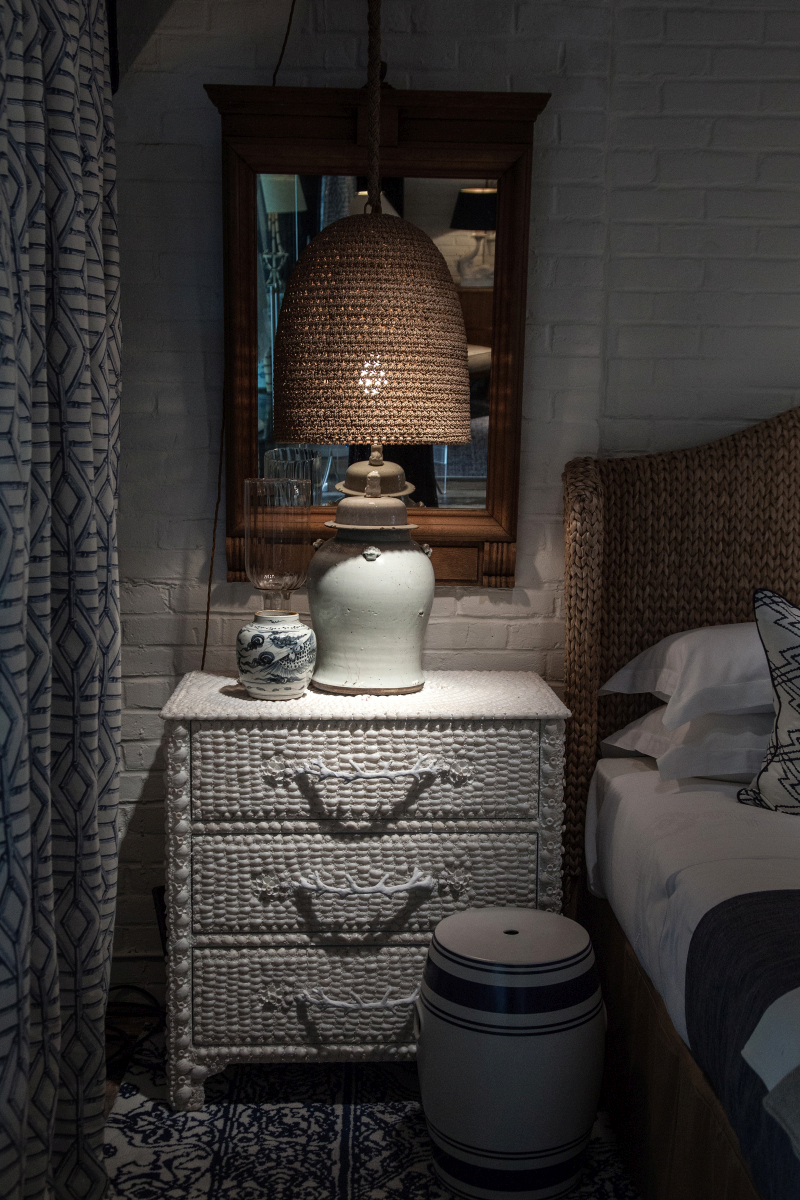
Suspended beside the bed, the woven shade hangs above a chest topped with ceramic vessels and glassware. Without a lamp base on the surface, those objects can sit beneath the light instead of competing with it for space.
Small openings in the weave reveal points of brightness, while the open bottom lights the chest below. Rope suspension and the textured shade echo the woven headboard, connecting the fixture to materials already beside the bed.
Light Reaches Up the Wall Behind a Curved Sofa
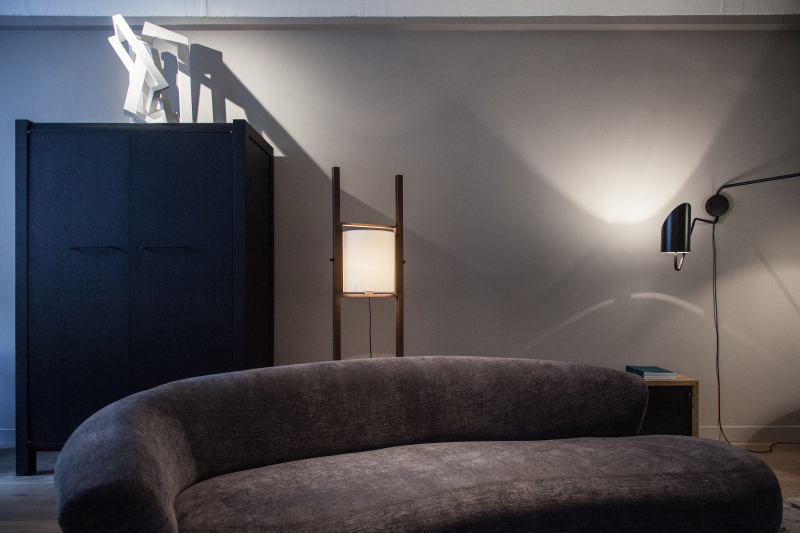
An upward-facing black shade casts a broad pool of light onto the wall above the sofa. Beside it, a floor lamp holds a glowing shade between two tall wooden uprights, adding a separate vertical element behind the seating.
Much of the wall remains bare, so the illuminated area becomes part of the composition. The arrangement shows how lighting can give an empty surface interest without covering it with more framed art.
Paired Lamps Frame a Mirror With Light and Shadow
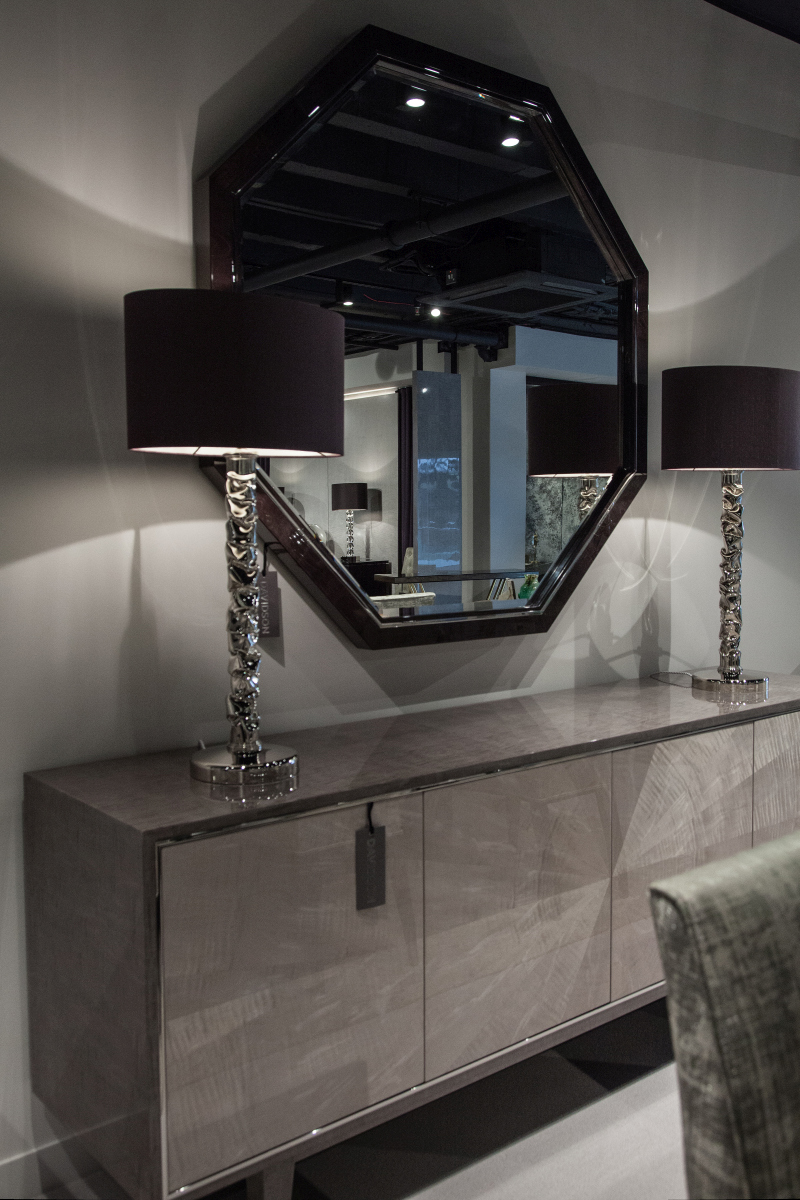
Two slim lamps stand at opposite ends of a sideboard, their textured silver-toned stems catching highlights beneath dark drum shades. Light escapes above and below the shades, creating bright areas around the large octagonal mirror.
Their narrow bases preserve space across the cabinet top, while the repeated shapes establish a frame on either side. Reflections add depth to the arrangement without requiring more objects on the sideboard.
A Long Arm Brings the Shade Over the Sofa
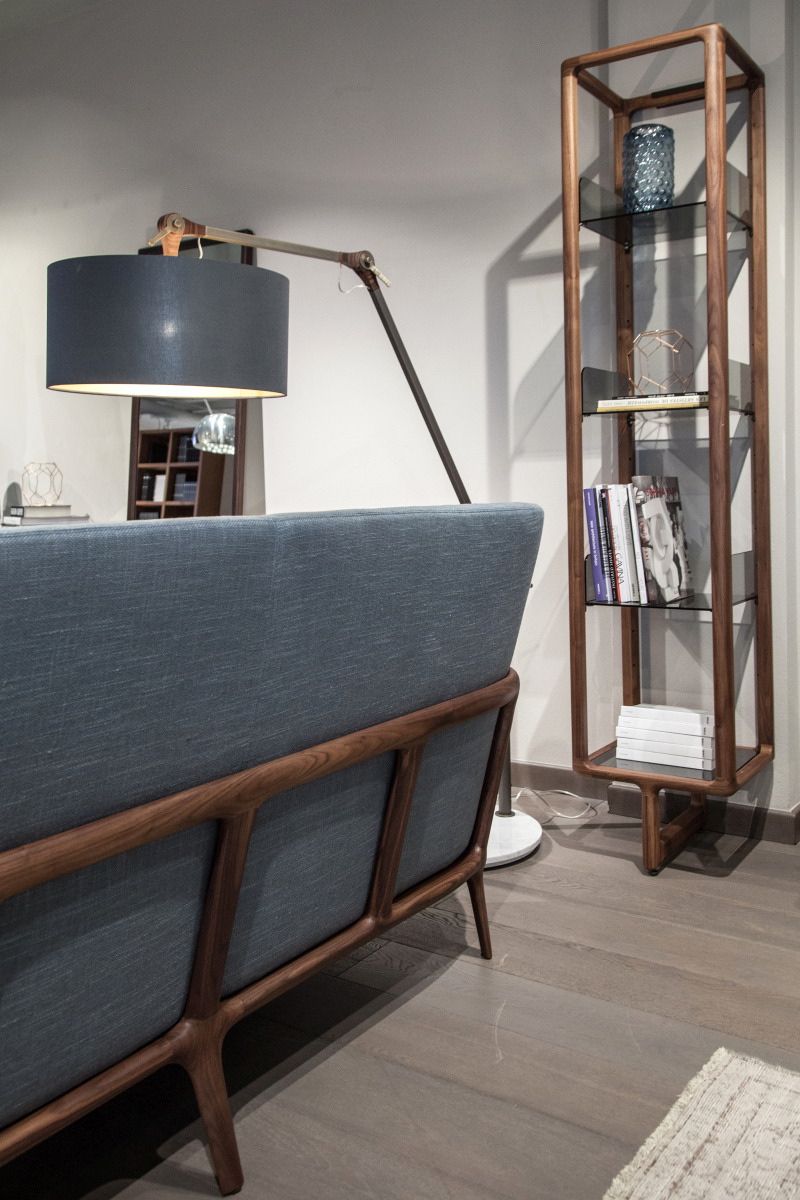
Positioned behind the sofa, this floor lamp extends its jointed arm over the seating. The offset shade reaches beyond the base, placing the light where a short upright lamp could not reach from the same position.
Its blue-gray shade picks up the upholstery color, while wood-toned joints connect with the sofa frame and nearby shelving. The arm introduces an angled line above the backrest, giving the fixture a role in the room even before it is switched on.
Would you choose one large fixture to command attention, or spread that impact across floor lamps and pendants?