These Living Room Storage Walls Have Zero Tolerance for Boring Shelves

Living room storage has moved beyond the familiar bookcase beside the television. Entire walls now combine open compartments, concealed cabinets, display niches, and lighting, giving books and everyday objects a place without sacrificing the room’s design.
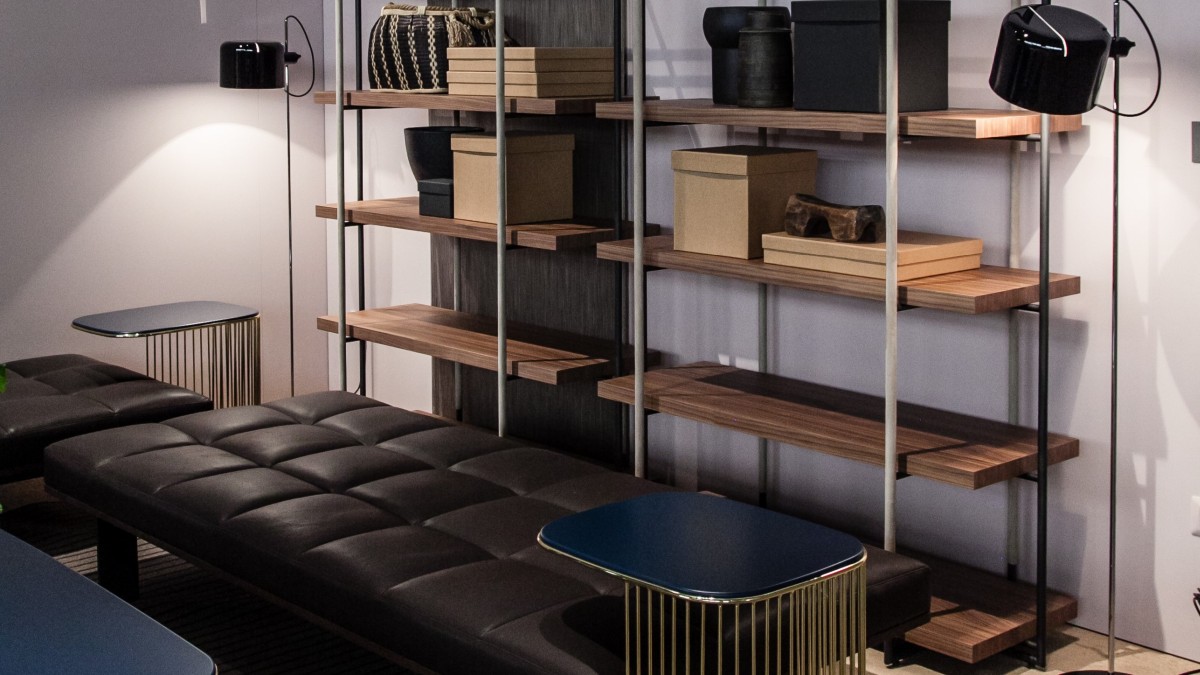
At Homedit, we’ve photographed wall units that go far beyond conventional shelving, from floor-to-ceiling libraries to freestanding structures that divide a room. Some incorporate televisions, while others use geometric arrangements, contrasting materials, or illuminated shelves to create an architectural feature.
Across these 11 designs, the difference comes down to how storage occupies the space. Cabinets float above the floor, shelves wrap around corners, and compartments break away from the standard grid, offering ideas for rooms where an ordinary bookcase would feel out of place.
A television framed by an entire wall of storage
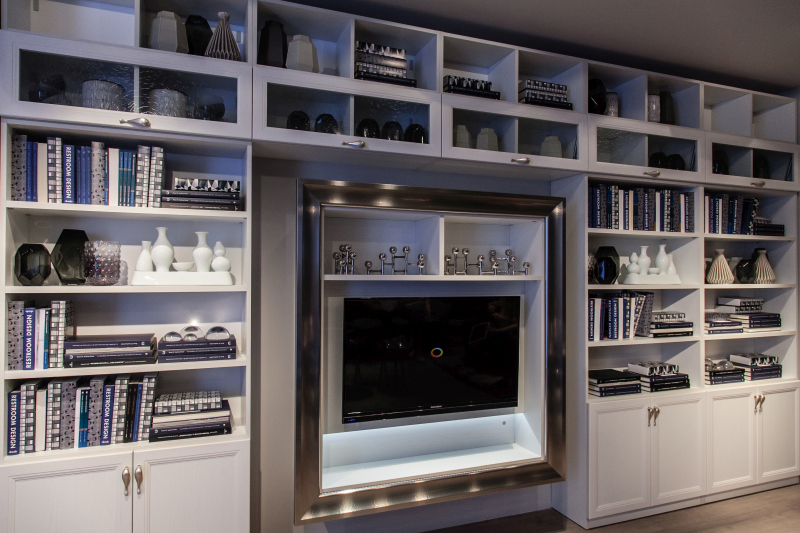
White cabinetry stretches across the wall, with open bookcases on both sides of a television enclosed in a broad metallic frame. Glass-fronted compartments run beneath the upper display cubbies, while paneled cabinets provide concealed storage at floor level.
The metallic surround gives the television its own defined space without separating it from the cabinetry. Books, ceramic vessels, and glass objects fill the surrounding compartments, turning what could have been a standard entertainment center into a complete furniture installation.
Storage compartments that refuse to follow one pattern
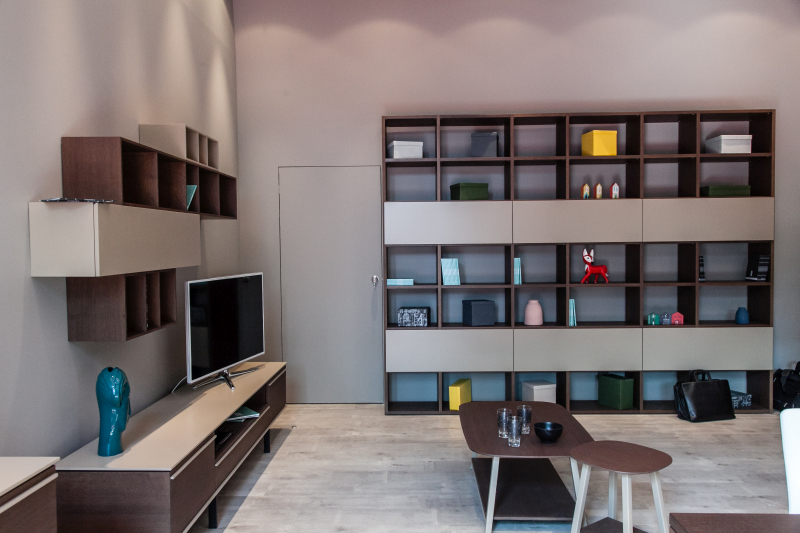
Dark wood cubbies alternate with long cream cabinet fronts in this modular arrangement, where the horizontal sections interrupt the grid rather than following the same pattern from floor to ceiling. A bright yellow box, a red animal sculpture, and small decorative houses introduce color against the restrained finishes.
The matching television furniture on the adjacent wall carries the same dark wood and cream combination, connecting two separate storage systems across the room. Open compartments leave space for display, while the solid fronts keep less attractive belongings out of view.
Blue shelving becomes a wall without closing off the room
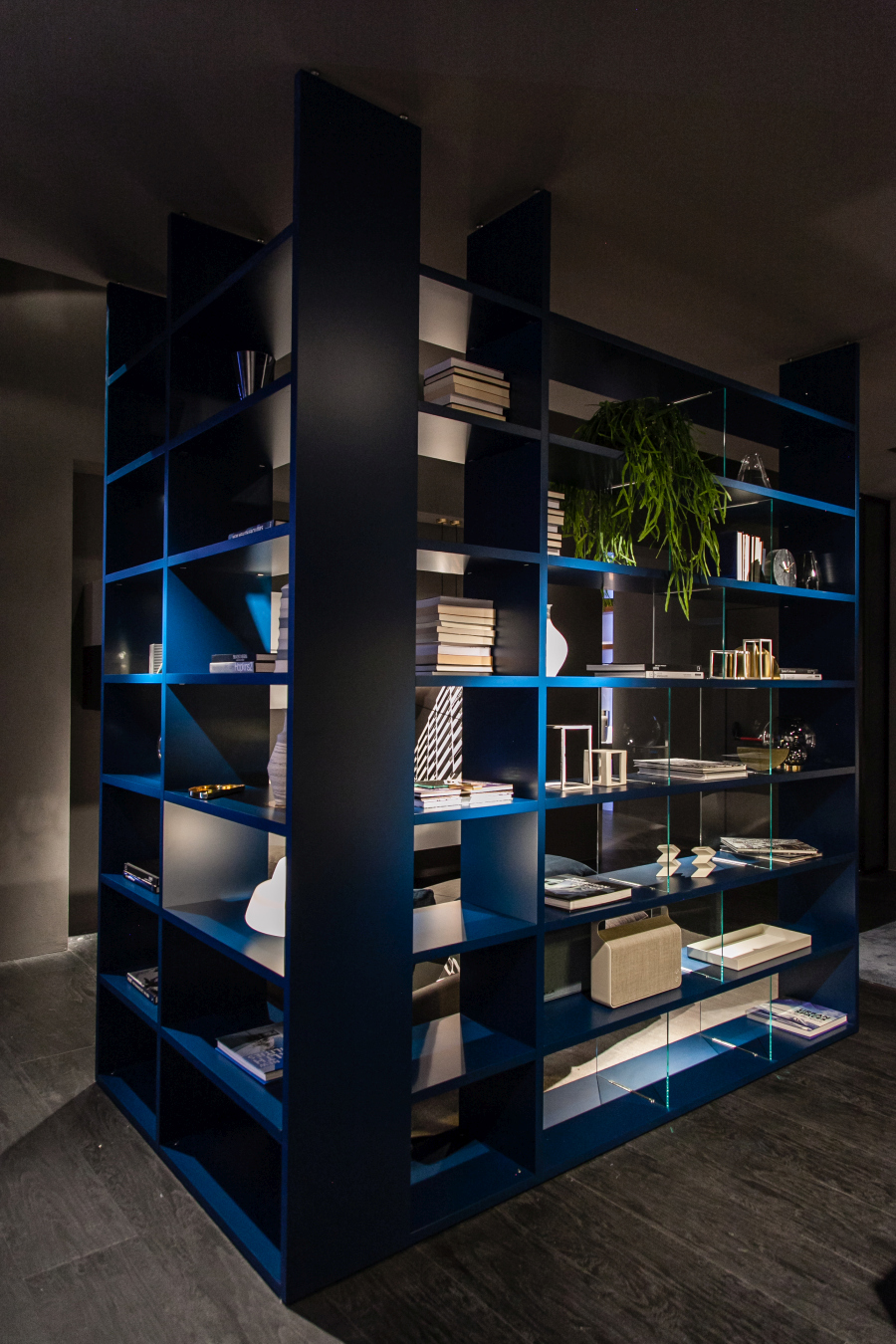
Deep blue shelving stands in the middle of the space, forming a substantial partition with open compartments on multiple sides. Its height and dark finish give it the presence of a built wall, yet the gaps between the shelves allow views through the structure.
Glass dividers, books, sculptural objects, and a trailing plant add different textures to the arrangement. The shelving creates separation without requiring a solid partition, making the furniture part of the room’s layout rather than an addition placed against an existing wall.
Blue backlighting changes the character of a dark living room
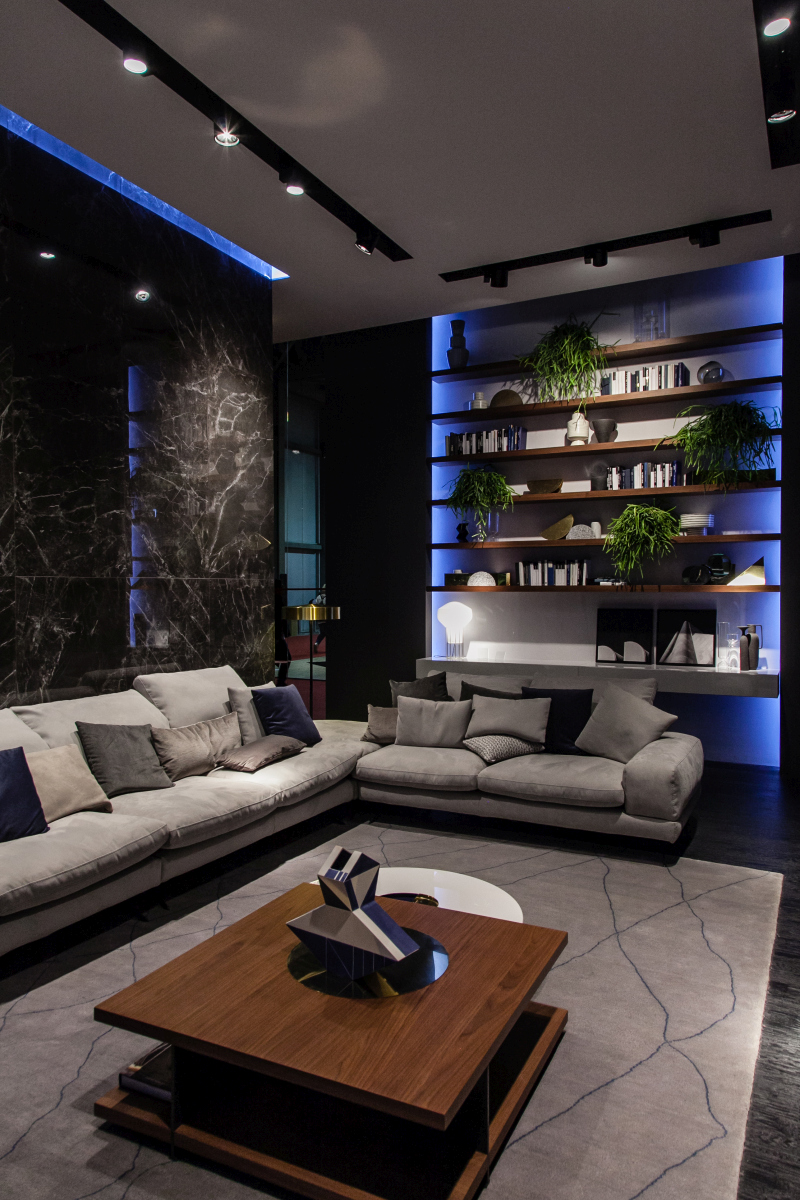
A tall shelving installation rises behind the seating area, with dark horizontal shelves set against a wall washed in blue light. Plants spill across several levels, while books and ceramic objects occupy the spaces between them.
The illuminated shelving provides a contrast to the dark stone wall beside it, which has a thin band of blue light along its upper edge. Large gray sofas and a wood coffee table anchor the room, allowing the illuminated wall to draw attention without requiring bright furniture or colorful upholstery.
Open shelves and closed cabinets form a screen behind the sofa
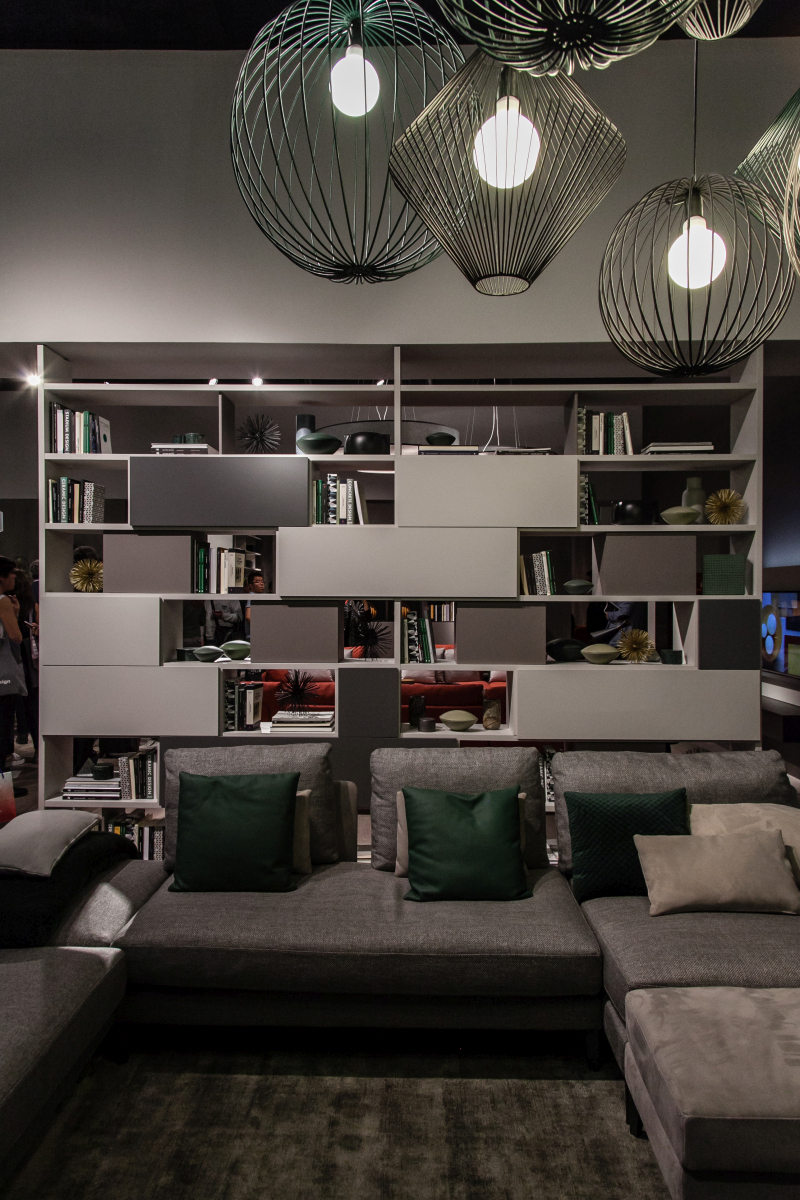
A geometric storage structure rises behind the gray sectional, combining open book compartments with solid panels in different shades of gray. Some sections contain books and decorative bowls, while others remain open enough to reveal the room beyond.
Rather than placing the sofa against a solid wall, the design uses storage to establish a boundary behind the seating. Large wire pendant lights hang above the arrangement, adding curved forms that contrast with the rectangular compartments and horizontal cabinet fronts.
A display wall takes its cues from gallery lighting
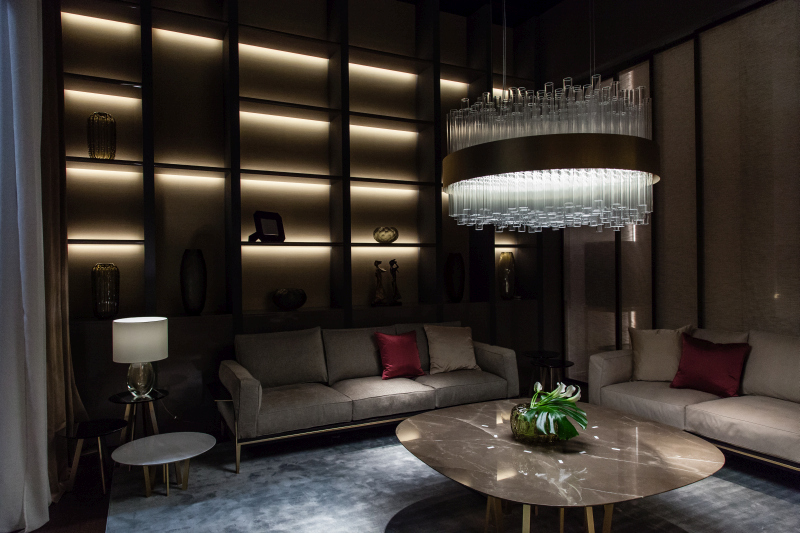
Tall dark shelving fills the wall behind a pair of pale sofas, with warm light running beneath the shelves to illuminate individual objects. Glass vessels, sculptures, and framed pieces occupy selected compartments, leaving generous areas of the wall free from decoration.
A circular chandelier made from vertical glass elements hangs above the large stone coffee table, bringing another layer of illumination into the room. The shelving uses light and empty space to give a small collection of objects greater presence than a crowded display could achieve.
An oversized bookcase breaks away from the standard grid
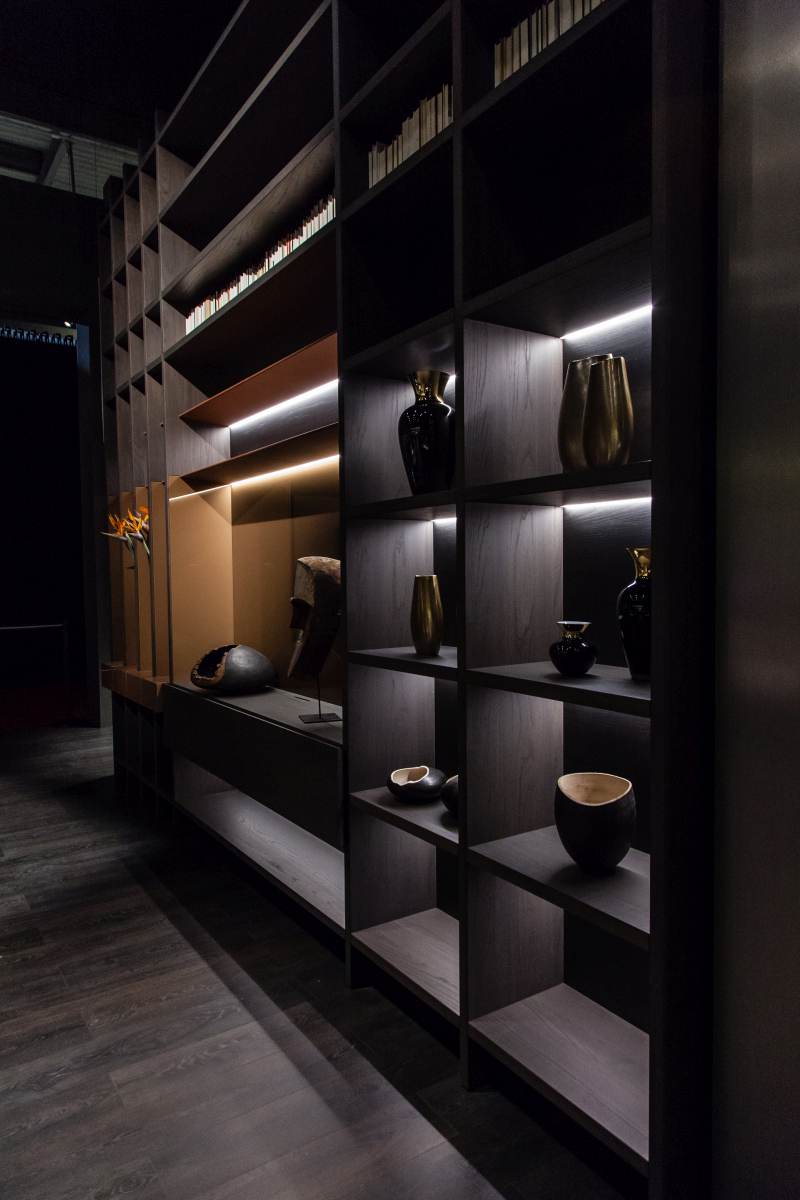
Dark wood shelving rises toward the ceiling, combining narrow book compartments, tall display niches, and horizontal recesses of different proportions. Integrated lighting draws attention to selected sections, including a warm-toned display area containing sculptural objects.
The arrangement avoids the uniform appearance of identical shelves stacked from bottom to top. Some compartments are intended for books, others accommodate tall vessels, and the largest openings provide room for objects that would struggle to fit inside a conventional bookcase.
Metal supports give wall storage an exposed structure
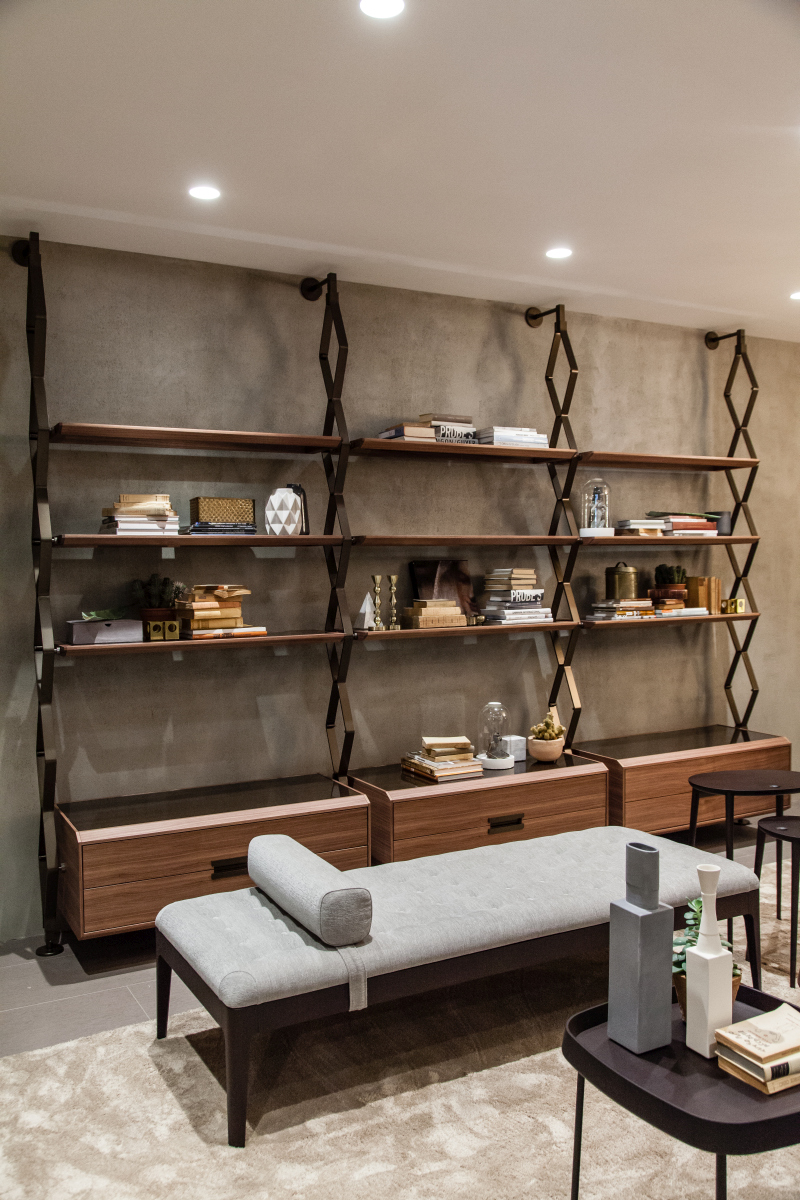
Wood shelves extend across a textured gray wall, supported by dark metal uprights that form elongated diamond shapes between the levels. The exposed supports become part of the design, creating a repeated geometric detail without enclosing the storage in a heavy cabinet frame.
Three wood-fronted storage cabinets sit beneath the open shelves, giving the composition a substantial base while leaving much of the wall visible. A pale upholstered bench in front of the installation reinforces the room’s mix of wood, metal, and soft fabric.
A floor-to-ceiling library turns books into a wall pattern
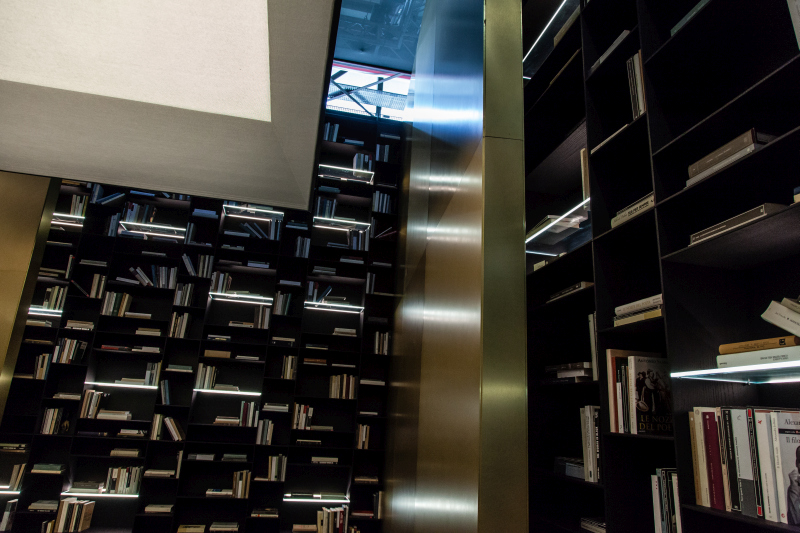
Tall dark bookcases cover the walls, with compartments of different heights holding books in upright rows and horizontal stacks. Thin strips of light illuminate selected shelves, producing bright lines that interrupt the dark surfaces.
The shelving extends far above ordinary furniture height, making the collection part of the surrounding architecture. Books occupy much of the installation, yet the uneven arrangement of illuminated and unlit compartments prevents the wall from reading as one continuous grid.
Floating white shelves give a workspace room to breathe
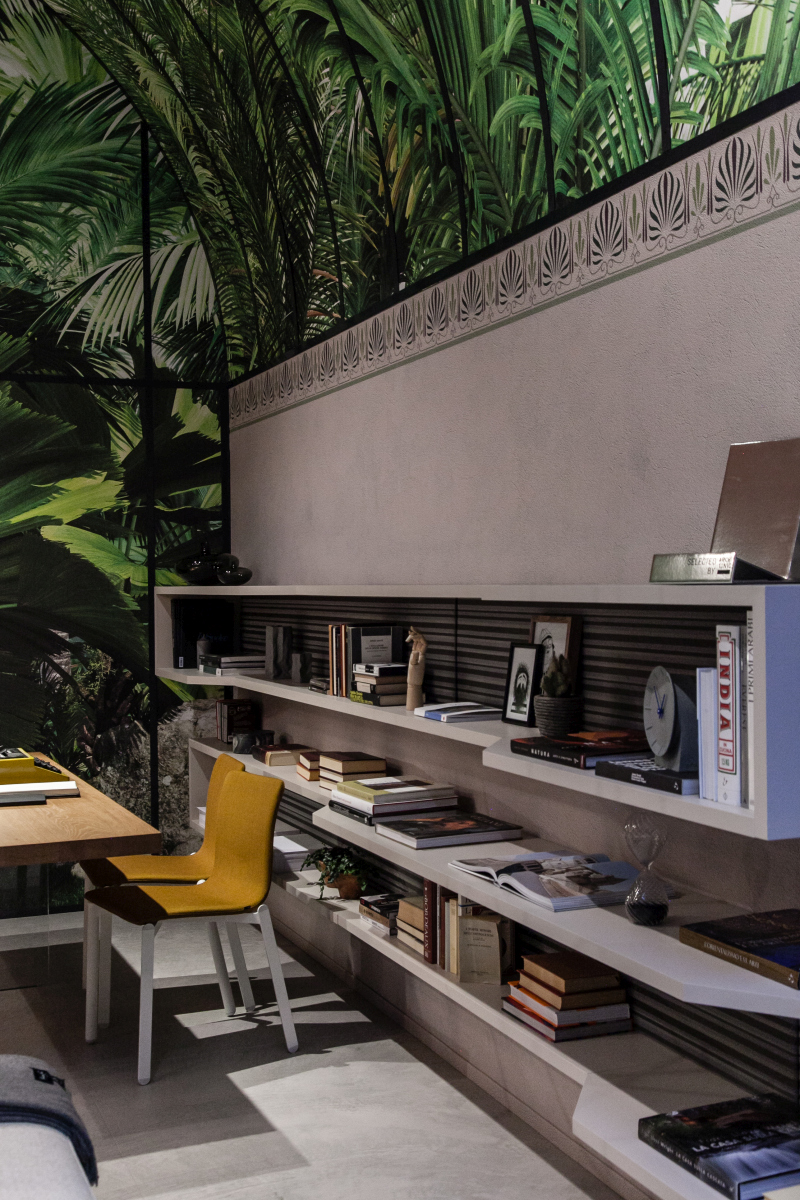
Long white shelves extend across the wall beside a wooden desk, with a combination of open compartments and solid cabinet sections. Books, framed objects, and small sculptures sit along the horizontal surfaces, while the pale finish keeps the storage from dominating the compact work area.
A dark slatted backing adds depth behind the lower shelves, contrasting with the white cabinetry and the large botanical wall treatment nearby. The horizontal arrangement provides display space without the visual weight of a full-height bookcase.
A floating media cabinet stretches beyond the television
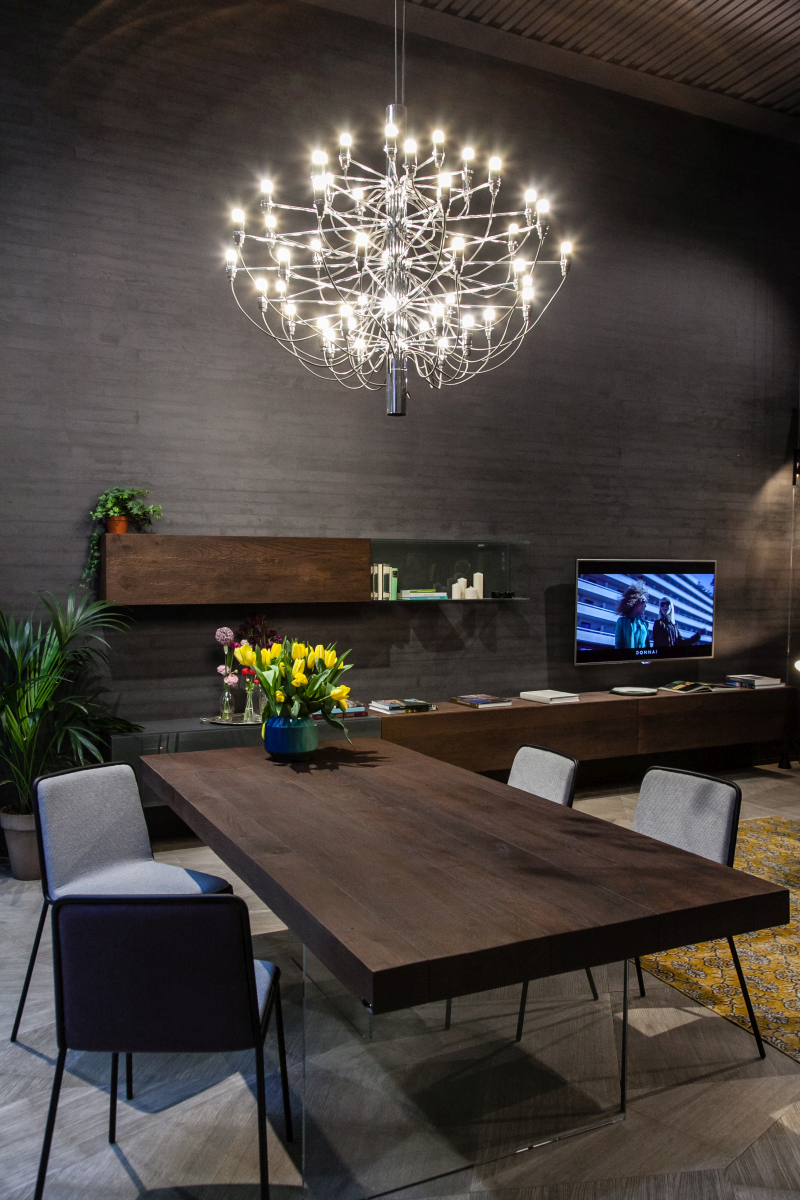
A long dark wood cabinet runs beneath the television, extending across much of the textured charcoal wall. Above it, a shorter wood cabinet and a glass display section form an offset arrangement, leaving a broad section of wall exposed.
The furniture uses horizontal lines to connect the television area with the dining space in front of it. Glass supports beneath the dining table and a sculptural chandelier add contrasting forms, while the low cabinetry keeps the storage from competing with the height of the room.
These rooms show how much can change when storage is treated as part of the architecture rather than furniture added after the layout is complete. From a blue shelving divider to illuminated display walls and floating media cabinets, each design gives the shelves a purpose beyond holding books.
Would you rather have an entire wall of open shelves to display your favorite objects, or a combination of open storage and closed cabinets to keep everything out of sight?