These Four Copper Pipe Elbows Were Made for Plumbing, but Ended Up Holding Kitchen Utensils


Four copper plumbing elbows sit in a row on a wooden board, but no pipes run through them. Instead, the curved fittings point upward, holding a spatula, whisk, and potholder on the kitchen wall. What looks like a set of copper hooks started with materials from the plumbing aisle.
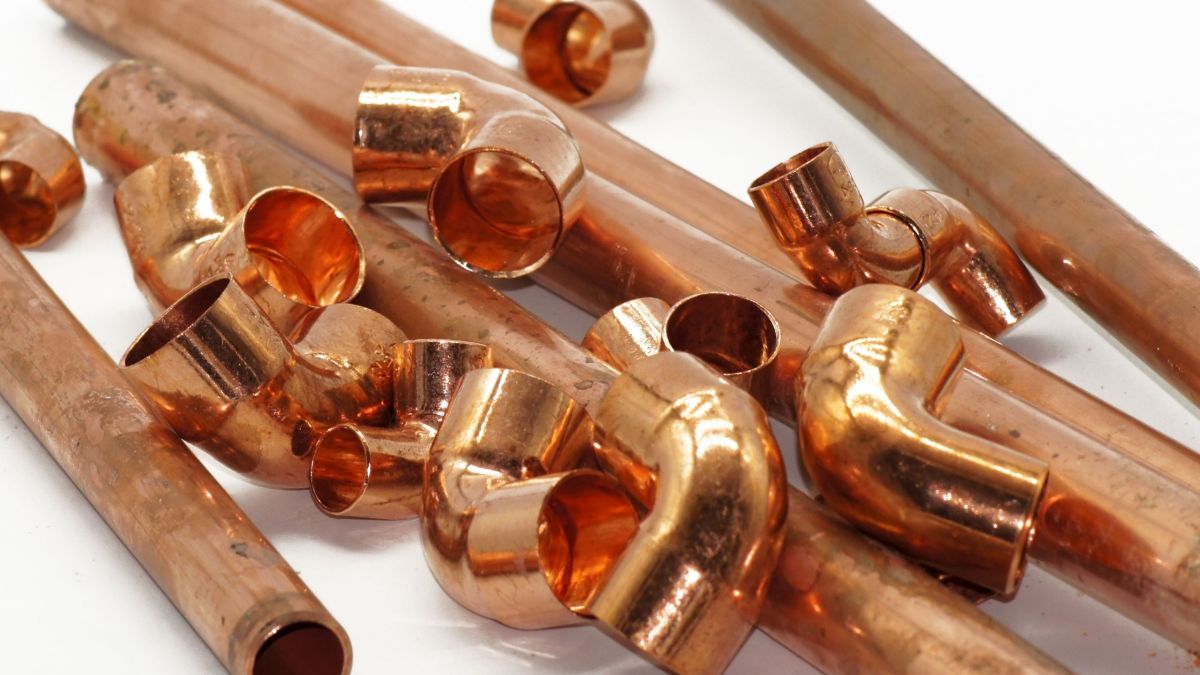
The original Homedit DIY uses short wooden dowels screwed into a stained board to support the copper fittings. Each elbow slides over a dowel, concealing the attachment and leaving its curved end exposed. The result is a wall-mounted utensil rack made without conventional hooks.
Four Copper Elbows Replace Standard Wall Hooks
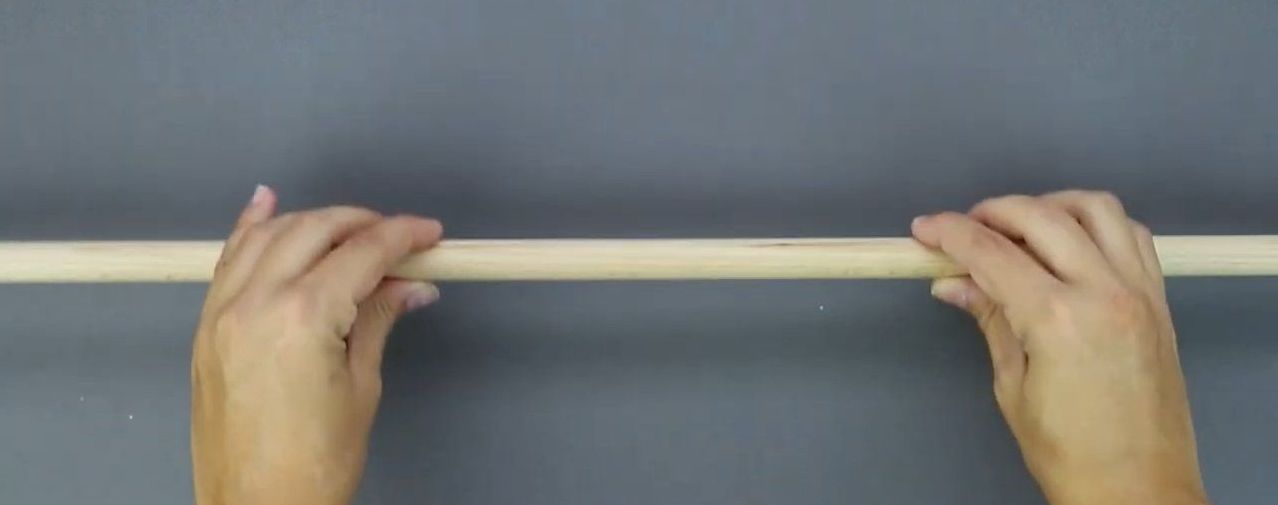
The project starts with a round wooden dowel, which provides the hidden support for each copper elbow. The dowel fits inside the plumbing fitting, allowing the curved copper piece to serve as the exposed hook.
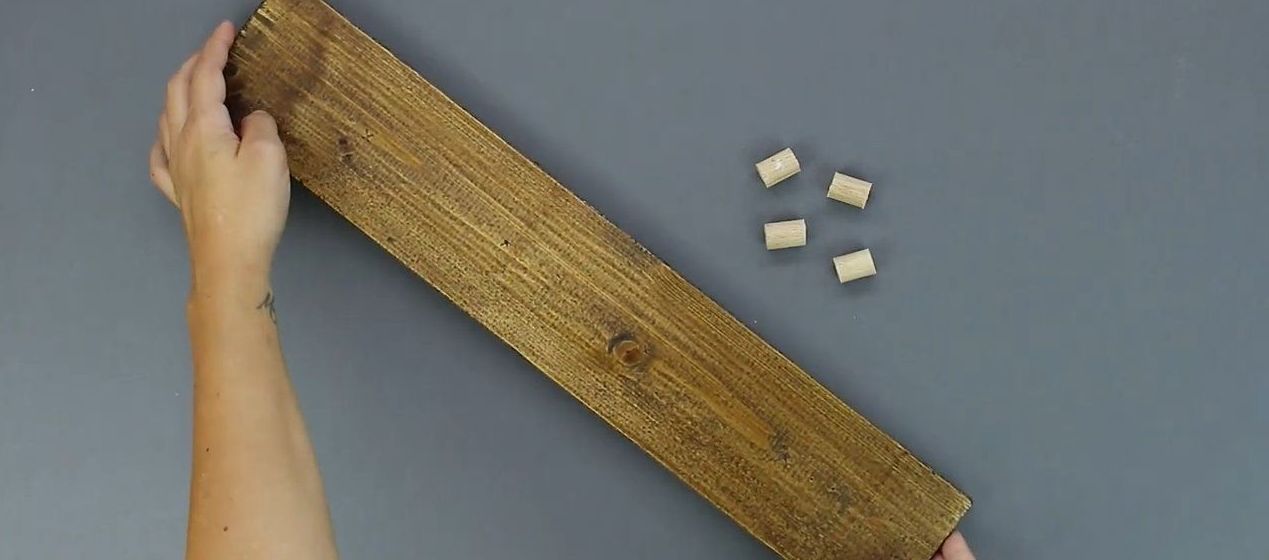
Four short sections of dowel sit beside a stained wooden board. The plank forms the backing for the finished rack, with enough length to space the hooks apart.
The Wooden Dowels Hold the Copper Fittings
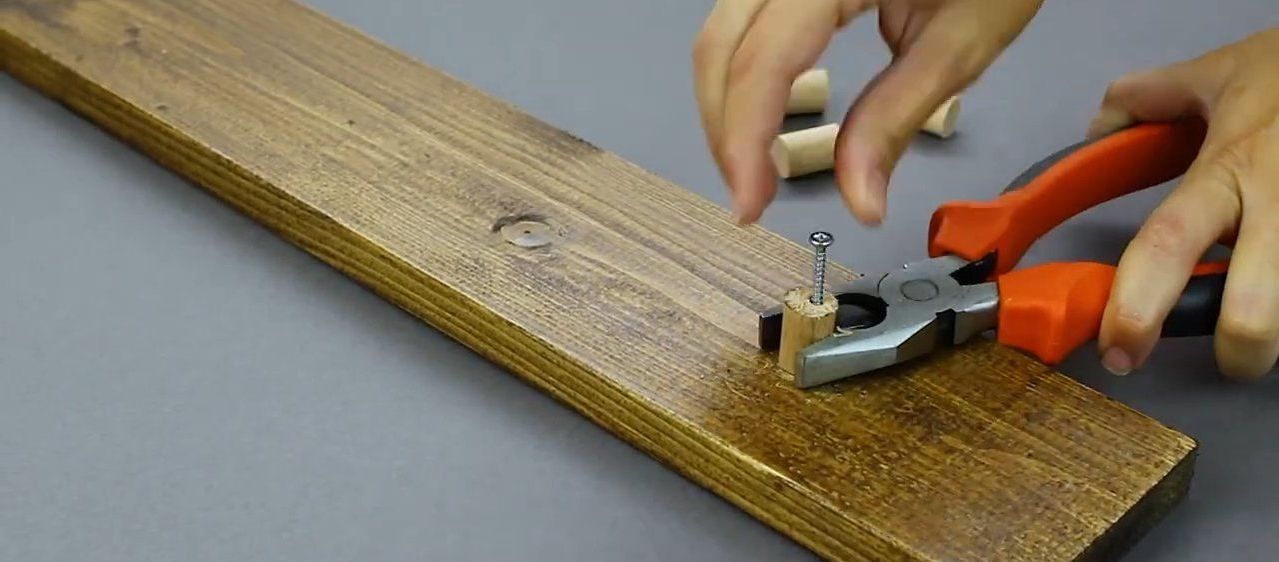
Each dowel section is secured to the board with a screw. Pliers hold the round piece in place while the screw is driven into the wood.
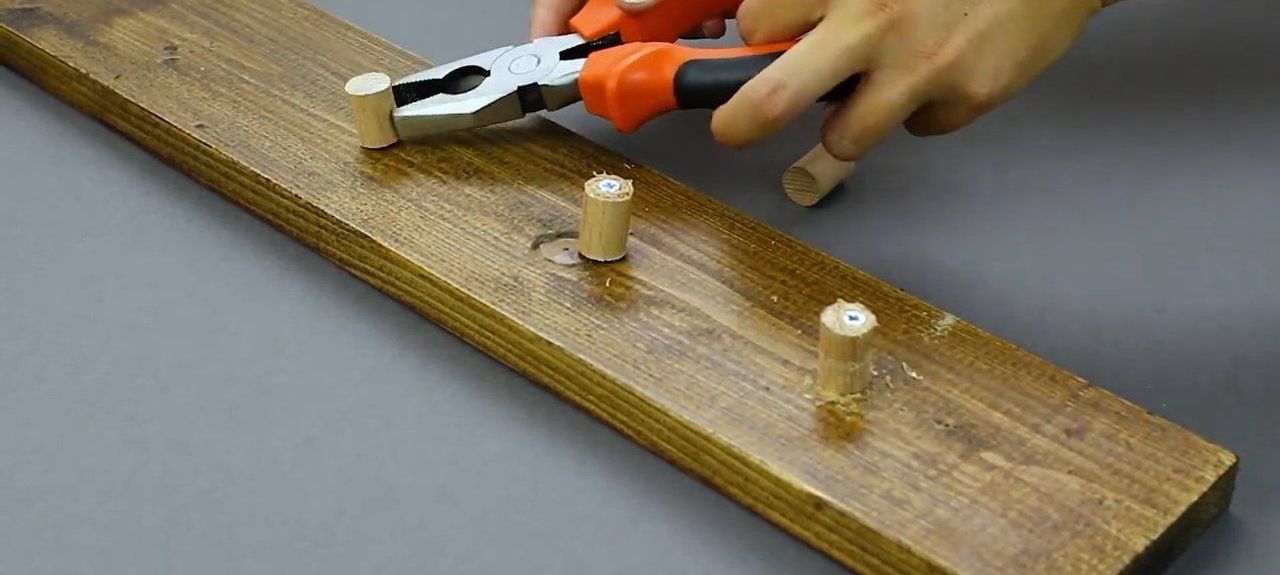
The supports project from the face of the board, creating mounting points for the copper elbows. The screws will be concealed once the plumbing fittings cover the dowels.
Copper Plumbing Fittings Become the Hooks
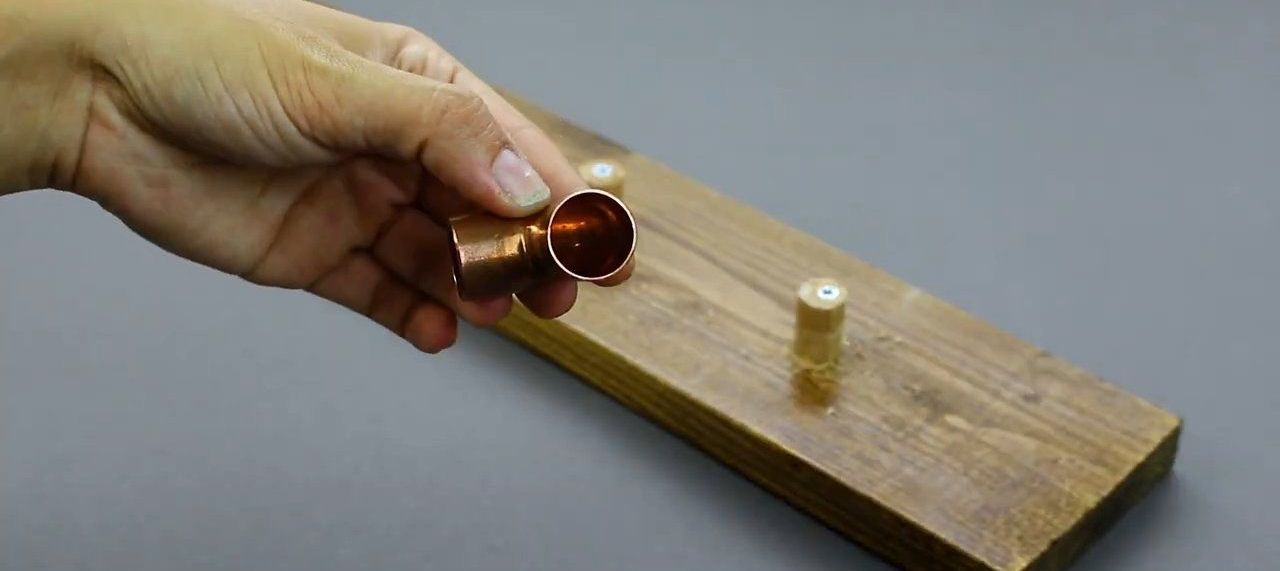
The copper elbows are standard curved pipe fittings, with open ends designed to receive pipe. Here, one end fits over the wooden support while the other points upward to hold hanging items.
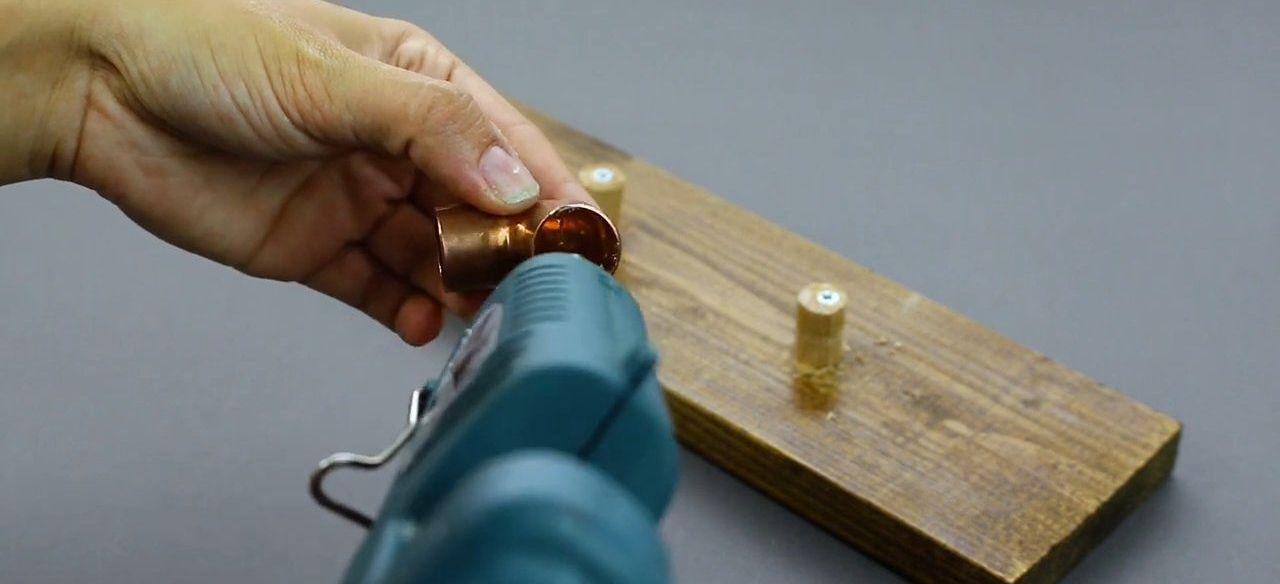
Hot glue is applied inside each elbow before it is fitted over the wood. The copper pieces cover the dowels, leaving the curved sections visible above the board.
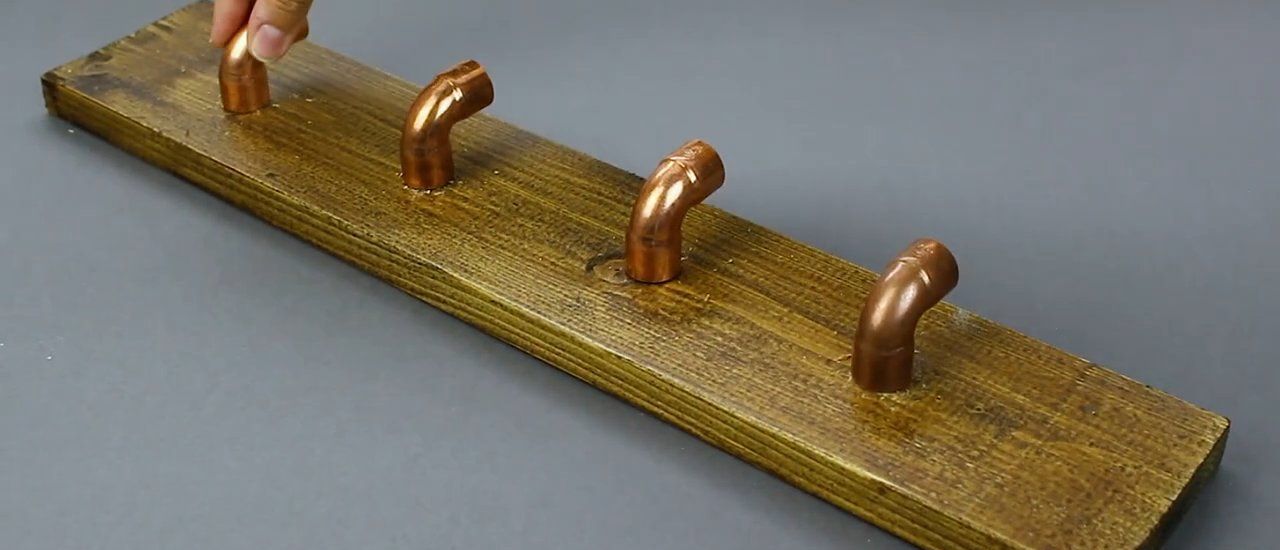
With all four fittings in place, the plank has become a row of copper hooks. Each elbow has the same upward-facing curve, while the wood provides the backing for the arrangement.
The Finished Rack Holds Kitchen Utensils
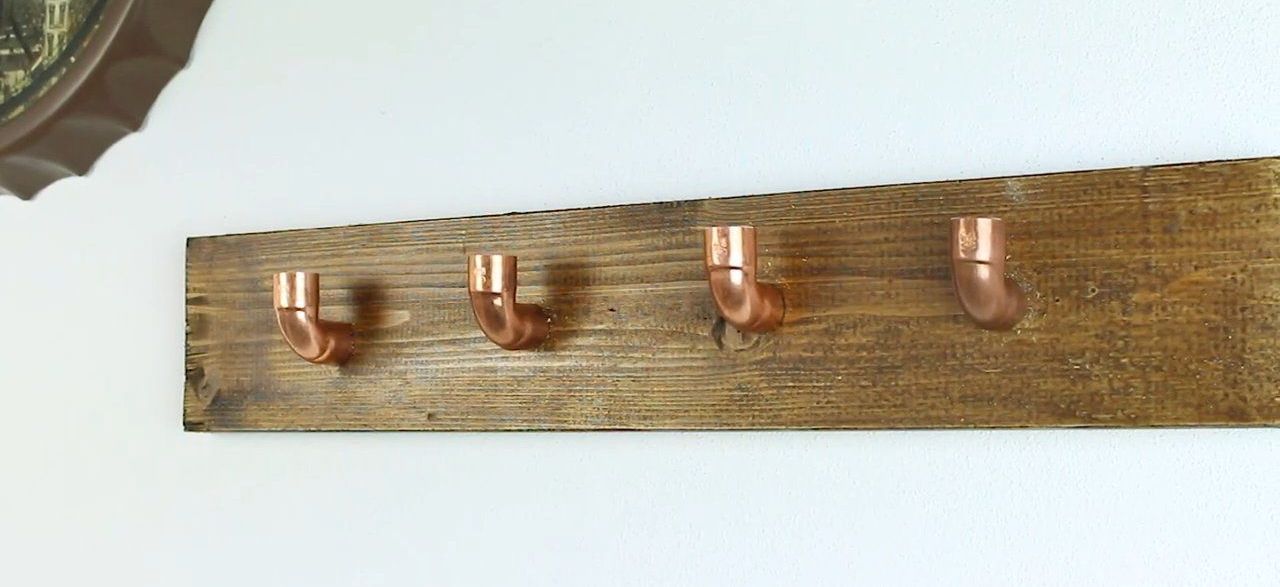
Mounted horizontally on a white wall, the board shows how the copper elbows function as hooks rather than plumbing connectors. Their openings remain visible, and the curved sections project far enough from the wood to receive hanging loops.
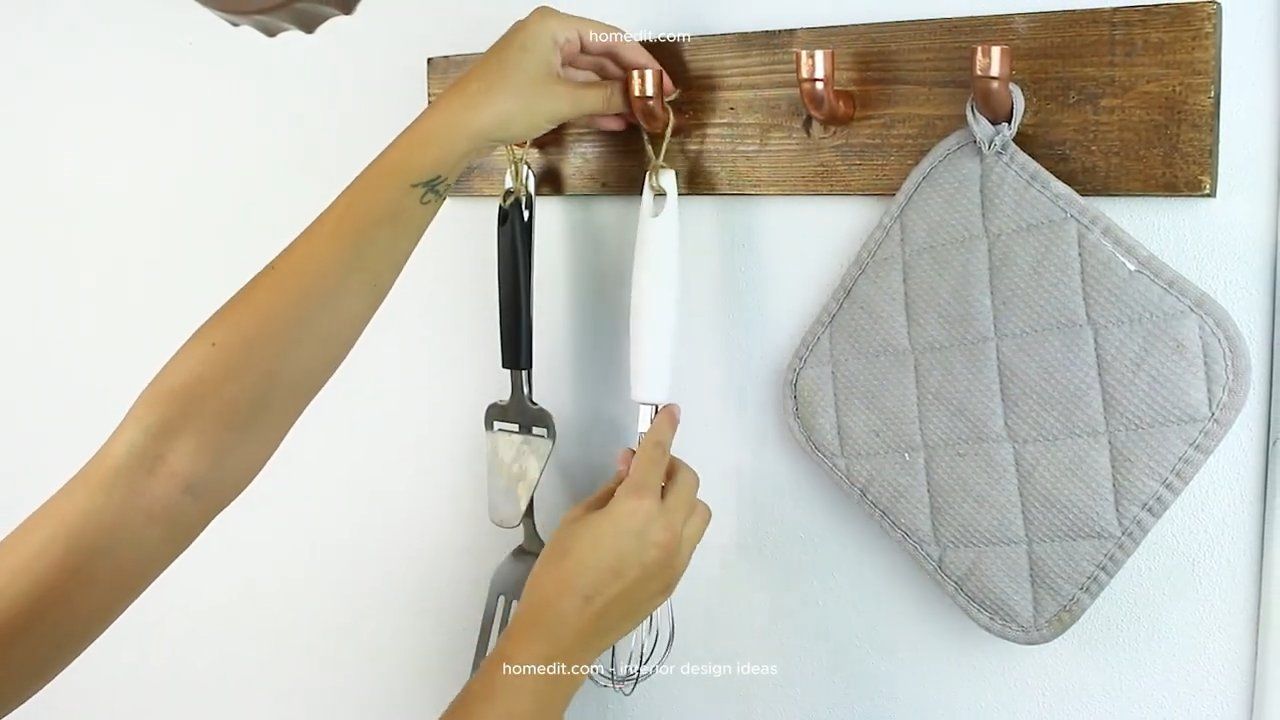
The finished rack holds utensils without additional hook hardware. The contrast between the stained wood and copper fittings gives the plumbing parts a different use.
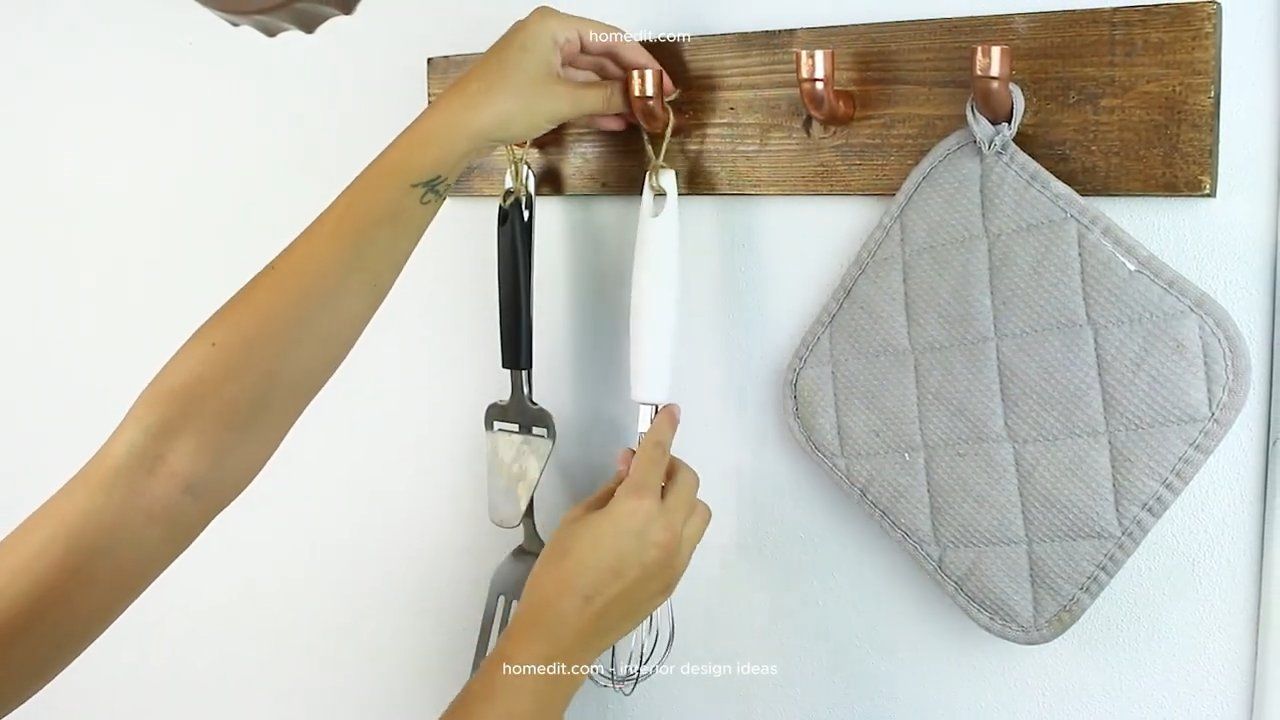
A spatula, whisk, and gray potholder hang from the copper hooks, showing the finished project in use. The same idea could serve as a hanging spot for other lightweight items with loops, provided the fittings and wall mounting are suitable for their weight.
The result is a wall organizer made from four plumbing elbows and a piece of wood, with the copper fittings taking the place of conventional hooks.
Would you use copper pipe elbows to hang kitchen utensils, or would you keep them for plumbing?
Original DIY project and images: Homedit.