They Turned a Backyard Full of Dirt Into a Patio With Concrete Pavers That Look Like They’re Floating


Starting a backyard renovation in late May leaves little time to get everything ready for summer. For one couple, the problem wasn’t an outdated patio or a patchy lawn. Their entire backyard was bare dirt, covered in tire tracks and surrounded by fencing.
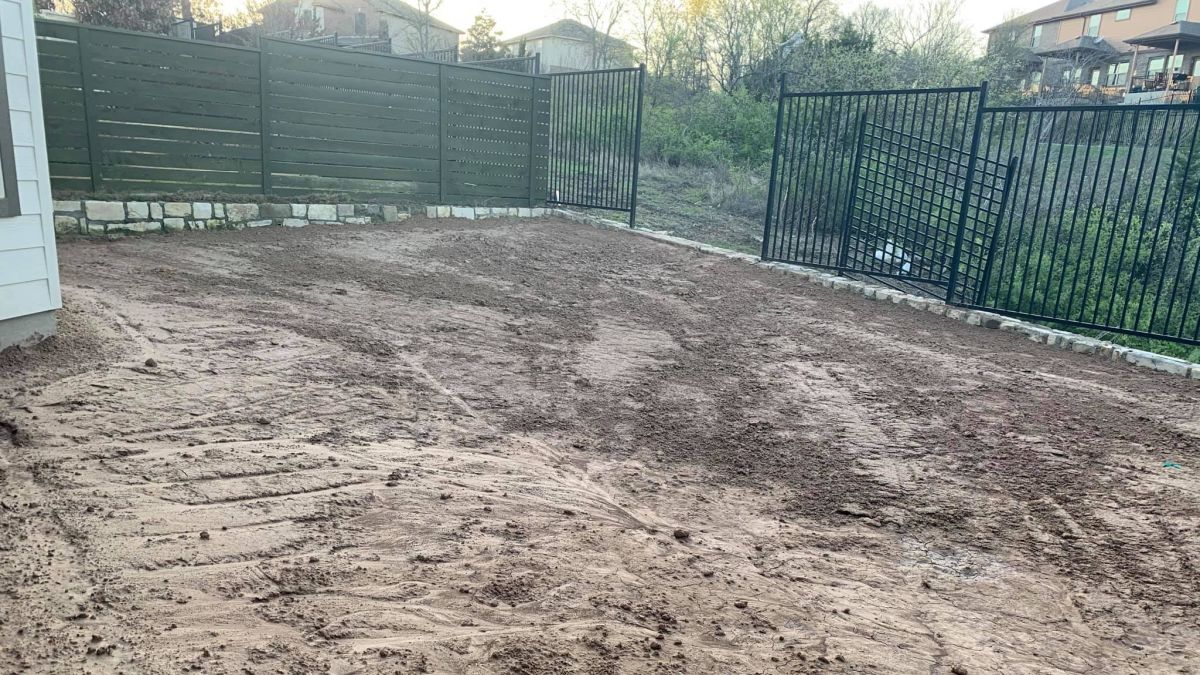
They wanted grass, a place for outdoor furniture, and a patio that wouldn’t require pouring a concrete slab. Rather than hiring a contractor, they decided to do the landscaping themselves, using square concrete pavers, dark stone, and fresh sod.
Shared by u/PhilosophyNo7619 on Reddit’s r/landscaping community, the project began with doubts about finishing before summer. Seventeen progress photos show how the yard went from an unfinished construction site to a lawn with a geometric patio framed by river rocks.
Before the patio, there was nothing but dirt
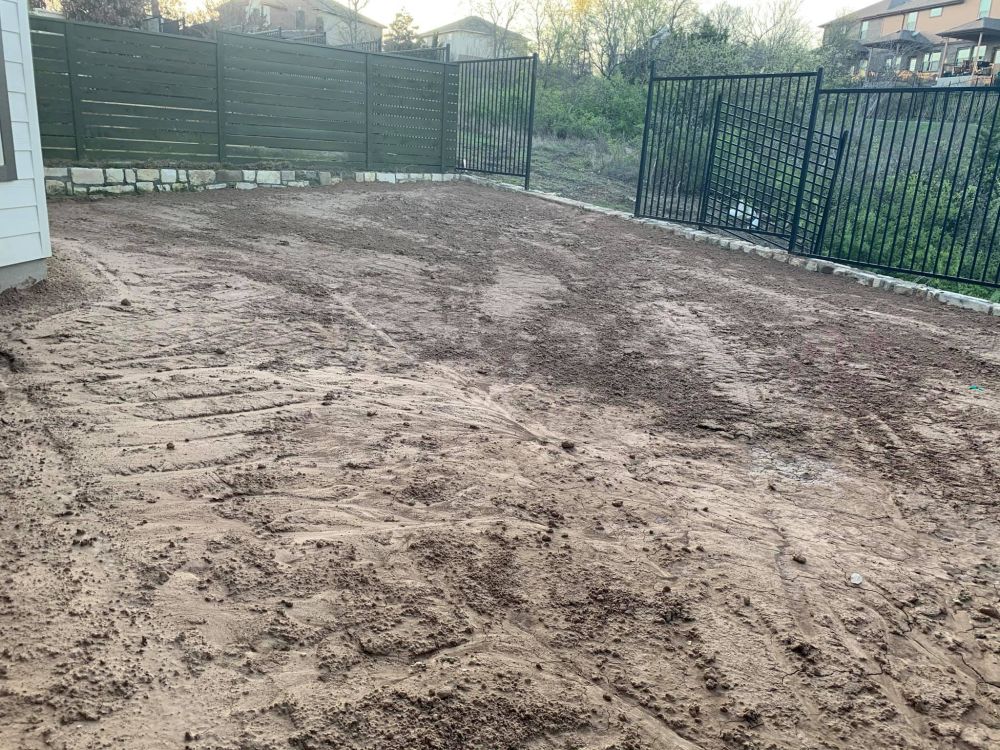
Tire tracks ran across the soil, and no grass had been planted around the house. Although the yard already had a black metal fence and stone edging, almost every part of the ground needed work before landscaping could begin.
Preparing the site meant moving soil, clearing debris, and deciding how much of the yard to reserve for grass. Instead of paving the entire space, the couple planned a patio on one side, leaving room for a lawn and a young tree.
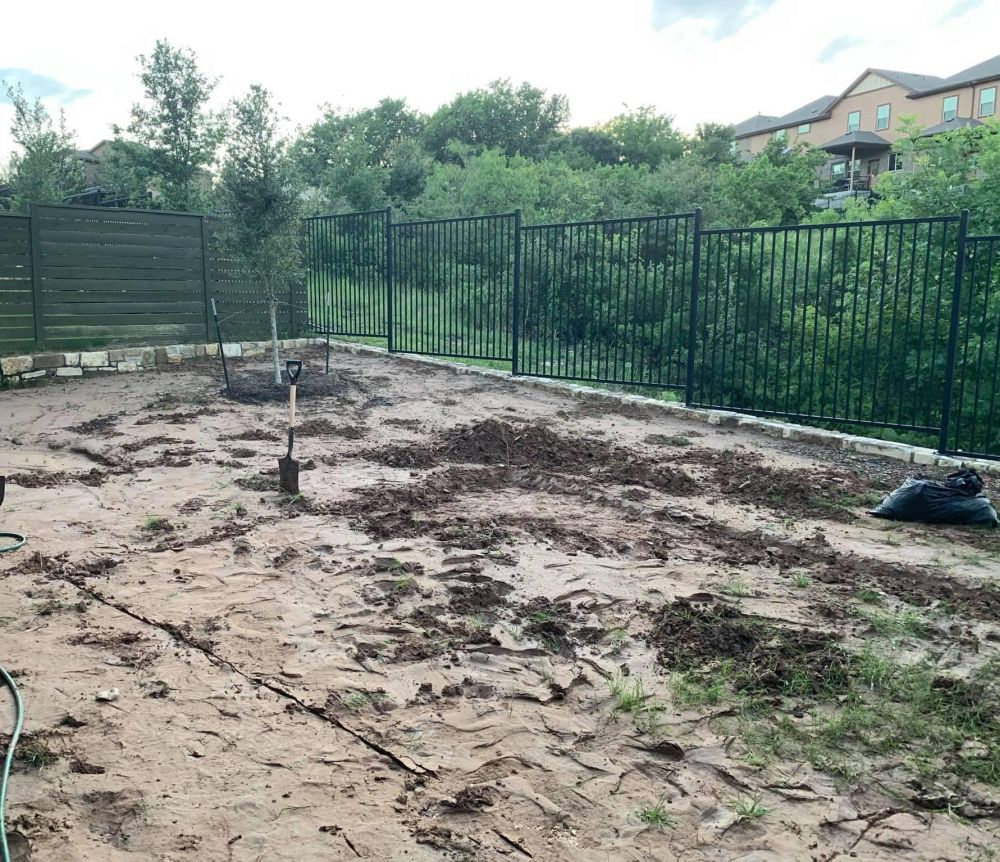
Once the tree was planted, work moved toward the patio area. The soil was still uneven, and the homeowners had to prepare a stable base before laying any concrete blocks.
They built the patio base without renting heavy equipment
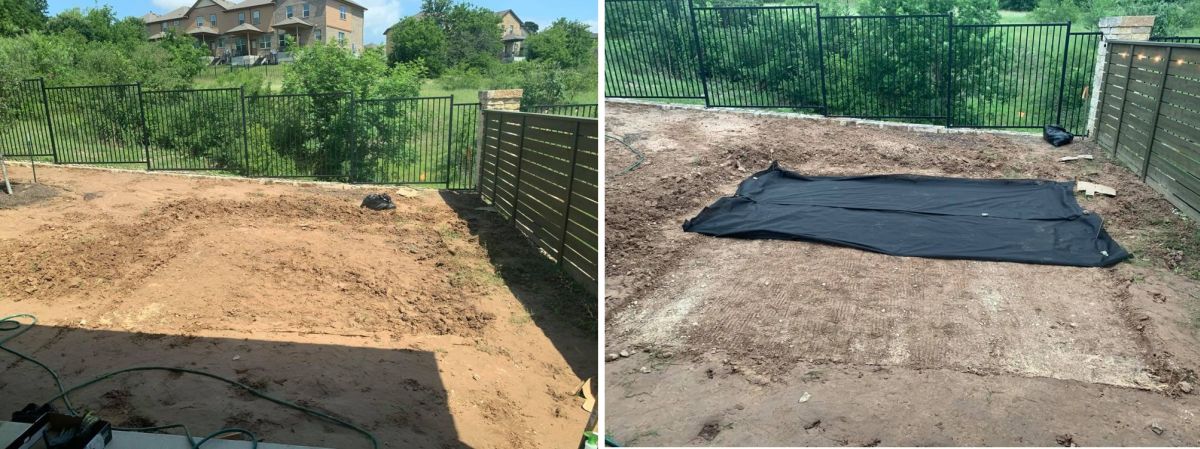
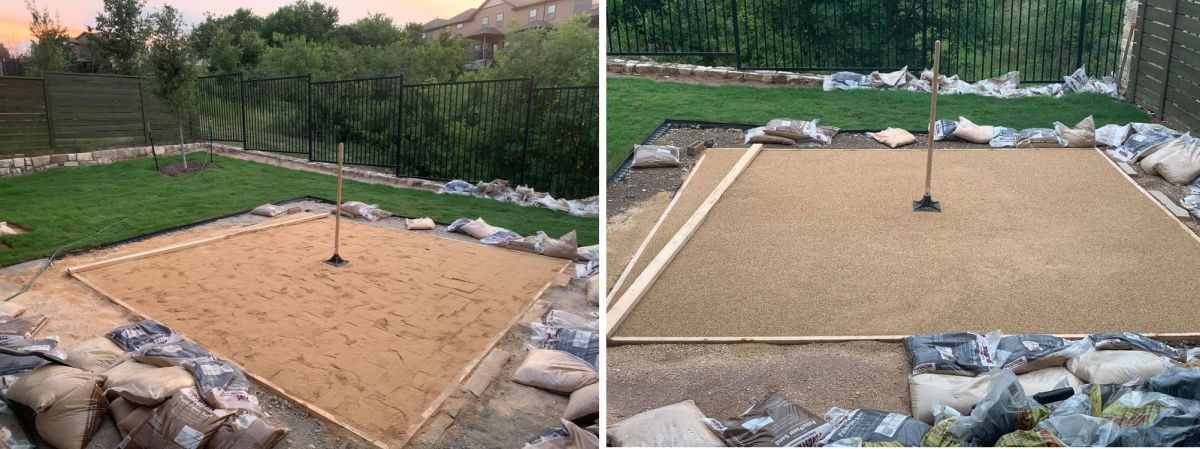
After clearing and grading the ground, they began laying landscape fabric and preparing the area for crushed granite. Wood boards marked the patio’s boundaries, giving them a guide for the square layout.
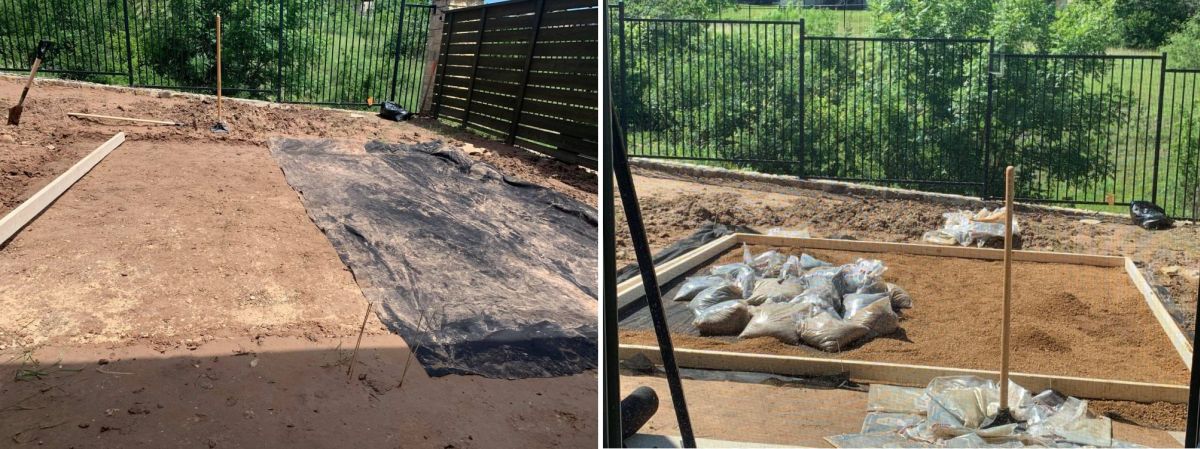
Getting the base ready took more effort than expected. Without a truck to transport a rental plate compactor, the homeowner used a hand tamper on both the crushed granite and sand.
Rain interrupted the work, leaving the soil muddy and making it harder to keep the surface even. The homeowner returned to the patio over several days, adding more sand and tamping it down before moving on to the pavers.
Meanwhile, the other half of the yard was beginning to look like a lawn.
Fresh Bermuda sod covered the exposed soil
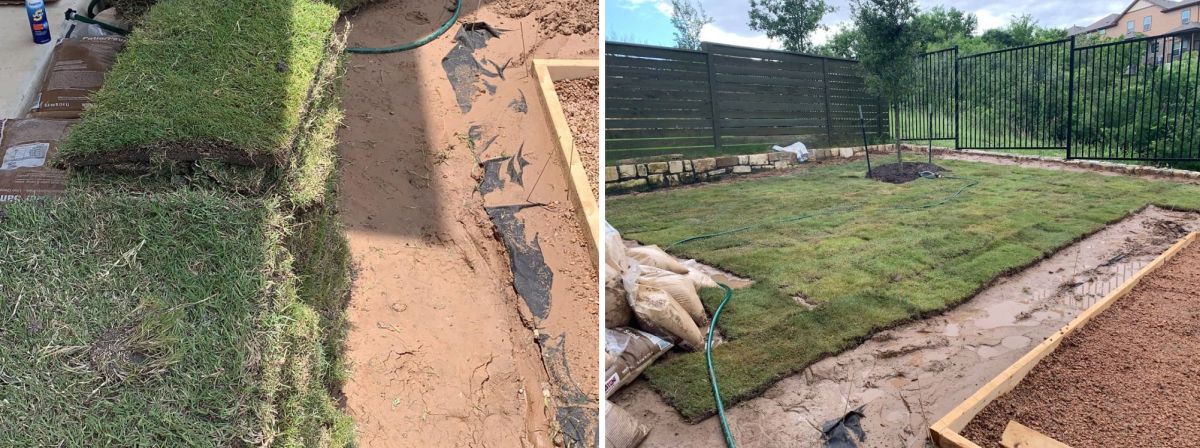
Rows of Bermuda grass sod replaced the bare dirt along the back fence and around the newly planted tree. Installing it while the ground was muddy created another problem: footprints and soft spots made the finished lawn uneven.
The homeowner later admitted they had skipped adding more topsoil after moving so much material. A lawn roller wasn’t available either, so they pressed the sod down by hand and accepted a few bumps.
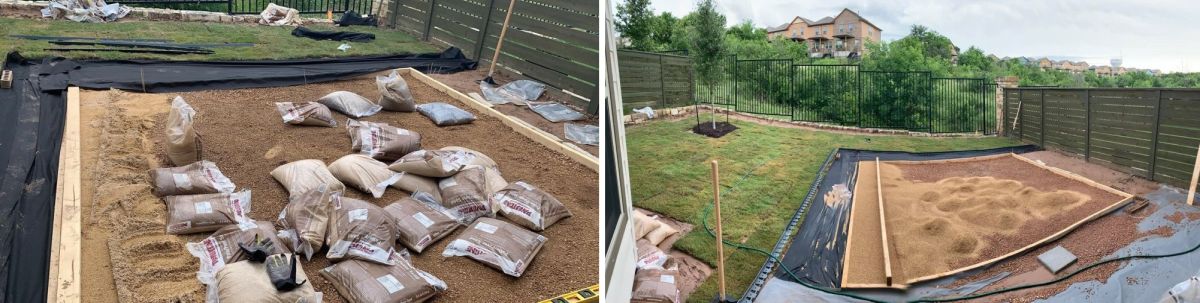
With the grass in place, they could concentrate on the patio. Bags of sand covered the prepared area, and the rectangular frame was ready for the first concrete blocks.
They used pieces of wood to space every concrete paver
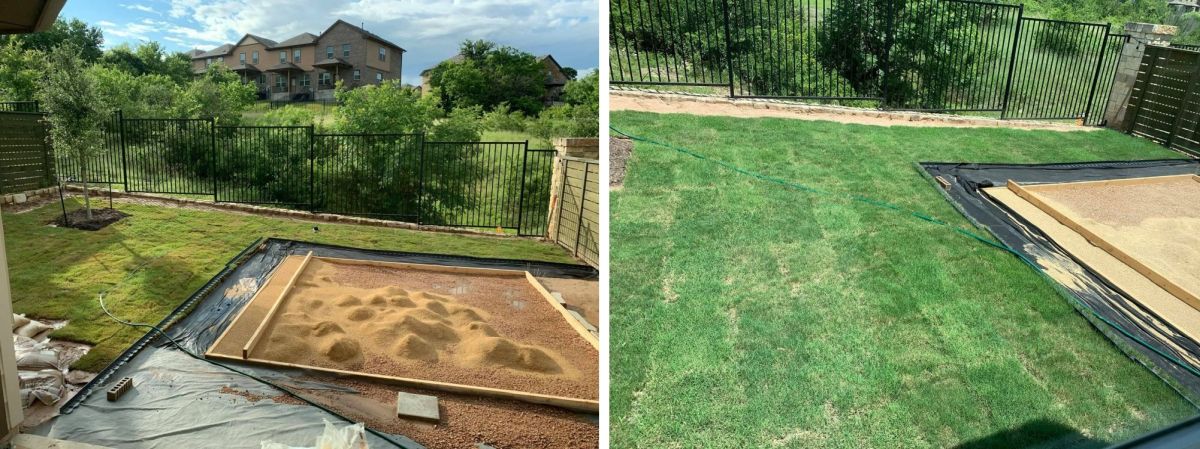
Installing the square pavers required more precision than the earlier digging and grading. A small difference in spacing could throw off the rows across the entire patio.
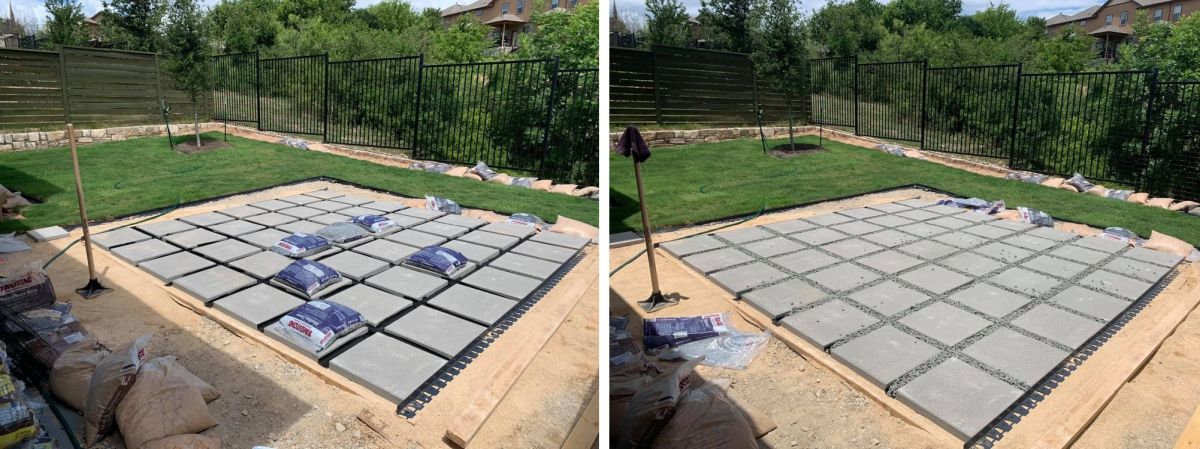
To avoid that, the couple bought inexpensive 2.5-inch-wide balsa wood and used it as a spacer between the blocks. Two neon strings stretched across the horizontal and vertical axes helped keep the outside rows straight.
Working from those guides, they placed each paver individually until the grid covered the prepared base.
Instead of filling the gaps with ordinary sand, they chose a dark aggregate called shadow stone. Against the light gray concrete, the stone made each square stand out and gave the patio a checkerboard-like pattern without alternating paver colors.
The wide joints also prompted questions from other Reddit users about future maintenance. Loose stone can collect leaves and soil, creating places for weeds to grow, and several commenters suggested polymeric sand as a possible solution. The homeowner considered adding it but did not confirm whether that happened.
A border of river rocks finished the square patio
Even after the pavers were installed, the surrounding ground still needed attention. Exposed fabric, bags of material, and unfinished edges separated the new patio from the lawn.
Rather than extending the concrete blocks to the grass, the couple added a wide border of smooth, dark river rocks. The rounded stones contrast with the straight paver edges, while their color ties into the smaller aggregate between the blocks.
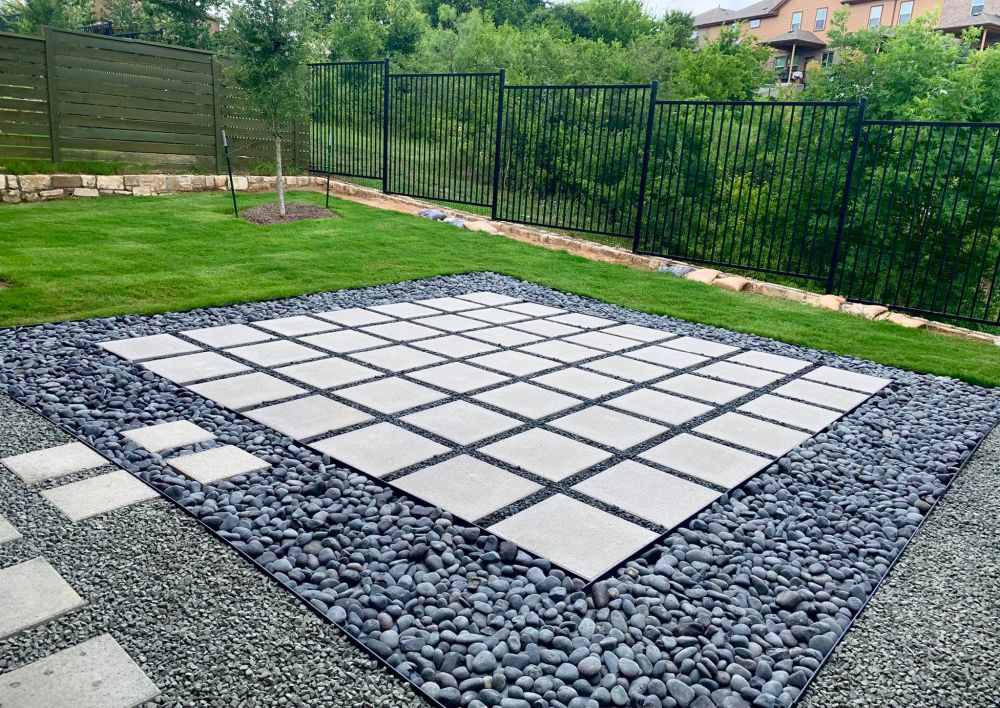
From the finished angle, the patio reads as one large square surrounded by stone. Grass borders the back and side, and a small stepping-stone walkway connects the new paved area with the rest of the yard.
The homeowners left the patio open, with no furniture covering the grid. That makes the pattern one of the most noticeable features in the backyard.
What began as bare dirt became a finished backyard
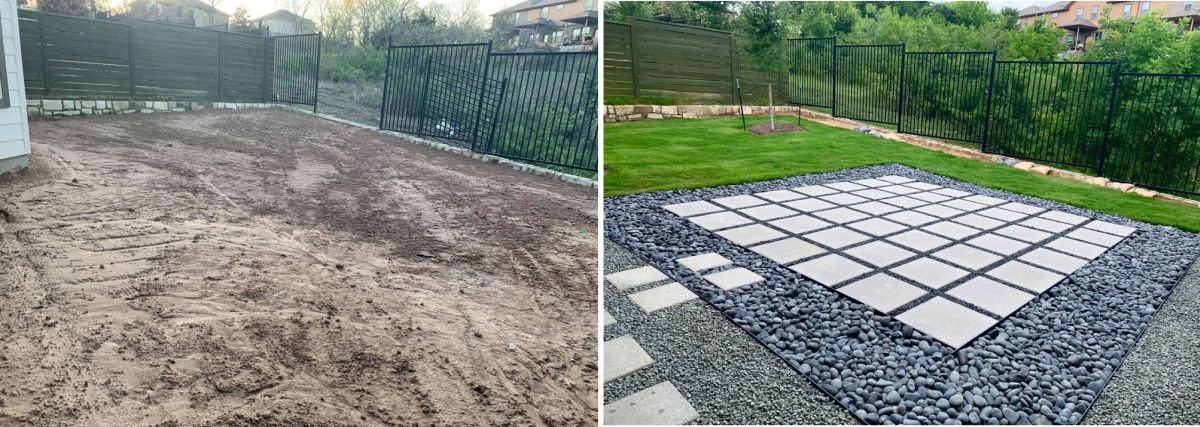
The homeowner admitted that hand-tamping the base was exhausting and said they would consider renting equipment or hiring a contractor for their next project.
For another backyard transformation built around stone, see how a homeowner brought a 3,500-pound boulder into a small backyard and turned it into a Japanese-inspired garden.
Would you choose concrete pavers with dark stone joints for your backyard?
Image credits: u/PhilosophyNo7619 via Reddit.