She Told Him to Get Rid of His Pile of Scrap Wood, So He Turned It Into This Bench


Small wood offcuts can accumulate faster than they find another job. Short boards, square blocks, weathered pieces, and leftover cuts may be too useful to throw away but too small for the next full project.
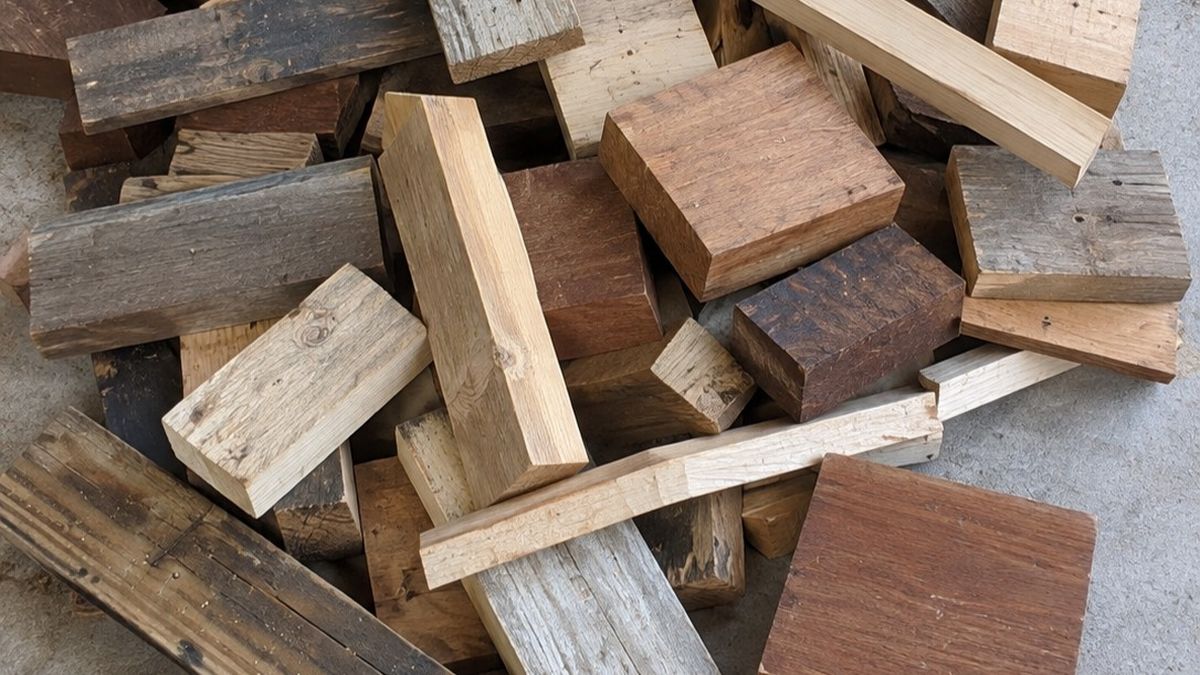
Christie Chase had reached that point with Tyler’s collection and told him he needed to purge some of the scrap wood. Instead of sending the pile out, he used it to build the body of a bench around an old bedside-table base he had taken apart before.
The finished piece makes no attempt to hide where the material came from. Different woods, dimensions, stains, grain patterns, and rough edges remain visible beneath a navy upholstered seat, turning the scrap pile itself into the design.
An old bedside-table base gave the scraps a starting point
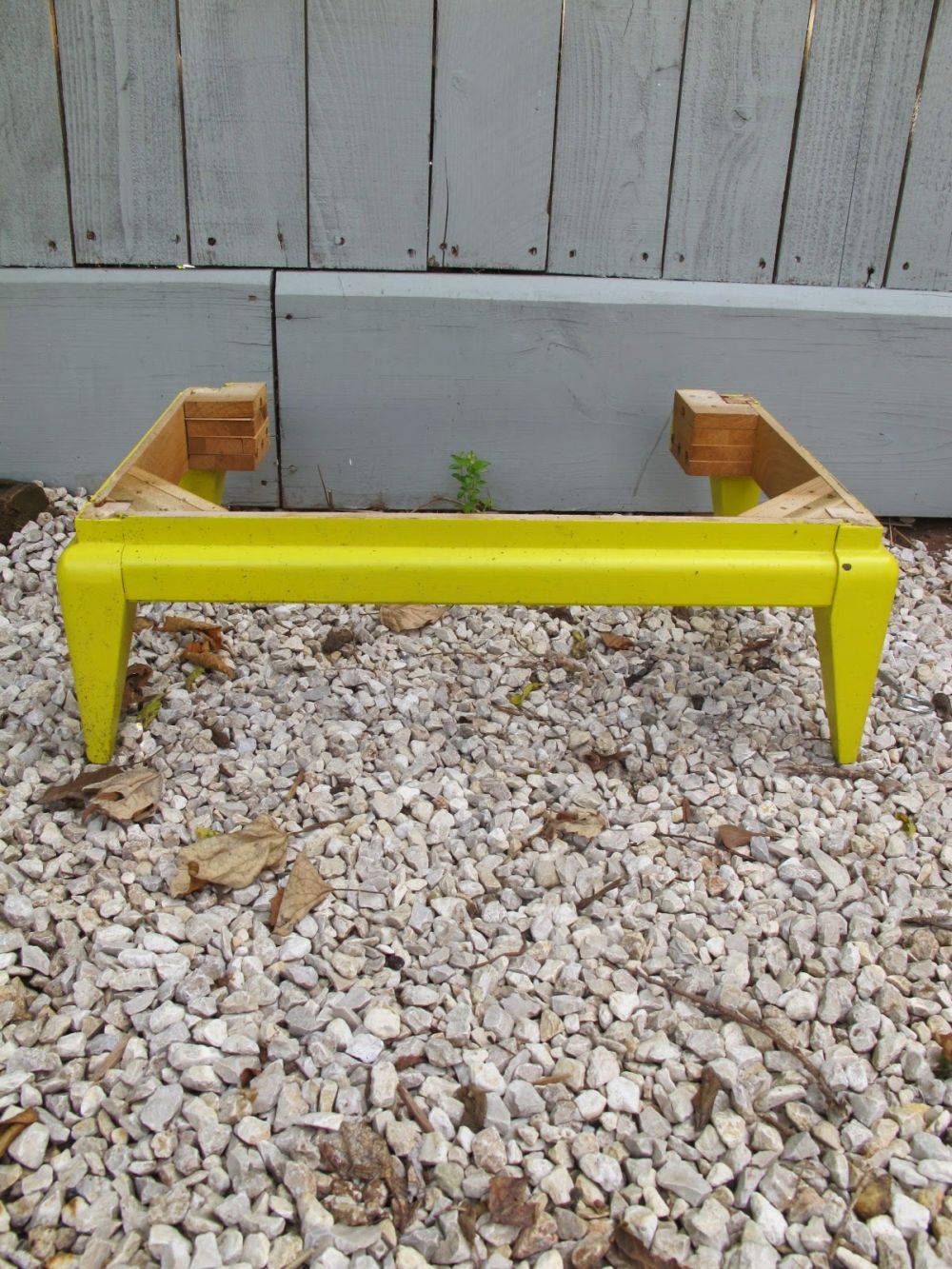
Bright yellow metal legs and a narrow front rail were left from a bedside table that had already been dismantled. Wood added behind the metal frame created supports for the material that would fill the open center.
Nothing about the base suggests a conventional upholstered bench yet. Most of its volume would come from the short wood pieces stacked above it.
Scrap pieces did not need to match
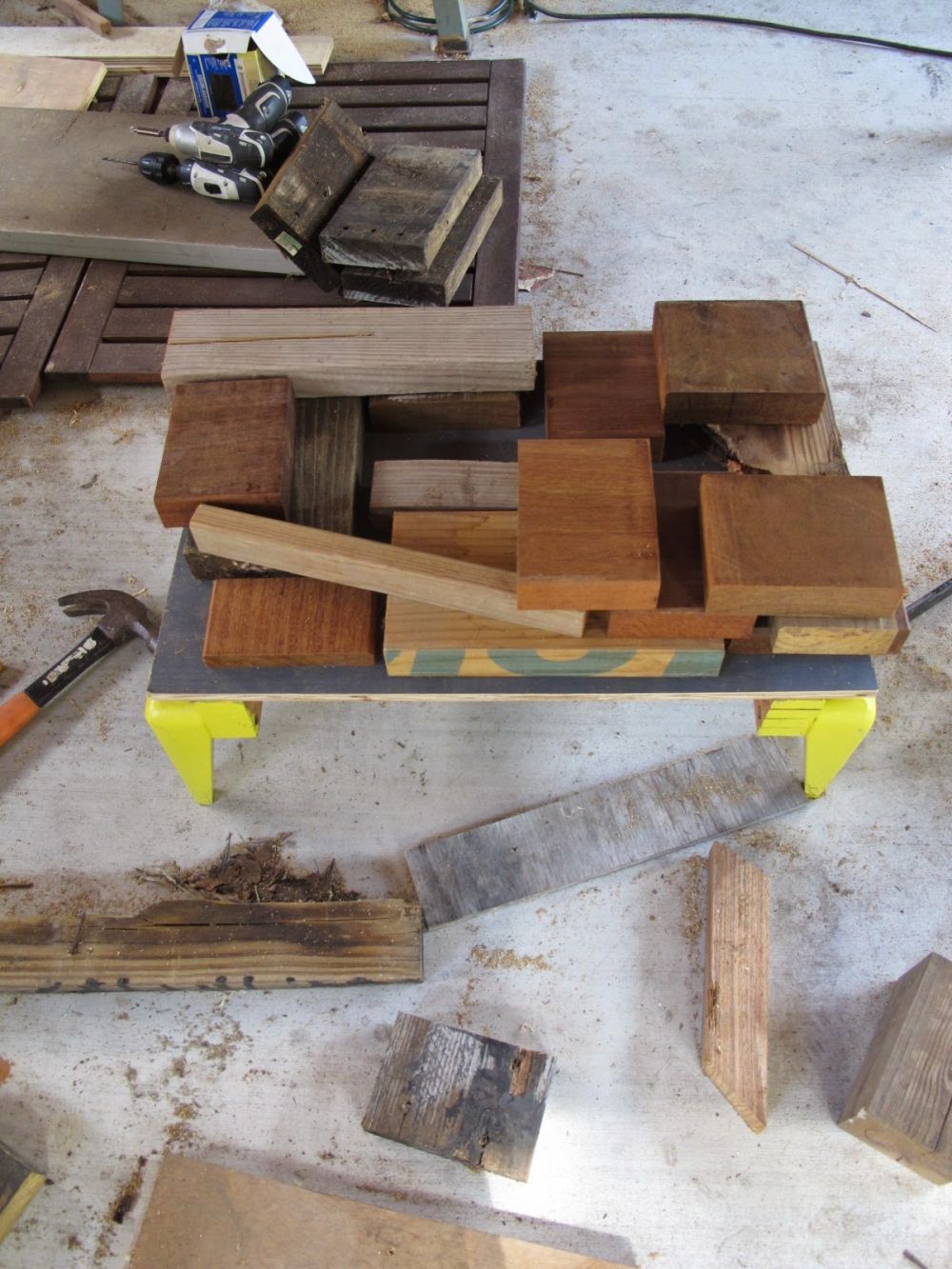
The available wood ranged from thick square blocks to narrow boards and weathered construction lumber. Some pieces carried dark stain, while others exposed pale grain, old marks, rough ends, or remnants of previous finishes.
That variation removed the need to mill every piece into matching dimensions. The scraps could keep much of the size and surface character they already had.
The pile became the bench body
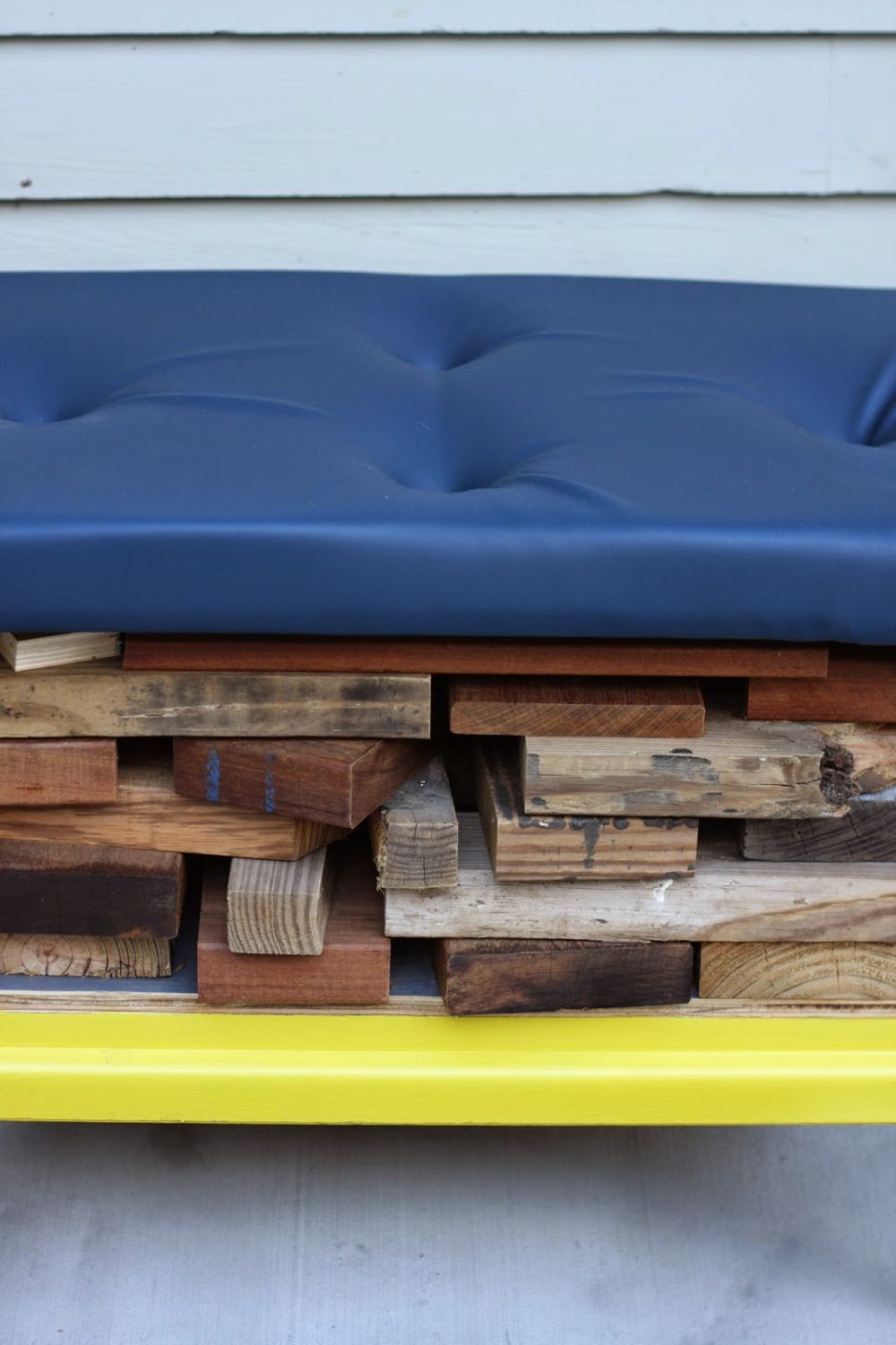
Instead of arranging the wood into a conventional frame and covering it, the scraps were stacked across the base and secured in place.
Pieces run in different directions and sit at different depths. Long boards bridge several blocks, while shorter cuts fill spaces between them. Open gaps remain visible rather than being concealed behind a panel.
A plywood seat above the stack provides the flat surface needed for the cushion, separating the irregular wood construction from the upholstered top.
Navy vinyl hides the plywood seat
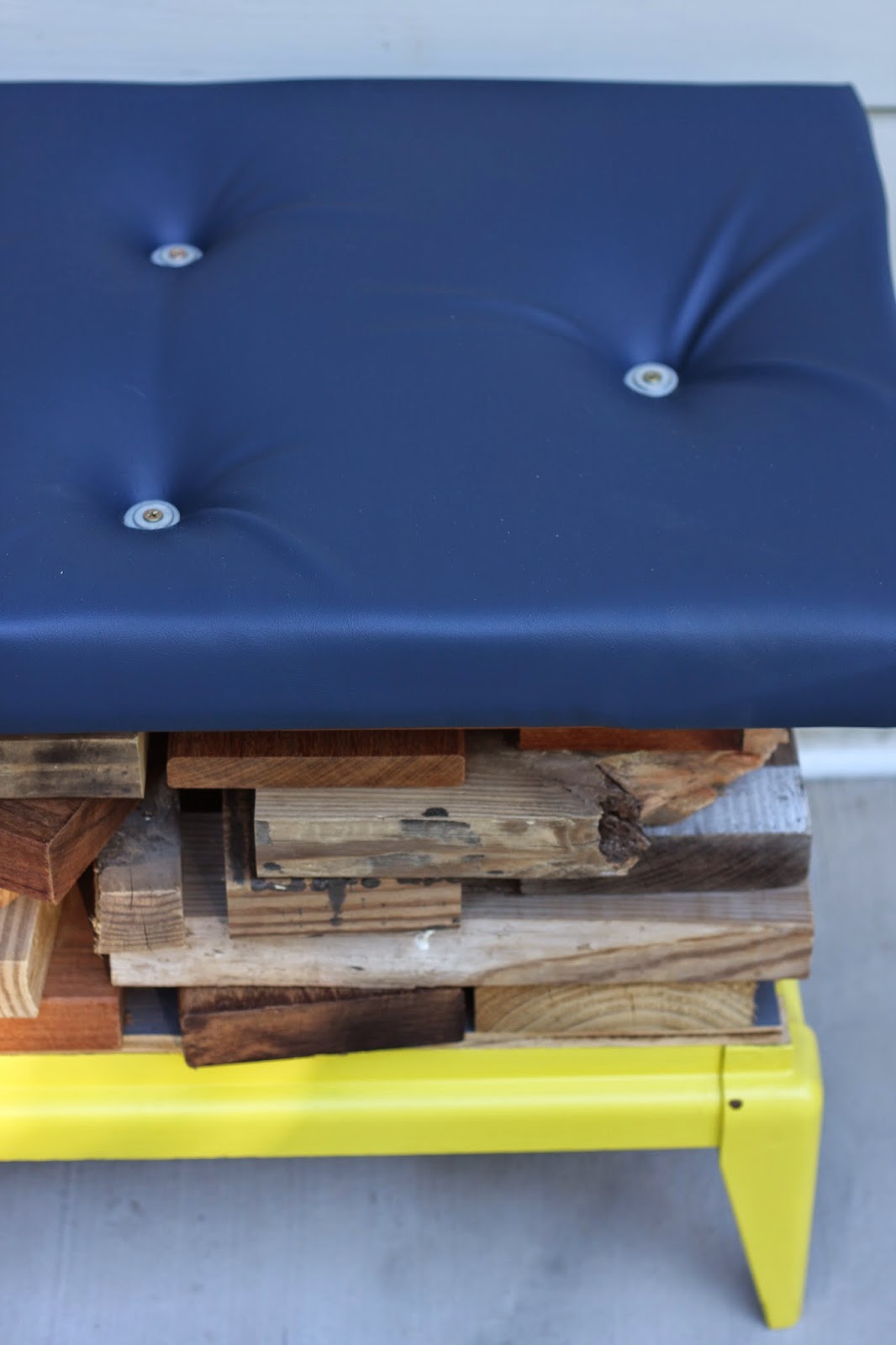
Foam and plywood form the padded top, with leftover navy vinyl pulled across the surface. The smooth upholstery creates a sharp break from the rough collection of wood underneath.
Tufting pulls the vinyl down at several points instead of leaving one flat padded surface. Washers and screws secure those depressions and attach the upholstered top to the bench.
Scrap wood becomes the finished bench
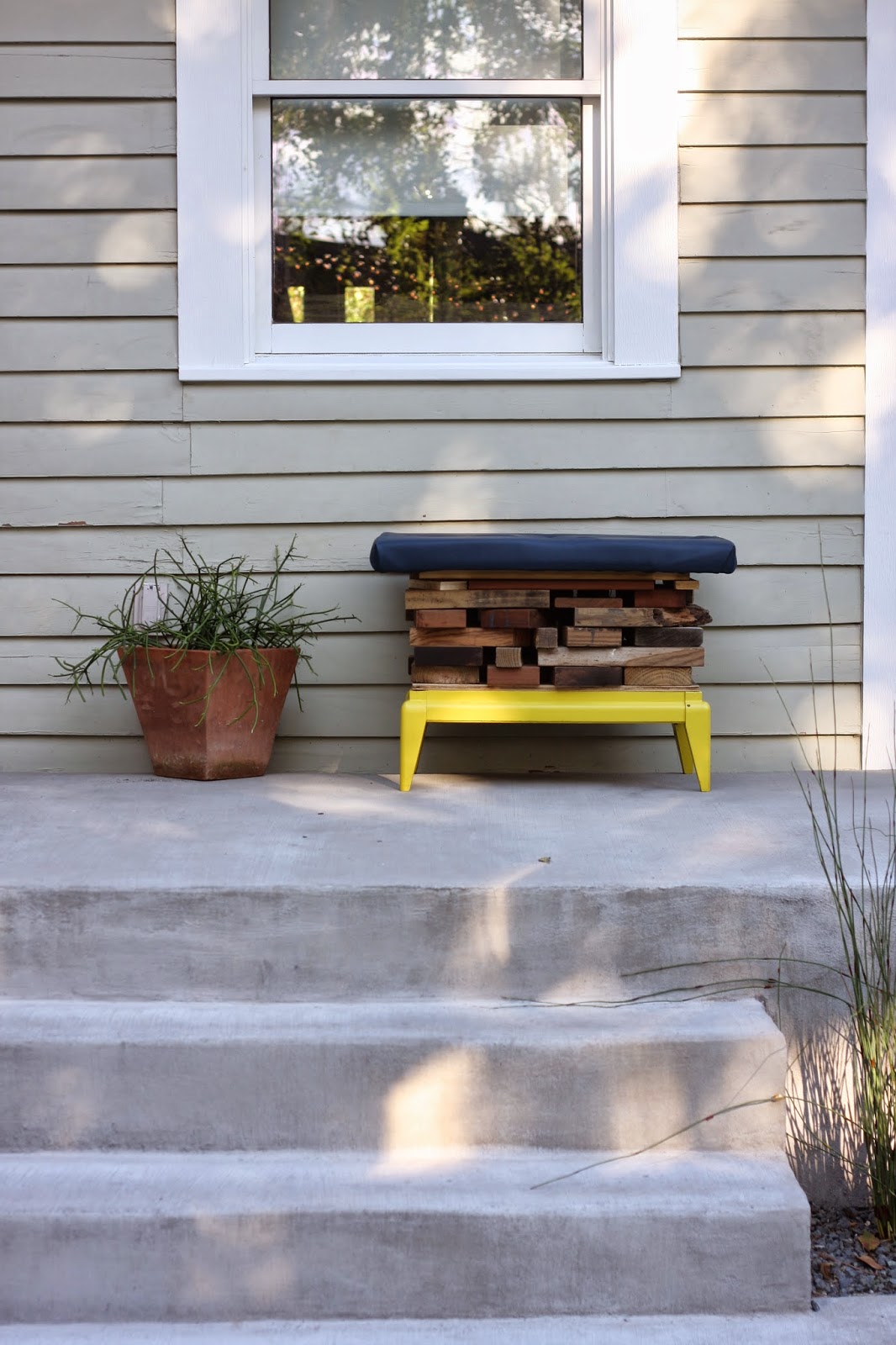
Set beside the house, the bench shows all three parts of the build at once. Bright yellow legs from the old bedside-table base remain exposed, stacked wood scraps fill the center, and the navy upholstered seat caps the uneven pile.
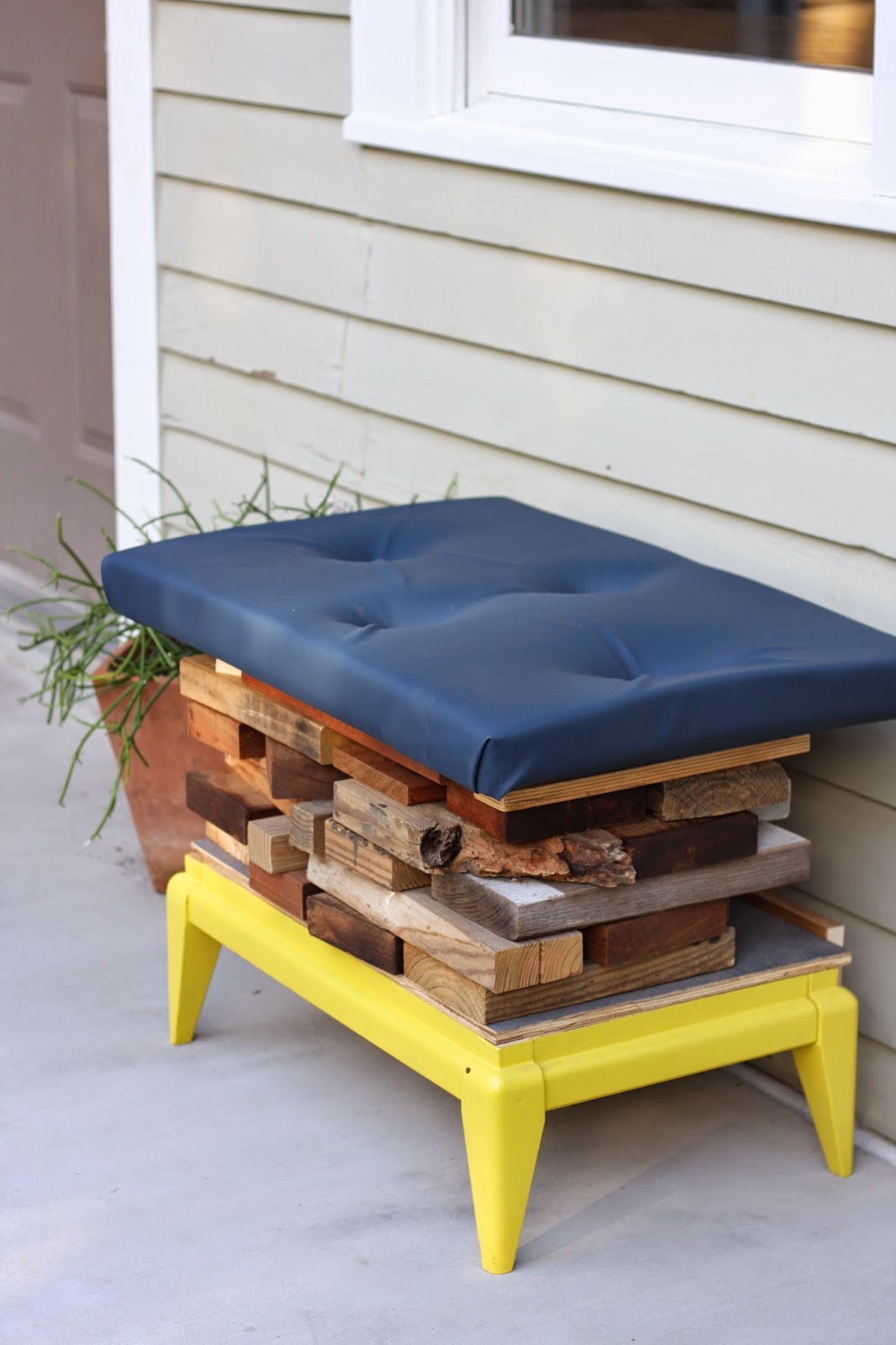
The scraps were not covered with a front panel or trimmed into matching blocks. Different lengths, thicknesses, colors, and gaps remain visible, making the material that was supposed to be cleared out the most noticeable part of the finished bench.
Scrap wood became the part worth seeing
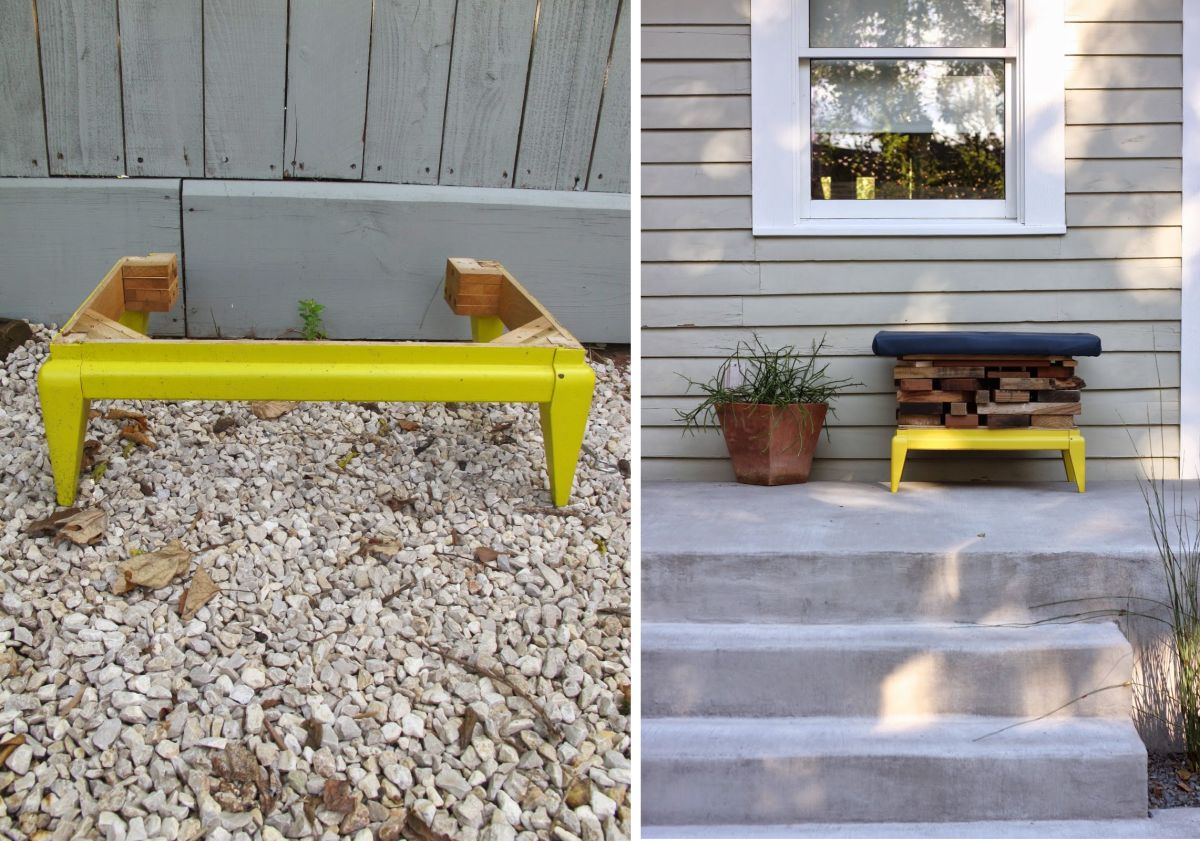
The finished bench sits against the house with the yellow bedside-table base still visible at the bottom. Between that frame and the navy cushion, the former scrap pile forms a thick band of wood.
Dark blocks sit beside pale boards, rough lumber beside finished pieces, and narrow cuts beside thick sections. Their differences are the point: material that had no reason to match when it entered the scrap pile did not have to match when it became furniture.
The project solved the original problem without pretending the scraps were new lumber. Instead of getting rid of the pile, the pile became the bench.
Image credits go to @christiechase.