Cleaning an Oven With Baking Soda Paste: The Step Most People Miss Before Wiping It Off


Grease splatters, baked-on food, and brown stains can build up on an oven door after months of cooking. Scrubbing the glass with water may remove loose debris, but hardened deposits can remain stuck to the surface.
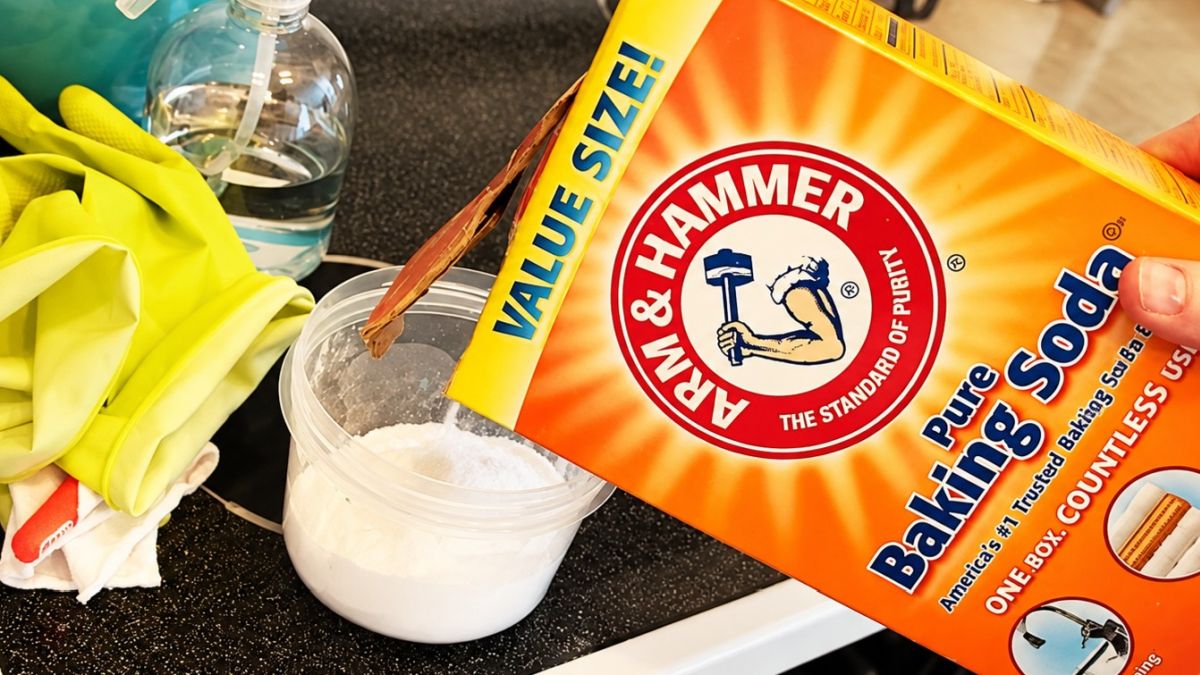
Baking soda paste offers a way to tackle those deposits without a commercial oven cleaner. Mixed with water, the powder forms a thick coating that can sit on greasy surfaces before scrubbing begins.
But removing the grease is only part of the job. Baking soda can leave a white film across the glass, and wiping it with a damp cloth may take several passes. One additional ingredient can help deal with the residue before the final rinse.
Why Baking Soda Paste Works on Oven Grease
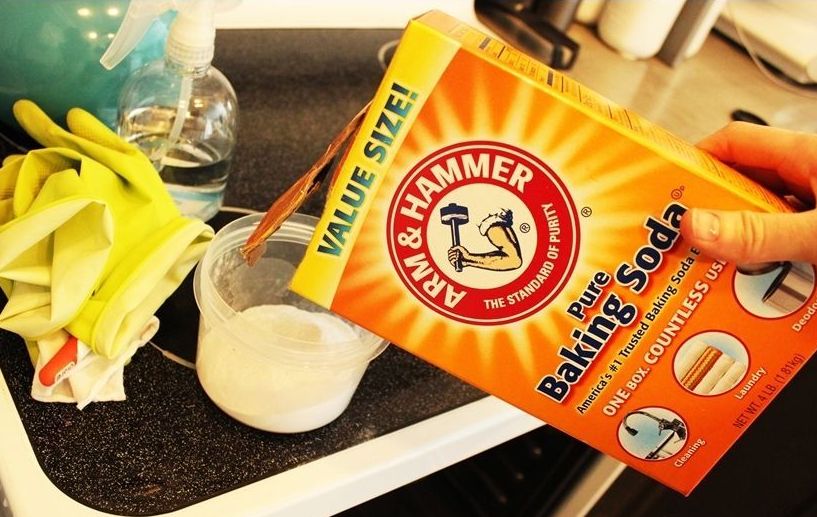
Baking soda, or sodium bicarbonate, is a mild alkaline powder with a fine texture that provides gentle abrasion. Combined with water, it forms a paste that clings to the oven door instead of running off the surface.
Start with about three parts baking soda to one part water, adding water in small amounts until the mixture holds its shape. The paste should spread across the glass without dripping.
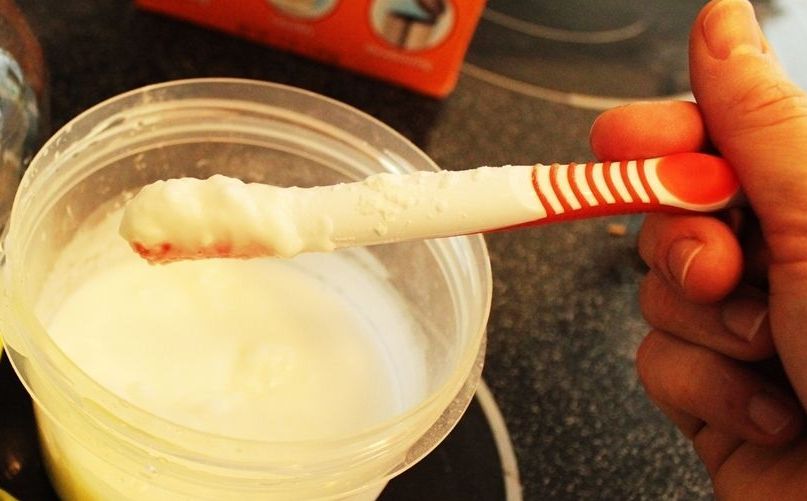
A spoon or spatula can spread the mixture across stained areas. Its thick consistency keeps the baking soda in contact with baked-on food and grease while the coating sits.
The paste does not dissolve heavy grease on contact. It helps loosen deposits so they can be removed with a cloth or non-scratch sponge.
Spread the Paste Across the Oven Door
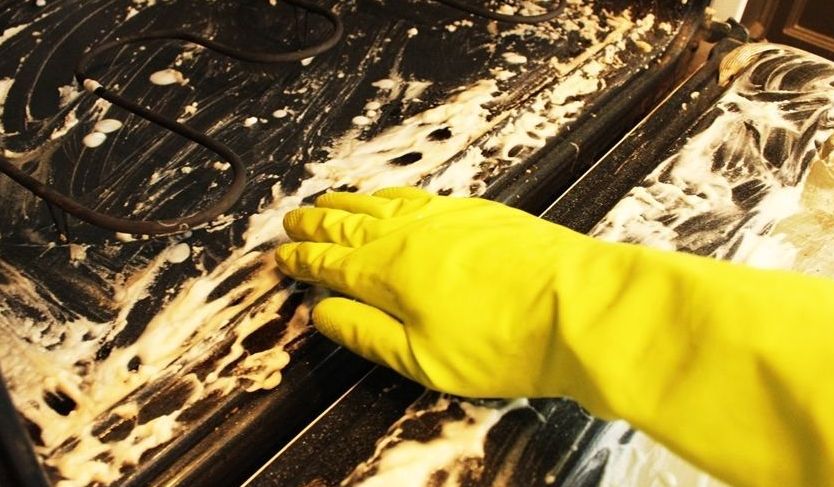
With the oven switched off and cool, apply the mixture to the interior glass and greasy areas of the door. Avoid heating elements, vents, electrical components, and damaged surfaces.
Let the paste sit for several hours, or overnight if the oven manufacturer’s instructions permit. Dried food deposits may soften during this period, reducing the amount of scrubbing needed.
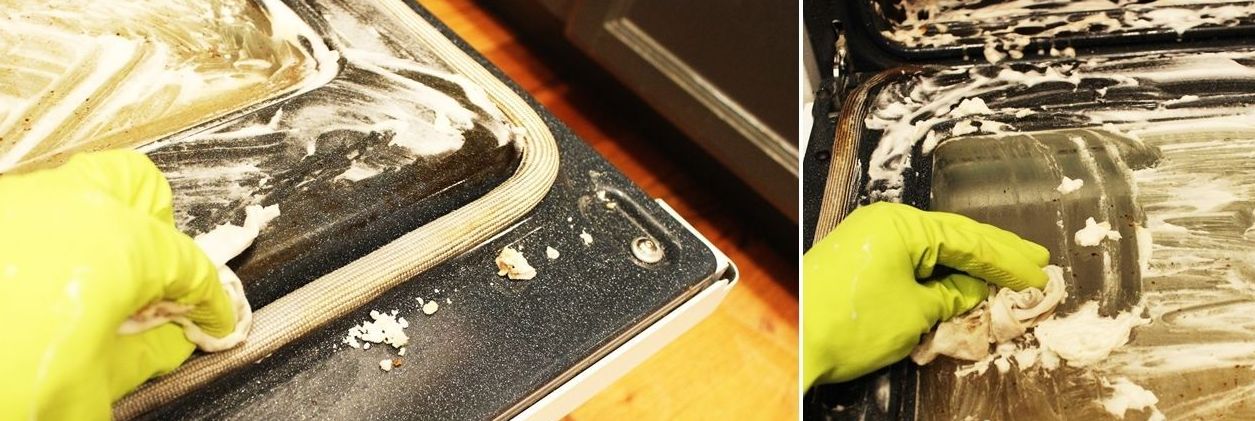
Use a damp, non-abrasive cloth to work over the glass, paying attention to corners and the edges around the window. Keep the paste away from the door gasket, where residue can become trapped.
Remove the loosened grease and most of the baking soda with a damp cloth before moving to the next step.
The Final Step That Helps Remove White Baking Soda Residue
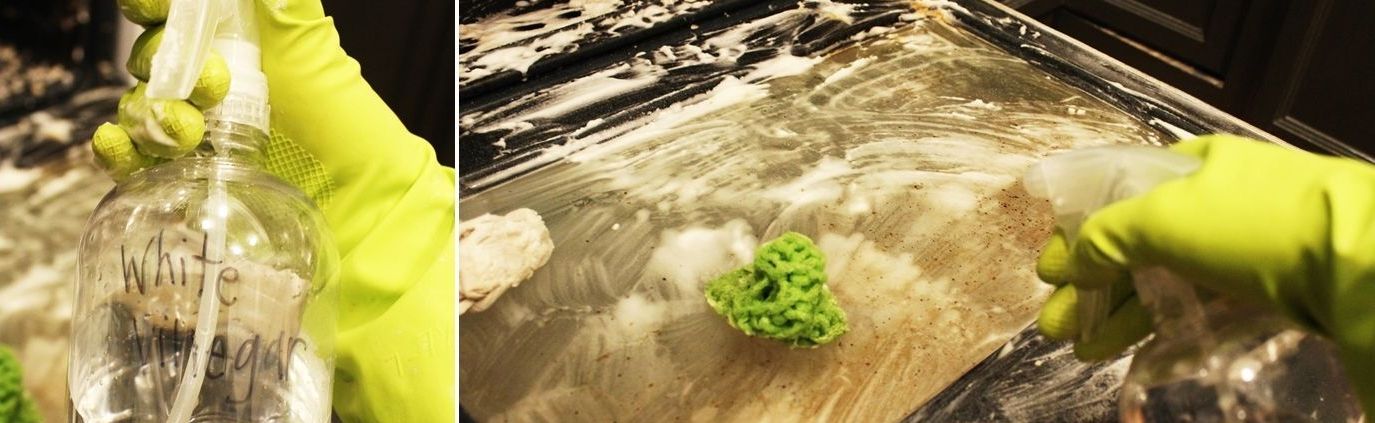
After the paste has lifted the grime, a white film may remain on the glass. That film comes from baking soda left behind during wiping.
White vinegar can help remove this residue. Its acetic acid reacts with sodium bicarbonate, producing carbon dioxide bubbles, water, and sodium acetate.
Use a small amount of diluted white vinegar on a cloth or apply it to accessible glass surfaces if the appliance manufacturer permits. Avoid spraying it into vents, hinges, seals, or openings around the door.
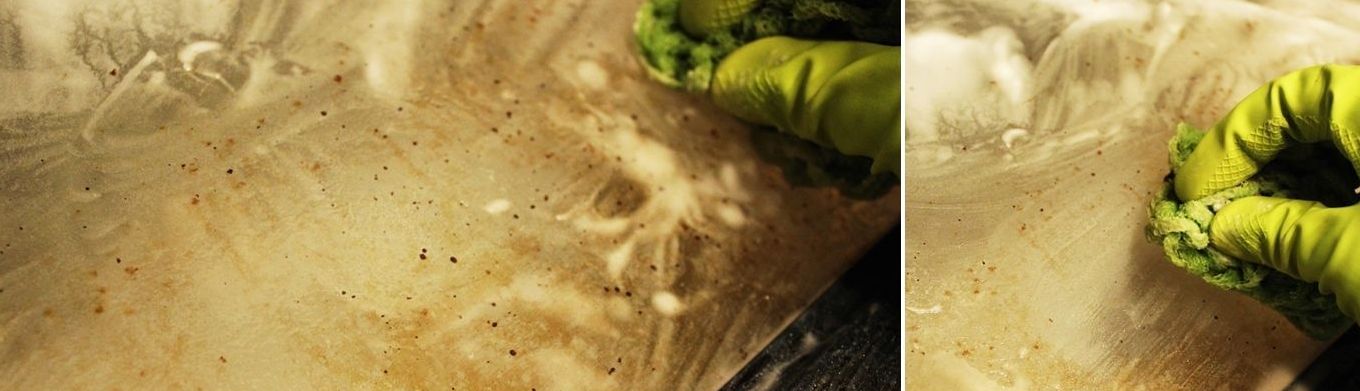
The fizzing reaction does not mean the mixture has become a stronger grease cleaner. Vinegar neutralizes some of the baking soda, which can make leftover alkaline residue easier to remove.
Wipe the treated surface with a damp cloth, then repeat with clean water to remove remaining cleaner and reaction products. Dry the glass with a soft cloth.
Vinegar is not required for every cleaning session. If water removes the paste without leaving a film, the extra step may offer no benefit.
What the Oven Door Looks Like After Cleaning
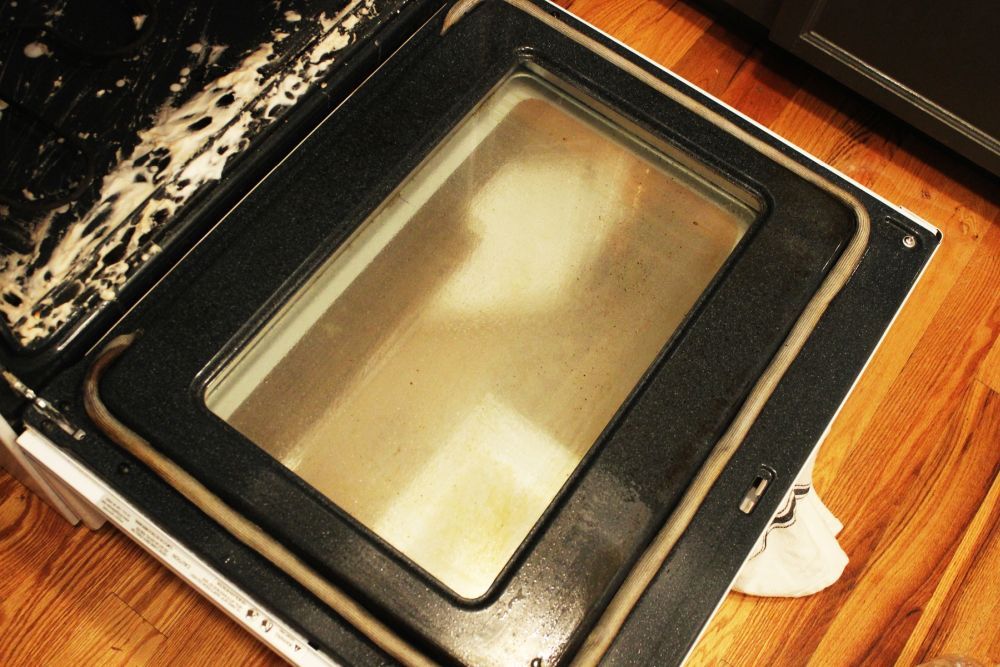
The finished oven door shows the glass after the baking soda paste and remaining residue have been wiped away. Brown deposits that covered parts of the window have been reduced, leaving the glass more visible.
Stubborn carbonized stains may require another cleaning session or an oven-safe product approved by the manufacturer. Avoid metal scrapers and abrasive pads unless the appliance instructions permit their use.
Baking soda handles the initial scrubbing, while vinegar can help with residue left behind. Keeping those steps separate avoids neutralizing the paste before it has done its work.
Have you tried baking soda paste on oven glass, and did you use vinegar to remove the white film or stick with water?