She Stripped the Dark Finish From a French Provincial Dresser and Revealed What Paint Would Have Hidden


Dark brown wood, curved drawers, ornate metal handles, and carved legs gave an old French Provincial dresser its traditional appearance. Four drawers formed a continuous wave across the front, while a scalloped apron followed the same shape along the bottom. The varnished surface concealed much of the wood grain beneath it.
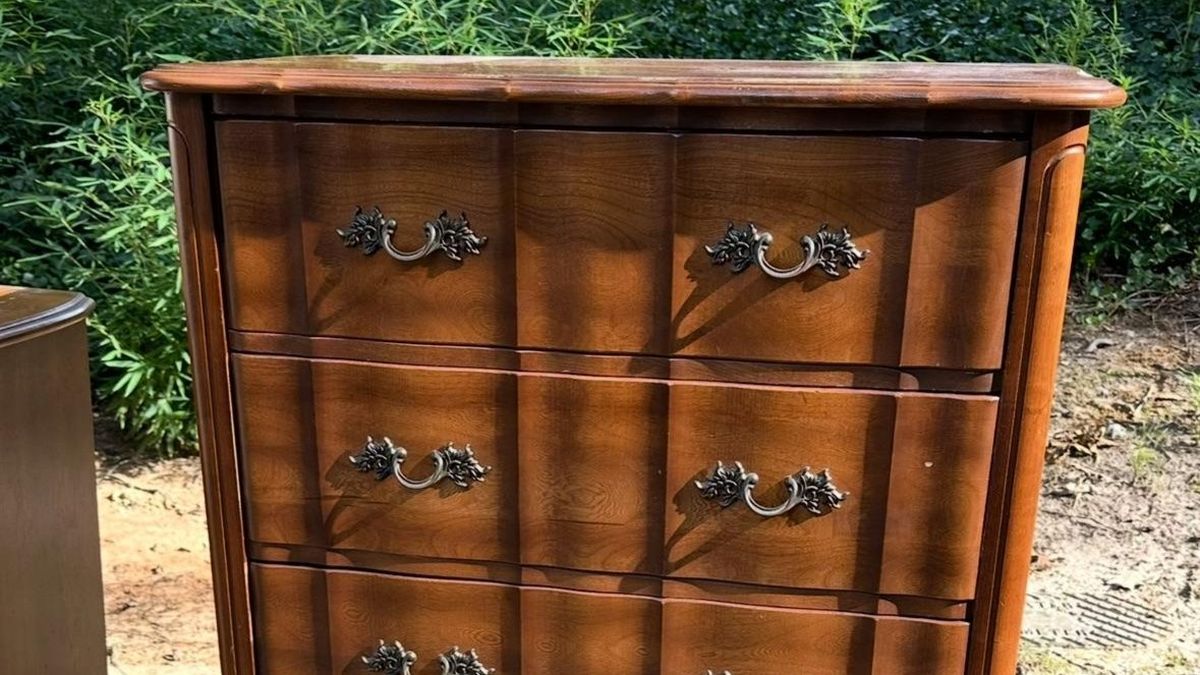
Reddit user u/MaraBrightwood chose the dresser for her first furniture refinishing project. Rather than covering the dark finish with paint, she decided to strip the piece down to bare wood, including the carved drawer fronts that would require hours of sanding.
Removing the old coating exposed an unusual grain pattern running through the curves, but the raw wood presented another challenge. She wanted a lighter finish without the orange tone that can appear when wood receives a new topcoat. Her solution involved a wash, a small amount of stain, and a decision to preserve part of the dresser’s original appearance.
Dark Brown Varnish Covered Four Curved Drawers
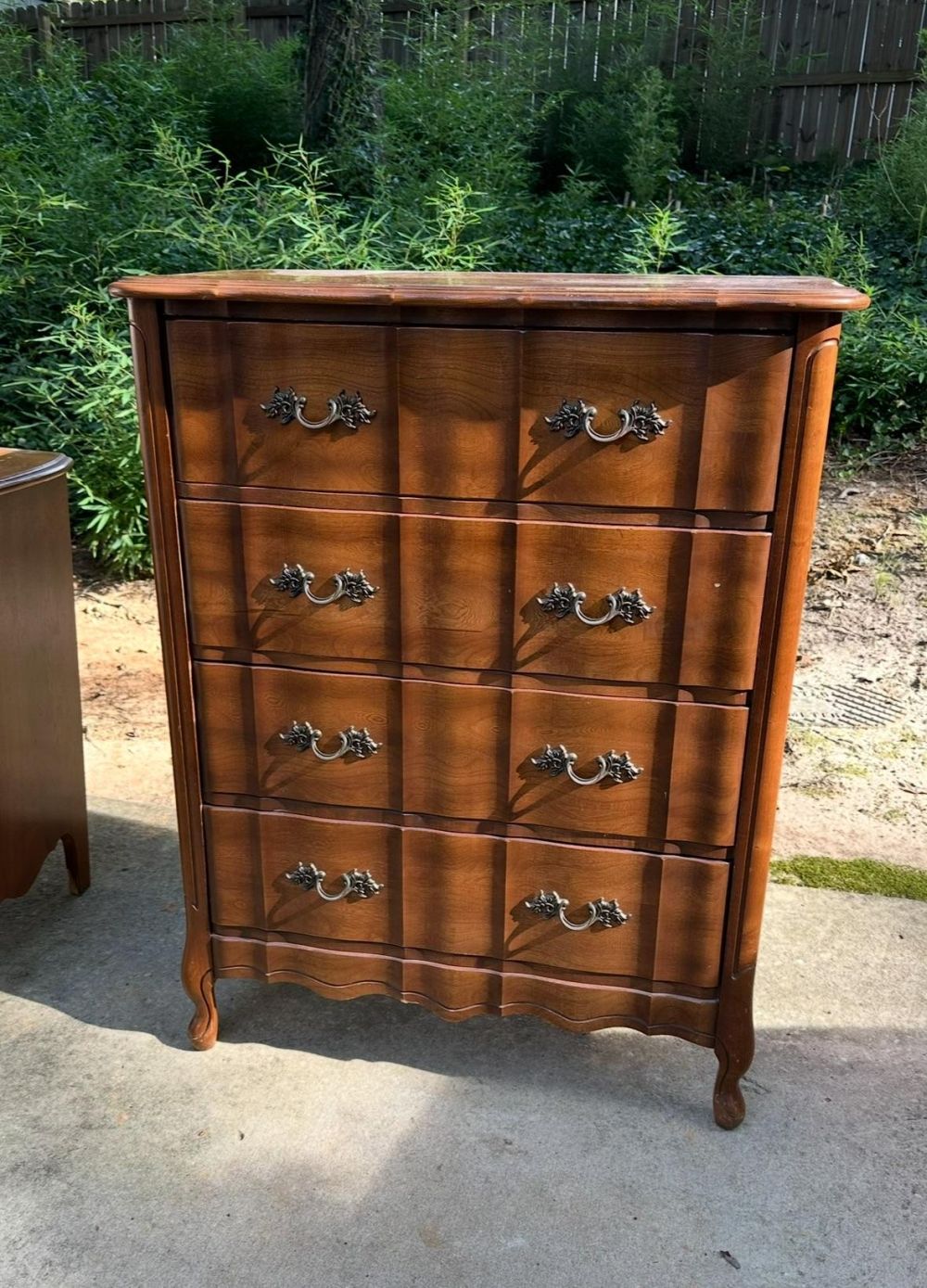
Before restoration, the dresser had a rich brown finish with darker areas around the recessed sections of its drawer fronts. Each of the four drawers featured two decorative metal pulls mounted over shaped wood panels, while the sides curved inward toward the front legs.
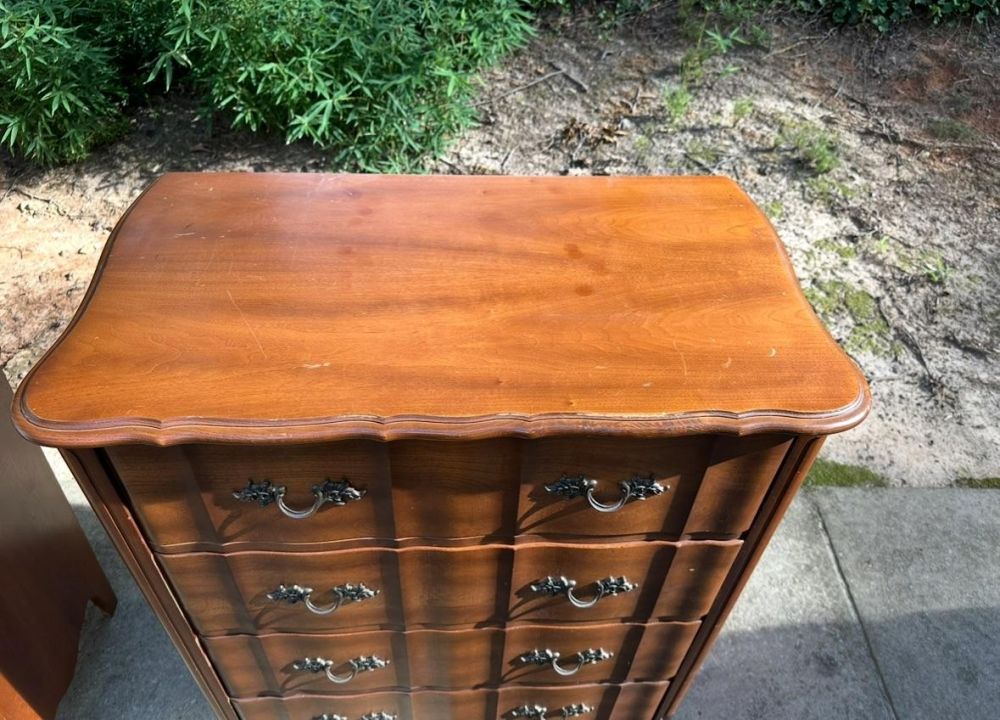
The top had a molded, scalloped edge with visible surface scratches and wear. Its shape continued into the carved drawer fronts and along the lower apron, creating a design that would be difficult to sand with a flat tool. Keeping those contours intact became one of the biggest challenges of the project.
Stripping the Carved Drawers Took More Work Than Expected
Removing the existing finish required chemical stripping and sanding. The restorer described using lacquer thinner and scouring pads during removal and identified Klean Strip Premium Stripper as another product used in the process. Once the coating came off, she worked across the carved surfaces with 60-grit sandpaper mounted on a foam interface pad, allowing the abrasive to follow the drawer contours.
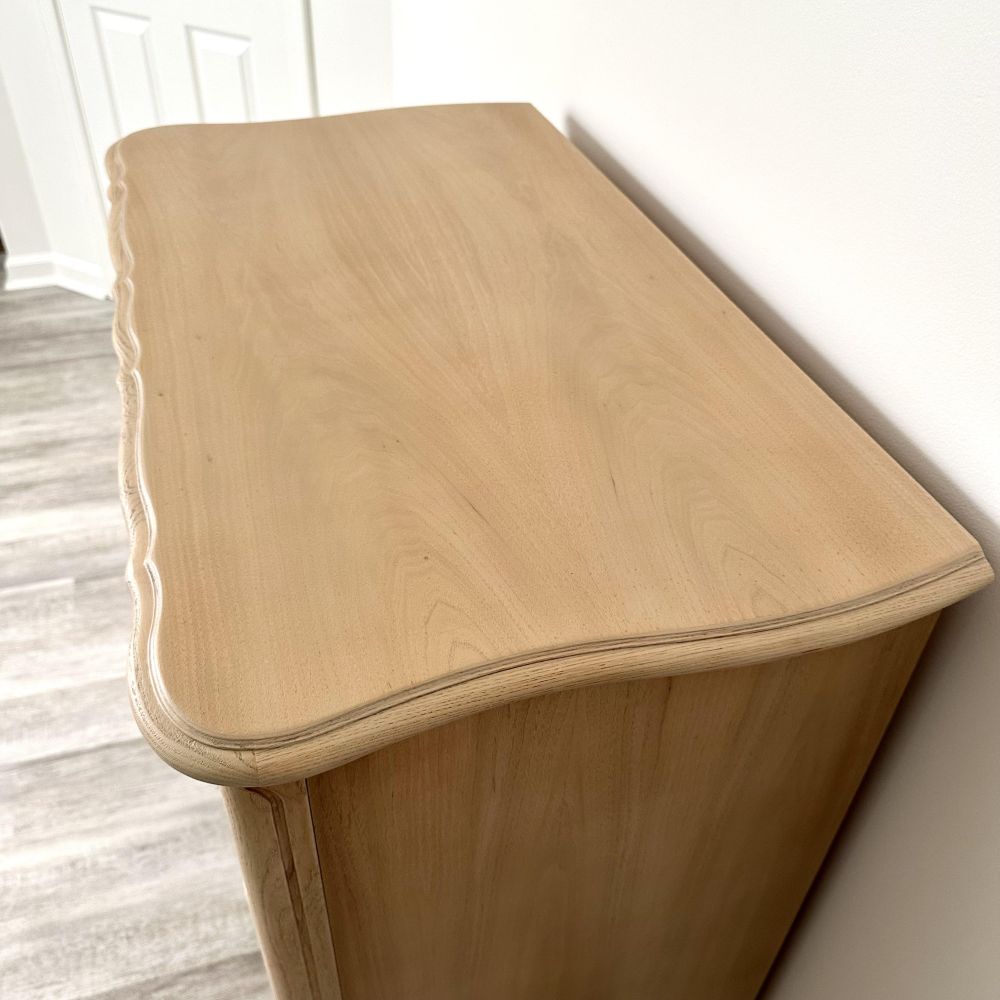
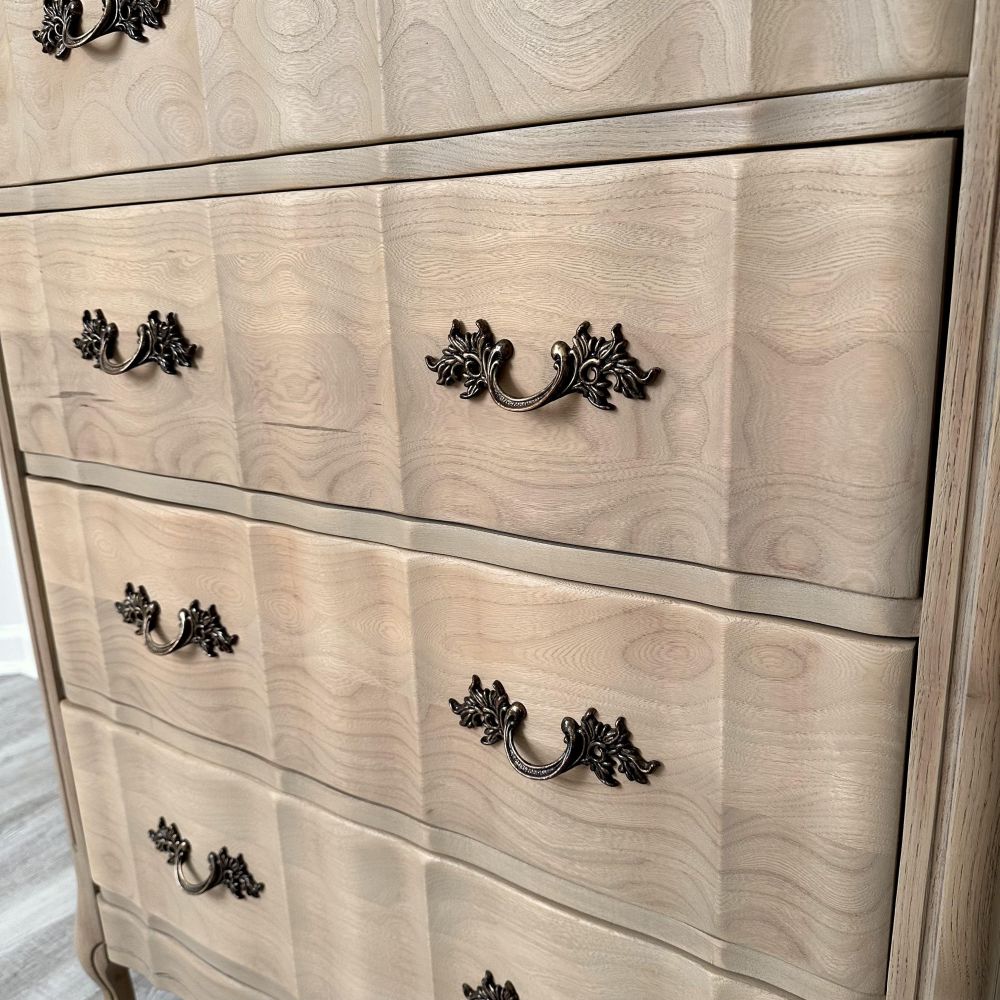
Each drawer took about 22 minutes of initial sanding to reach bare wood, followed by additional passes through finer grits. The finished close-ups show the result of that work, from the grain following the wave-shaped drawer fronts to the exposed wood along the molded top edge.
Tan Wash Brought Out the Swirling Wood Grain
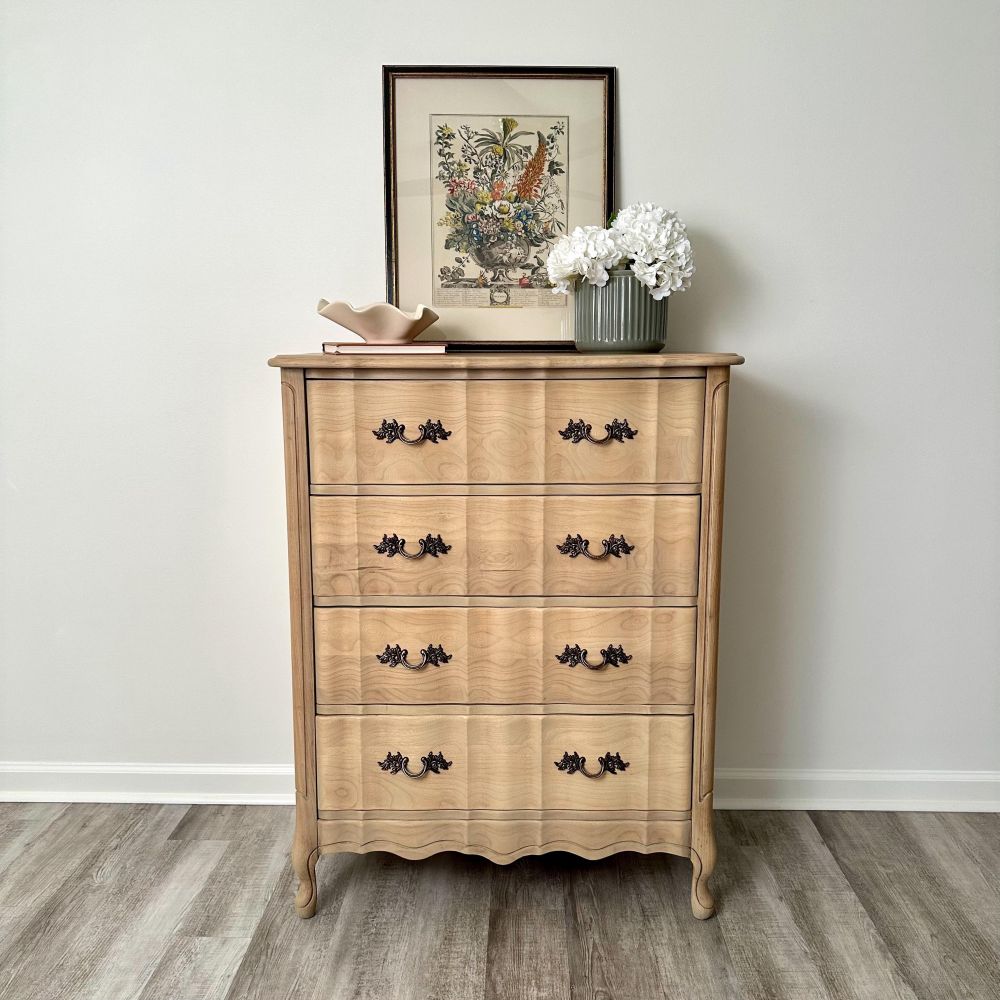
Stripping exposed a pale wood surface with swirling patterns across the drawer fronts. Circular grain formations appear beside long, flowing lines, creating different markings on each section of the dresser. The grain becomes more pronounced where the curved surfaces catch light from the side.
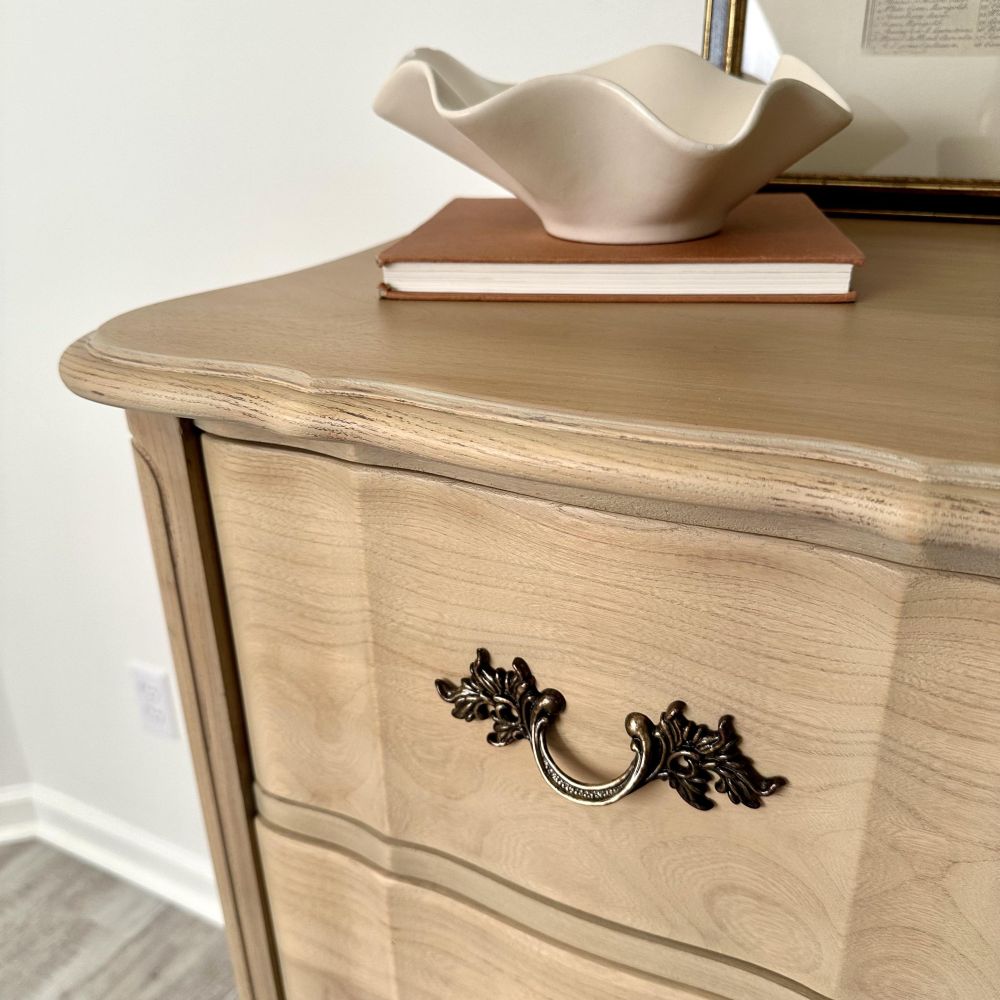
A tan wash helped control the orange tone of the raw wood, although the first result appeared too washed out for the look she wanted. Adding a small amount of stain to the topcoat restored some warmth without returning the dresser to its former dark brown color.
The completed finish has a muted beige tone, allowing the grain to remain the dominant feature rather than covering it with an opaque color.
Original Hardware Kept Its Dark Patina
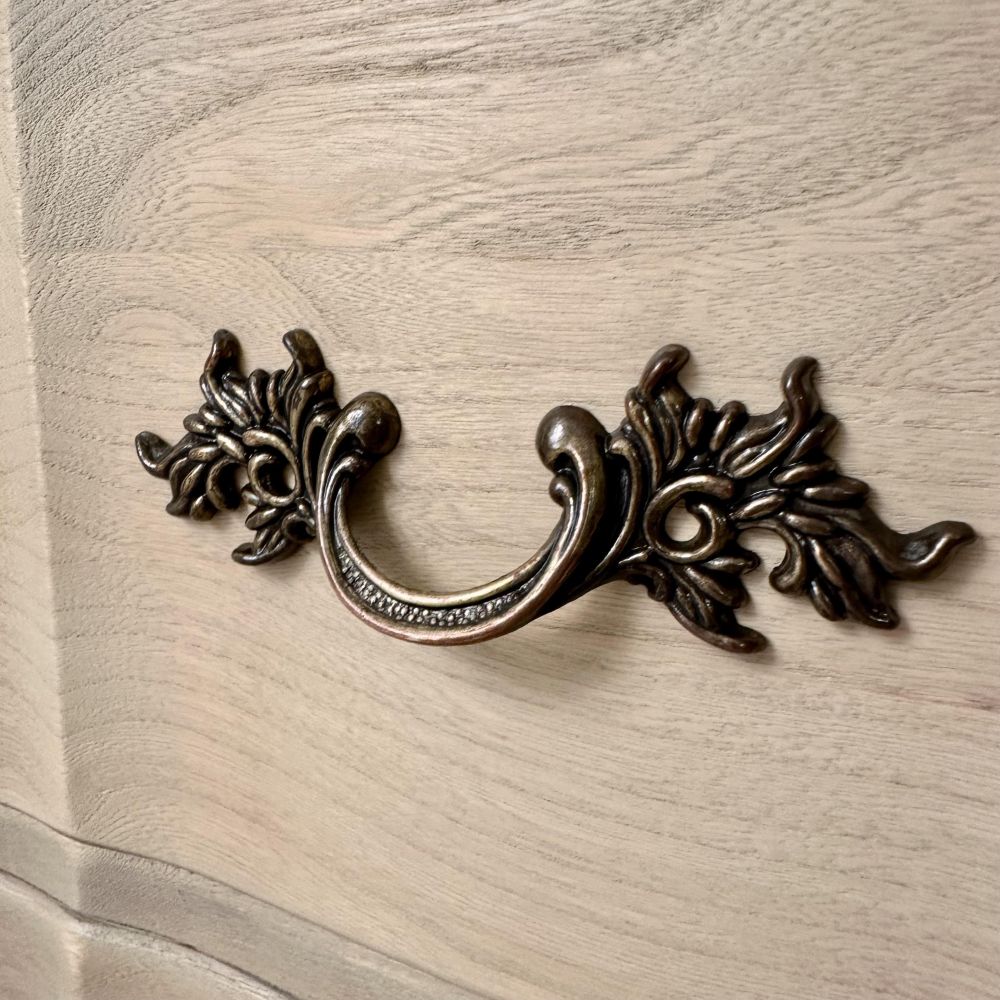
Ornate metal pulls remained on all four drawers, retaining their curved handles and decorative leaf-shaped mounting plates. Instead of polishing the hardware to bright brass, the restorer used Bar Keepers Friend and 0000 steel wool to remove surface buildup while leaving much of the existing patina.
The close-up reveals darkened recesses around the raised floral details, with bronze highlights along the curved handle. Against the pale wood, the aged metal provides contrast without introducing new hardware.
Floral Drawer Liners Added Another Detail
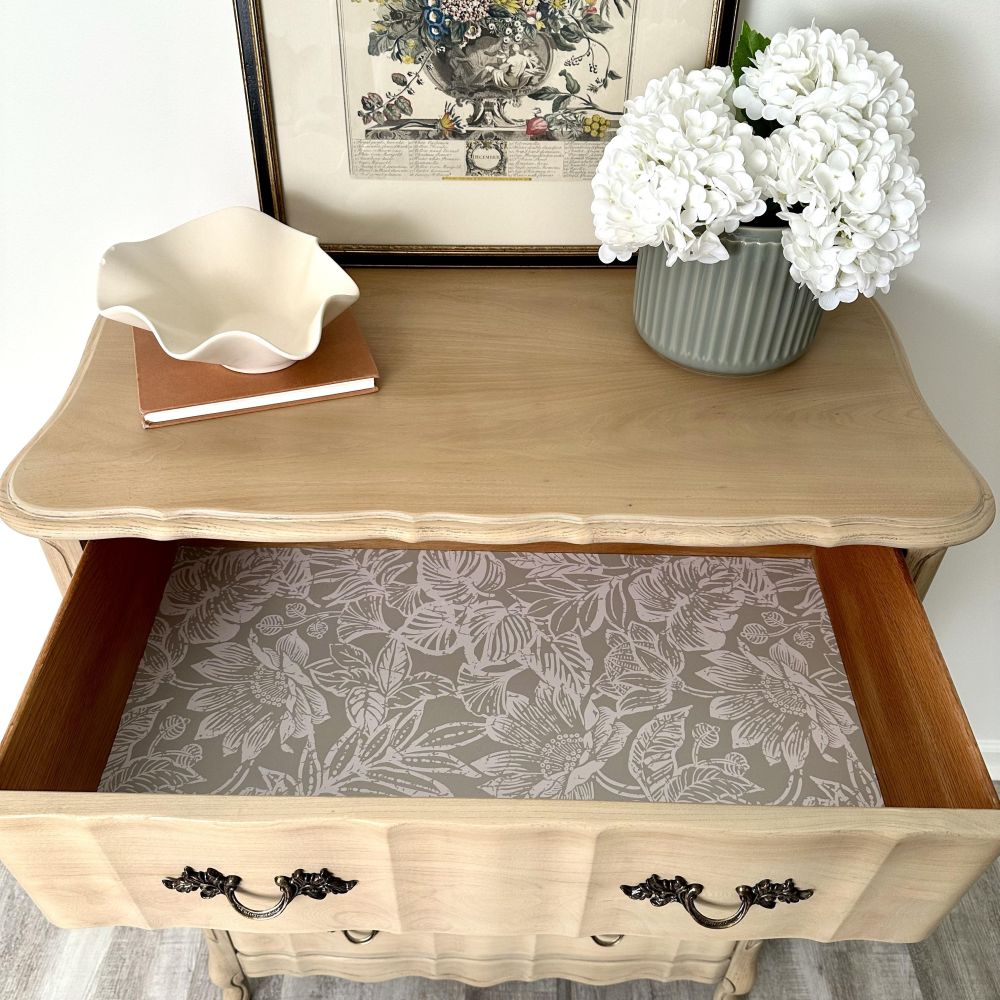
Opening the upper drawer reveals a gray-and-white botanical pattern across the bottom. Large flowers, leaves, and branching stems cover the liner, while the drawer’s interior sides retain a darker brown wood finish.
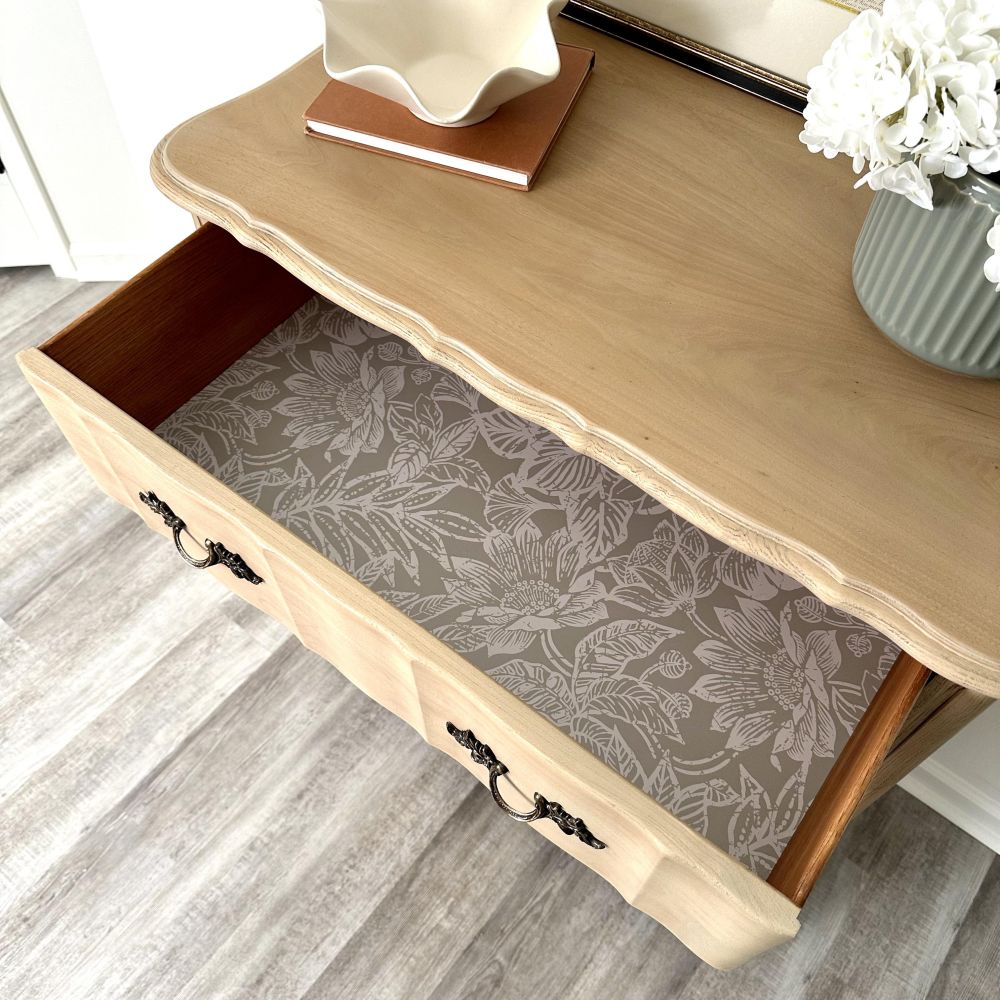
The overhead photographs also show the shaped front edge of the dresser top, including the thin decorative grooves running around its perimeter. A cream-colored sculptural bowl, a book, and white flowers sit above the open drawer, bringing the interior pattern into view without removing it from the dresser.
Finished Dresser Looked Different Without Losing Its French Provincial Shape
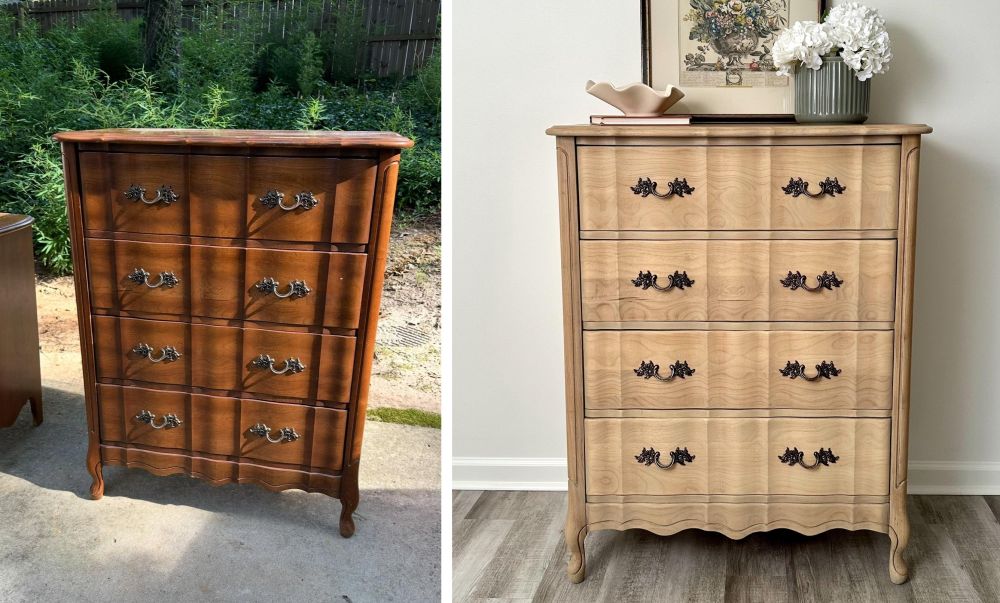
The before-and-after comparisons show the dresser in two settings, first outdoors with its dark finish, then indoors against a white wall with a framed floral print and white hydrangeas. The scalloped top, four drawers, curved legs, and decorative pulls remain in place, while the exposed wood gives the piece a new appearance.
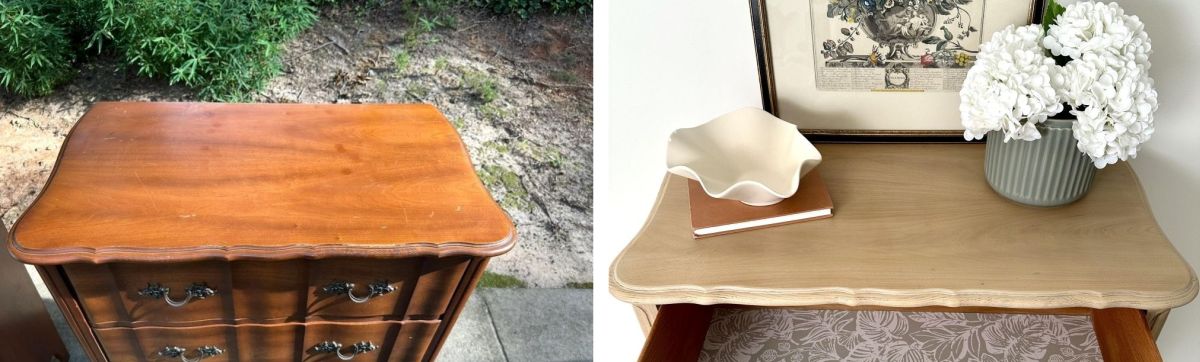
The project marked the restorer’s first completed furniture makeover and found a new home after its transformation. Her work also led to a commission to refinish a matching six-drawer French Provincial dresser using the same approach, giving her another chance to tackle the sanding process she had found so demanding.
Would you have stripped the dark finish to expose the wood grain or kept the original brown color?
Image credits go to u/MaraBrightwood.