She Couldn’t Decide What Color to Paint Her Front Door for 6 Years, Then Chose Sea Creature Blue


Six years passed before a homeowner decided what to do with her plain white front door. The metal door had raised panels, an oval glass insert, and black hardware, but choosing a new paint color kept her from starting the project.
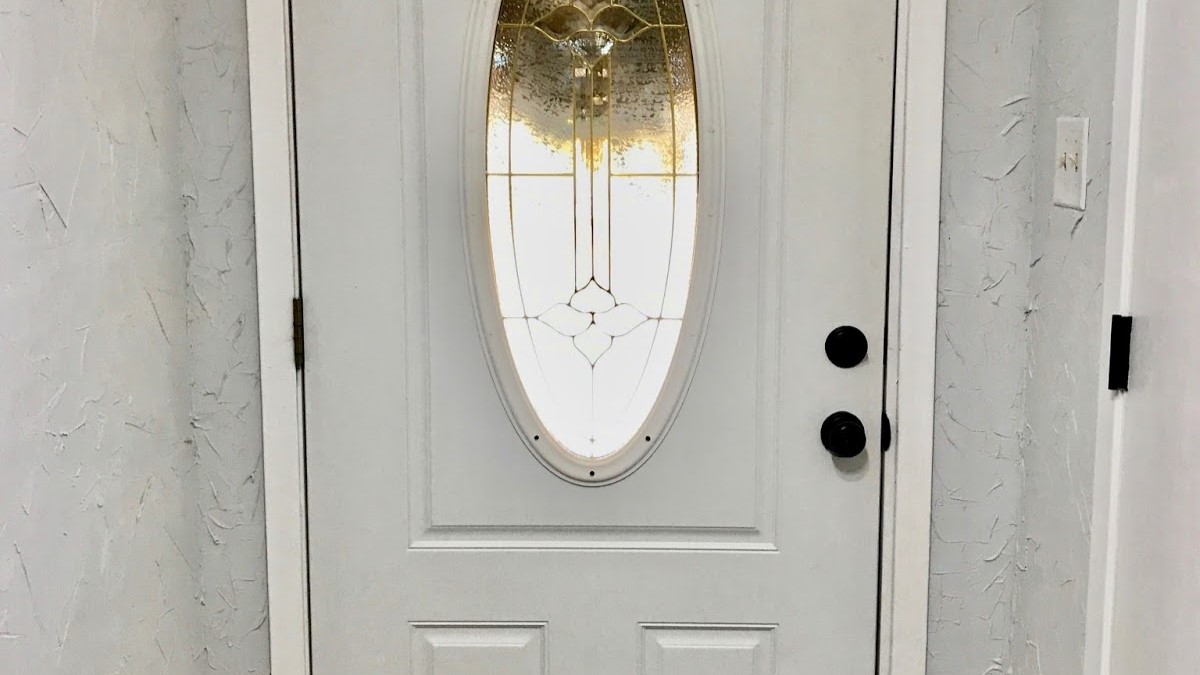
After asking readers for suggestions, she settled on Sherwin-Williams Sea Creature Blue, a muted blue shade that would replace the white finish without changing the door, glass, or hardware.
The homeowner behind “Our Clover House” documented the project from preparation through the final coat. She used Valspar Duramax exterior paint from Lowe’s, completing the transformation with two coats.
White Metal Door Had an Oval Glass Window
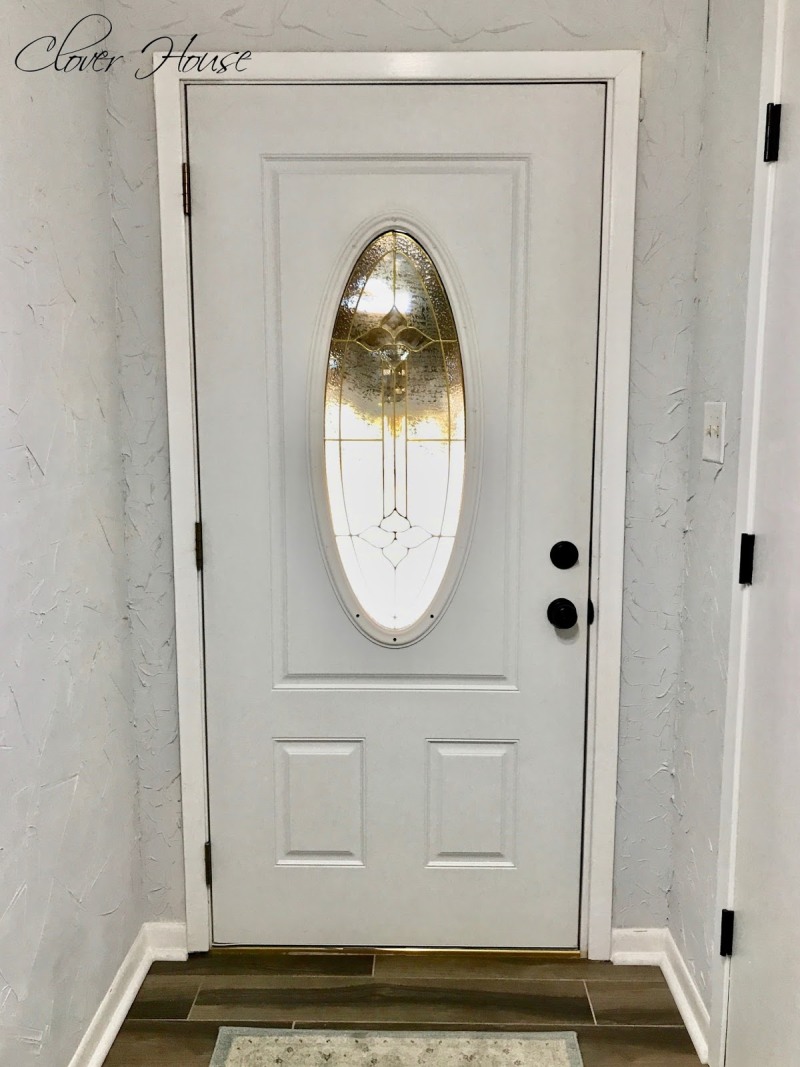
White paint covered the door, including three raised panels beneath and around the oval glass insert. Decorative lines crossed the glass, while black locks and a round doorknob sat on the right.
The surrounding entryway had textured pale walls, white trim, and dark rectangular floor tiles. Rather than replace the door, the homeowner chose to repaint its existing surface.
She Taped Around the Glass, Hardware, and Door Frame
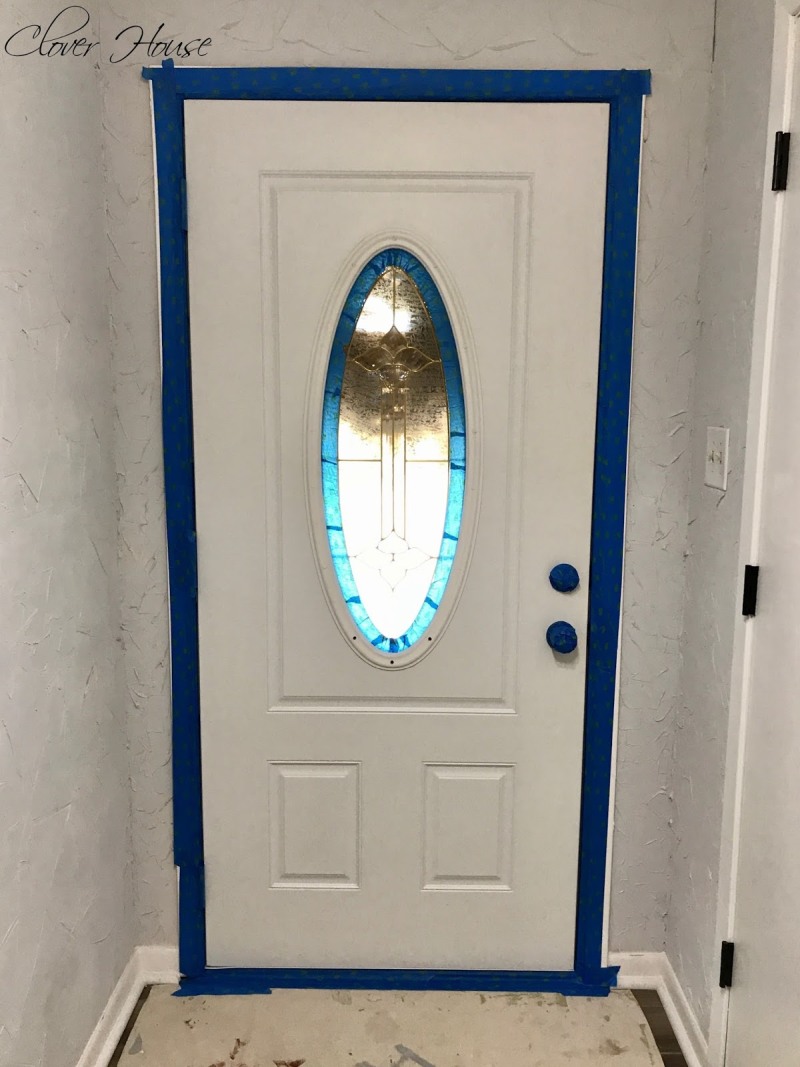
Blue painter’s tape protected the white frame, oval glass, doorknob, and deadbolt. The curved window required strips of tape around its narrow border, while a drop cloth covered the tile floor.
The homeowner left the hardware attached because her husband was at work and she preferred to paint around it rather than remove the locks and handle.
Valspar Duramax Paint Was Tinted to Sea Creature Blue
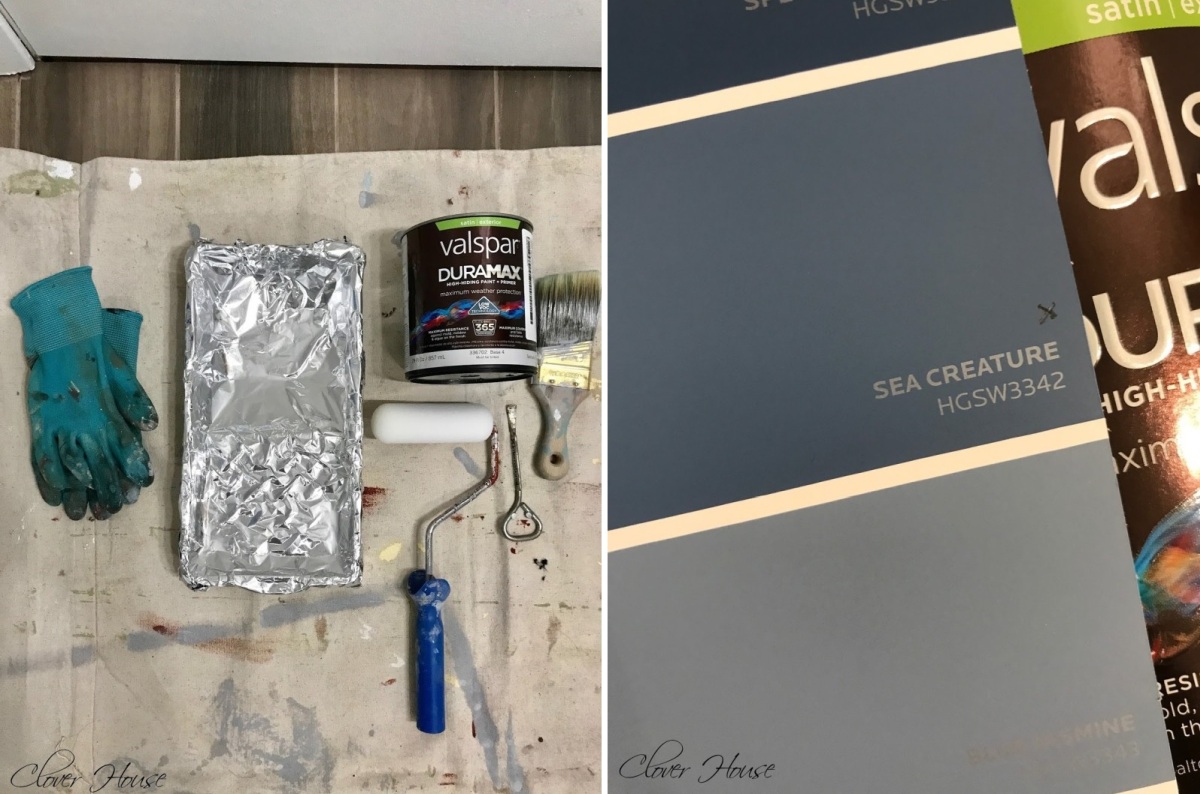
She selected Valspar Duramax exterior paint in a satin finish. The paint combines primer and color in one product and was tinted to Sherwin-Williams Sea Creature, color code HGSW3342.
Her supplies included a paint tray lined with aluminum foil, gloves, an angled brush, and a small foam roller. The brush would reach the molded sections, while the roller would cover the flat door panels.
Painting Began Around the Raised Panels
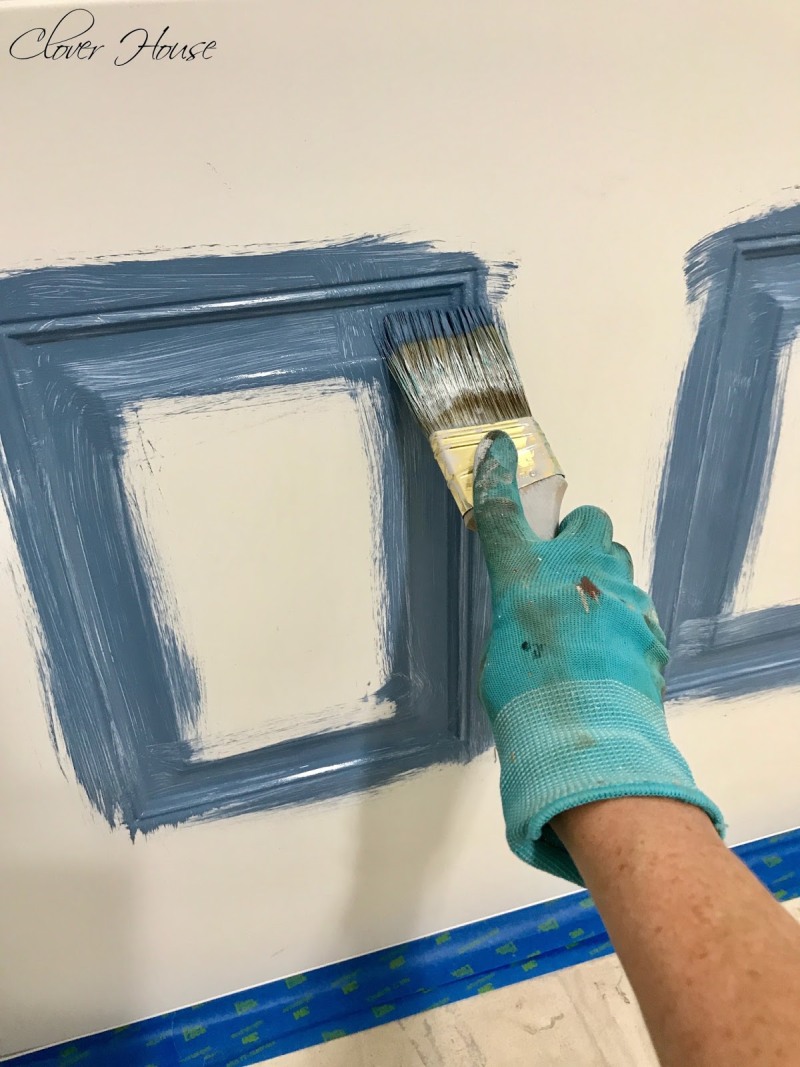
Rather than roll paint across the entire door at once, she used an angled brush to coat the recessed edges of the raised panels.
The door had three main molded areas: one large rectangle surrounding the window and two smaller rectangles near the bottom. Brushwork covered the corners and narrow grooves where a roller would have trouble reaching.
A Foam Roller Covered the Flat Surfaces
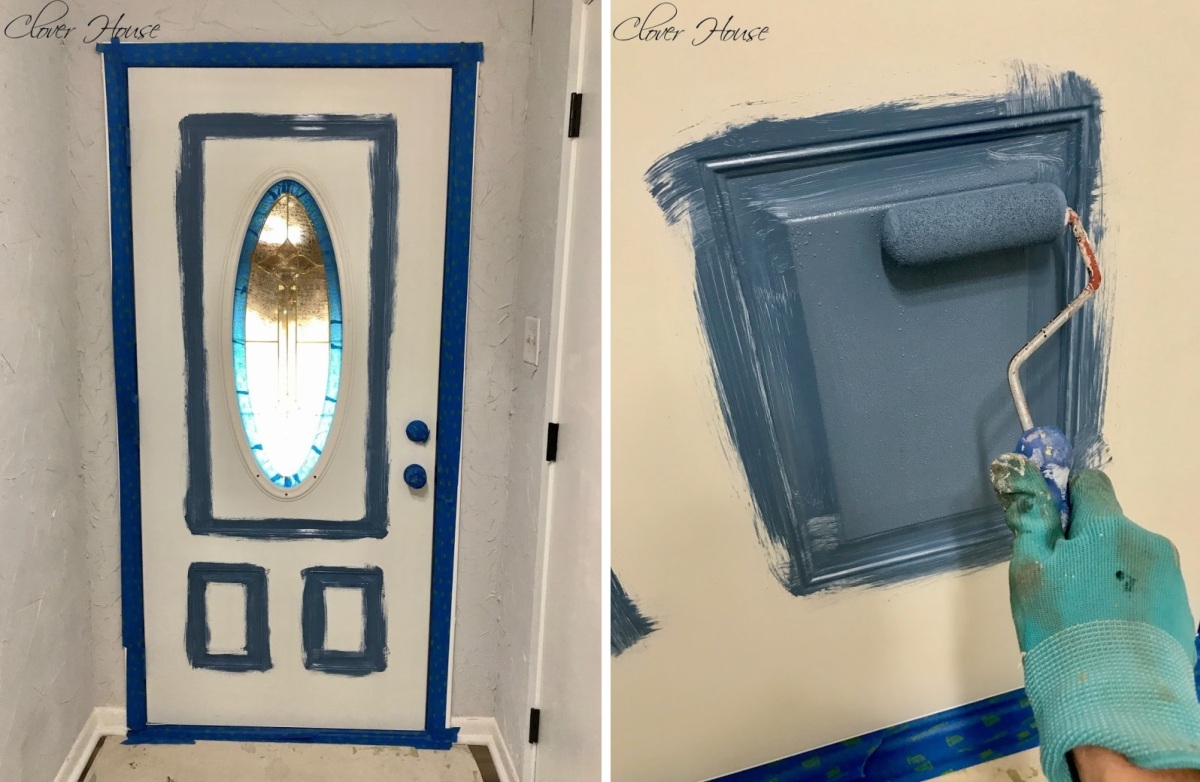
After brushing the recessed sections, she painted around the oval window and hardware. A foam roller then spread a thin coat of Sea Creature Blue across the flat panel surfaces.
The roller helped cover the larger sections without leaving the same brush marks visible around the molding.
First Coat Left White Areas Showing Through
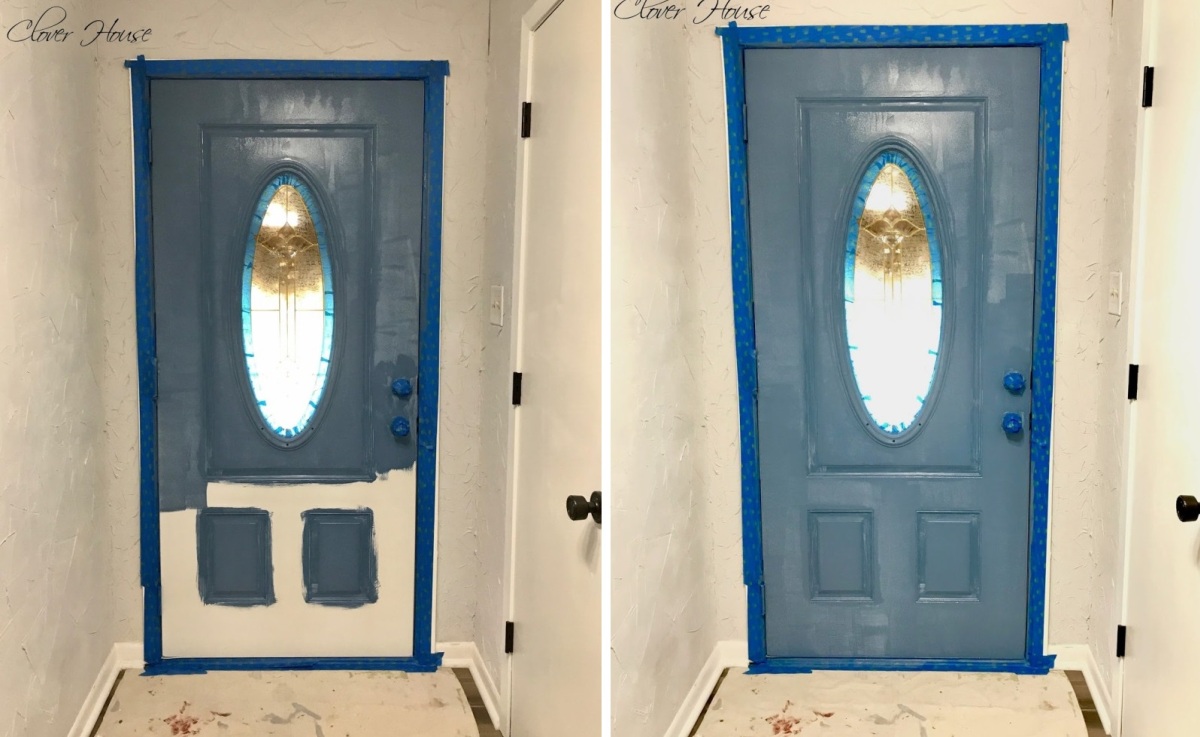
The first coat did not cover the white finish in one pass. As paint spread across the upper section, patches of the original color remained visible near the lower panels.
She worked from the top toward the bottom, using the roller across the broad surfaces after painting the trim and corners with a brush.
Two Coats of Sea Creature Blue Covered the White Door
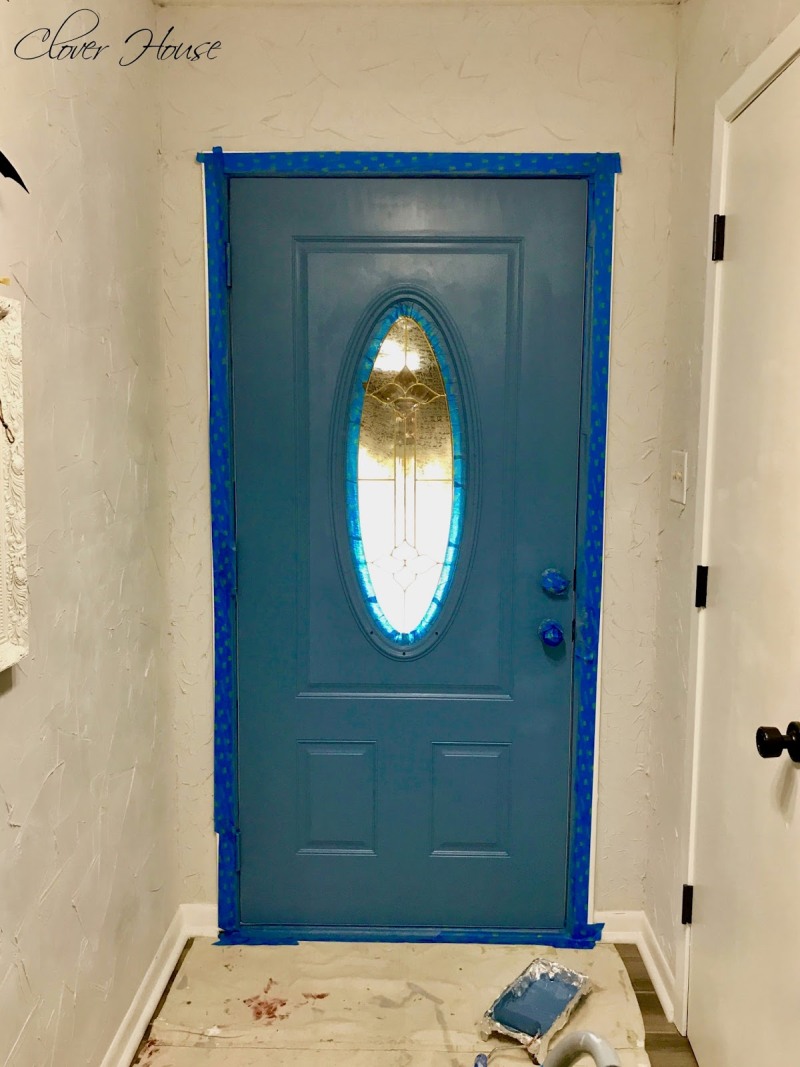
The first coat left patches of white visible across the panels. After about 30 minutes, the homeowner applied a second coat, working around the molding with a brush and covering the flat surfaces with a foam roller.
Once the paint had dried, she removed the tape from the oval window, door frame, and hardware. The black locks and white trim remained untouched.
Six Years Later, the Front Door Was No Longer White
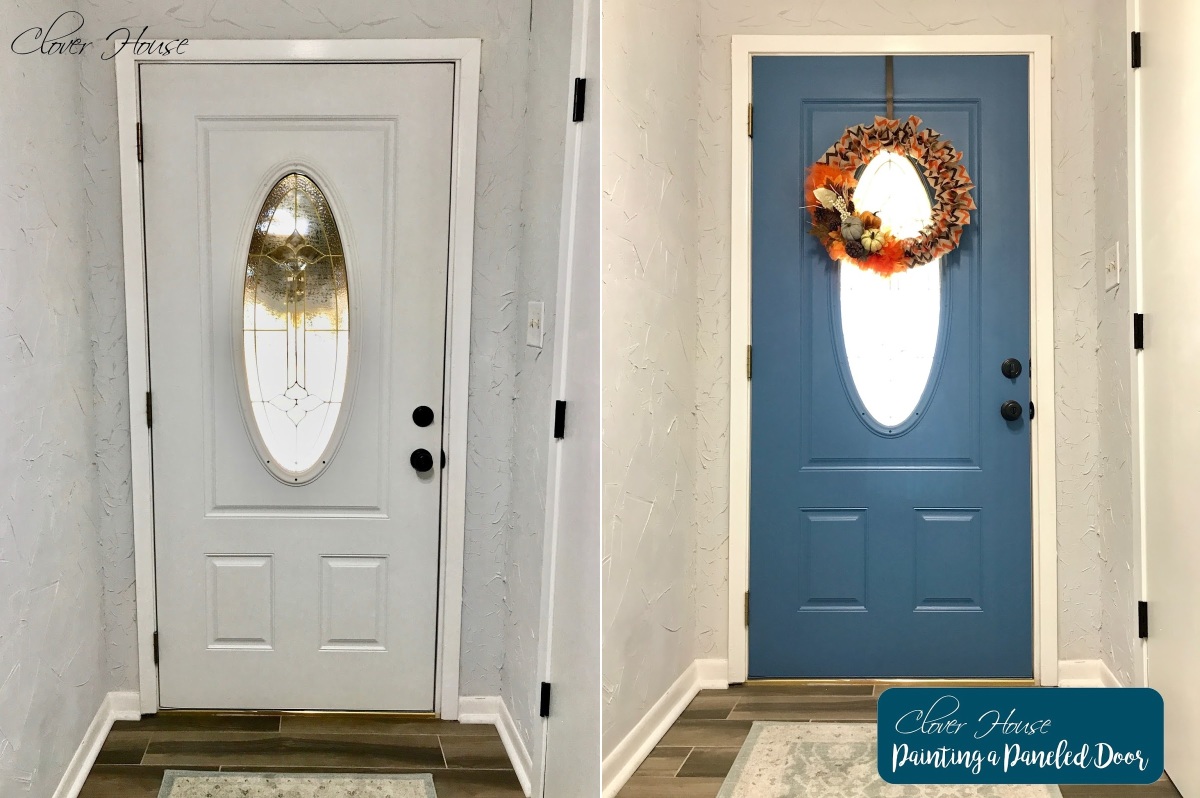
The finished door retained its original oval glass insert, raised panels, and black hardware. Sherwin-Williams Sea Creature Blue replaced the white finish, while the surrounding entryway remained unchanged.
Would you have chosen Sea Creature Blue for this front door, or gone with another color?
Images and project details courtesy of @ourcloverhouse.