If your outlet wiggles, tightening the screws can make it worse: a home inspector explains


The outlet moves every time you plug something in. The cover plate shifts, the plug sits at a slight angle, and the obvious fix is to grab a screwdriver and crank the screws a little tighter.
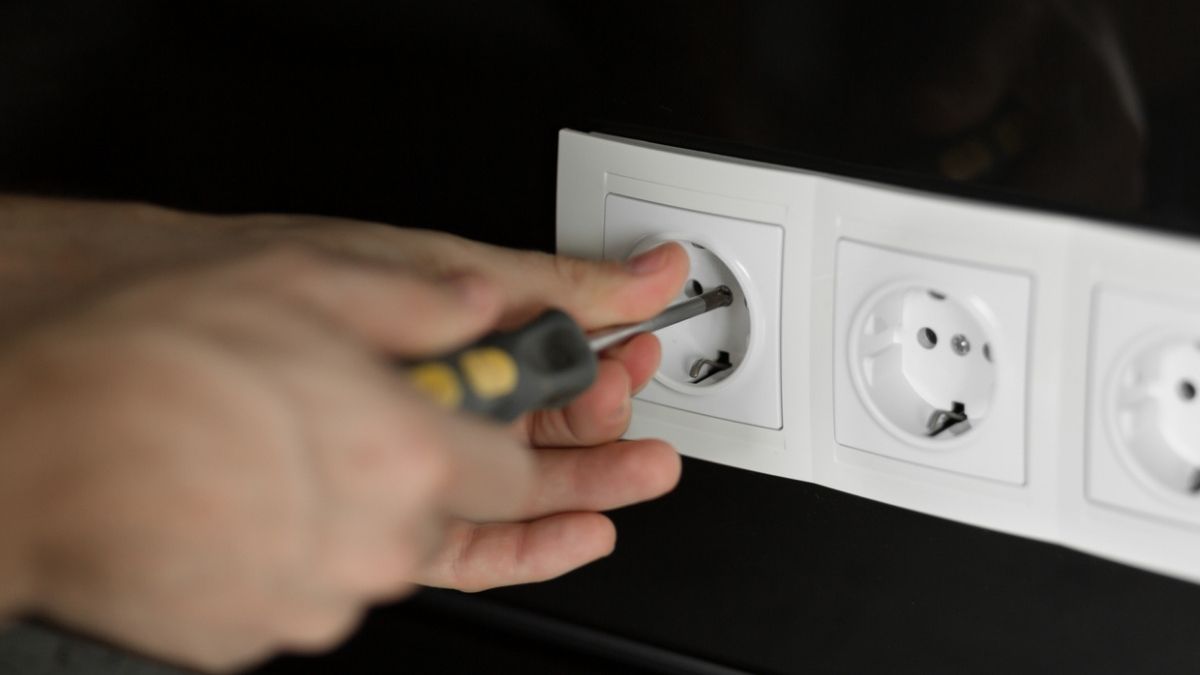
It’s not your technique. The problem usually sits behind the wall. Reuben Saltzman, a second-generation home inspector, explains that when the electrical box is set too deep, tightening the outlet screws means “you’ll suck the outlet back into the wall.” That leaves a gap between the face of the outlet and the cover plate, and tightening the plate over that gap can crack it.
Why tighter screws can’t fix a sunken box
Electrical boxes are supposed to sit flush with the wall surface. Saltzman points to the electrical code rule, NEC 314.20, which allows a box to be set back a maximum of 1/4 inch in a noncombustible wall such as drywall. In combustible material, such as wood paneling, any recess at all is a problem.
So when the box is too deep, the screws have nothing solid to pull the outlet against except the box itself. The tighter you turn them, the further the outlet sinks.
Before you start, it also helps to know which kind of outlet you have: GFCI outlets, the ones with test and reset buttons, are common in bathrooms and other spots near water, and they can cut the power in an emergency.
The fix that actually holds the outlet in place
- Cut the power. Switch off the breaker for that circuit, then confirm the outlet is dead before you touch anything.
- Measure the recess. Check how far the edge of the box sits behind the wall surface.
- Up to 1/4 inch in drywall: use outlet spacers, each about 1/8 inch thick, behind the outlet’s mounting tabs so it rests at the wall surface.
- More than 1/4 inch, or any recess in wood paneling: use a box extender, not spacers. Saltzman once stacked four spacers to fill a 1/2-inch recess, and he says that’s not the proper fix.
- Snug the cover plate. With the outlet sitting flush, the plate only needs to be snug, not cranked down.
Saltzman calls these “5-minute fixes or less.” Plan B, if you’re not comfortable working in an electrical box: leave the outlet alone, avoid plugging heavy loads into it, and call a licensed electrician.
Signs it’s no longer a DIY job
A loose outlet is one thing. A hot or damaged one is another. The Electrical Safety Foundation International lists signs of home wiring hazards that call for a licensed electrician, including receptacle covers that are hot to the touch or discolored from heat, and arcs or sparks anywhere in the system.
Code details also vary by town, and older homes can hide surprises in the walls. If the box itself is loose, damaged or full of crowded wires, don’t try to force a fix. That’s work for a licensed pro.
Fill the gap behind the outlet instead of squeezing the screws, and the wobble stops. That’s the trick.