She Cleaned Her Window Tracks While the Dirt Was Still Dry to Avoid Turning It Into Mud


Spraying cleaner into a dirty window track seems like the fastest way to remove the buildup. Instead, dust, leaves, and grit turn into wet grime that gets pushed against the sliding rail and into narrow corners. A dry toothbrush can prevent that mess, but using it at the wrong stage leaves much of the dirt behind.
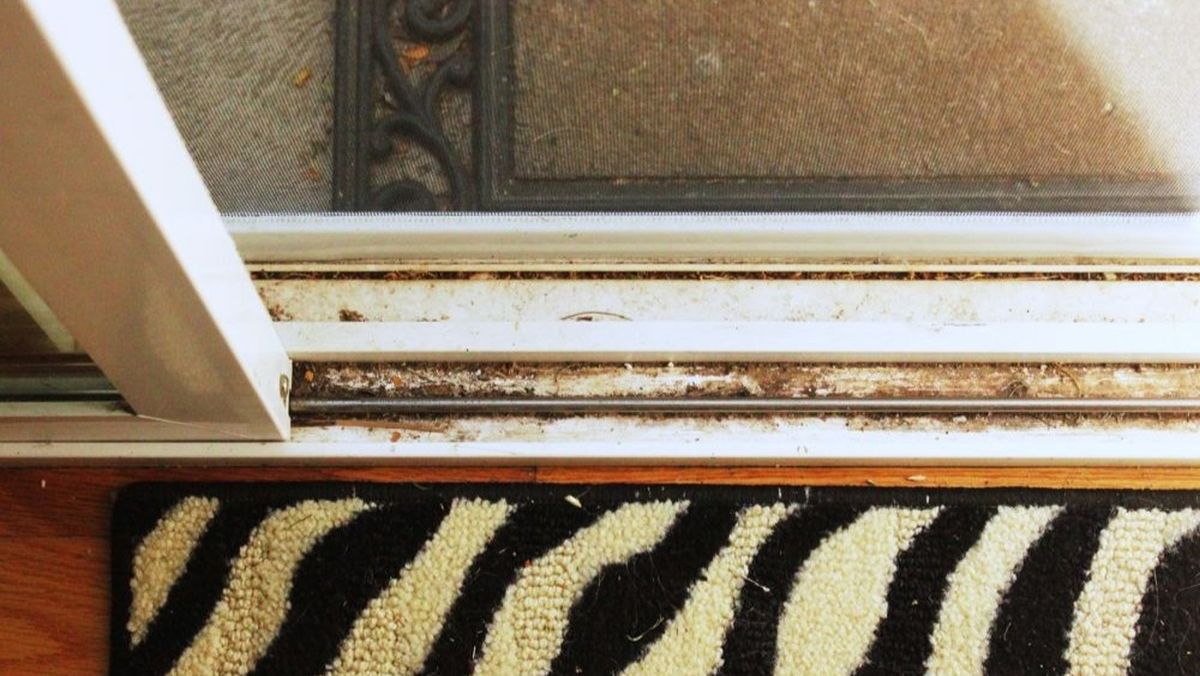
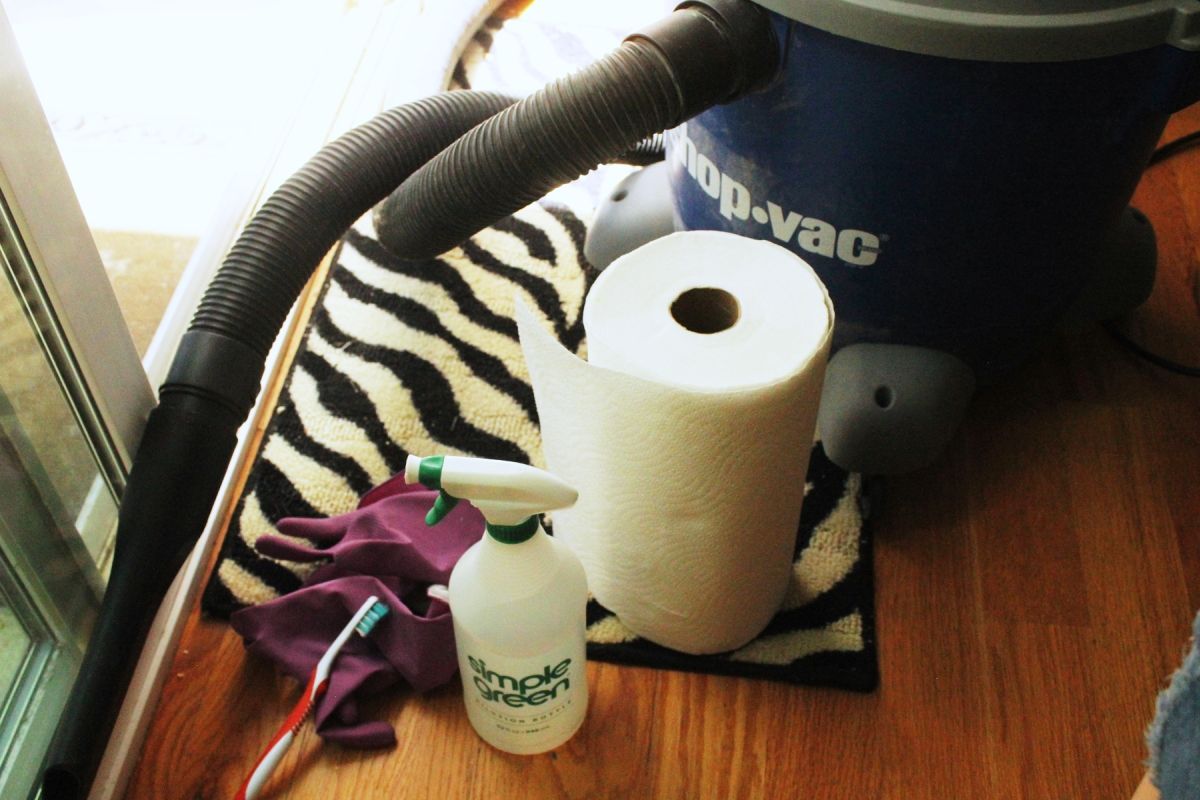
Homedit’s Brittney Smart tried a different approach on a sliding glass door track packed with dirt and debris. Using a vacuum, an old toothbrush, all-purpose cleaner, and paper towels, she showed why the order of cleaning matters more than the product itself.
Dirt Collects in the Narrow Grooves of Window Tracks
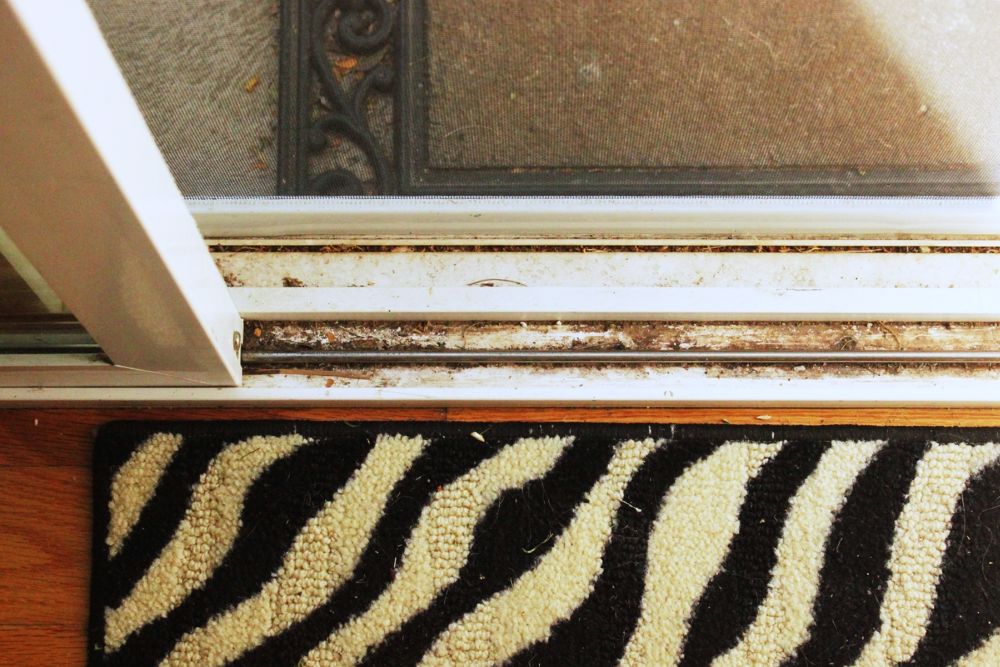
The original photo shows dark buildup along the metal sliding rail, with loose dirt packed into the white channels on either side. Leaves, dust, and outdoor debris have collected around the frame, including the corners where the door meets the track.
Those narrow spaces make cleaning difficult because a cloth cannot reach beneath the edges of the rail, while spraying cleaner over the buildup can turn the loose material into a paste.
Remove Loose Debris With a Vacuum First
Start with a vacuum fitted with a narrow nozzle attachment, working along the length of the track and into the spaces beside the door frame. This removes loose dirt before it has a chance to mix with water or cleaning solution.
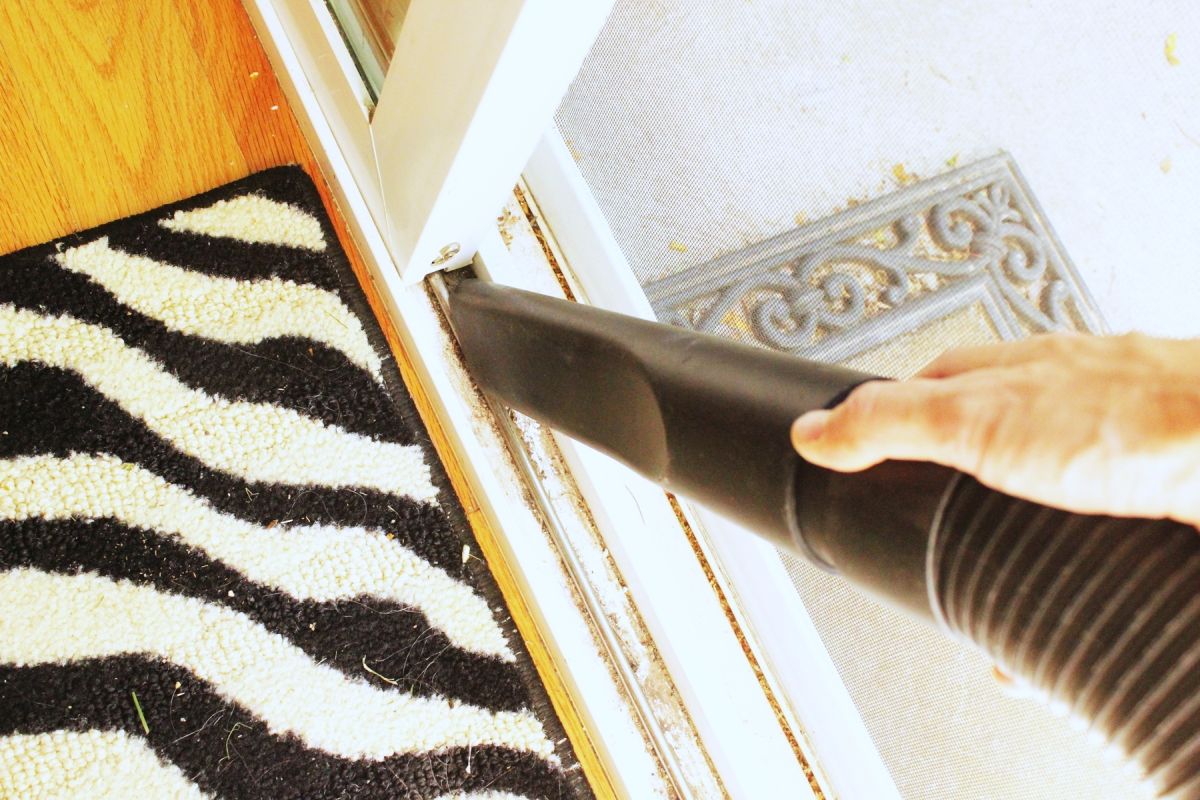
The original method uses a shop vacuum, but a household vacuum with a crevice attachment can serve the same purpose. Keep the nozzle close to the metal rail and work across both channels, leaving the dirt stuck against the edges for the next step.
A Dry Toothbrush Reaches Dirt the Vacuum Leaves Behind
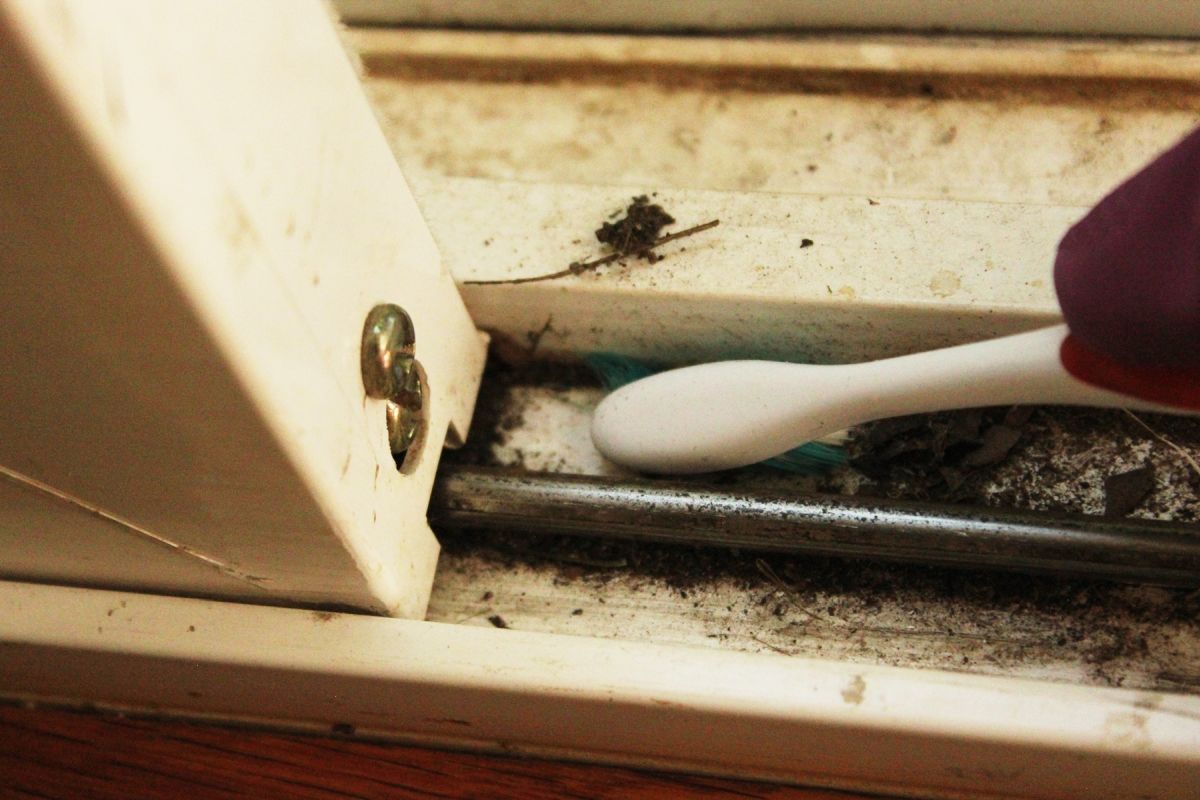
Once the loose debris is gone, use a dry toothbrush to scrub the dirt lodged against the rail and inside the corners. The small bristles reach spaces that a cloth or large cleaning brush cannot access, including the narrow gap beside the vertical door frame.
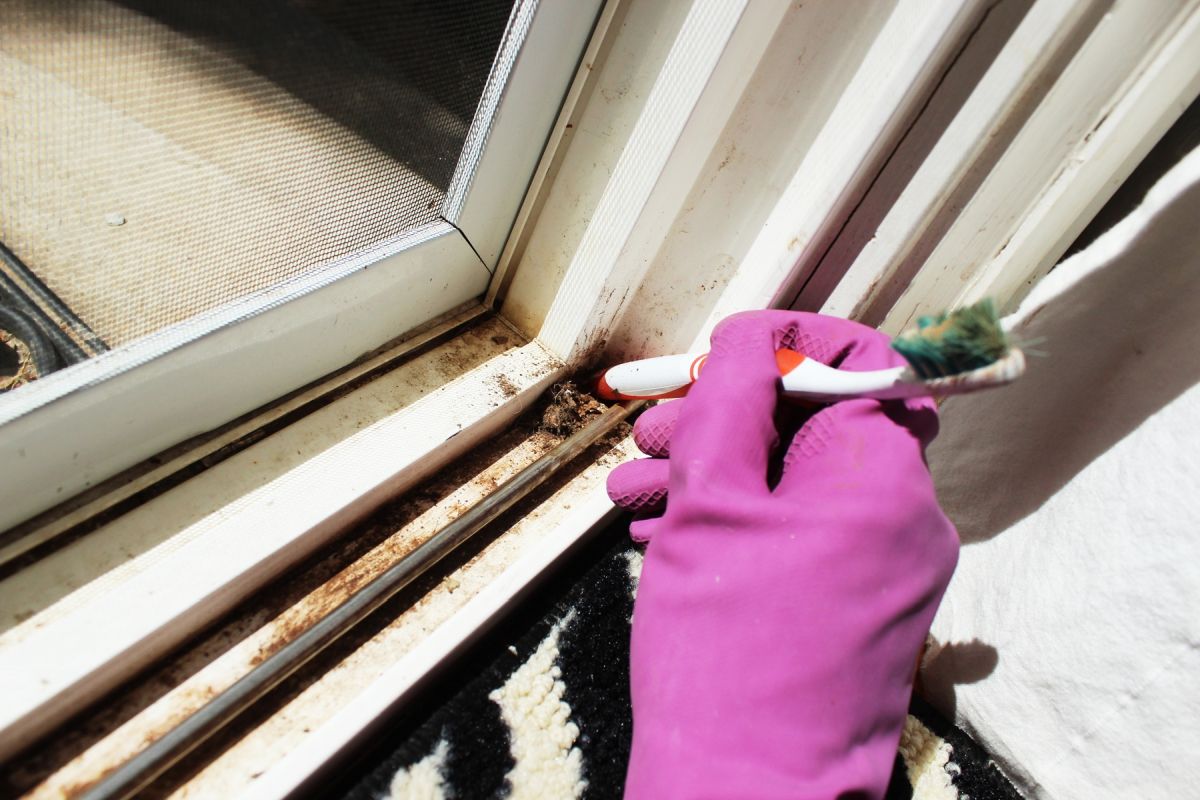
The close-up photo shows the toothbrush dislodging dark clumps of dirt and small pieces of outdoor debris from one corner. Work along the track with short strokes, using the tip of the brush where the channel becomes too narrow for the full head.
Keeping the brush dry at this stage is important because the loosened material can still be collected with the vacuum rather than spread across the track.
Vacuum the Loosened Dirt Before Spraying Cleaner
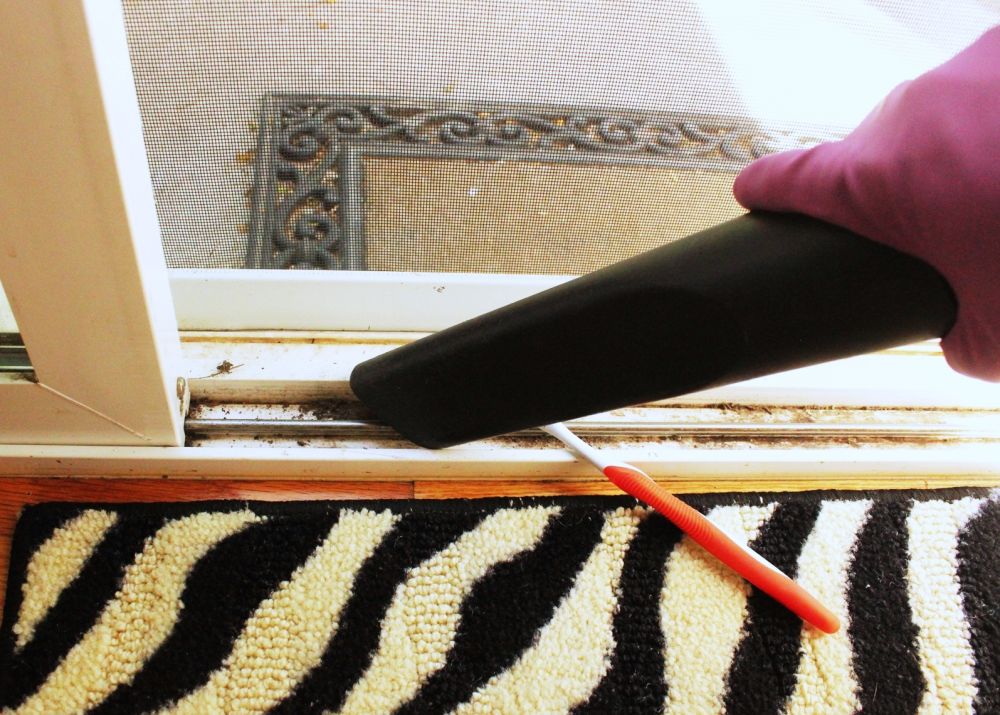
After brushing the corners and grooves, make another pass with the vacuum to collect the material left on the surface. The photo shows the nozzle positioned beside the metal rail, where the toothbrush has loosened dirt from the surrounding channel.
This second vacuum pass prepares the track for washing, removing the larger particles that could otherwise become trapped in the cleaner.
Use a Small Amount of Cleaner for the Remaining Residue
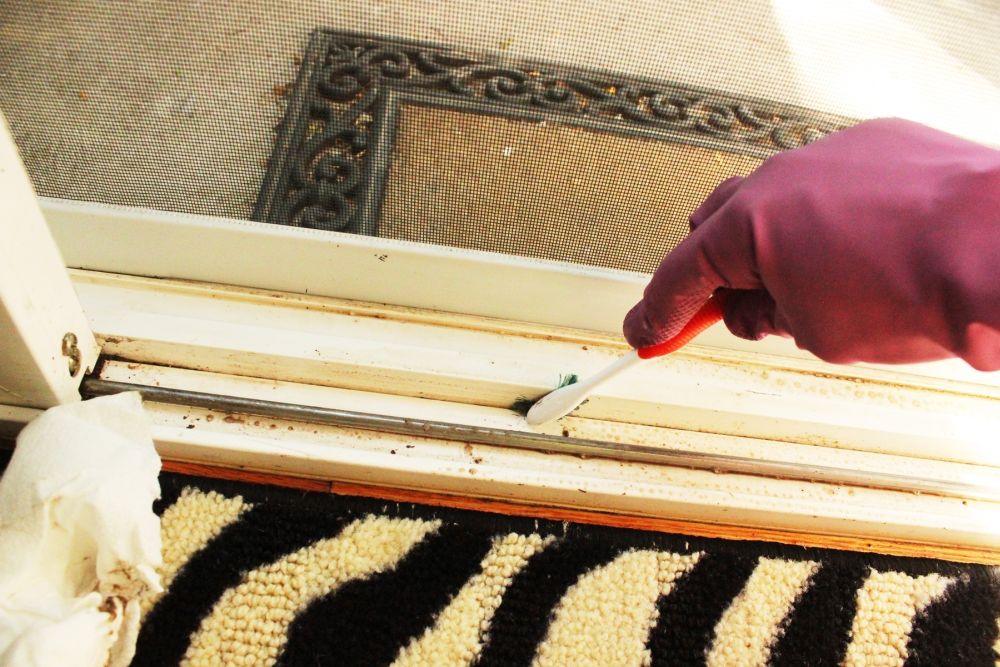
With the loose debris removed, apply a small amount of all-purpose cleaner to the track and scrub with a rinsed toothbrush. The original tutorial recommends about one spray, enough to work on the remaining grime without filling the channel with liquid.
Focus on the edges beside the rail and the corners around the door frame, where dark marks can remain after vacuuming. The brush helps lift residue from the surface, while the cleaner addresses dirt that dry brushing could not remove.
Fold a Paper Towel to Reach the Narrow Channels
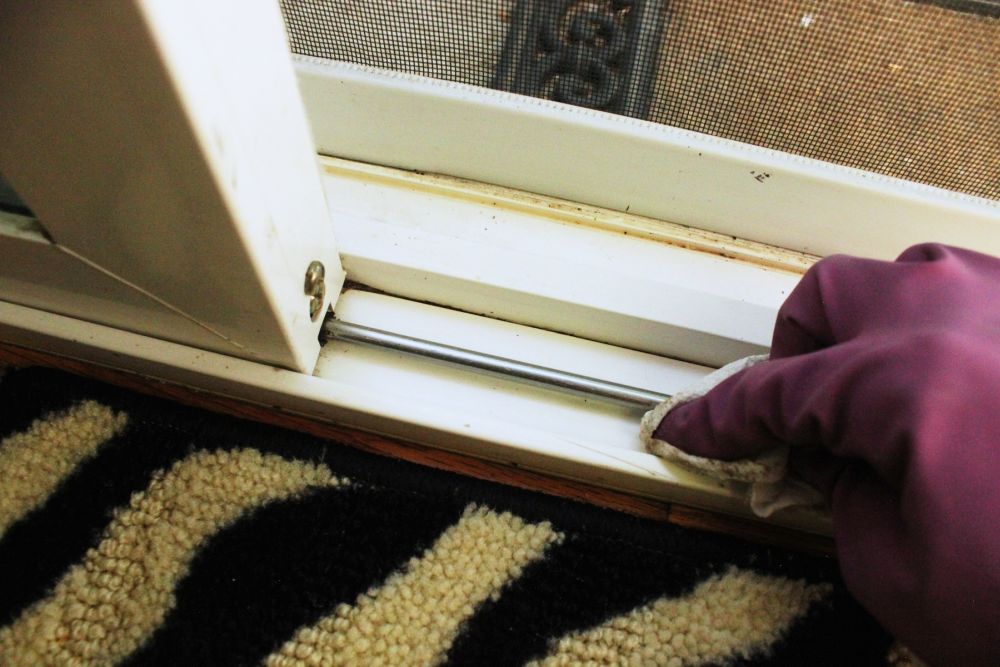
Finish by wiping the track with a paper towel, folding one corner into a narrow point to fit inside the grooves. Move the folded edge along the rail to collect loosened dirt and excess cleaner, switching to a clean section of towel as needed.
The towel also absorbs moisture left inside the channel, which matters around the corners where water can collect. Continue until the surface stops transferring dirt onto the paper.
The Finished Track Shows the Difference
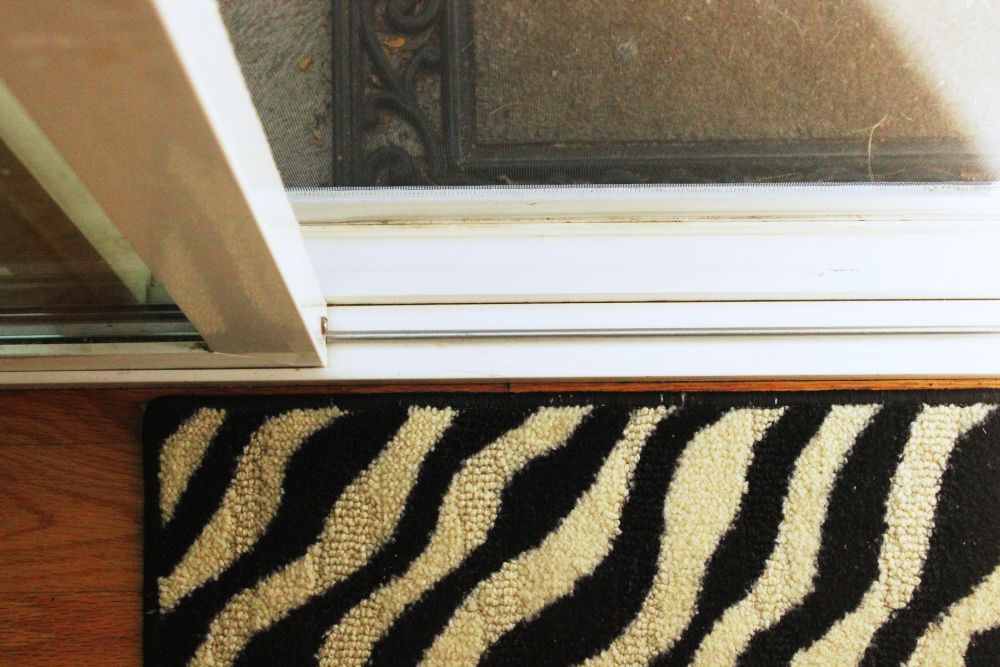
The final photo shows the white track with the heavy buildup removed, exposing the metal rail and the channels that were covered with dirt in the original image. Some faint discoloration remains along the edges, but the loose debris and dark clumps are gone.
The important part of this method isn’t a special cleaning product. It’s removing the dirt before getting it wet, using a vacuum and dry toothbrush to reach the narrow spaces, then applying cleaner to the residue left behind.