She Painted Her Mother’s Dark Hutch White but Chose Blue for the Inside


Dark wood framed the glass display and lower cupboards of this dining room hutch, with gold-colored hardware running down the doors. When her mother offered her the furniture, Tina Marie of It’s a Mom’s World accepted it for its shape, storage, and built-in lighting, then changed the finish to suit her dining room.
Behr Popped Corn covers the exterior, while Cool Jazz adds a blue-green background behind the glass shelves. The original hardware returns in a silver finish, preserving its decorative shapes against the white doors.
The project involved both wood and laminate, which made preparation a concern for the owner. She kept the cabinet’s construction and worked across those different surfaces, using primer, a sprayed first coat, and roller-applied coats to complete the change.
Dark Finish Surrounded the Glass Display
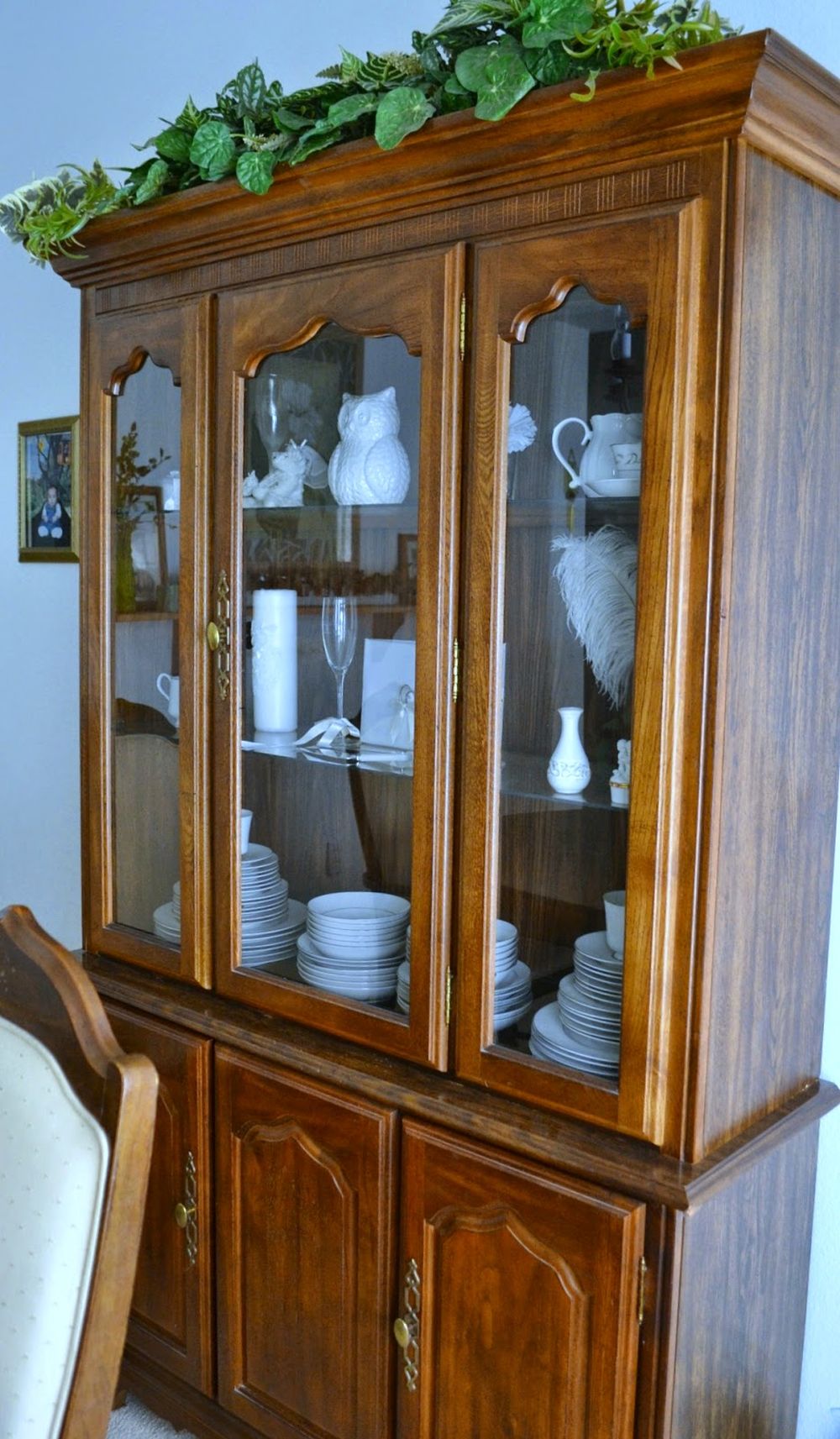
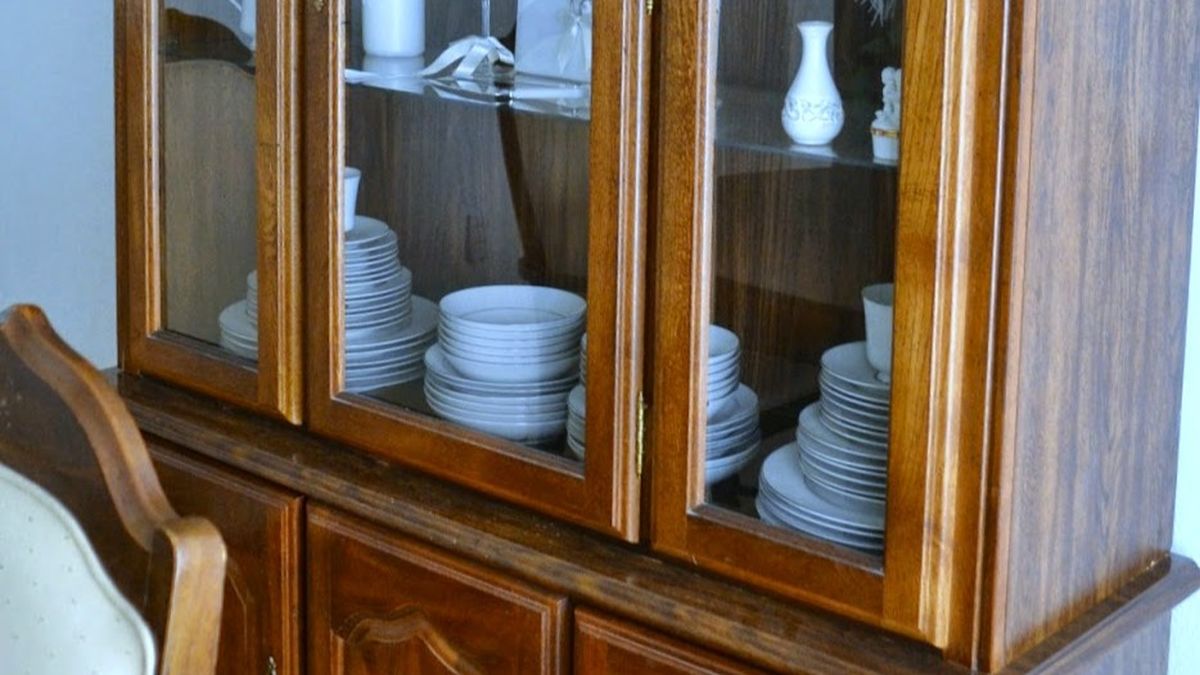
Brown covered the crown, shaped glass surrounds, side panels, and lower cupboard fronts, connecting the upper display with the enclosed storage beneath it. Greenery sat across the top, while white dishes and ornaments filled the glass shelves.
The owner described the hutch as being in good condition, with no damage requiring repair before the makeover. Her reason for changing it was its dark appearance in the dining room.
Curved Door Details Gave Her Something to Keep
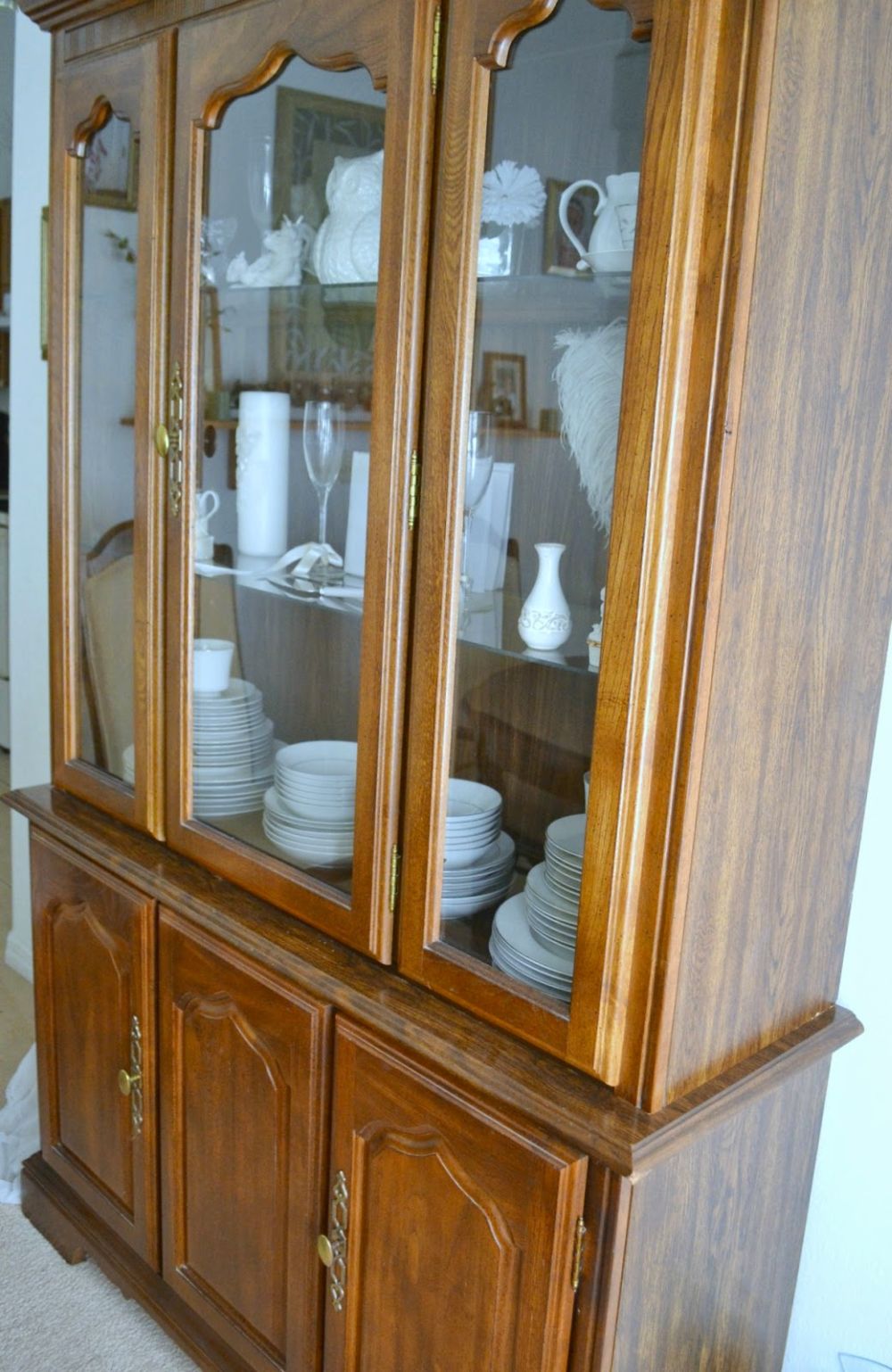
Shaped openings across the upper section echoed the curved molding on the lower fronts, giving the hutch detail beyond its brown finish. Long decorative backplates and oval knobs added another repeated shape down the cabinet.
Those elements remained part of the finished piece, with paint changing their surroundings rather than new doors or trim changing the design.
Separating the Cabinet Exposed the Lower Storage
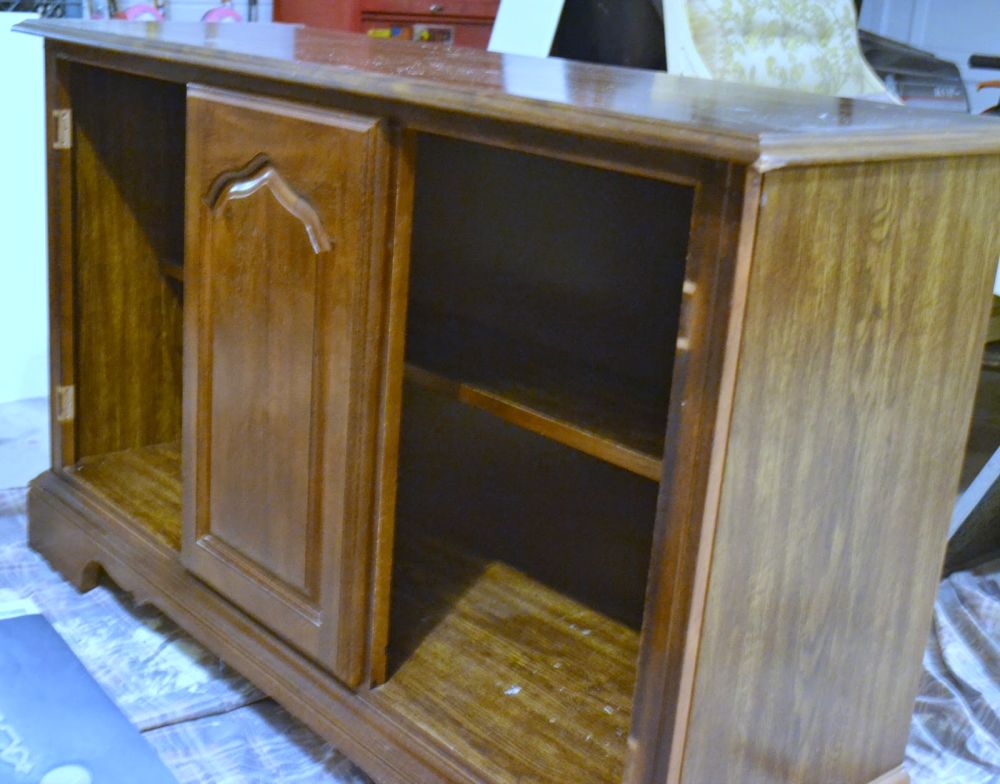
With the upper section lifted away and the outer lower doors removed, the base revealed its storage compartments and broad work surface. Removing the hardware also opened access to the edges around the doors and hinges.
Her husband helped move the separated sections into the garage, where the cabinet could be prepared and painted away from its dining room position.
The Upper Section Combined Wood and Laminate
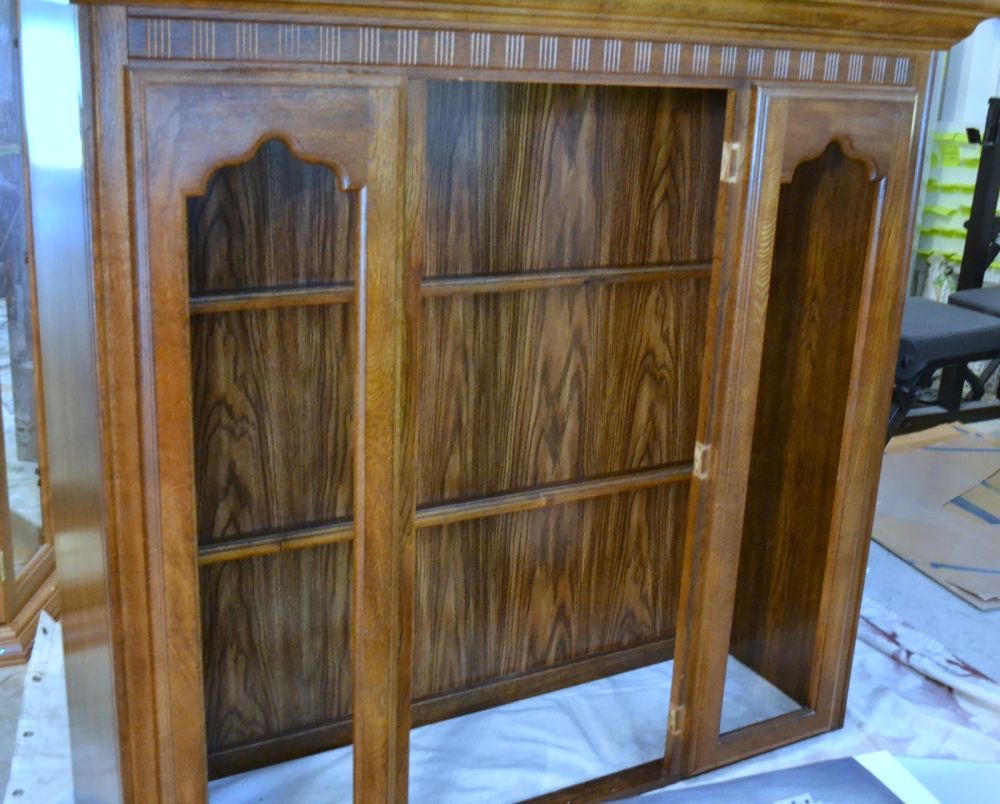
Without its glass, shelves, and center door, the upper cabinet exposed the brown backing behind the display. Narrow supports crossed that surface, while the shaped outer openings remained attached to the frame.
The owner identified the upper sides and back as laminate, which concerned her because she planned to paint without sanding. That material difference became part of the preparation, even though the original finish made the cabinet look like one continuous wood surface.
Primer Covered the Brown Before White Paint Went On
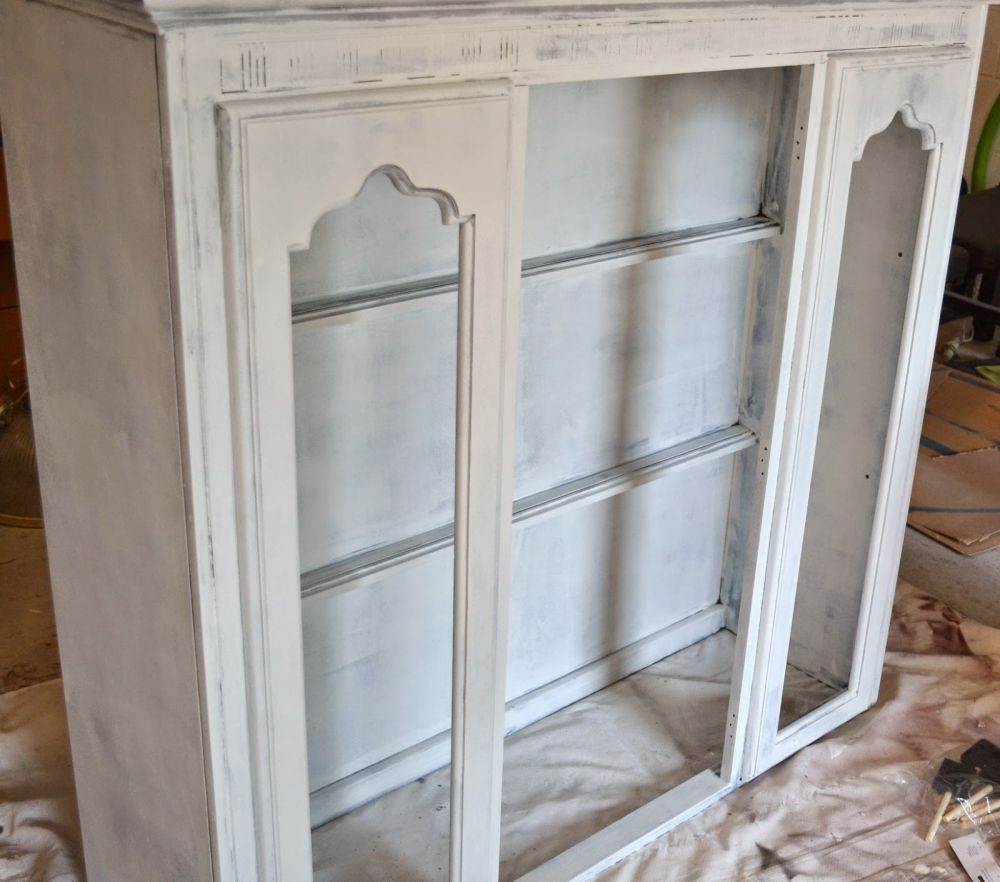
Pale primer covers the cabinet’s backing, sides, crown, and narrow front edges in this progress view, with traces of the darker finish still visible beneath it. The glass openings retain their curved profiles through the preparation stage.
She reported using two coats of Zinsser Cover Stain primer before applying the finish paint. This was her approach to the mixed surfaces, followed by the white exterior and a separate color inside the display.
A Spray Gun Handled the First White Coat
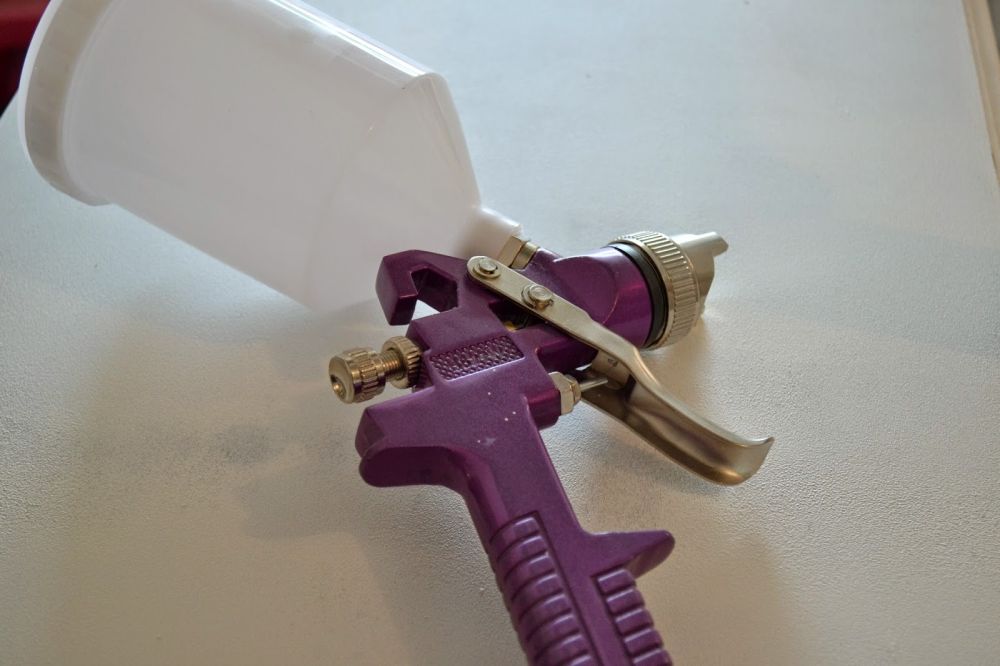
A purple Harbor Freight spray gun applied the first coat of Behr Popped Corn, helping her cover the cabinet’s broad panels and detailed trim. She reported paying $16.99 for the tool during the 2014 project.
The next two coats went on with a six-inch foam roller, so the finished surface came from a combination of spraying and rolling. White paint extended across the exterior from the crown to the shaped base.
Gold Hardware Returned With a Silver Finish
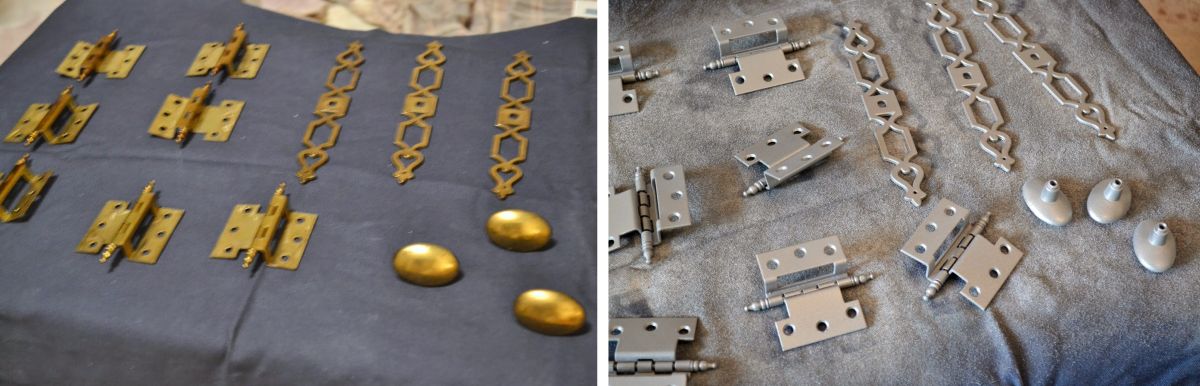
Hinges, decorative backplates, and oval knobs appear together before and after their color change, showing that the fittings were reused. Gold gave way to silver without altering the long, open shapes of the backplates.
Spray primer preceded two thin coats of Rust-Oleum silver metallic paint, bringing the existing hardware into the new palette. Against the white doors, those fittings provide contrast without introducing a different handle design.
Blue Behind the Glass Changed the Display
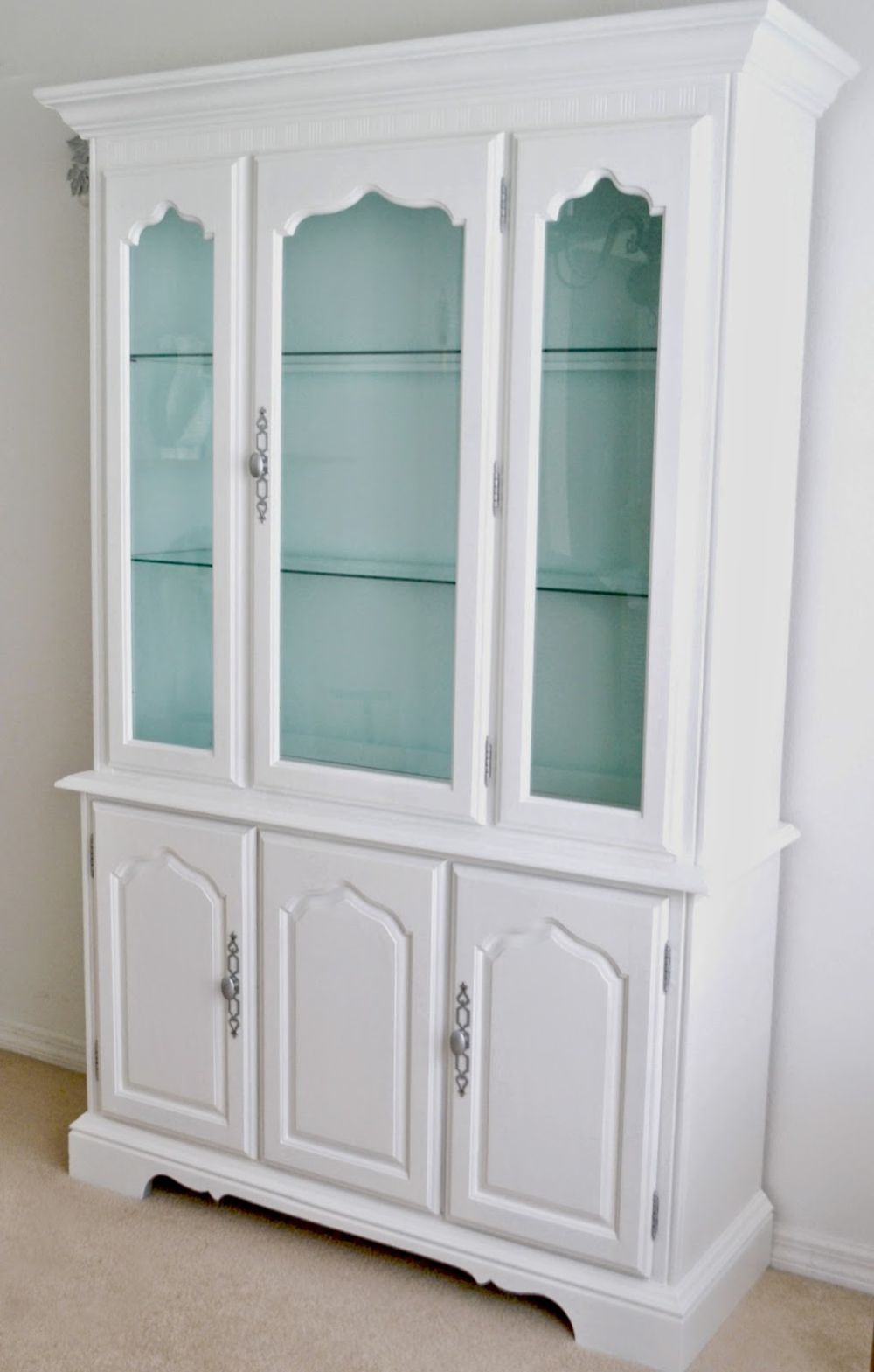
Cool Jazz covers the interior behind the glass shelves, creating a blue-green field within the white frame. The empty cabinet shows the division between the two colors before dishes and ornaments return.
The owner chose the shade to contrast with her white decor, keeping the stronger color inside the display. White paint around the shaped openings outlines the blue rather than carrying it across the entire cabinet.
Built-In Lighting Illuminated the Restyled Shelves
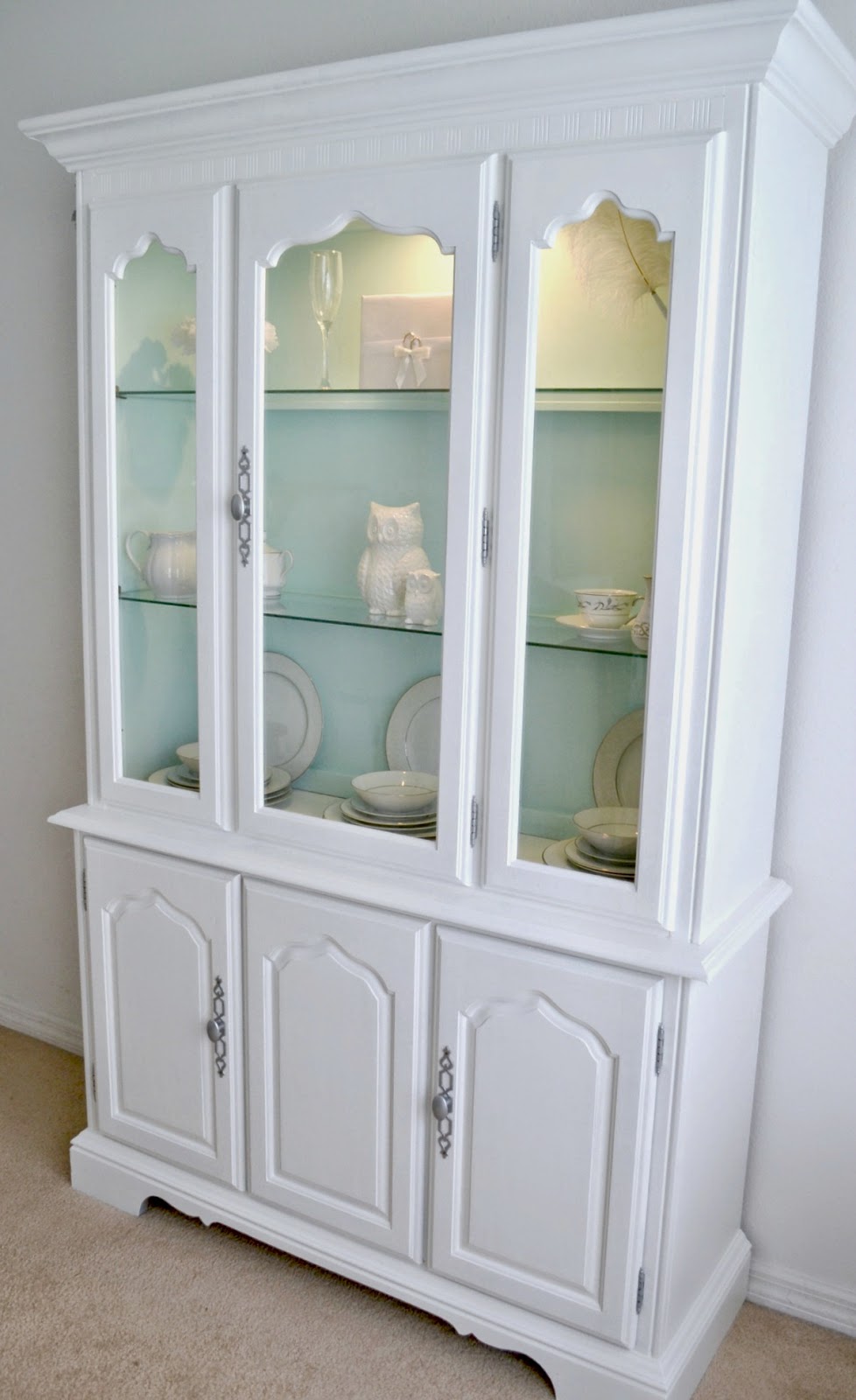
White plates, cups, pitchers, and owl figures sit against the colored backing, with the cabinet’s existing light illuminating the upper shelf. Glass shelves allow the background to remain visible through the height of the display.
The lower cupboards stay white and enclosed, while the upper section combines color, light, and visible contents. That division gives the hutch a different appearance without changing its storage arrangement.
White Ornaments Stand Against the New Background
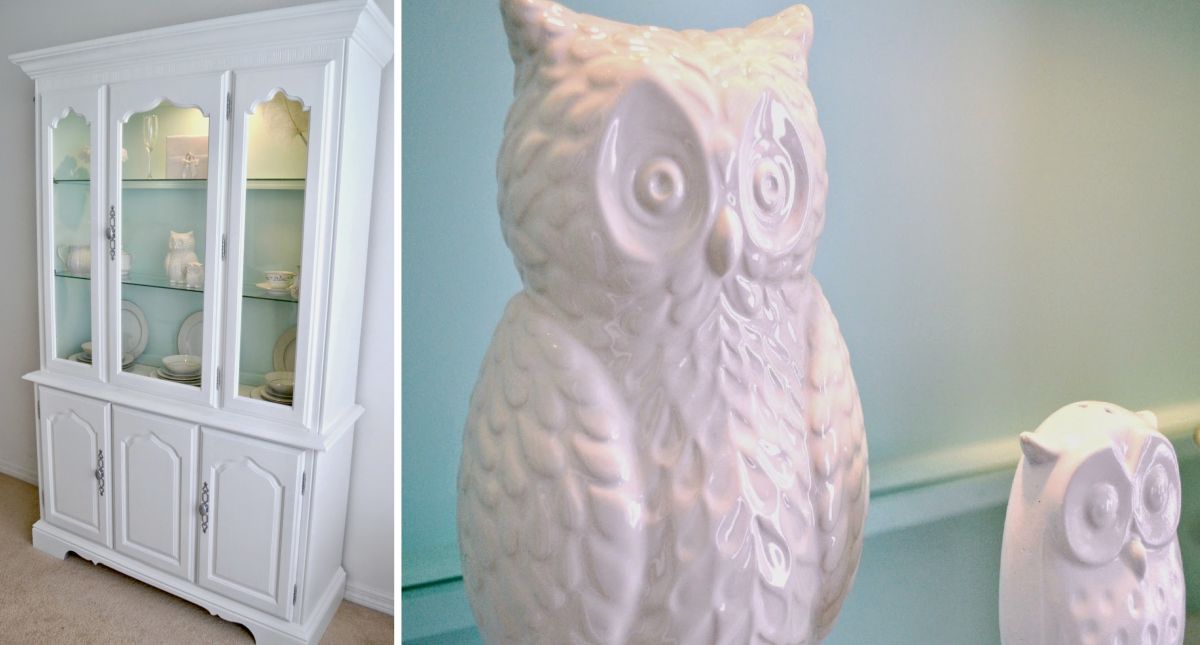
Close views show the raised feather details on the owl figures against the blue-green backing, with the white cabinet framing the collection. The colored interior gives those pale objects a distinct background that the exterior paint alone would not provide.
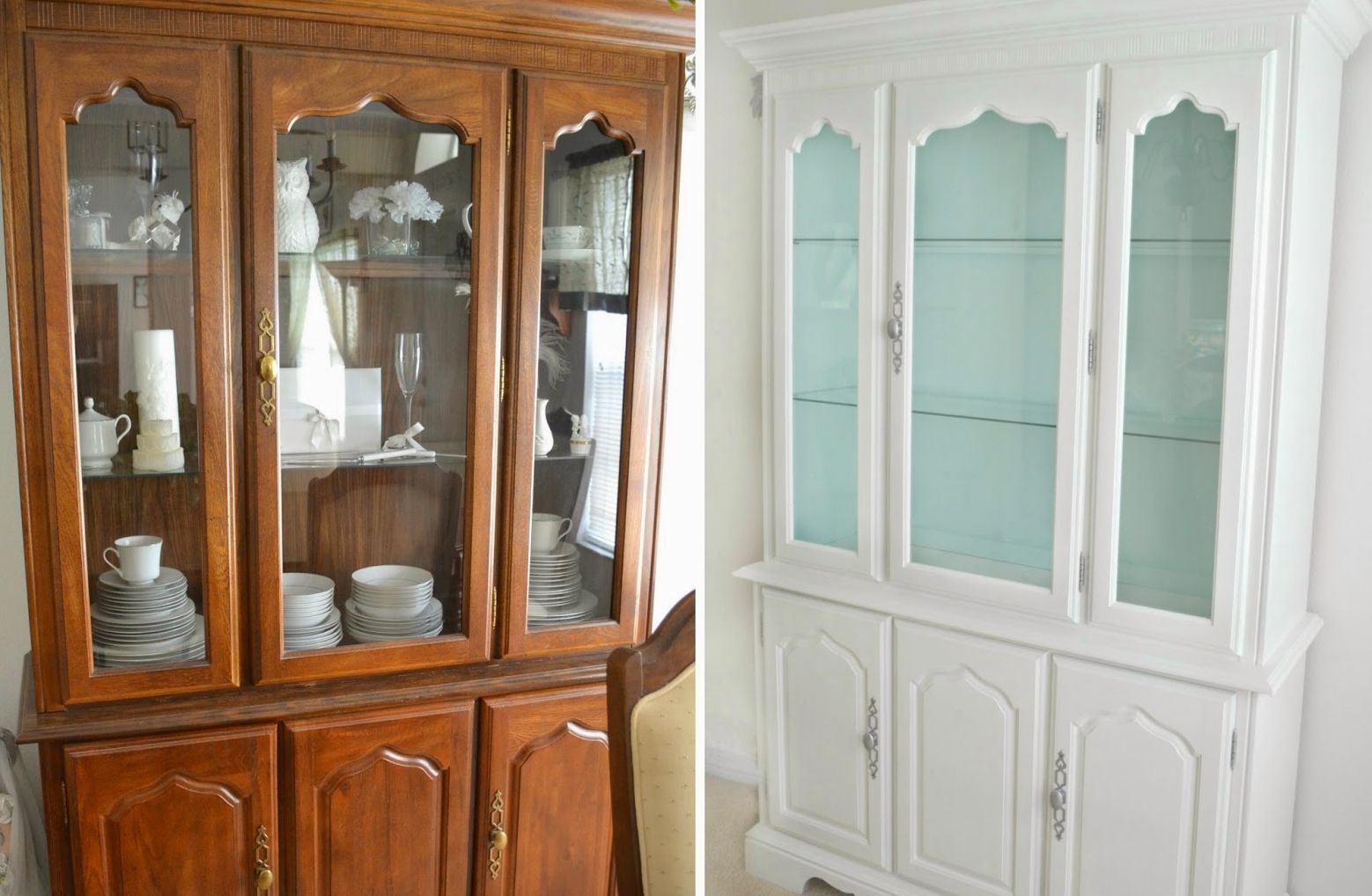
Before her mother offered this hutch, Tina Marie had struggled to find one with the right size and design. The inherited piece had the proportions, details, and lighting she wanted, but its dark finish held her back. Seen side by side, the two versions show how she made a family hand-me-down suit her home without giving up the features that made her accept it.
Would you paint furniture passed down through your family, or preserve the finish you remember?
Images and project credit: It’s a Mom’s World.