She bought her great-grandparents’ 1908 farmhouse back at auction, and the wood trim was still unpainted


Old houses that change hands for 80 years tend to lose their best details one owner at a time. The wood trim gets a coat of white paint, the stained glass gets swapped for plain panes, the pocket doors get stuck in the wall, and the ceilings get sprayed with popcorn texture.
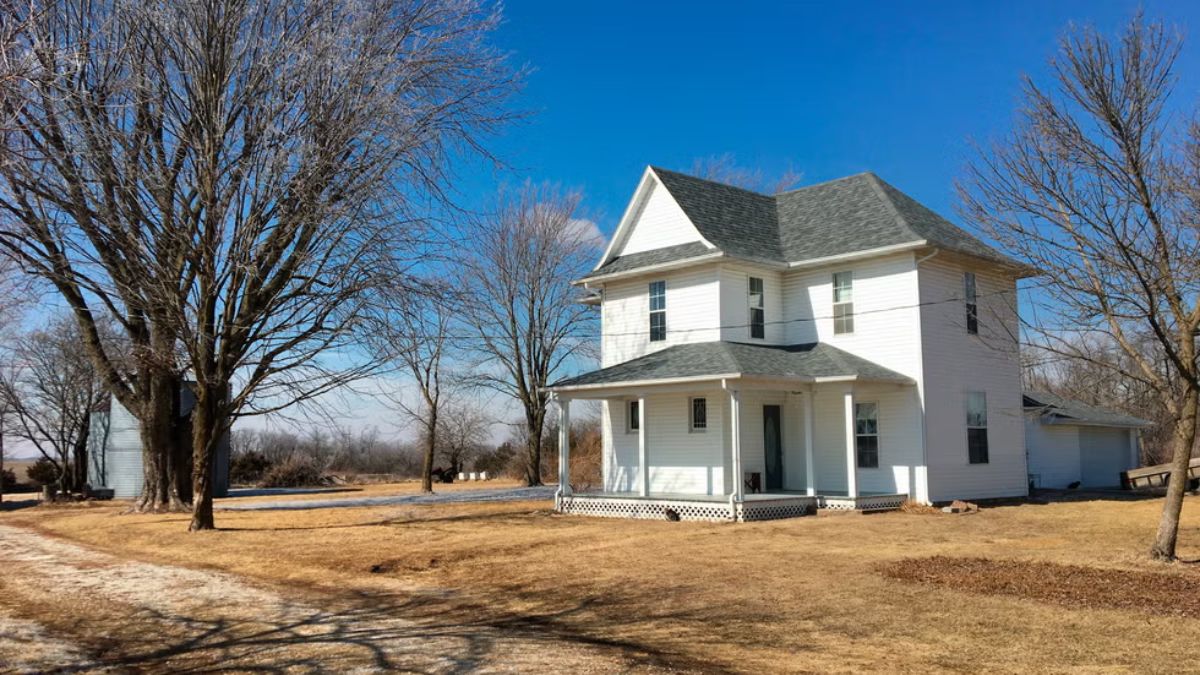
The house wasn’t the problem, the layers added over the decades were, and this one had fewer than most. Jennifer Kopf, an executive editor at a home magazine, traces her family to a white farmhouse her late great-grandparents, Til and Arizona Hays, built around 1908 in a small town in central Missouri: about 15 acres with grain bins and a red barn. The property had been out of the family since the mid-1940s. Then her cousin Tony, a real estate agent and auctioneer, sent the listing to her and her mom. A few hectic weeks later came a live auction on the property, and the house was hers.
Why the bones mattered more than the finishes
Previous owners had already handled the structural improvements, and the original details had survived nearly 120 years: the stained glass windows, the pocket doors and, most surprising, wood trim that had never been painted.
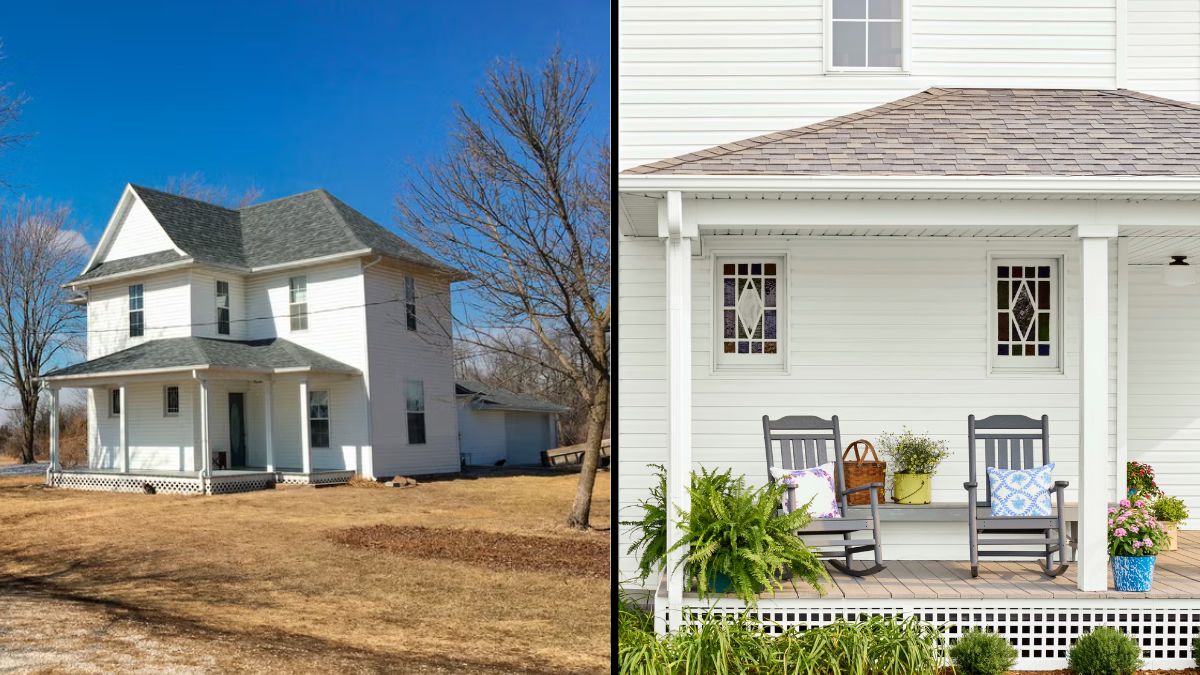
That last detail is the hardest to get back. Paint goes onto old trim in an afternoon, but taking it off again means hours of stripping and sanding every groove. Because the structure and the trim were already sound, Jennifer could focus on the finishes instead of a full restoration.
The same logic applies to decor. Not everything farmhouse has to go: pieces that do a job, like multi-drawer cabinets and architectural salvage such as carved panels, doors and shutters, still work in a room, while farm-themed signs and reproductions are what made the look feel dated.
What came out of the house, and what went in
- Keep every original. The stained glass windows, the unpainted trim and the pocket doors stayed exactly as they were.
- Take down the popcorn. The textured popcorn ceilings were removed.
- Strip the walls. Old wallpaper came off.
- Pull up the floors. Carpet and linoleum went too.
- Add period materials. Beadboard and shiplap went up to suit the age of the house.
- Choose fixtures that fit. Period-appropriate fixtures replaced newer ones.
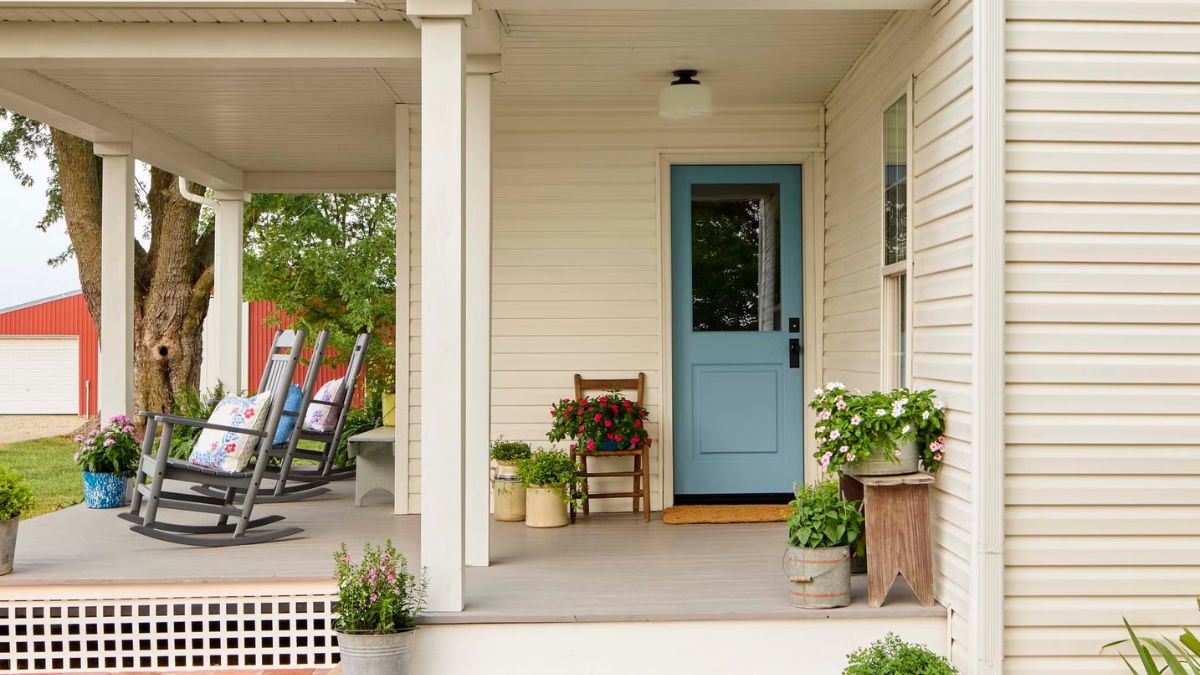
Jennifer writes about the work in the plural without naming who did which job, and she doesn’t share the auction price, the renovation budget, the paint colors or how long it took.
Plan B, if the trim in your old house is already painted: don’t start stripping right away. Beadboard, period fixtures and removing a popcorn ceiling can bring back the age of a room without touching the woodwork.
What a house this old can hide in its ceilings and floors
Old ceiling texture and old flooring are worth checking before you scrape anything. A Washington air quality agency explains in its guide to removing spray-on popcorn ceilings that not all of them contain asbestos, but the only way to know for sure is to send popcorn samples for laboratory analysis. If you skip the test, it says to assume the ceiling contains asbestos and treat it that way.
The EPA adds that material in good condition that won’t be disturbed is best left alone, and it recommends an inspection by an accredited professional before you remodel. Old linoleum and its adhesive deserve the same caution as the ceiling.
Paint is the other question. A house built around 1908 is likely to have lead-based paint somewhere under later layers, so test before sanding walls or any trim that was painted.
Stained glass and pocket doors are easy to damage and hard to replace. If a panel is loose or a door sticks in its track, call a specialist before forcing anything.
Keep what’s original, and remove only what came later. That’s the trick.