Instead of Tiling the Wall Behind Their Toilet, They Covered It With Old Fence Boards


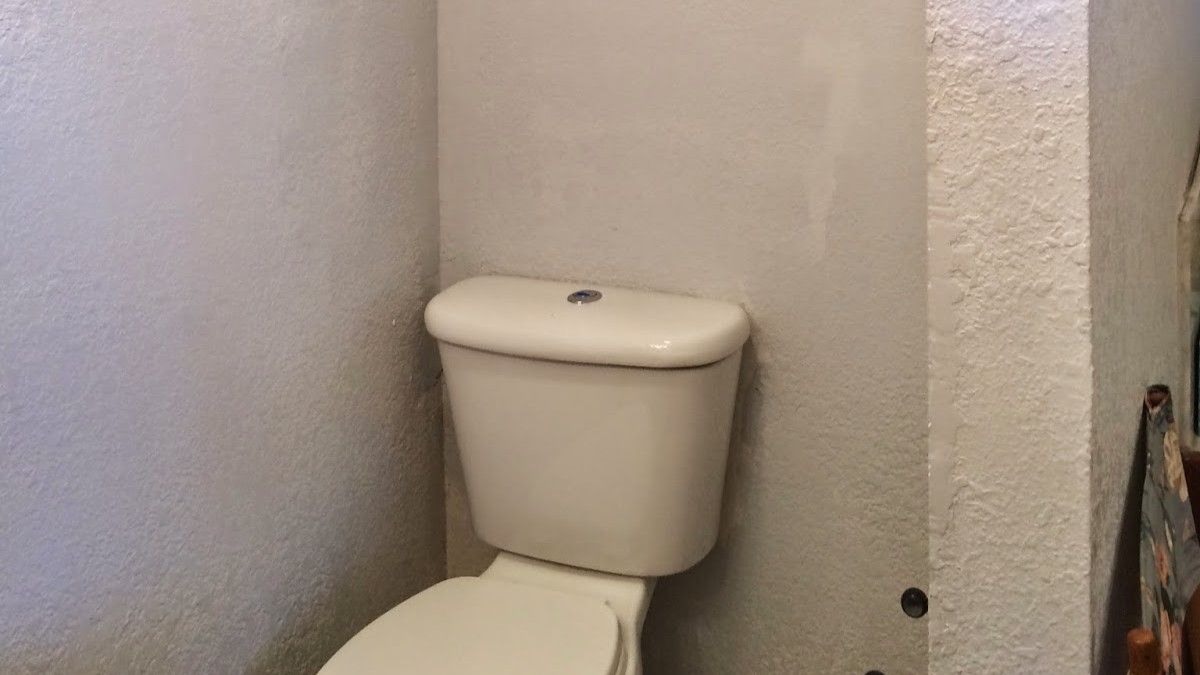
The wall behind the toilet in this master bathroom was a narrow recess with a plain white finish. Its textured surface extended from the toilet tank to the ceiling, with no shelves, tile, or decoration covering the space.
Instead of installing tile or buying new wood paneling, the homeowners used discarded fence pickets from a stack in their backyard. They cut the boards into different lengths and arranged them in horizontal rows, mixing weathered brown, gray, and tan wood across the wall.
DeeDee from Clover House shared the project after her husband helped build the accent wall as a Valentine’s Day gift in 2015. The couple finished the project in a few hours, using reclaimed boards, construction adhesive, and a nail gun.
White Bathroom Wall Behind the Toilet Before the Makeover
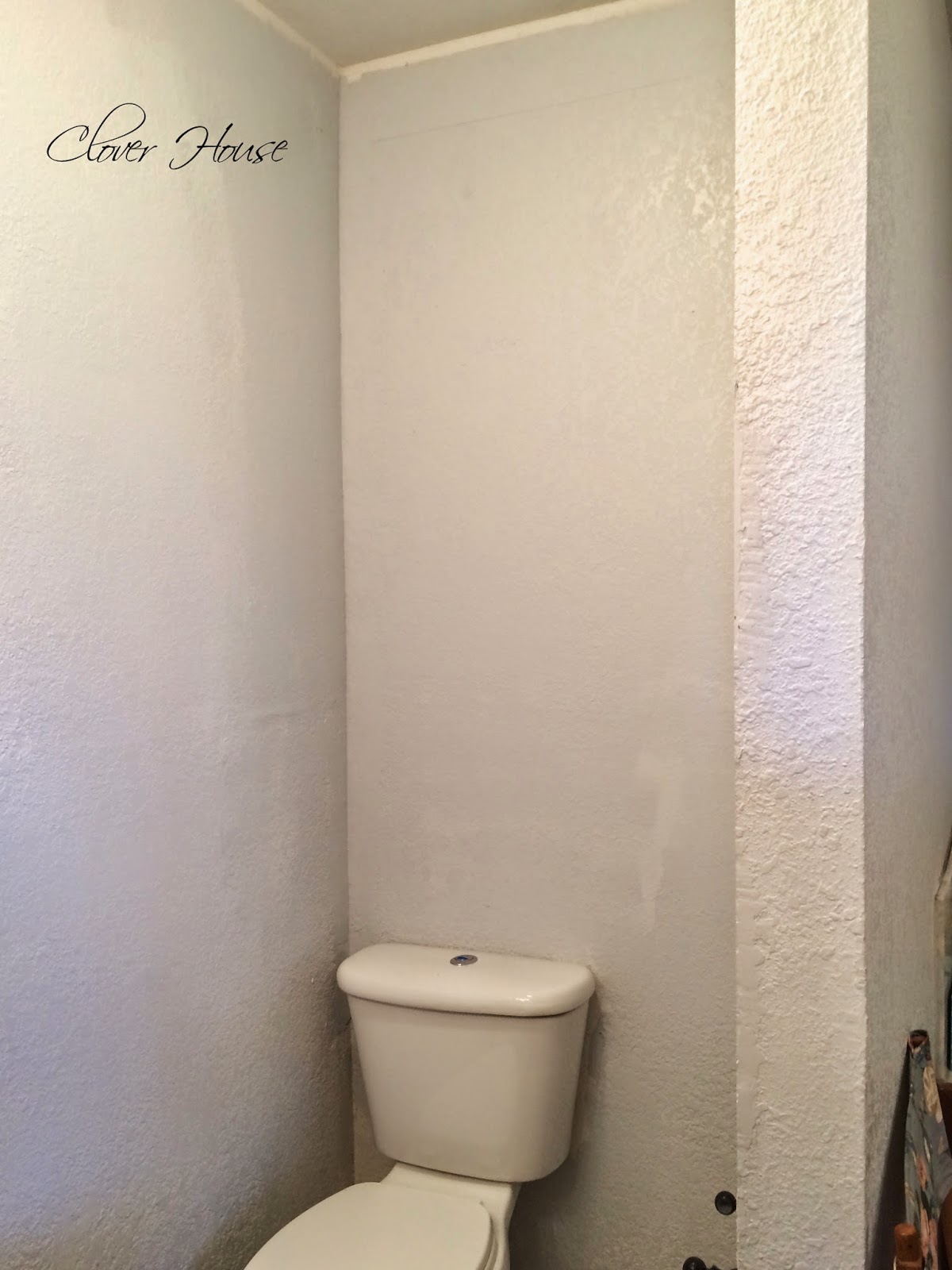
The original bathroom had a white toilet positioned inside a recessed space with textured walls on three sides. A narrow projection along the right side framed the back wall, leaving a rectangular section above the toilet tank.
The couple chose to cover the back wall from the ceiling down toward the floor, leaving the surrounding white walls untouched.
Old Fence Pickets Were Measured and Attached Across the Top
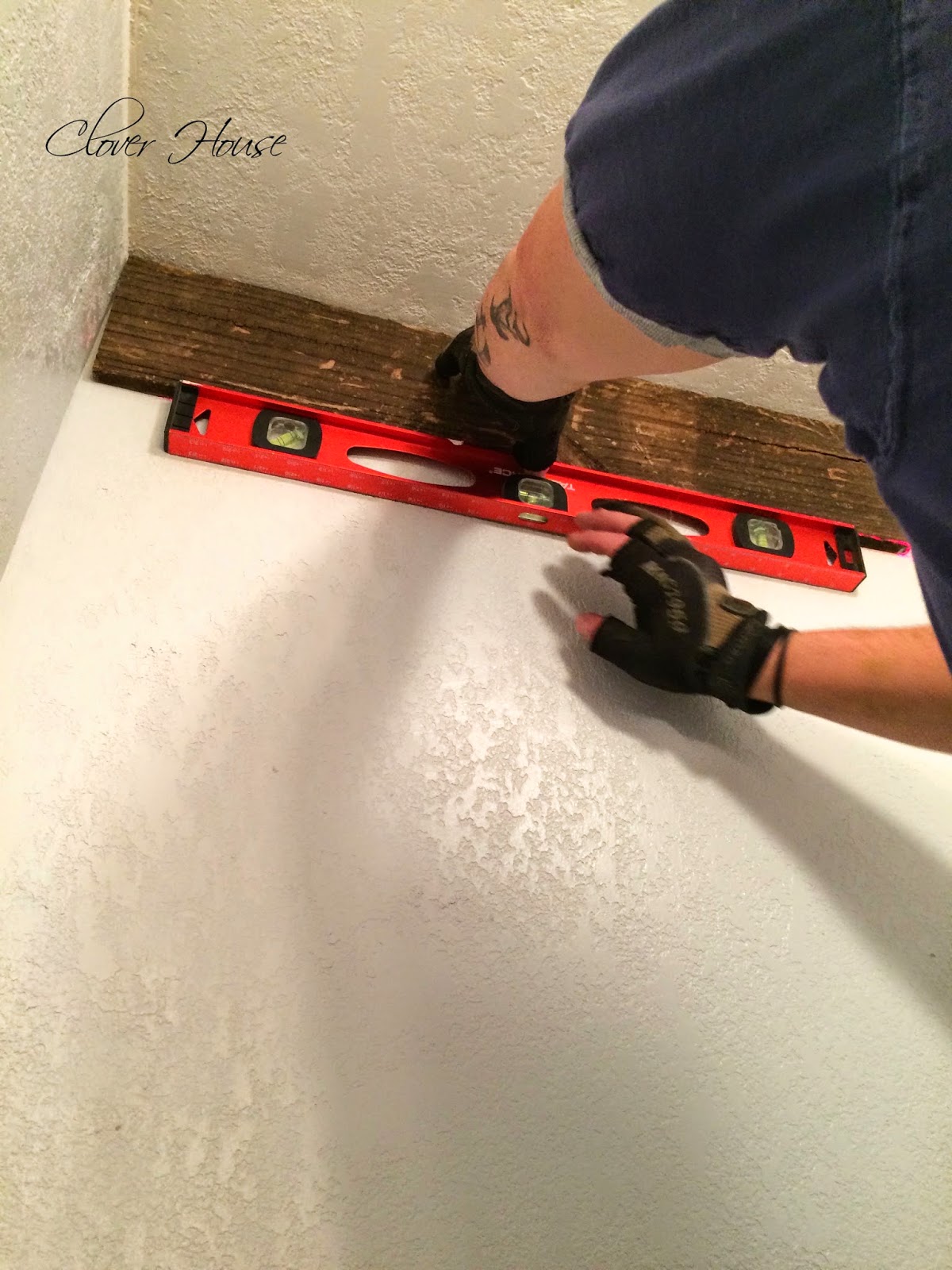
The couple selected boards from their collection of recycled fence pickets and removed old nails and staples before installation. Some boards had warped from outdoor exposure, so the pieces needed to be checked before fastening them to the wall.
The first row was positioned against the ceiling and checked with a level. Each row used two boards of different lengths, allowing the joints to shift across the wall rather than forming continuous vertical lines.
Construction Adhesive and Brad Nails Secured the Wood
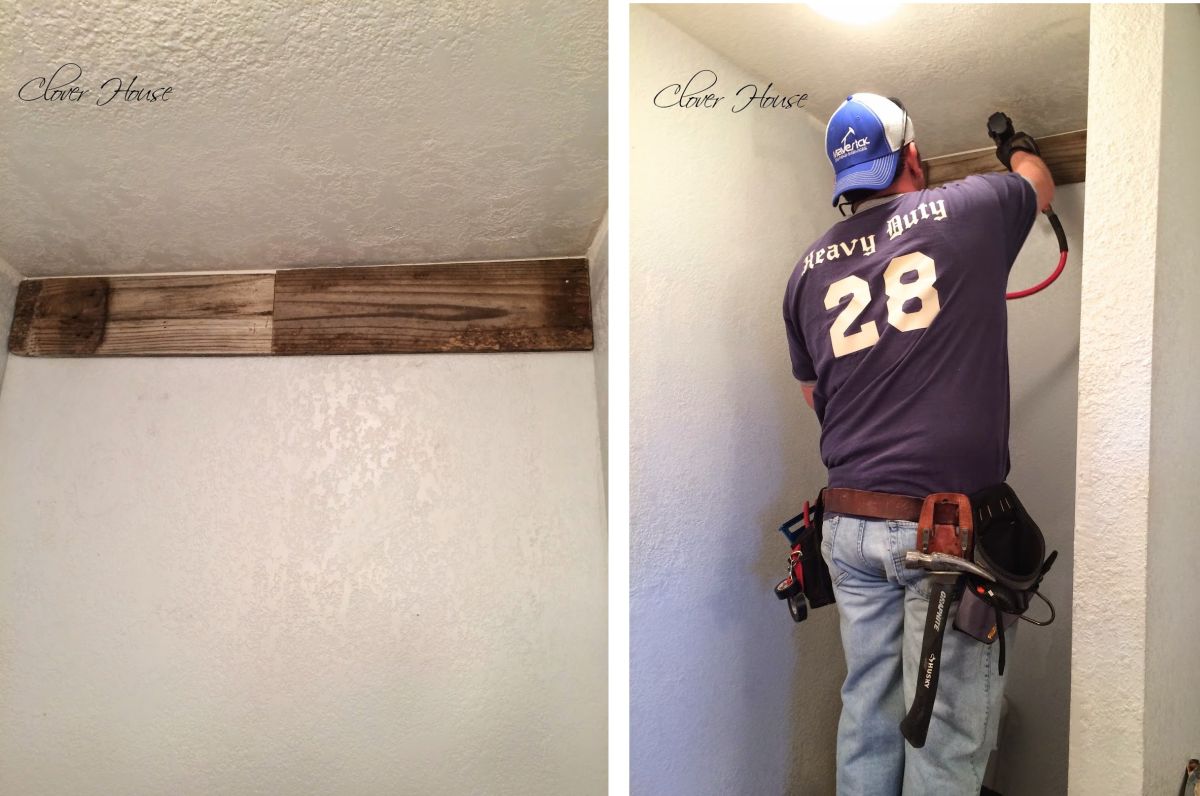
The couple applied a small amount of construction adhesive to the backs of the boards and secured them to the wall studs with 1¼-inch brad nails.
Her husband measured and marked the space while DeeDee recorded the dimensions. They cut enough wood for four or five rows at a time before returning to install the pieces, checking the fit before applying adhesive.
Short and Long Boards Created a Staggered Pattern
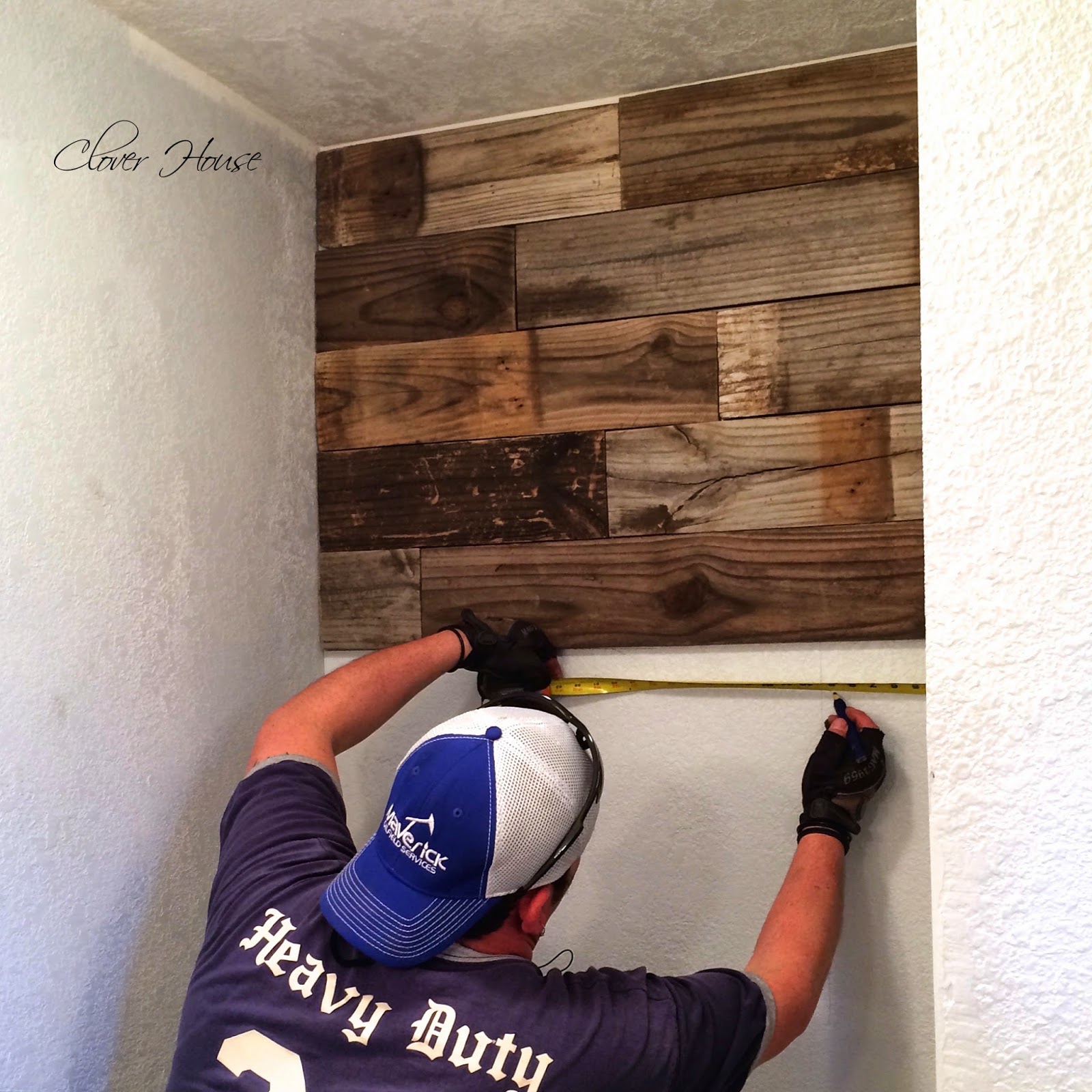
As the installation progressed, the wall took on a patchwork appearance. Boards with dark brown weathering sat beside lighter sections, while some retained knots, scratches, and marks from their previous use outdoors.
The couple selected different wood tones for each row rather than grouping boards with matching finishes. The staggered joints continued down the wall as they measured and cut additional pieces.
Weathered Fence Boards Kept Their Original Finish
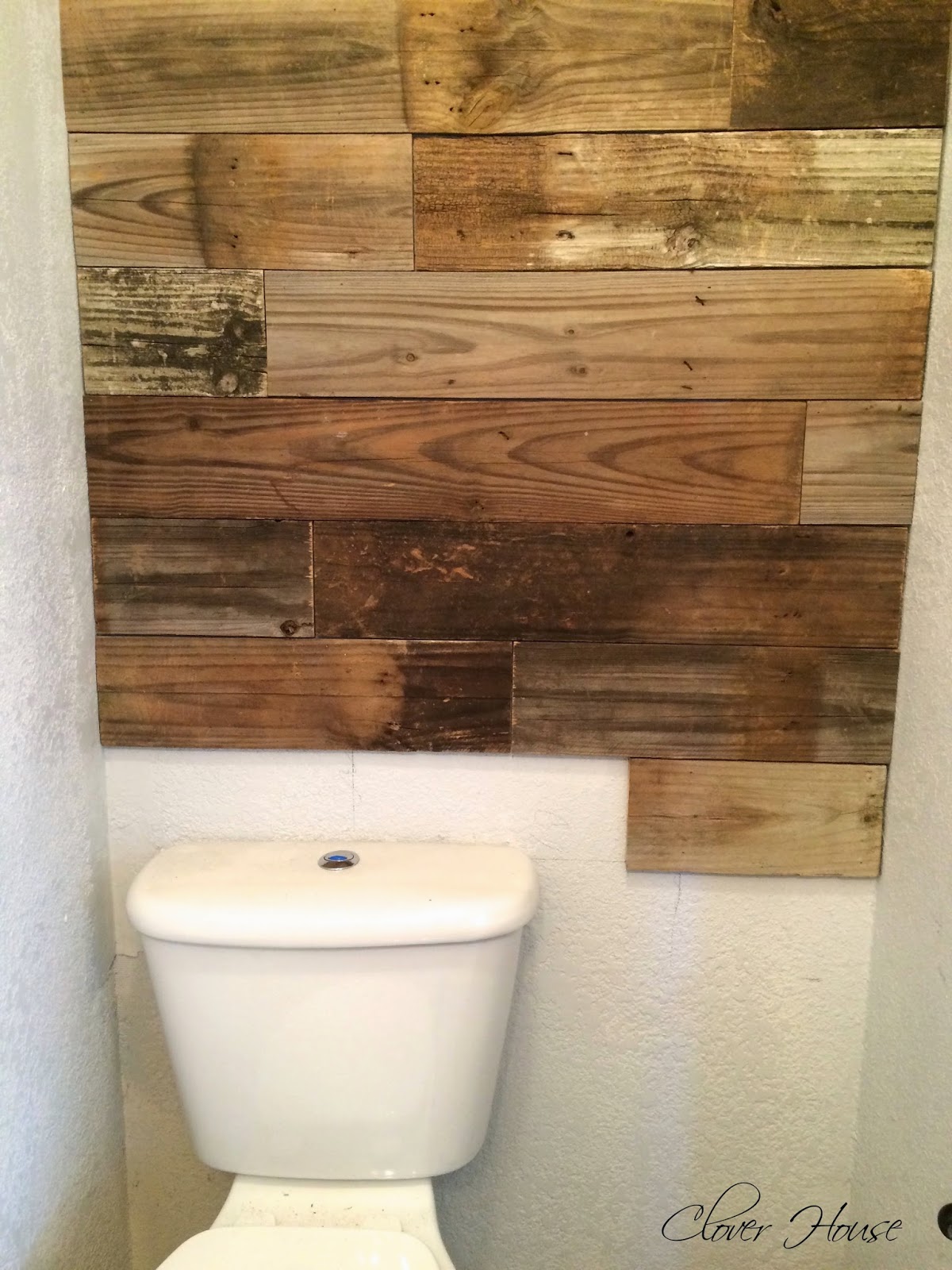
The reclaimed pickets varied from pale tan to dark brown, with gray patches and exposed grain across their surfaces. Some sections showed old marks and discoloration from weather exposure.
The boards were not painted to create a uniform finish. Their existing colors formed the pattern, with the horizontal arrangement bringing different shades together across the narrow wall.
The Toilet Tank Created an Installation Problem
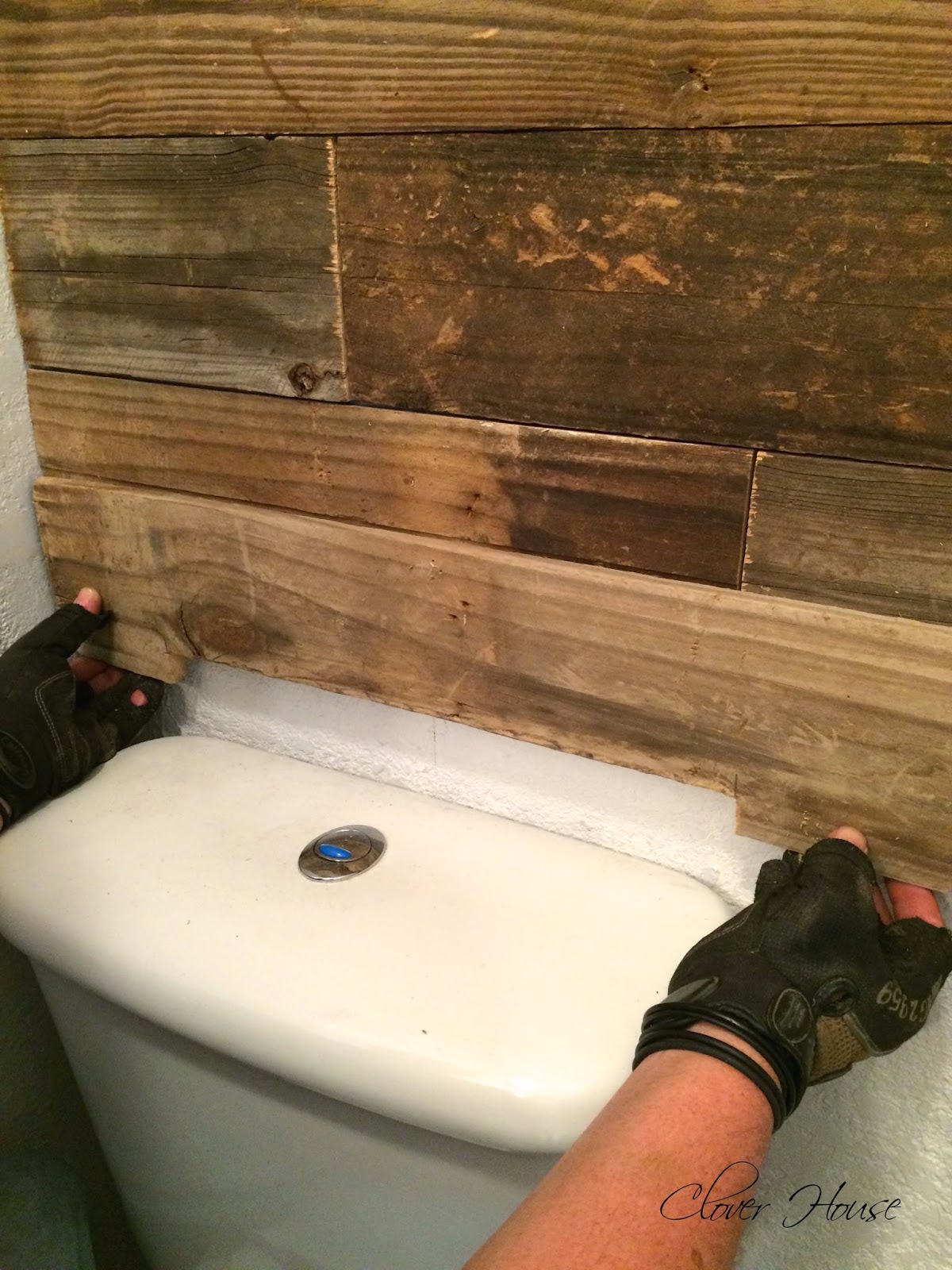
When the installation reached the toilet, the next board would not fit behind the tank lid. The couple tried moving the toilet forward, but there was not enough space to accommodate the wood.
Her husband cut a section from the board to clear the projecting tank lid, allowing the planks to continue down the wall without moving the toilet.
Cutout Allowed the Boards to Fit Around the Tank
The modified board was positioned around the upper edge of the toilet tank, with the cutout hidden behind the lid. The remaining planks continued beneath it, bringing the wood covering down toward the floor.
This adjustment kept the toilet in its existing position while allowing the wall treatment to extend behind the fixture.
Reclaimed Fence Pickets Now Cover the Entire Back Wall
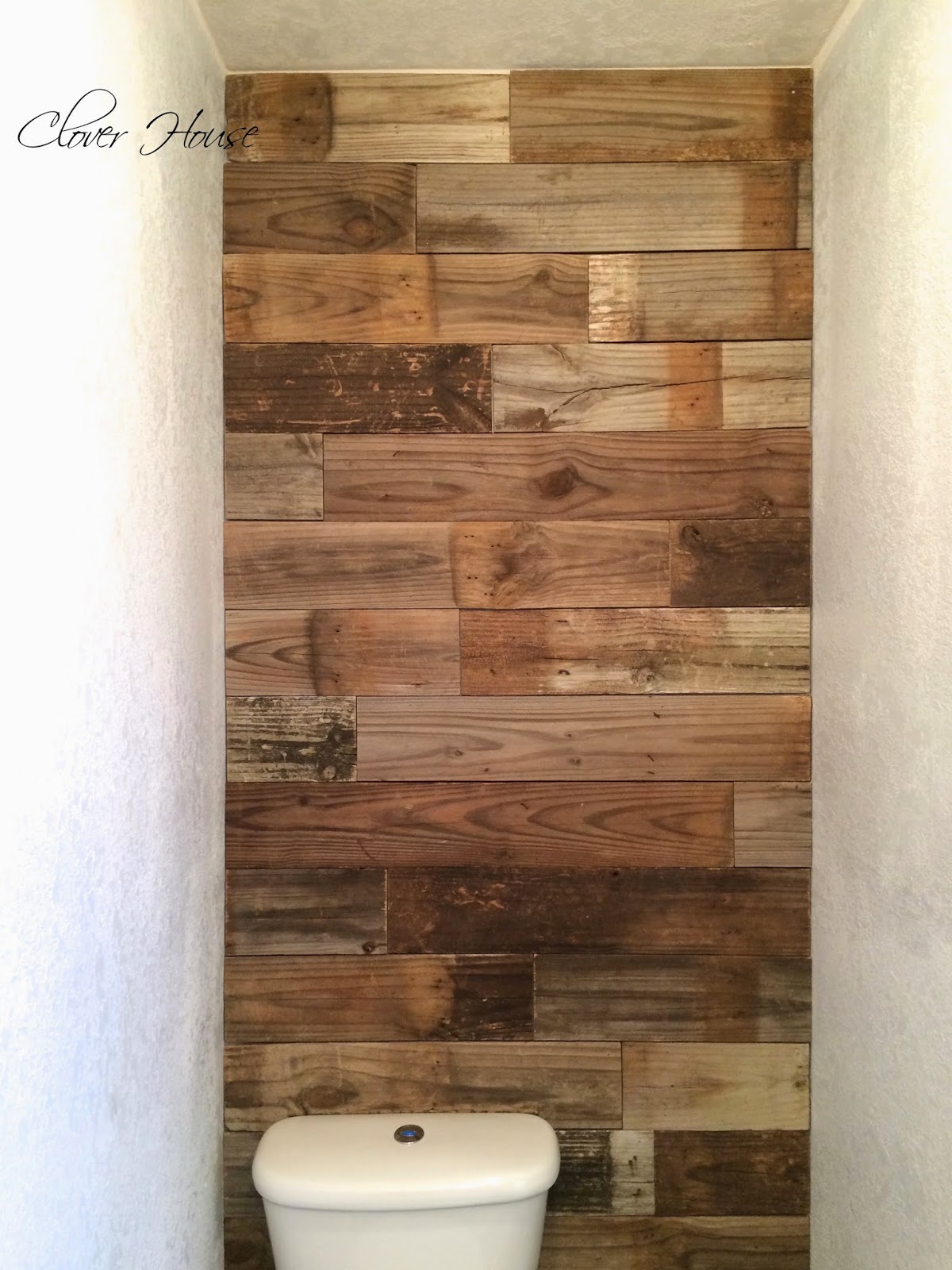
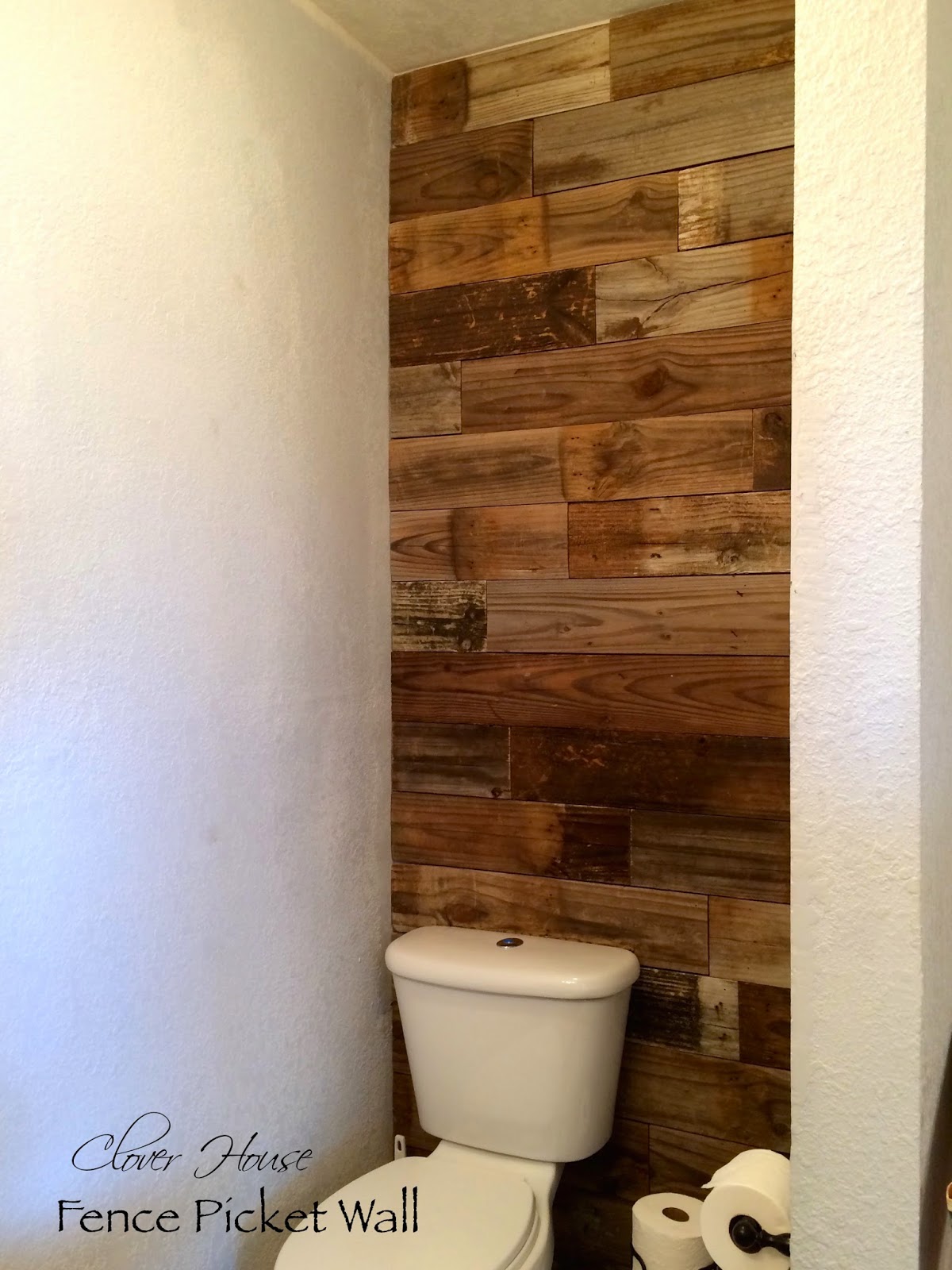
The finished wall has horizontal rows of reclaimed fence boards extending from the ceiling to the floor behind the toilet. Brown, gray, and tan sections alternate across the surface, with no paint or matching stain applied to the wood.
The white side walls, toilet, and surrounding bathroom fixtures remain unchanged. The entire transformation is concentrated on the narrow back wall.
A Small Bathroom Recess Gets a New Wood Finish
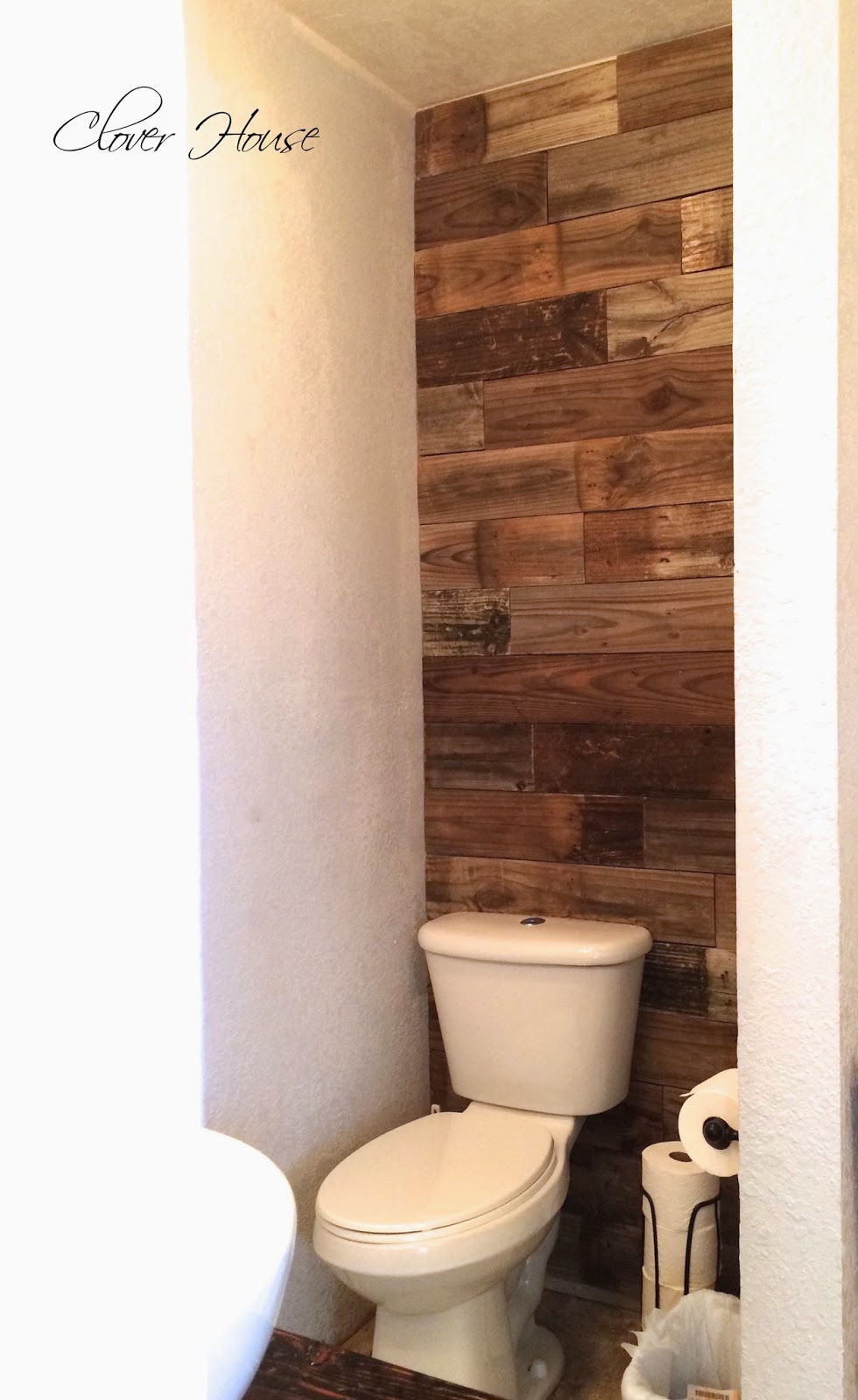
Viewed from the bathroom entrance, the wood covering fills the recessed wall behind the toilet. The staggered boards contrast with the white textured surfaces around them, while the narrow space retains its original dimensions.
The couple used wood they already had, avoiding the cost of buying boards for the project. DeeDee also explained that she cleans the finished surface with a vacuum brush attachment when needed.
From a Blank White Wall to Reclaimed Fence Wood
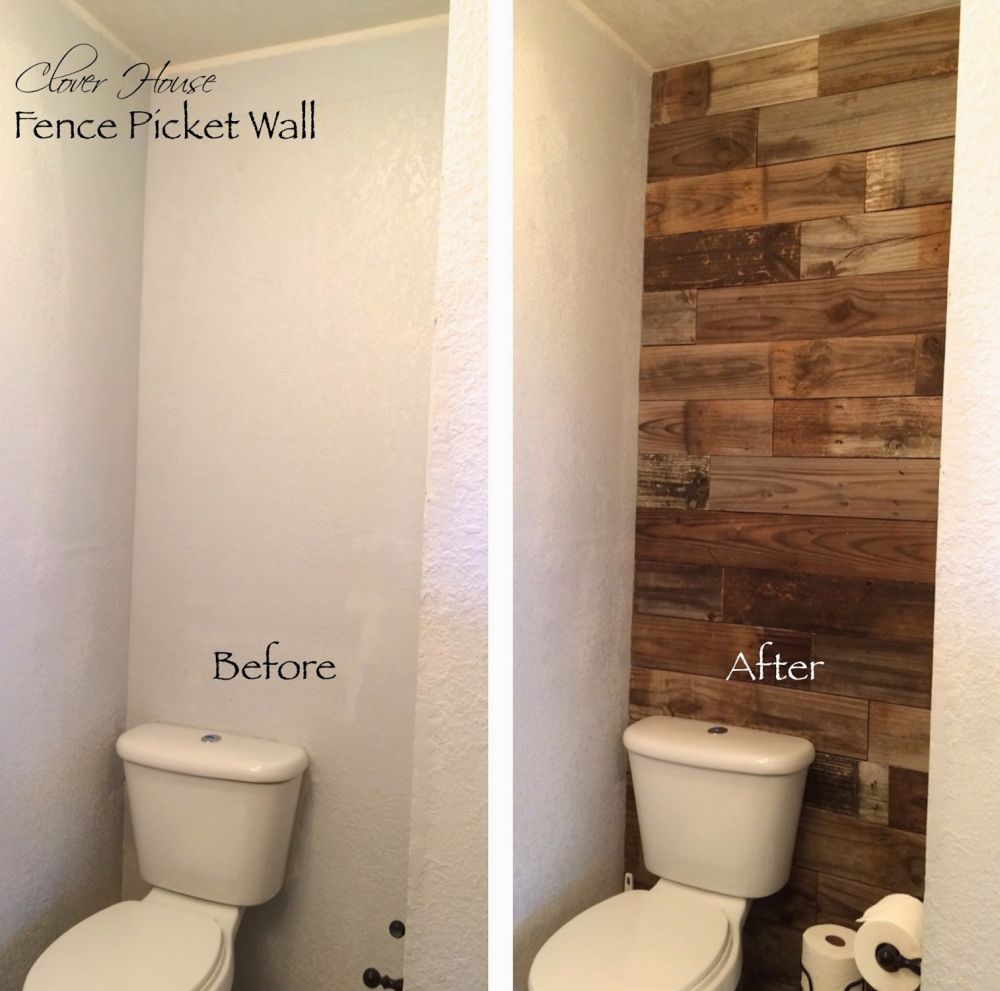
The before-and-after comparison shows how the former white wall became a surface of horizontal wood planks without changing the toilet or bathroom layout.
The couple completed the installation in a few hours, using recycled fence pickets, adhesive, brad nails, and a cutout to work around the toilet tank. DeeDee described the finished wall as her Valentine’s Day gift from her husband, who chose the project instead of candy or flowers.
The couple also found another use for reclaimed wood in the garden, where they used leftover fence pickets to hide a flower pot without repotting the plant.
Would you use reclaimed fence boards behind a toilet or choose tile for a bathroom accent wall?
Image credits: Clover House, DeeDee.