Instead of Spending $50,000 on Her 1915 Bungalow Kitchen, She Transformed It for Under $2,000


She wanted to avoid spending $50,000 remodeling the kitchen in her 1915 Arts & Crafts bungalow. Instead, she spent under $2,000 and kept the dark cabinets, butcher-block countertops, stainless steel appliances, and existing layout.
In a transformation shared on Reddit’s r/kitchenremodel by u/Blood_sweat_and_beer, the homeowner stripped up to eight layers of paint from the window trim, refinished the worn wood countertops, and installed an emerald green backsplash that looks like ceramic tile but is peel-and-stick.
Brass hardware, a rebuilt crystal chandelier, and a handmade spice rack using pieces from an antique chess set completed the makeover.
The Original Kitchen Had Dark Cabinets and White Window Trim
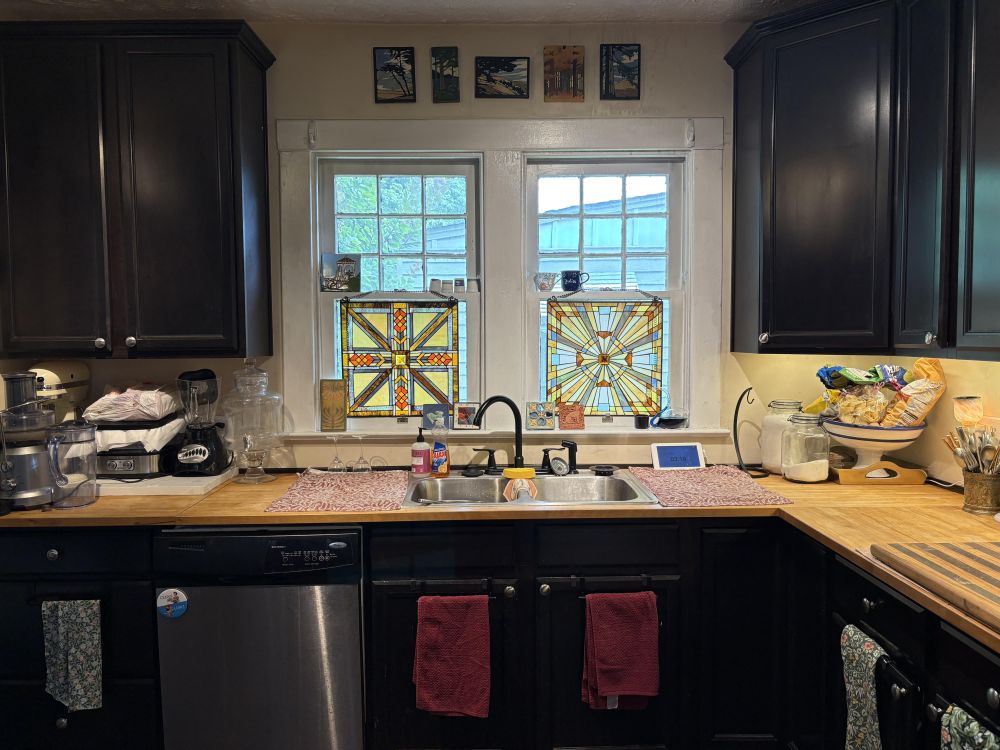
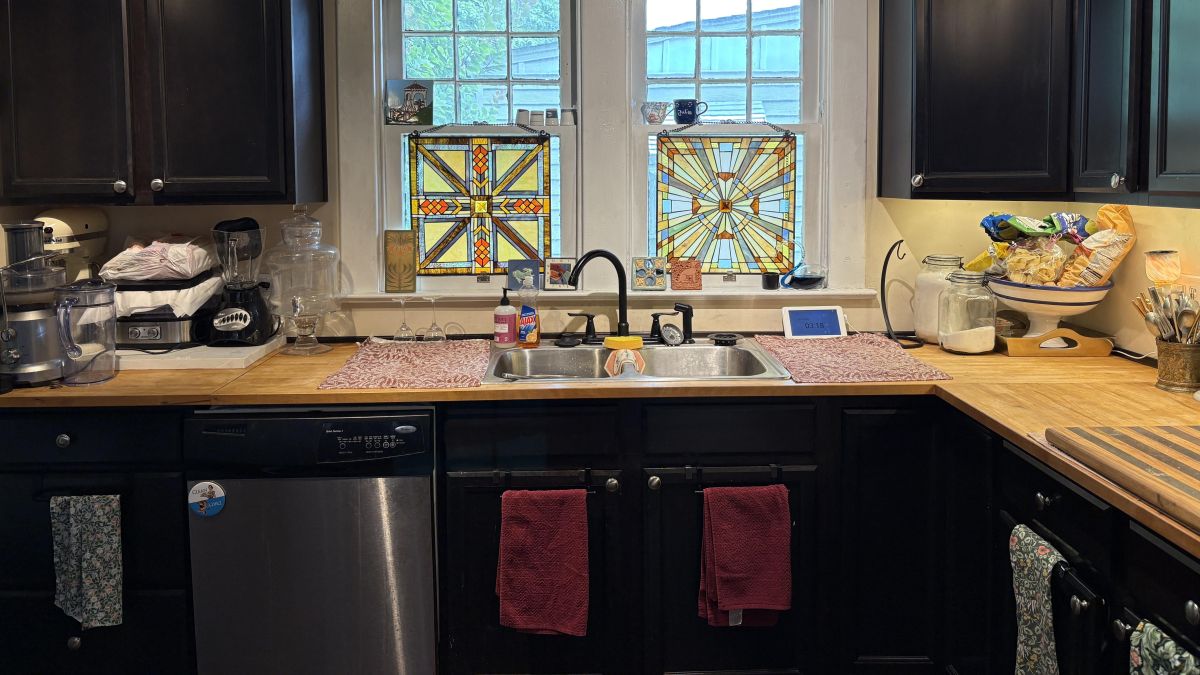
Dark stained cabinets surrounded the stainless steel sink, with beige walls above the yellow-toned butcher-block countertops. White-painted trim framed two windows, each holding a decorative stained-glass panel.
The homeowner wanted a kitchen that suited the bungalow’s 1915 architecture, but replacing the existing cabinetry would have consumed much of the budget.
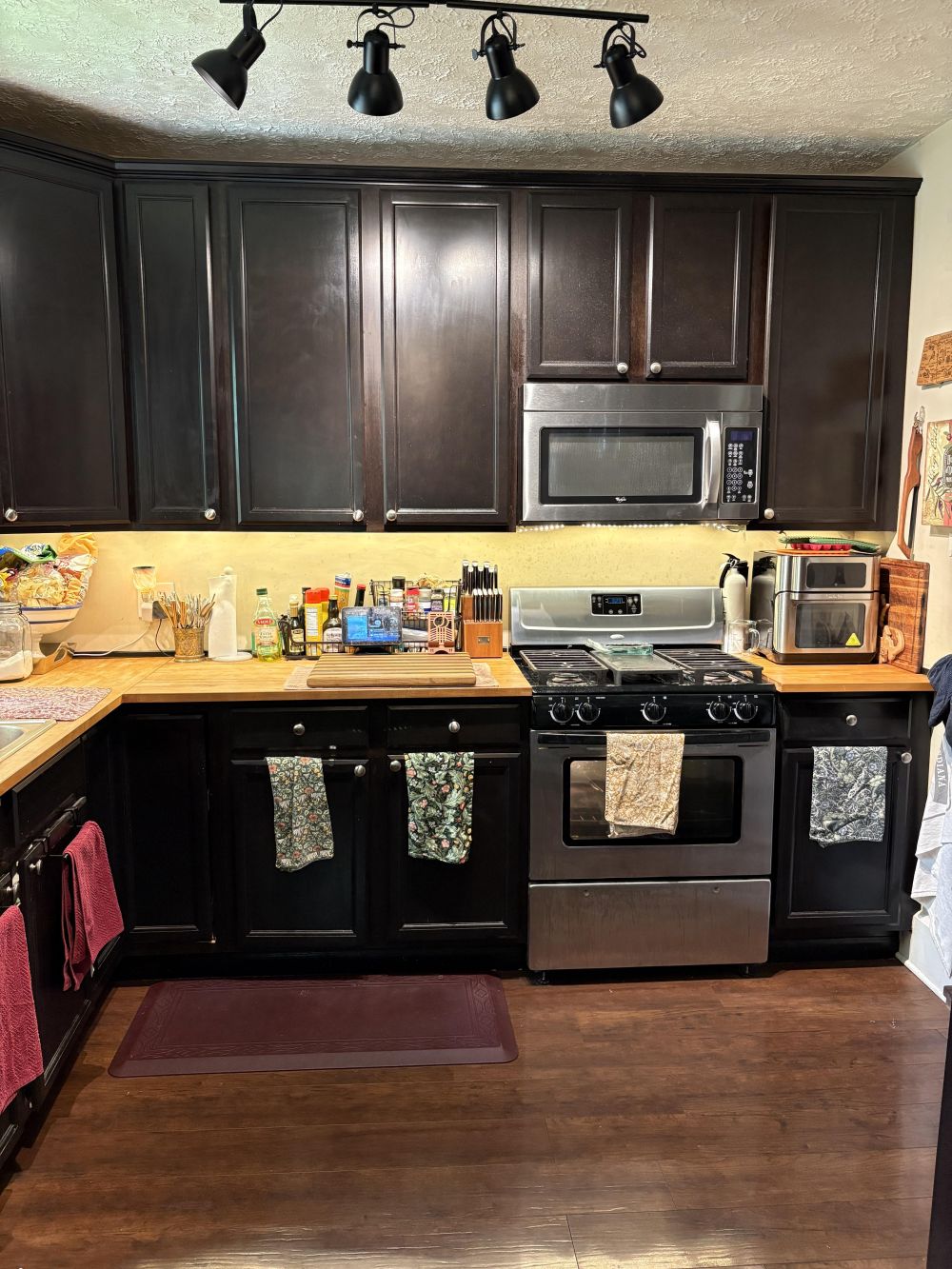
Across the cooking wall, upper cabinets reached almost to the ceiling, with a stainless steel microwave installed above the gas range.
The original cabinet doors had recessed panels and dark brown finishes. Countertop appliances, utensil containers, and an assortment of kitchen towels filled the space, but the cabinets, stove, and storage arrangement were left untouched.
Emerald Green Peel-and-Stick Tile Replaced the Beige Backsplash
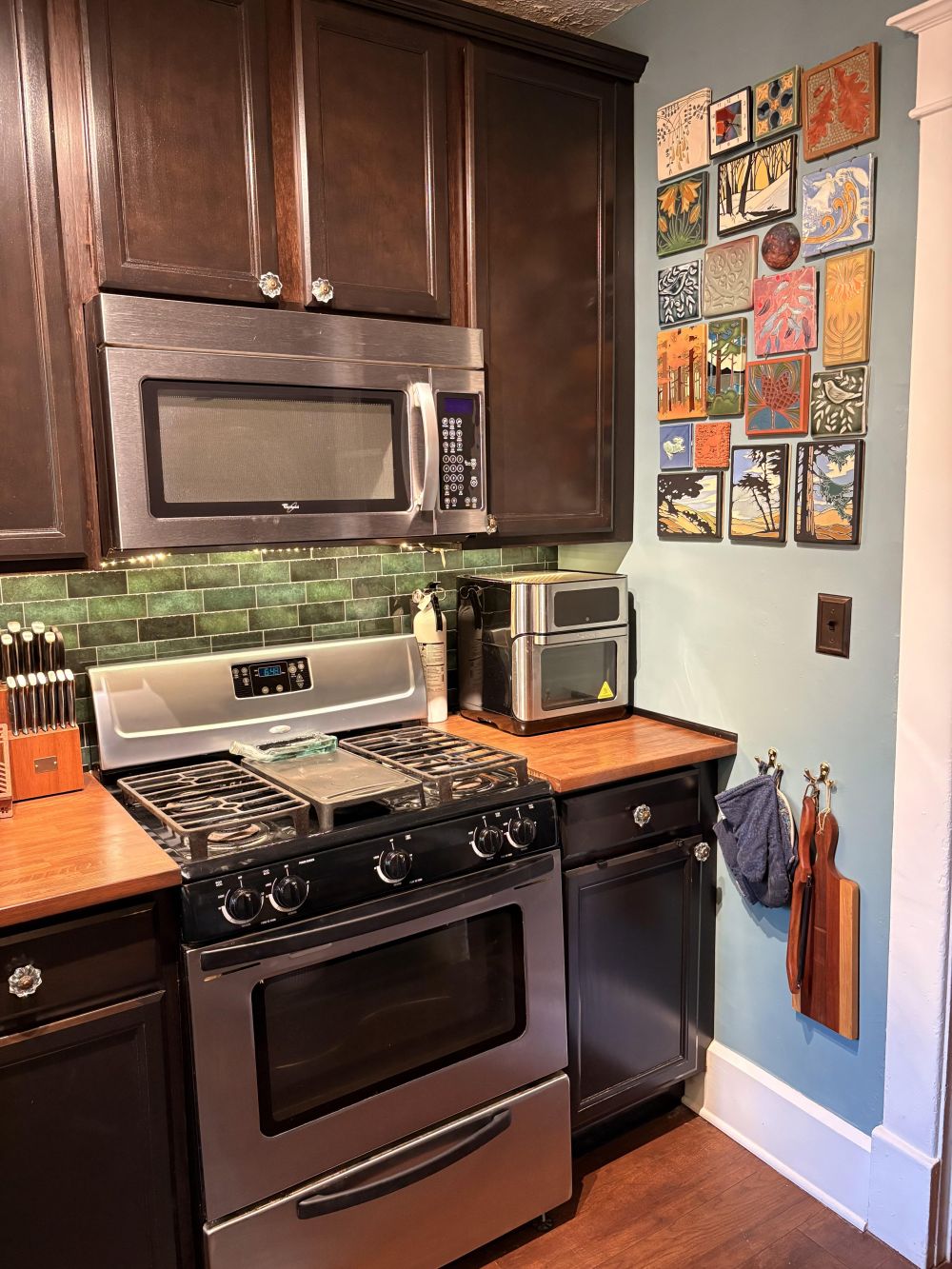
The new backsplash resembles dark green glazed subway tile, with variations between emerald, forest green, and near-black.
The homeowner originally planned to install ceramic tile but discovered that the window trim lacked enough clearance for its thickness. She chose Smart Tiles peel-and-stick panels instead, taking care to conceal the seams.
On the wall beside the stove, she arranged a collection of Arts & Crafts decorative tiles, including pieces from Motawi. These came from her existing collection rather than the renovation budget.
She Stripped Up to Eight Layers of Paint From the Window Frames
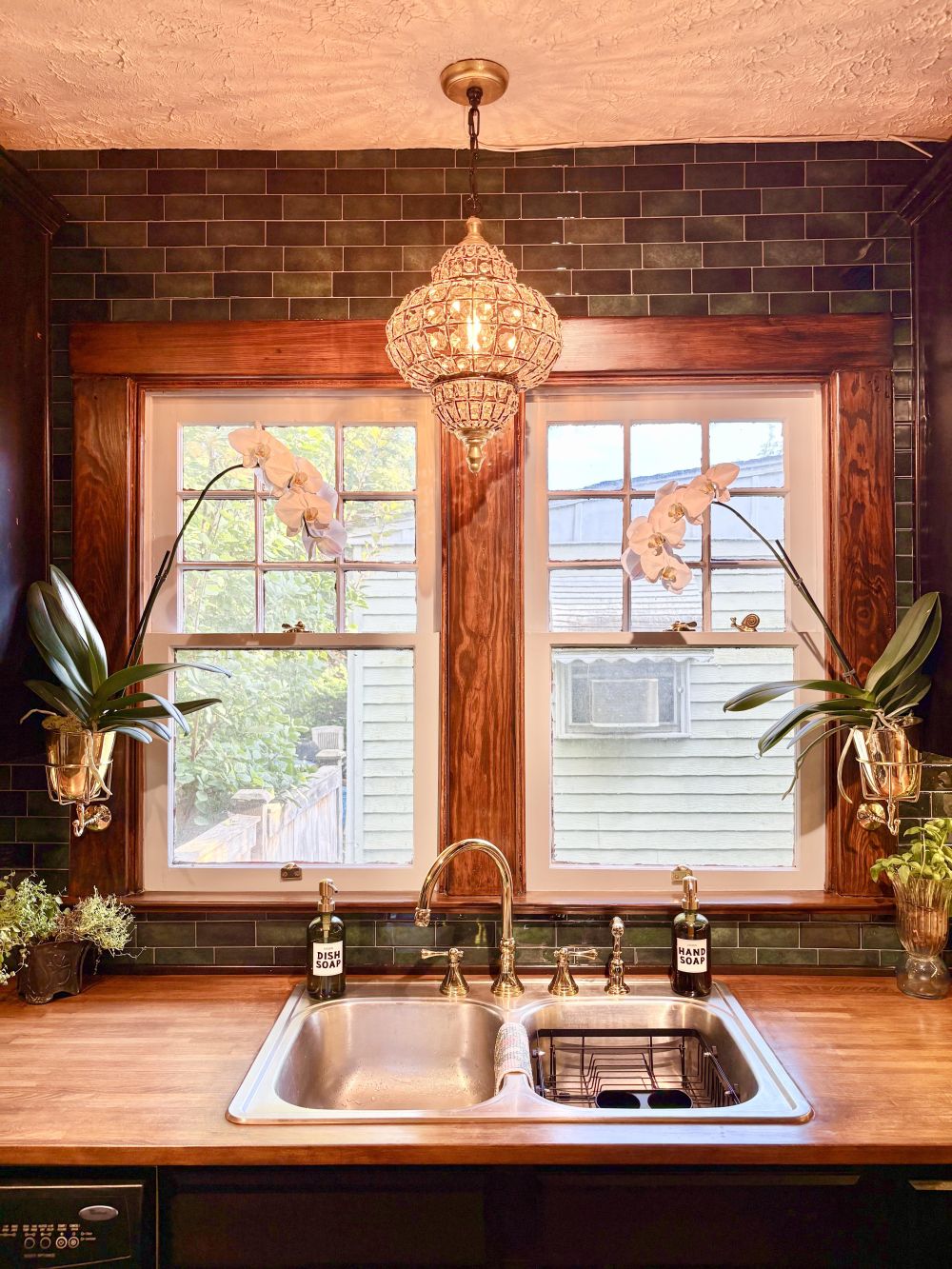
The homeowner removed seven or eight layers of white paint from the existing window trim using Citristrip. After stripping the wood, she sanded, stained, and sealed it, exposing the grain beneath decades of paint.
Green backsplash panels now extend above the windows to the ceiling, while the dark brown trim surrounds both panes.
She also replaced the sink faucet with a brass-colored model and installed matching wall-mounted orchid holders.
The chandelier above the sink was another DIY project. She dismantled a silver-colored fixture, rewired it for plug-in use, painted the metal oil-rubbed bronze, applied gold leaf to the finials, and reassembled the crystals and glass beads.
The Worn Butcher-Block Countertops Were Sanded and Restained
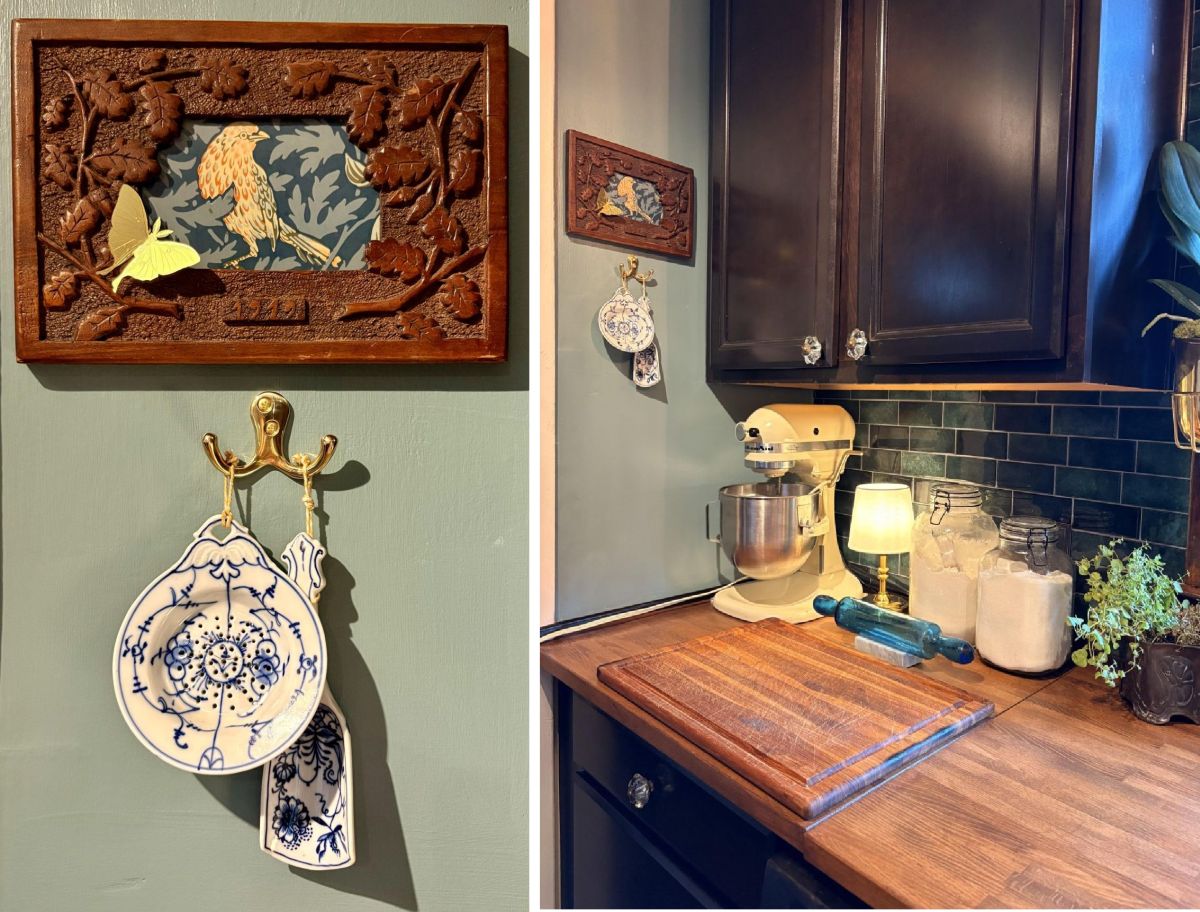
The original countertops had a yellow stain, a thick beeswax coating, and marks from years of use. Instead of replacing them, she sanded the wood down to its raw surface and applied Watco butcher-block stain and sealer.
One section became a baking station with a cream stand mixer, glass storage jars, and a dark wooden cutting board.
Above the counter, a carved wooden frame displays a William Morris bird print, with blue-and-white ceramic pieces hanging beneath it.
A Countertop Corner Became an Art Deco Drink Station
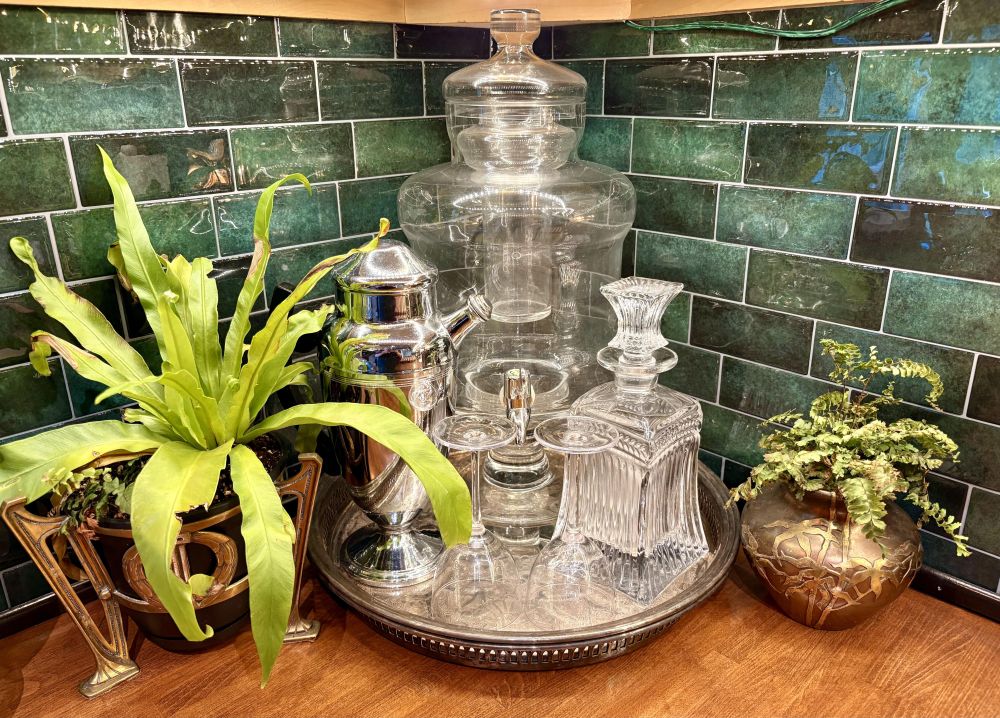
The homeowner created a separate area for cocktail accessories without adding cabinetry.
A round silver tray holds a glass beverage dispenser, metal cocktail shaker, cut-glass decanter, and stemware. A brass-toned plant holder and patterned ceramic pot sit on either side, against the green backsplash.
She Built a Spice Shelf Using an Antique Chess Set
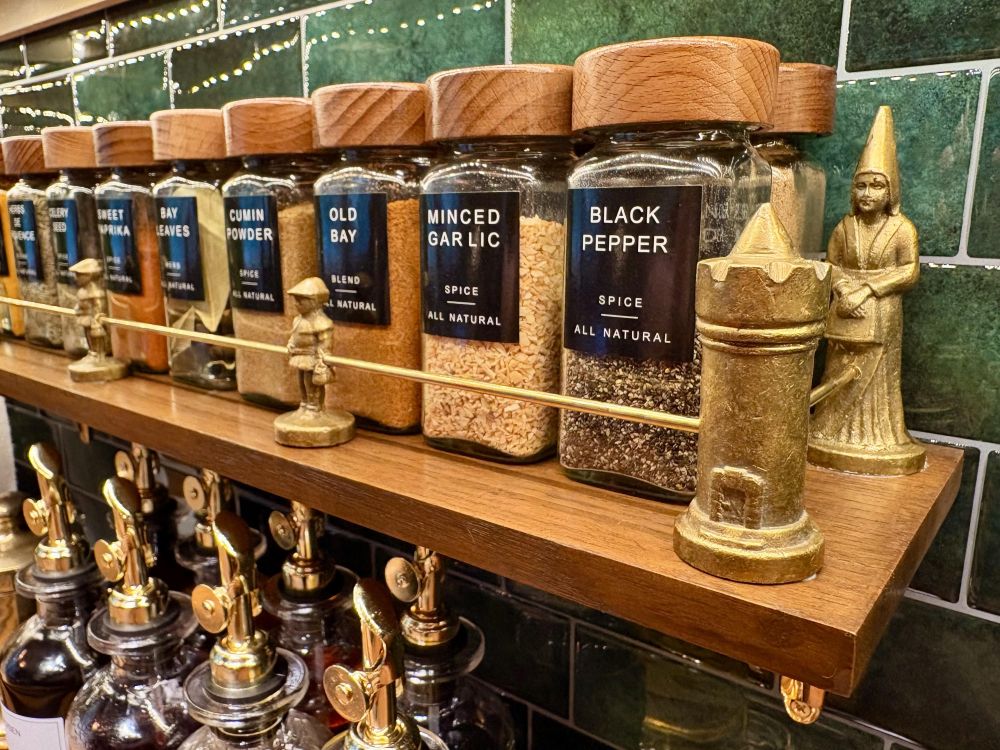
Unable to find the brass-railed spice shelf she wanted, the homeowner designed one from scratch.
A local woodworking shop cut quarter-sawn oak to her measurements. She sanded, stained, and sealed the wood, then purchased an incomplete antique brass chess set on eBay.
The medieval-style chess figures became supports for the shelf’s front rail. She drilled holes through the metal pieces, inserted brass welding rods, and attached the figures to the oak. Small Art Nouveau brass brackets support the shelf.
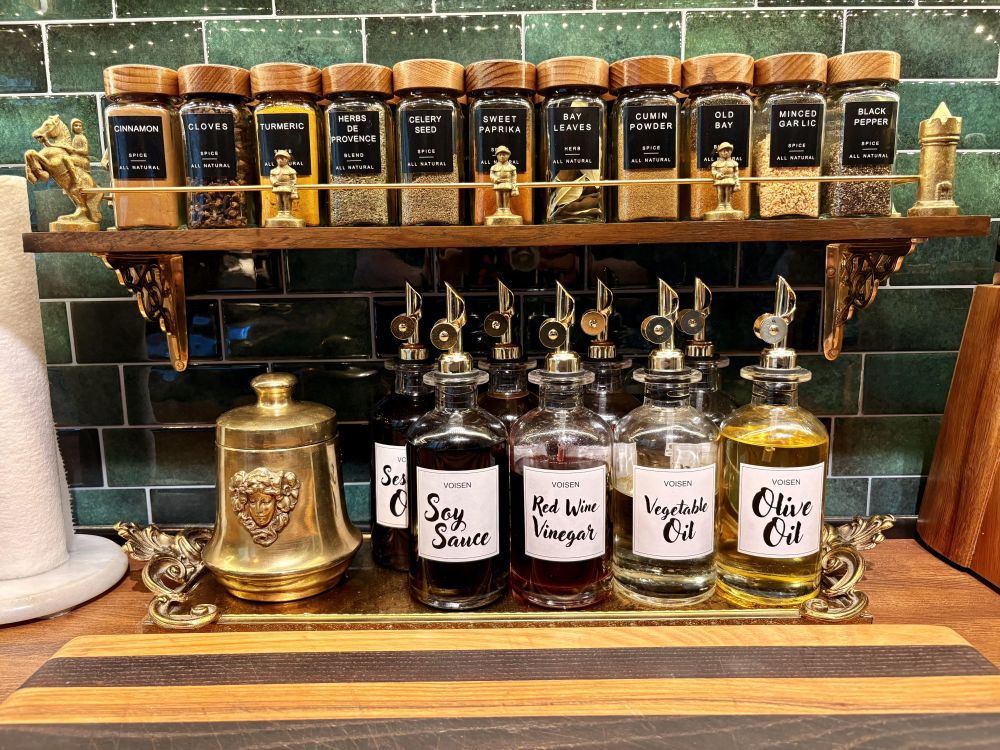
The finished rack holds eleven glass spice jars with wooden lids and black labels, including cinnamon, cloves, turmeric, cumin, paprika, minced garlic, and black pepper.
Beneath the shelf, matching glass bottles with brass pourers contain soy sauce, red wine vinegar, vegetable oil, and olive oil. She made the bottle labels using a Cricut machine.
A brass tray holds the bottles beside a vintage-style brass container, while the chess pieces stand between the jars above.
The Original Cabinets and Appliances Remained in Place
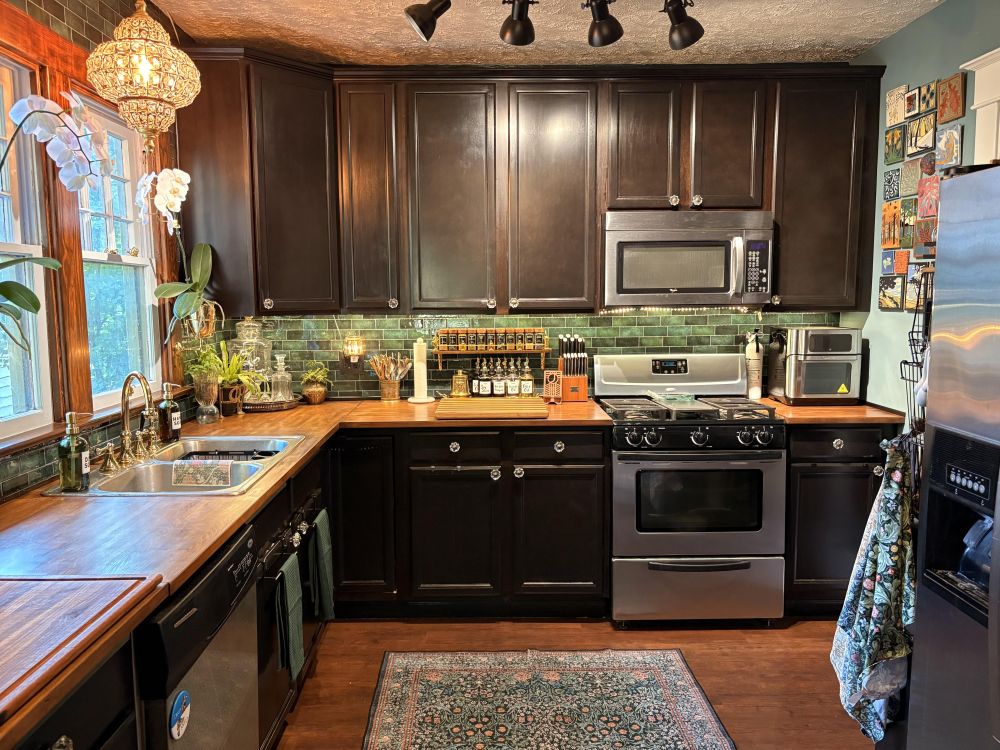
From the full kitchen view, the stainless steel stove and microwave still occupy their original positions, surrounded by the same dark cabinet doors.
The refinished wood countertops now sit against the green backsplash, with the custom spice station positioned beside the range. Under-cabinet lighting illuminates the wall, while a patterned green rug covers part of the wood floor.
Crystal-and-antiqued-brass cabinet knobs replaced the original round metal hardware.
The Sink Wall Shows the Biggest Change
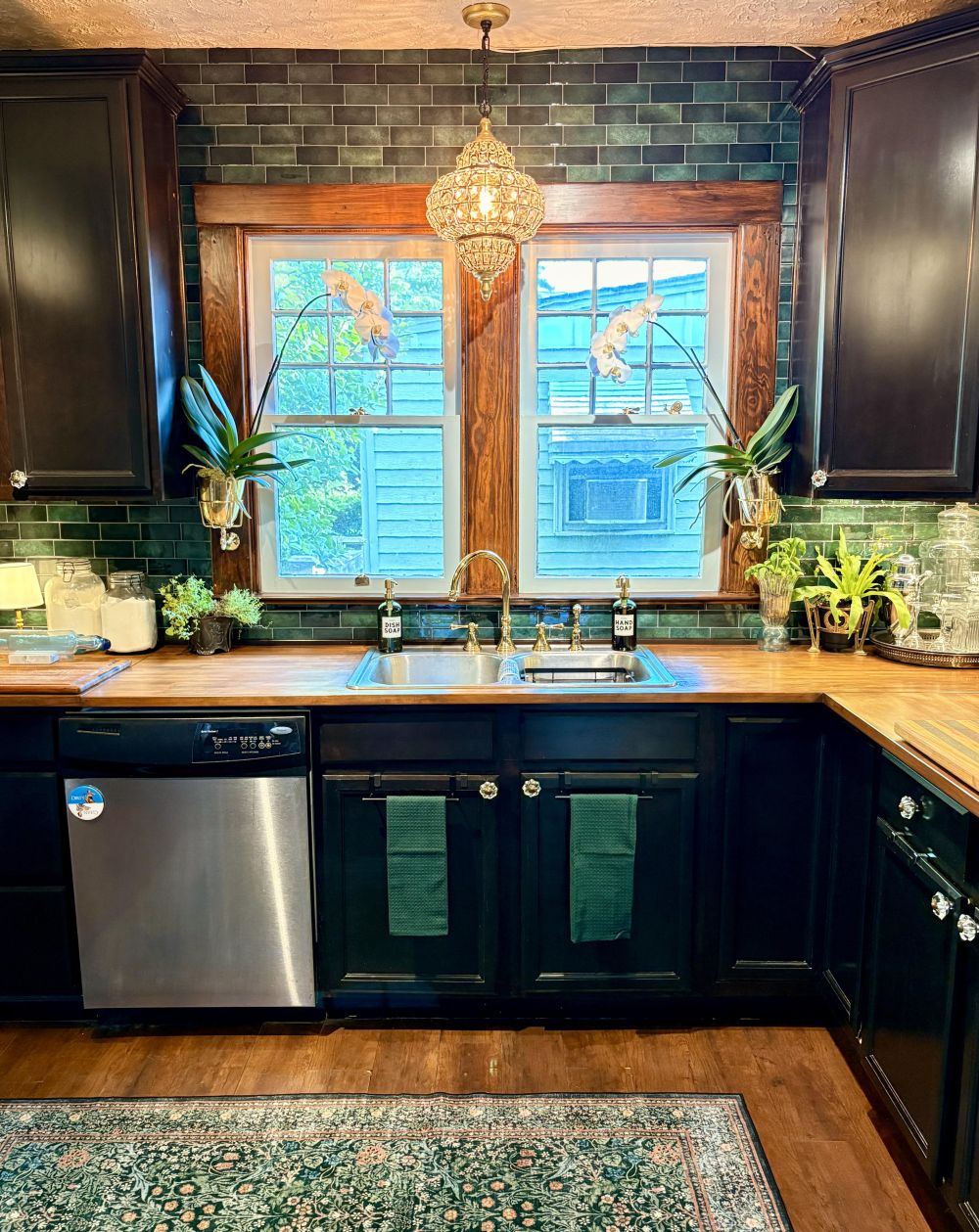
A washable rug featuring a William Morris Hawthorn pattern covers the wood floor in front of the sink. Green foliage, cream flowers, and a decorative border reference the bungalow’s Arts & Crafts origins. The homeowner chose crystal-and-brass cabinet knobs with a floral shape that echoes the rug, while the crystal matches the chandelier above the windows.
Would you keep the original dark cabinets in a 1915 bungalow, or spend more to replace them?
Image credits go to u/Blood_sweat_and_beer.