If Your Dryer Takes Longer to Dry Clothes, Check What’s Underneath the Lint Filter


You take a load of laundry out of the dryer, but the towels are still damp, and the thicker clothes need another cycle. You check the lint filter, remove the fibers and put it back. Yet the next load takes just as long to dry.
The problem may sit underneath the filter rather than on its surface. Even when the removable screen looks clean, lint can remain inside the filter housing, restricting the airflow needed to remove moisture from clothes.
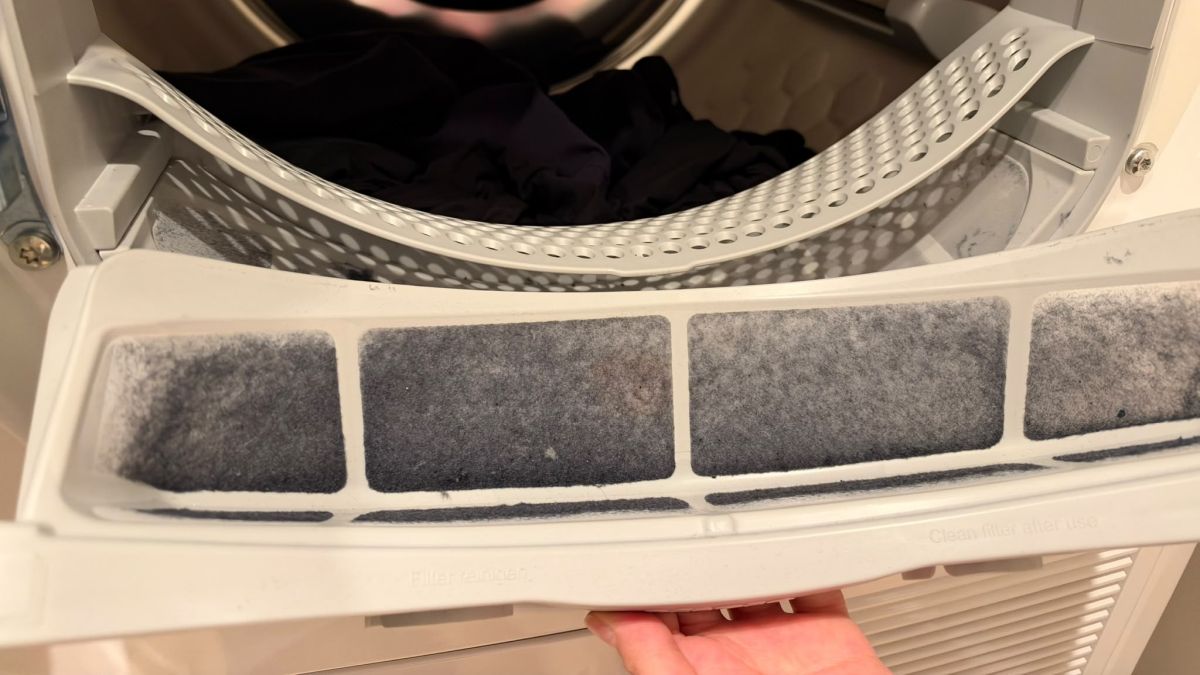
These photographs taken by Homedit show what can collect beneath the lint filter and why removing the screen is worth doing before assuming something is wrong with the dryer.
What Collects on the Dryer Lint Filter
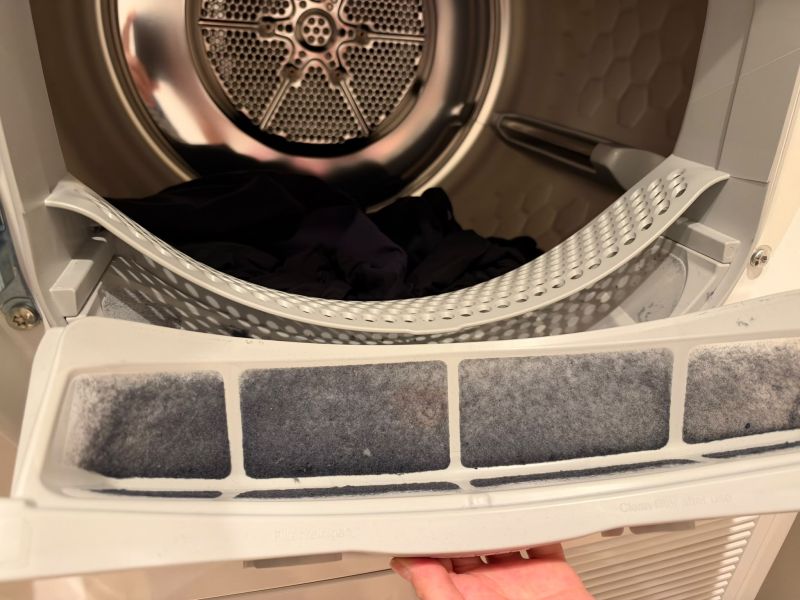
During each drying cycle, friction between fabrics releases small fibers that travel with the air circulating through the drum. Towels, cotton bedding and fleece can leave behind a thick layer of lint.
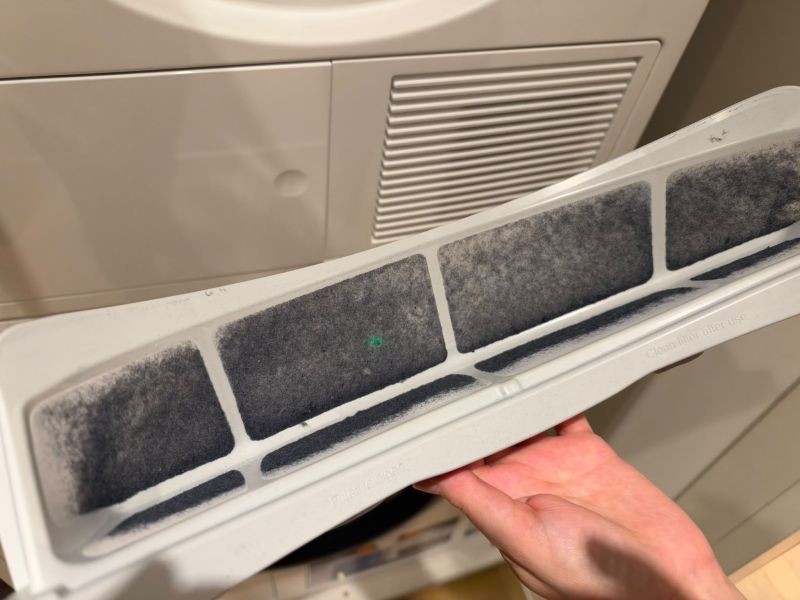
The mesh catches these fibers before they travel farther into the appliance, but not every fiber remains on its surface.
Removing the Lint From the Screen Is Only Part of the Job
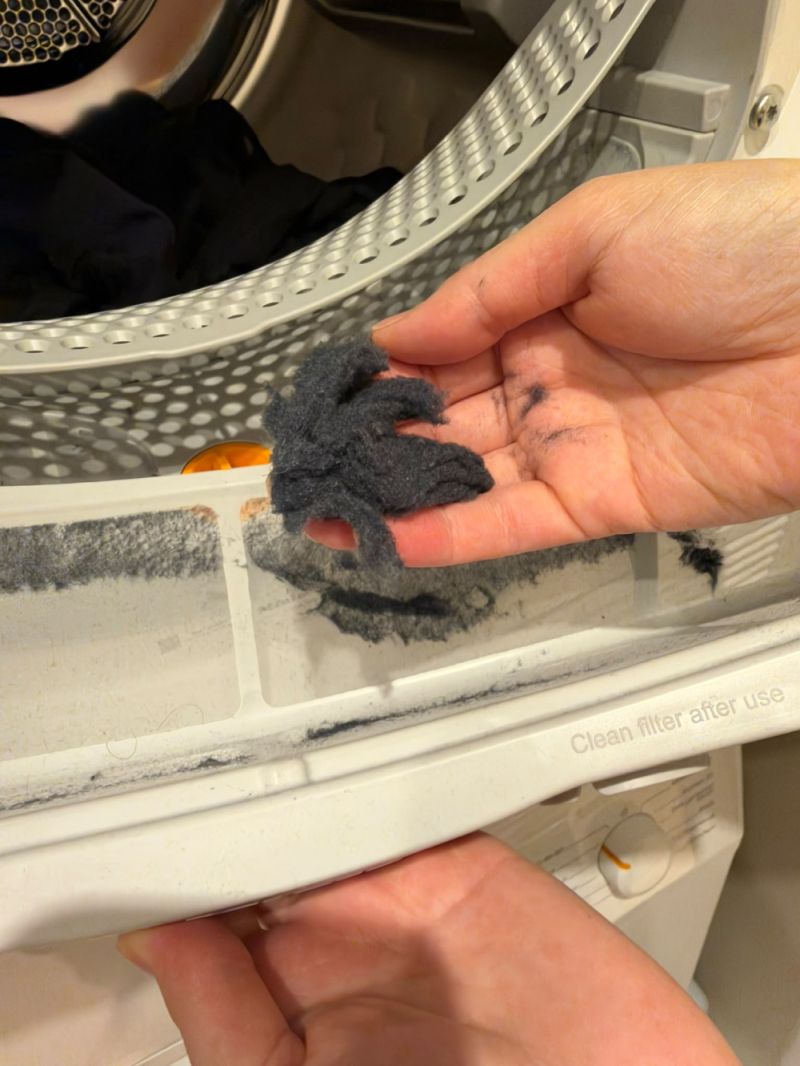
Removing the accumulated lint by hand clears the mesh, but the edges of the filter and the space surrounding it can still contain loose fibers.
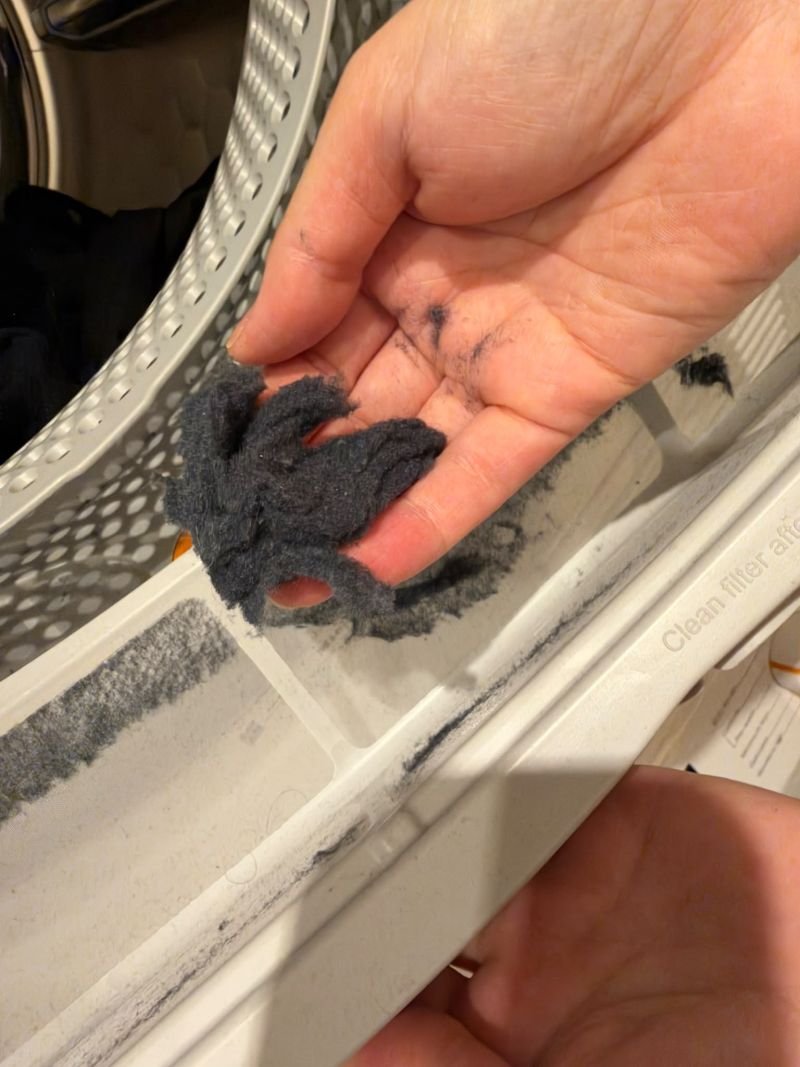
Pulling the filter out of its housing provides access to areas that cannot be reached when cleaning the screen in place.
Another Filter Sits Underneath the Removable Screen
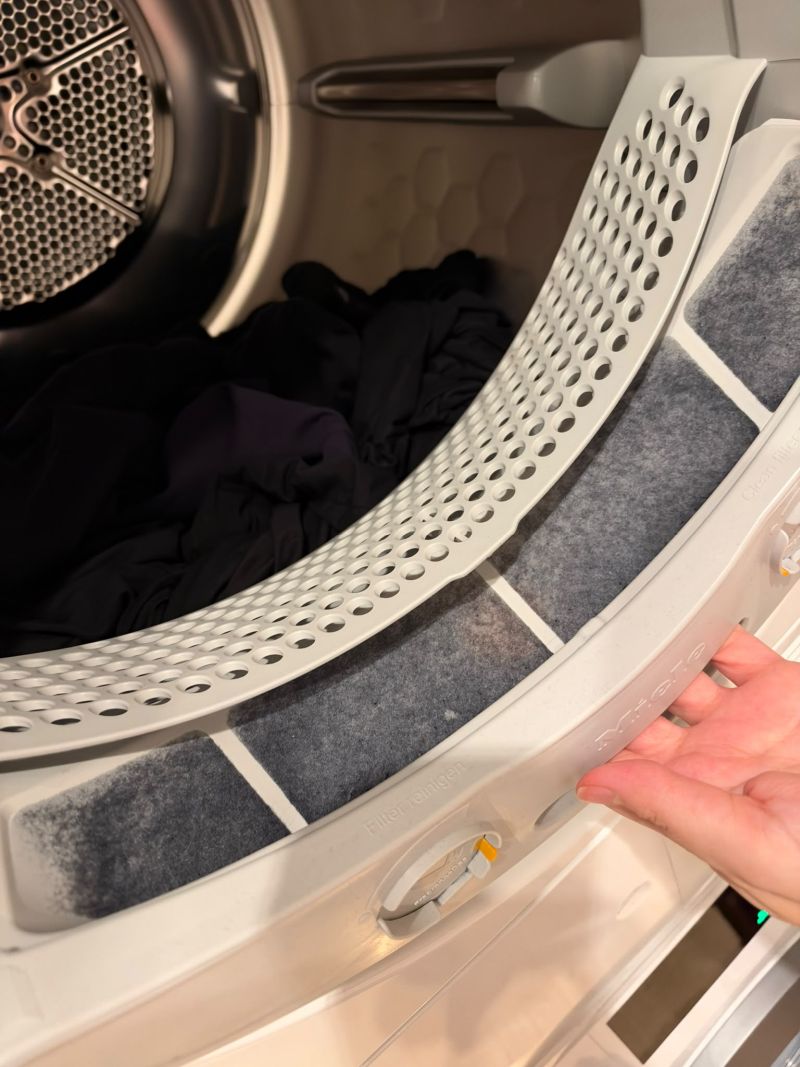
Some dryers, including the model shown in these photographs, feature two lint filters inside the door opening. Removing the upper section provides access to the filter beneath it.
According to Miele’s dryer maintenance instructions, lint should be removed from both the upper and lower filters, as well as the perforated surface surrounding the drum opening. Miele also recommends using a vacuum cleaner with a long crevice attachment to remove visible lint from the airflow openings.
Switch off the dryer before cleaning and check the manufacturer’s instructions, since filter configurations differ between models.
How Lint Buildup Affects Drying Time and Electricity Consumption
According to ENERGY STAR, cleaning the lint filter after each load improves air circulation and dryer efficiency. Residue from dryer sheets can also form a film across the mesh, creating another restriction that may be difficult to see.
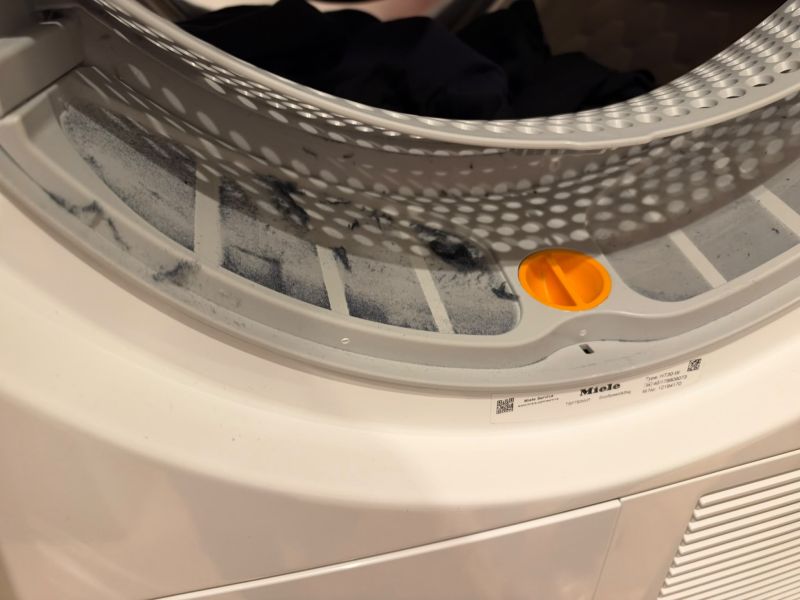
If clothes continue to come out damp after cleaning the filters, check for overloaded laundry, blocked exhaust vents on vented models or additional filters that require maintenance.
Dryer maintenance is one part of improving laundry results, while the choice of laundry accessories is another. Some households are even replacing conventional dryer balls with an unexpected alternative.
When was the last time you removed your dryer’s lint filter and checked what was underneath it?
Image credits: Homedit.com.