He Pulled the Carpet Off His Stairs and Found Wood That Wasn’t Worth Keeping Exposed


Removing carpet from an old staircase can reveal hardwood worth sanding and staining, but that wasn’t the case here. Beneath the beige carpet, the homeowner found worn wooden steps covered with patches of white paint, dark residue, and damaged finishes. Restoring the exposed boards would have meant working around years of previous treatments.
Instead of trying to save those surfaces, he covered the staircase with new wood treads and risers, then stained the steps dark and painted the vertical sections white. The wide landing at the bottom received the same treatment, replacing the carpet with a black wood surface.
Shared by Redclip on Imgur, the project documents the carpet removal, new stair coverings, landing construction, and final paintwork. A later update shows the handrail stained Minwax Ebony, with Behr Venom green and Graceful Gray on the surrounding walls.
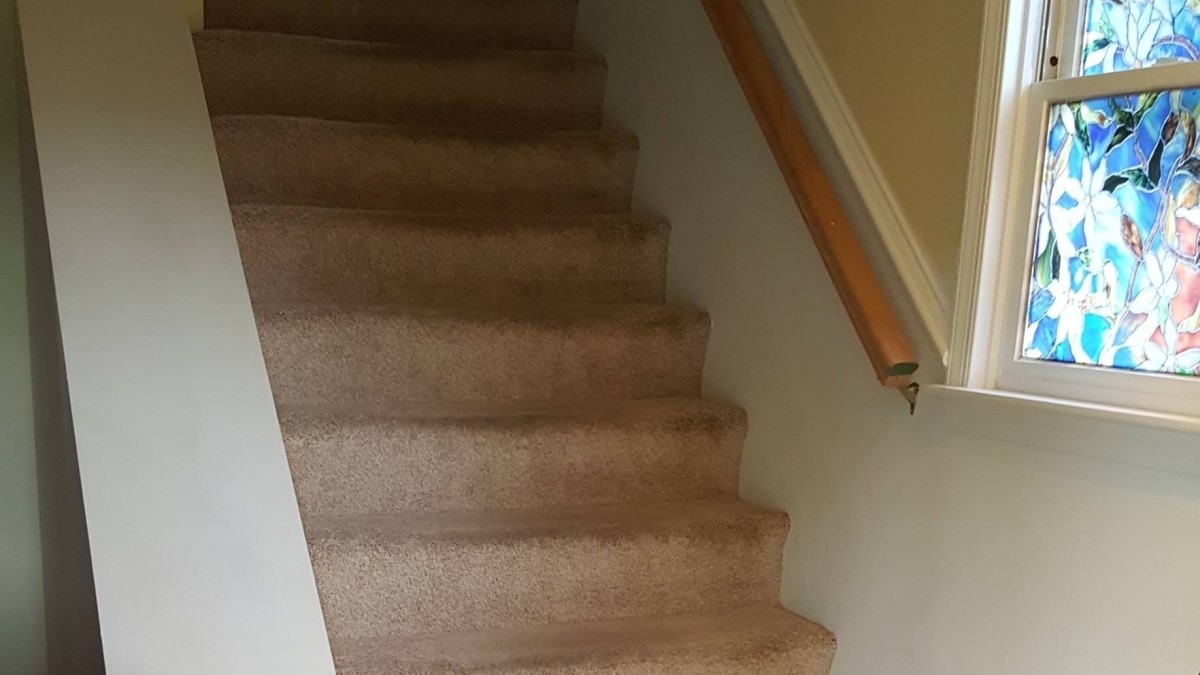
The Original Staircase Had Beige Carpet From Top to Bottom
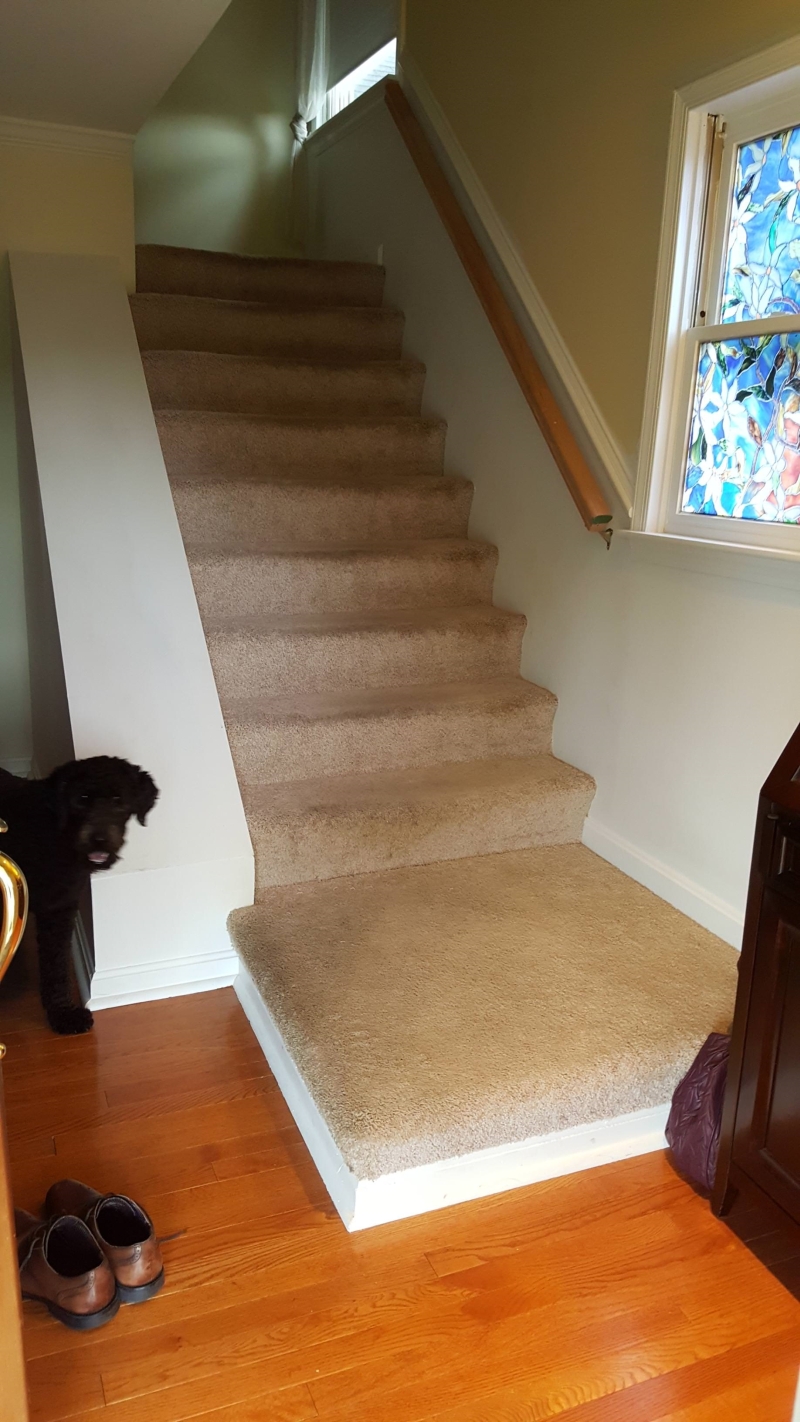
Beige carpeting covered every visible step and wrapped over the edges, continuing across the oversized landing at the bottom. A natural wood handrail followed the right wall, beside a window with decorative stained glass.
The landing projected into the entryway, where orange-brown hardwood flooring met the carpeted platform. Its unusual size made it part of the renovation rather than a step that could be finished with a standard stair tread.
Removing the Carpet Exposed Old Paint and Damaged Wood
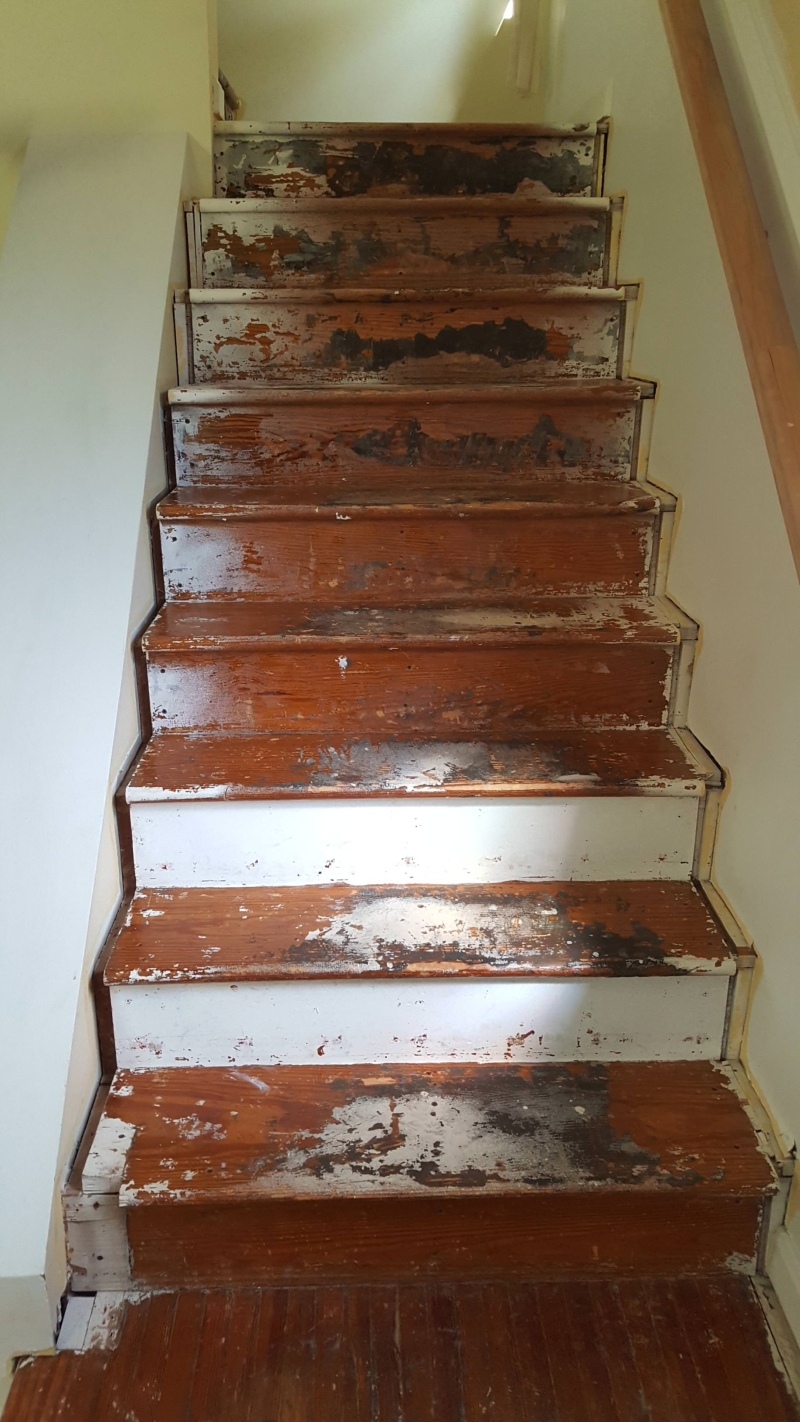
Once the carpet came off, the staircase revealed brown wooden treads with large patches of white paint, dark marks, and worn finishes. Several risers retained paint residue, while the exposed tread edges showed scratches and surface damage.
The boards were not bare hardwood ready for stain. Paint and finish remnants covered much of the surface, particularly near the upper steps where dark patches stretched across the risers.
The homeowner chose new wood coverings rather than sanding the existing surfaces down to a uniform finish.
New Wood Treads and Risers Covered the Damaged Steps
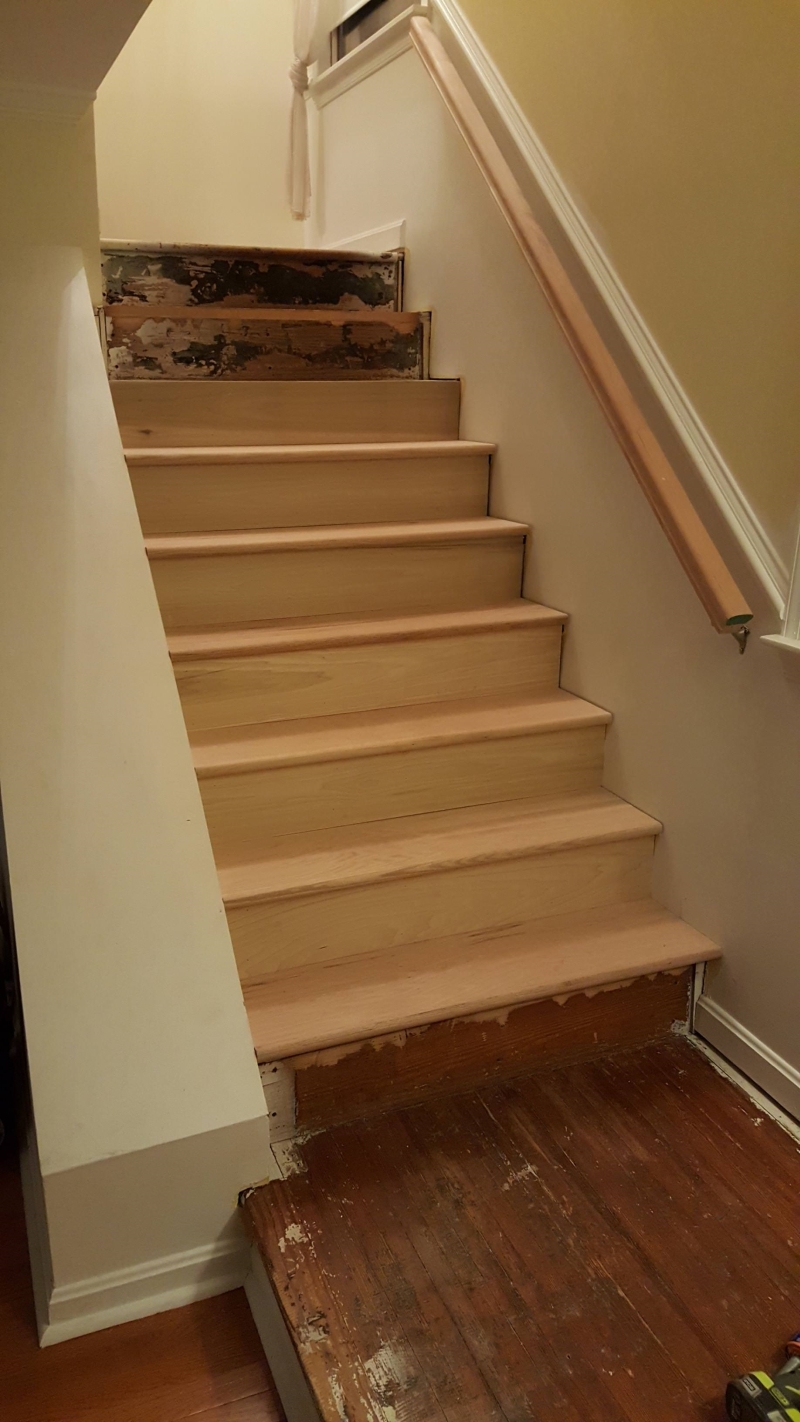
Light-colored wood now covers most of the staircase, with rounded nosings extending beyond the risers. The new boards conceal the old painted surfaces and create matching edges from one step to the next.
Near the top, two risers still expose the original wood and peeling finish, showing the difference between the uncovered staircase and the installed sections below.
The handrail remains its original light wood color at this stage.
The Homeowner Stained the Treads Dark and Left the Risers Light
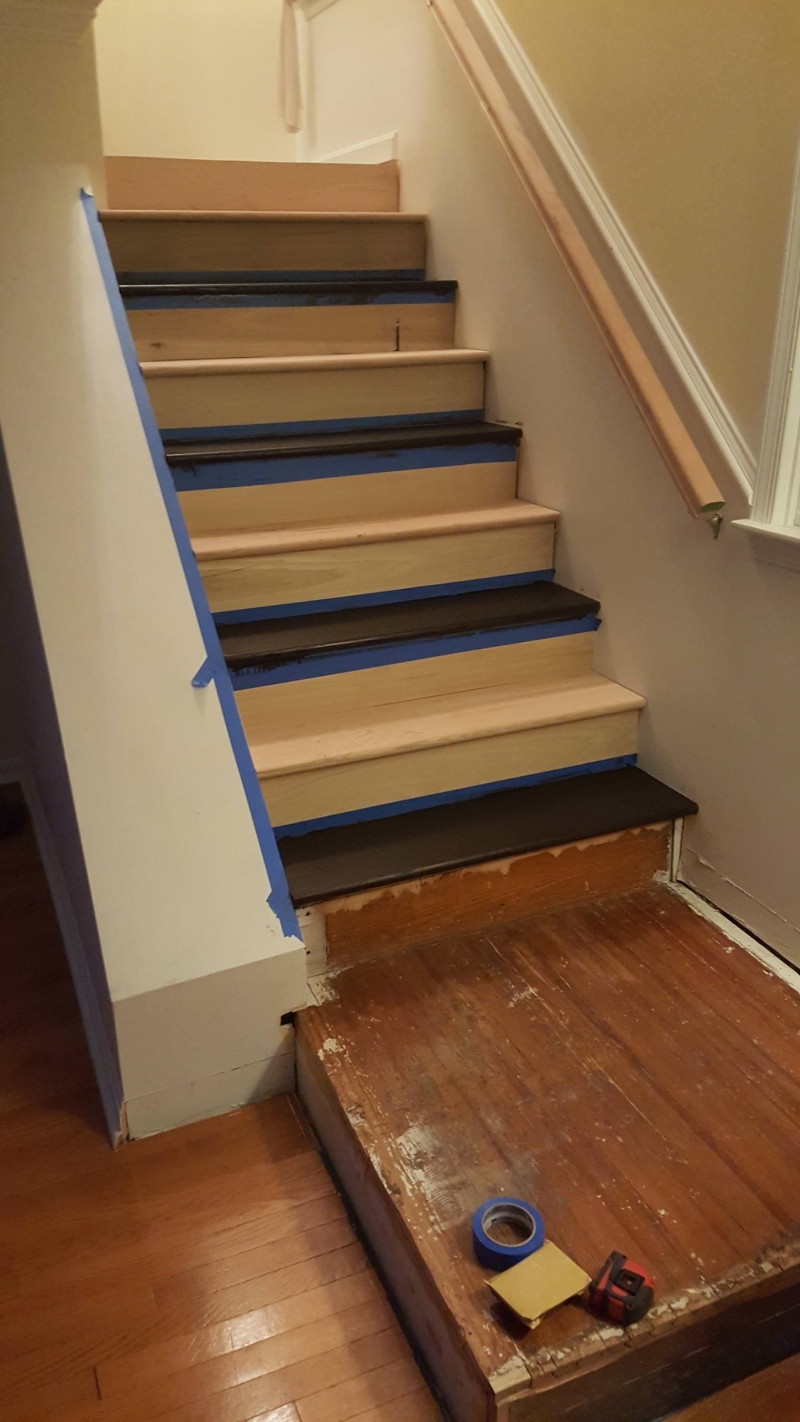
Rather than staining every surface, the homeowner applied a dark finish to the horizontal treads while keeping the vertical risers light. Blue painter’s tape protected the wood edges and adjacent trim during the process.
The contrast appears across alternate completed steps, with dark tread surfaces separated by pale risers. The lower landing still shows its original worn finish while the staircase work continues above it.
The Large Bottom Landing Needed New Wood Panels
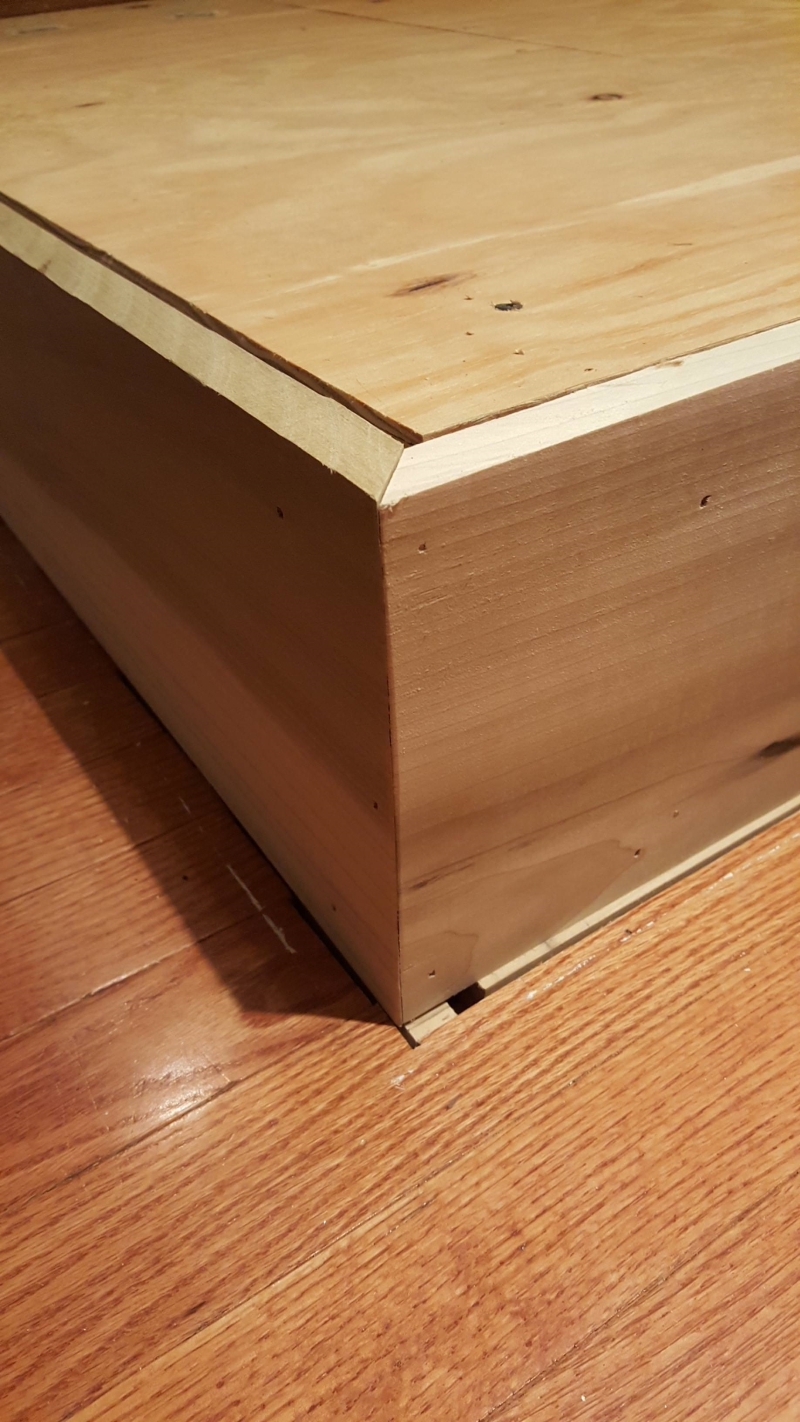
Unlike the narrower steps, the bottom landing required a broad surface covering. A close-up shows pale wood panels meeting along a straight seam, with mitered trim fitted around the exposed corner.
The rounded front edge extends over the vertical face, matching the nosing profile used on the stairs. Small nail holes remain visible in the wood before the final finish.
Plywood Covered the Upper Landing During Construction
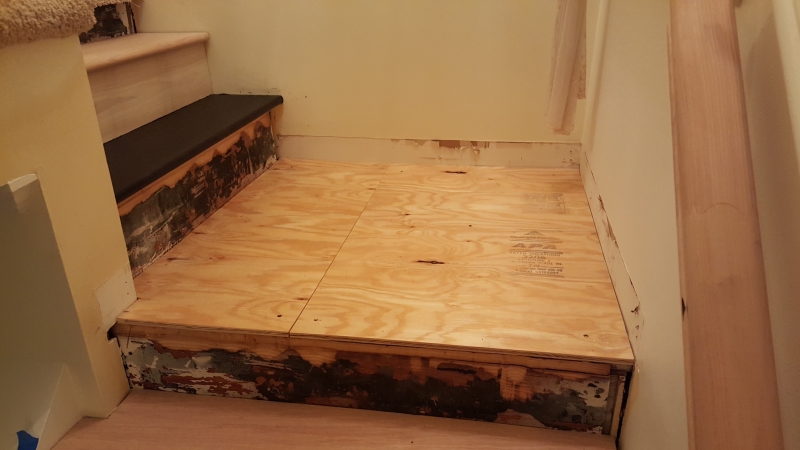
Another view shows a wide landing covered with plywood sheets cut to fit between the stair walls. The panels meet along a center seam, while the old painted riser remains exposed beneath the front edge.
The new surface provided a base for the finished landing, which would receive matching wood and dark stain.
The Bottom Platform Received a New Wood Surface and Trim
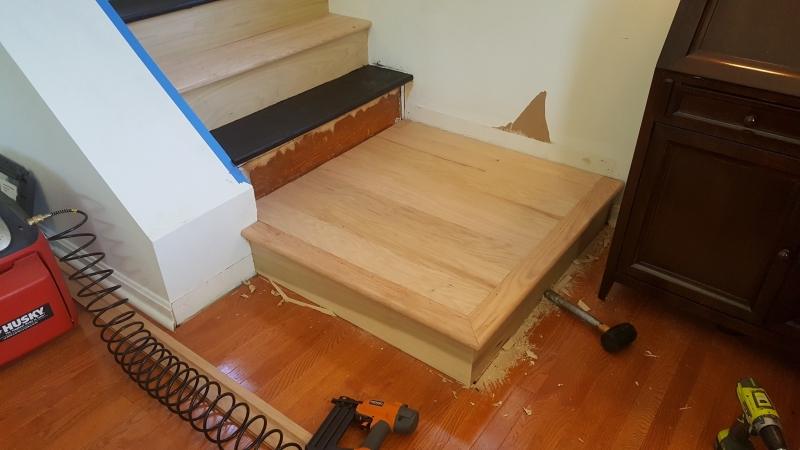
Pale boards now cover the bottom platform, with a mitered border surrounding the top and a vertical wood face replacing the exposed front. A nail gun, drill, and rubber mallet sit on the floor beside the work.
The landing projects into the entryway beside the existing hardwood floor, retaining its original footprint but replacing the carpet with a wood surface.
Dark Treads and Light Risers Create the New Stair Pattern
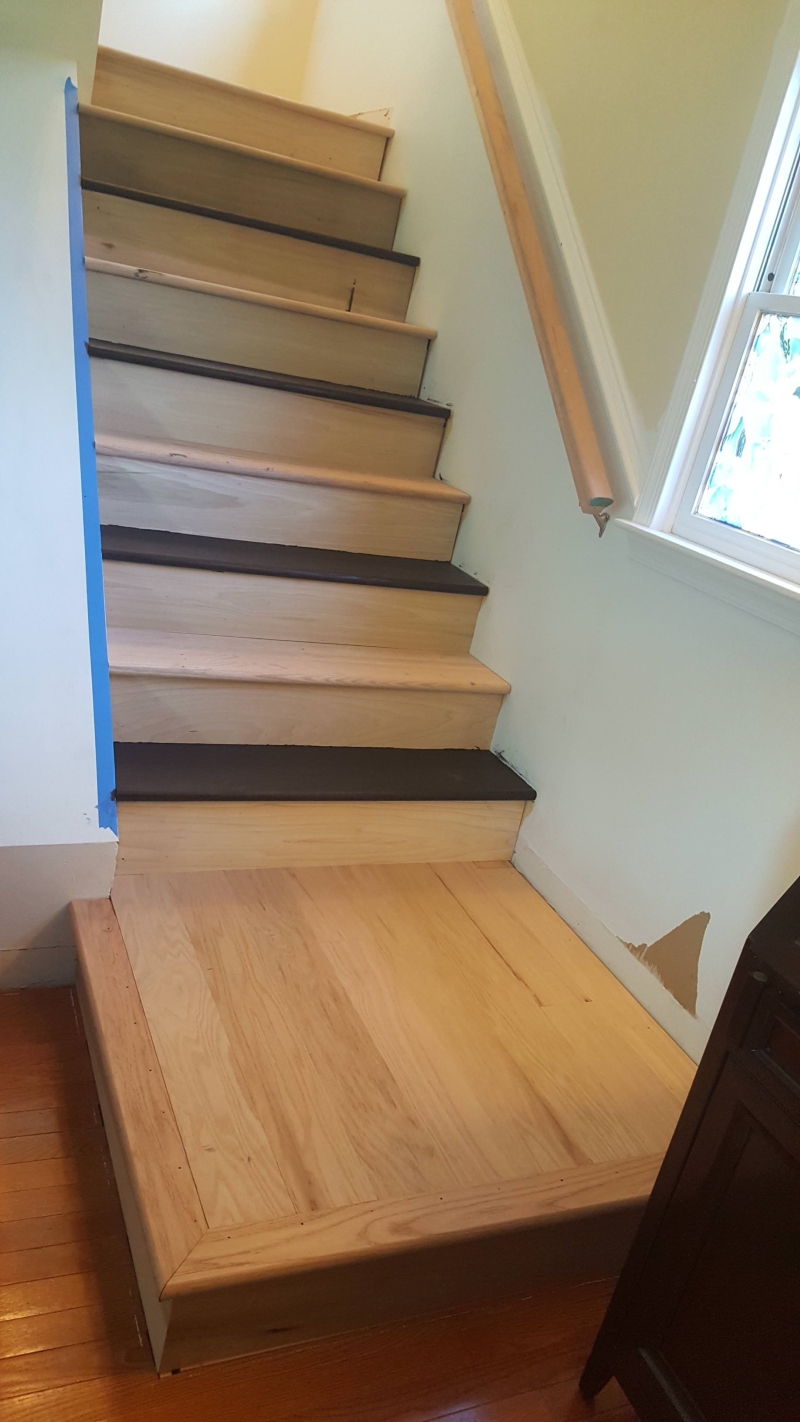
Most of the staircase now has dark horizontal treads separated by light wood risers. The bottom platform remains unfinished in this photograph, showing how the pale wood looks before receiving the dark treatment.
Blue painter’s tape follows the left wall, protecting the painted surface from the stain. The right-hand railing remains light wood, awaiting the later finishing work.
The Staircase Was Finished With Black Treads and White Risers
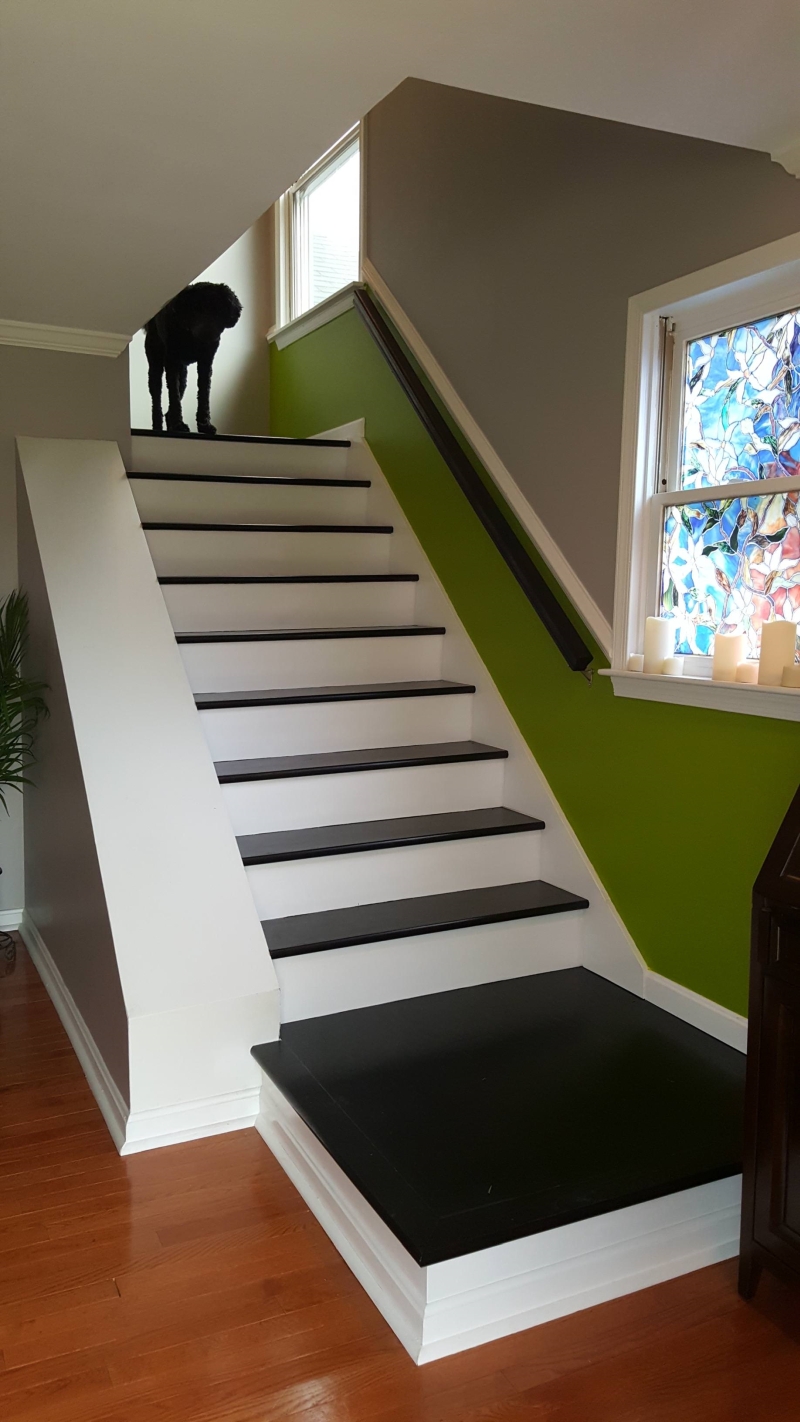
The finished staircase has near-black treads, white risers, and a matching dark landing at the bottom. The handrail was stained Minwax Ebony with two coats, followed by one coat of Minwax Satin polyurethane.
The homeowner also painted the wall beside the handrail Behr Venom, a bright green, while Behr Graceful Gray appears on the other walls. White trim separates the green section from the staircase and decorative window.
A black dog stands at the top in the finished photograph, offering a view of the completed steps without carpet.
The Dark Finish Continues Across the Wide Landing
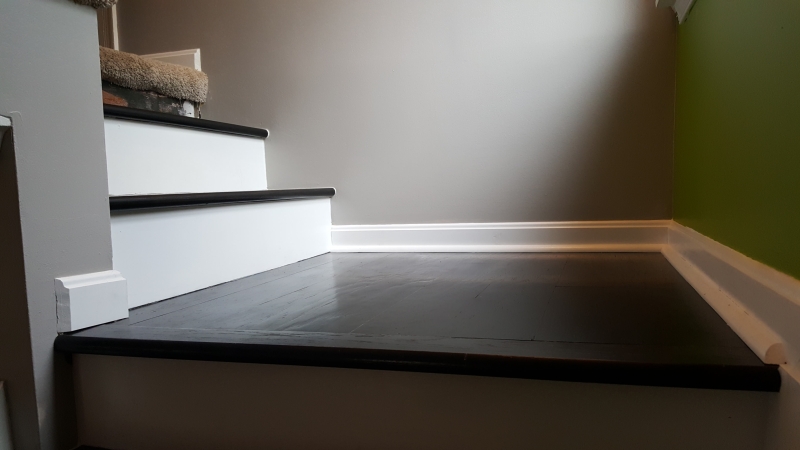
The bottom landing now has a dark wood surface extending across the platform, with white trim around its vertical base. Dark stair nosings continue upward, while the white risers separate each step.
The landing sits beside the existing orange-brown hardwood floor, creating a contrast between the stained staircase and the entryway flooring.
The Top View Shows the Dark Wood Grain
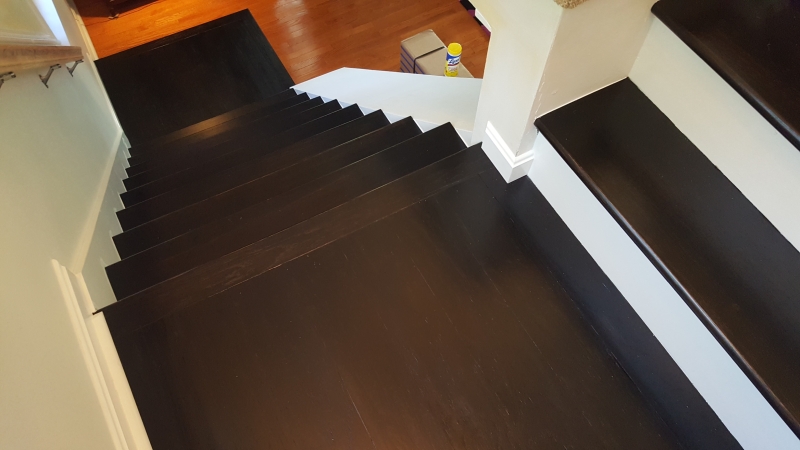
Looking down from the upper landing, the dark finish reveals wood grain across the broad landing and individual stair treads. Narrow seams remain visible between some boards, while the white risers form bands between the steps.
The upper hallway still had carpet when the homeowner shared the update. He planned to address the top riser and landing tread when replacing that flooring.
The Before-and-After Comparison Shows the Full Change
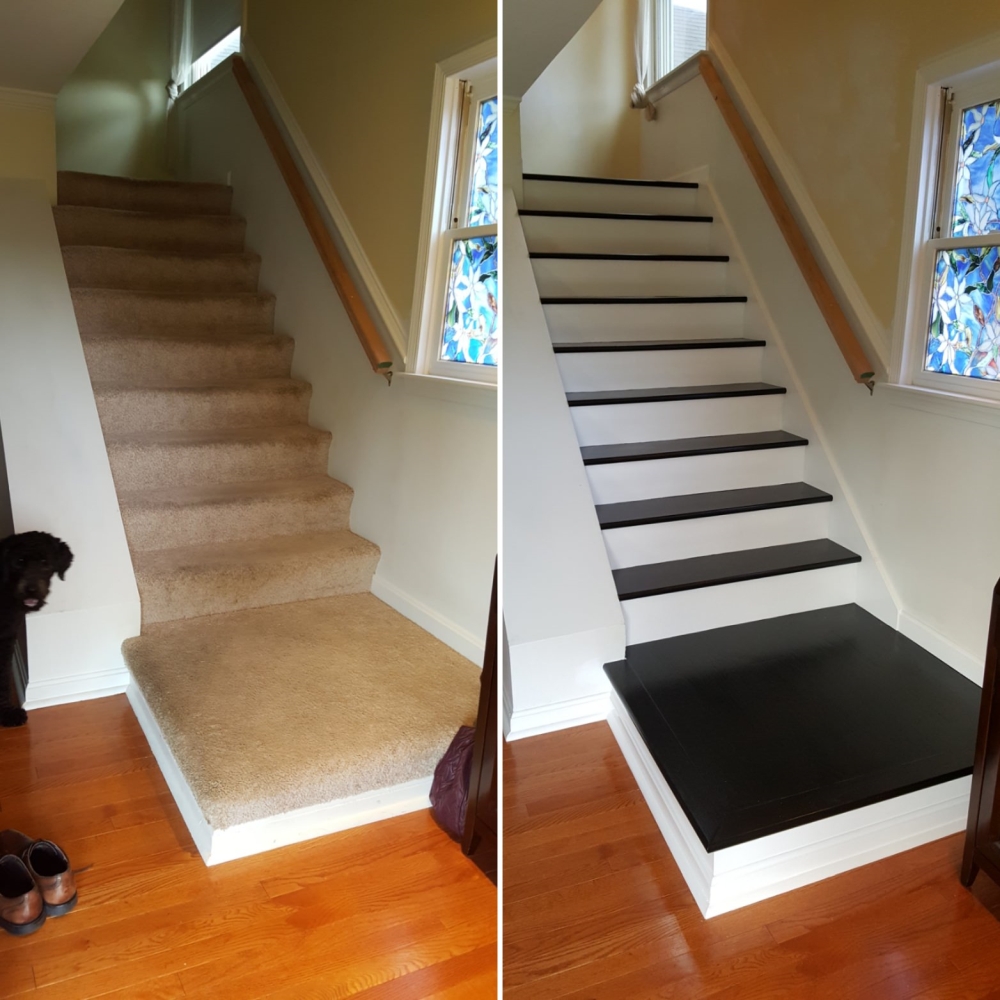
Side-by-side photographs show beige carpet covering the stairs and bottom landing before the work, followed by dark wood treads, white risers, and a matching black platform.
The staircase kept its original layout, walls, and handrail position. Its new appearance came from replacing the carpet, covering the worn wood with fresh materials, and using contrasting finishes across the horizontal and vertical surfaces.
The homeowner also received comments about the dark stairs showing wear and the risk of slipping without carpet. Dark stained wood can reveal dust and scratches, while smooth stair treads may require additional traction measures.
Would you replace carpeted stairs with dark wood and white risers, or choose a natural wood finish to match the surrounding floors?
Image credits go to Imgur user Redclip.