He Moved 15 Tons of Rock With a Shovel and Wheelbarrow to Build His Own Backyard Patio


After spending eight hours at a desk, most people want to put their feet up when they get home. This homeowner spent his evenings removing grass, hauling crushed stone, and laying pavers across his backyard. Within a month, an empty lawn became an outdoor space with a dining area, fire pit, and curved retaining wall.
Renting a mini skid steer would have made the work easier, but he preferred the physical exercise after spending his days at a desk. Moving approximately 15 tons of rock by hand took several days.
Reddit user u/DifferentPound9738 shared the project, revealing that materials cost between $4,000 and $5,000.
String Marked the Footprint of the Future Patio
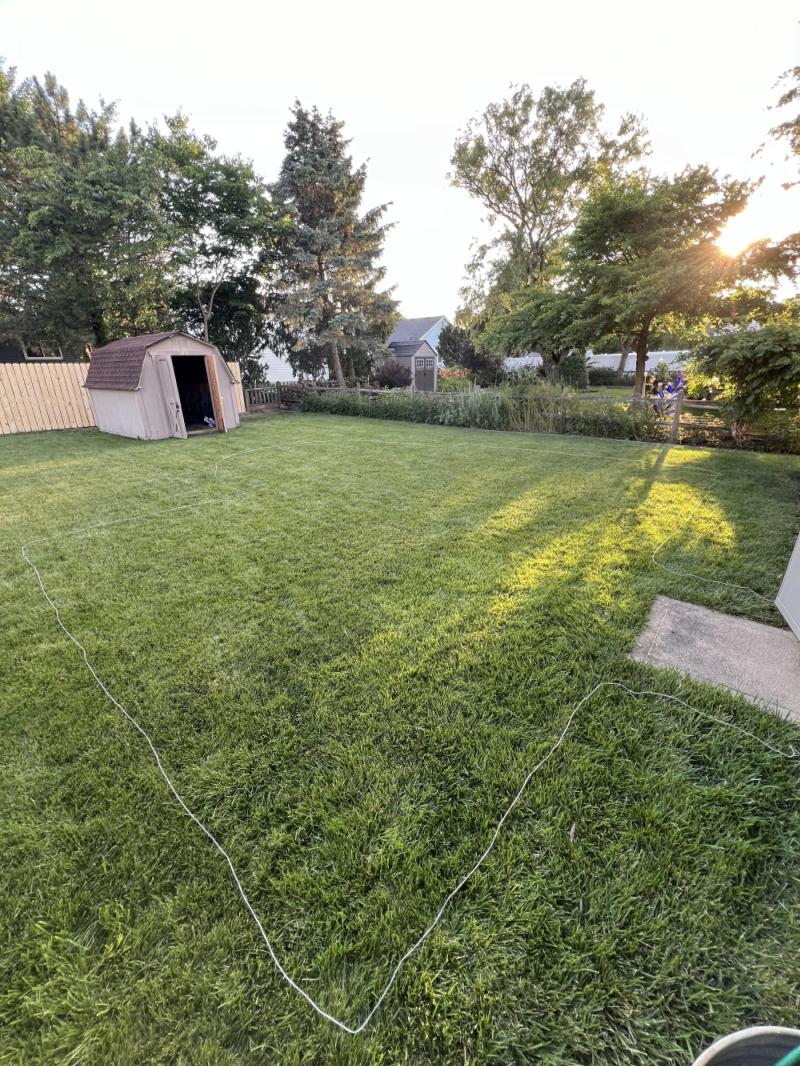
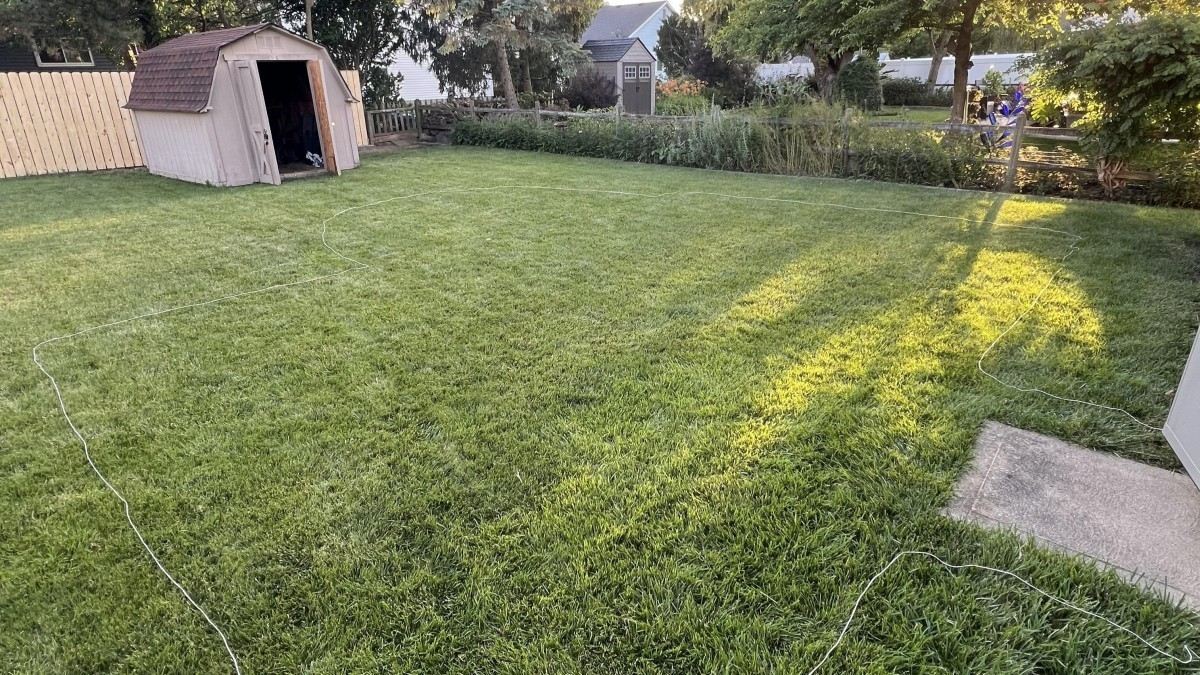
Before construction began, grass covered most of the backyard, with a storage shed occupying one corner and a small concrete landing outside the back door.
String placed across the lawn established the shape and size of the proposed patio, including an extension for the fire pit.
Removing the Grass Exposed the Ground Beneath
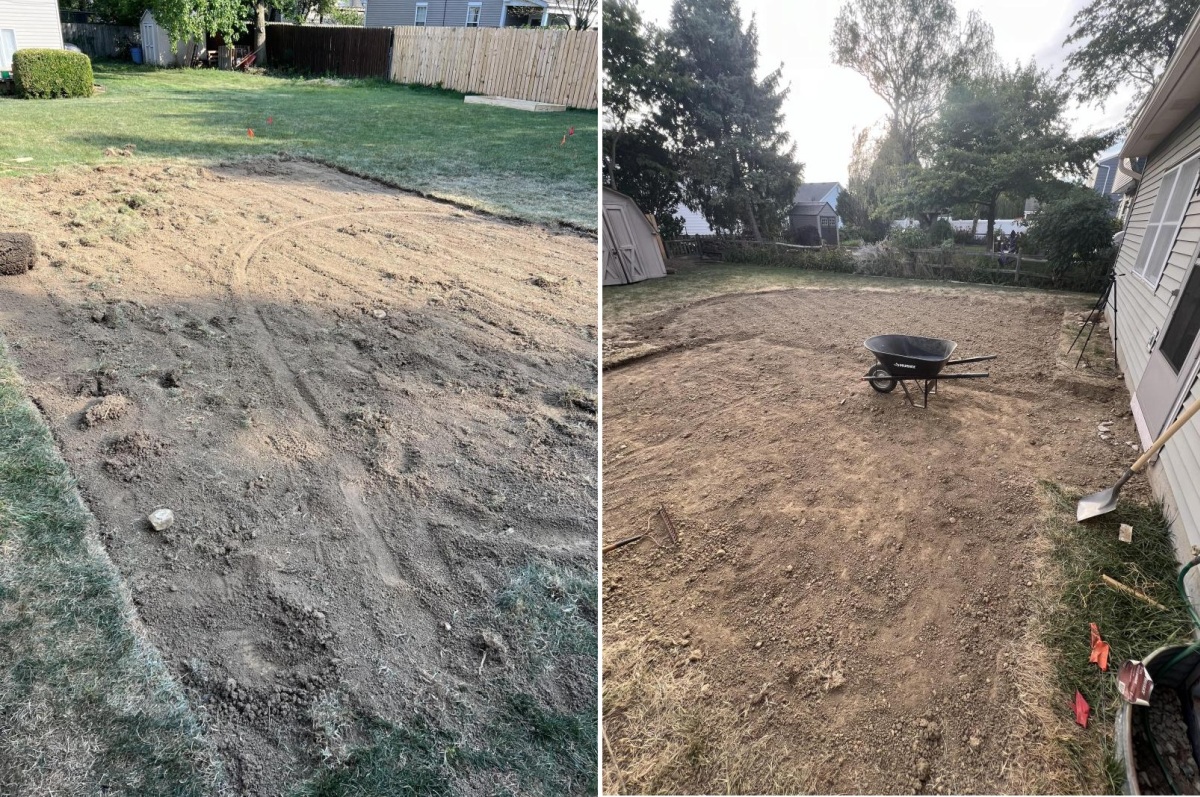
Using a rented sod cutter, the homeowner removed grass from the marked area. Excavation followed, creating space for the aggregate foundation and concrete pavers.
Apart from renting a sod cutter and plate compactor, he completed most of the project with a shovel and wheelbarrow.
Tons of Crushed Stone Arrived in the Driveway
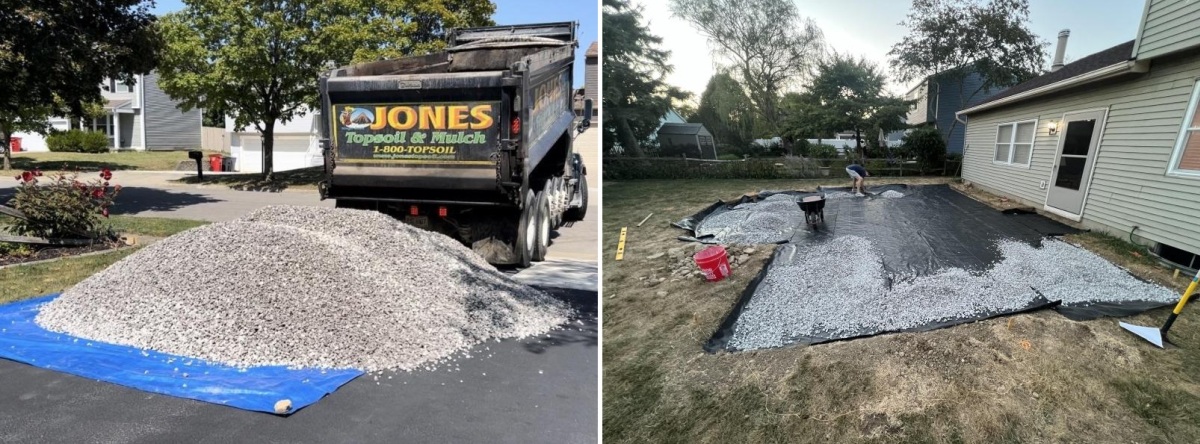
Crushed stone was delivered onto a tarp in the driveway before being transported to the backyard by wheelbarrow. Landscape fabric covered the excavated ground beneath the aggregate.
Moving large quantities of stone can transform an entire property, as seen in another project where a homeowner ordered 7.5 tons of giant boulders to rebuild his front yard.
Crushed Stone Formed the Patio Foundation
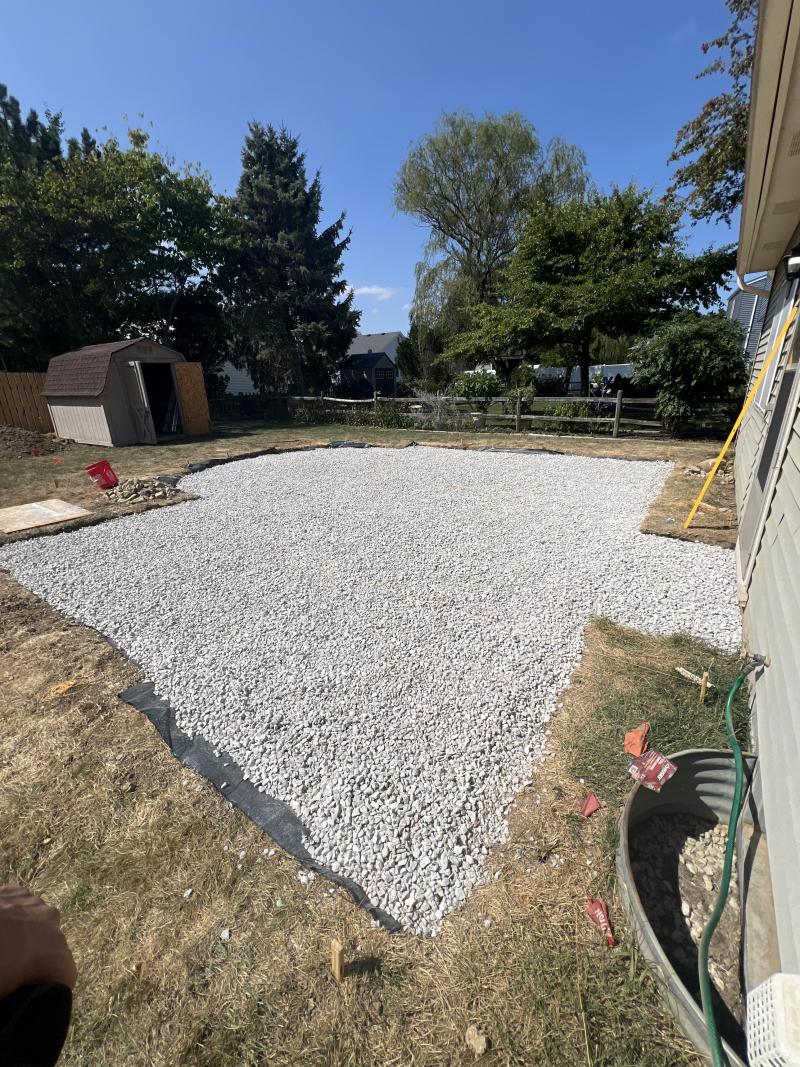
Once spread across the excavated area, crushed stone established the foundation for the patio. Using a plate compactor helped consolidate the aggregate before the next stage of construction.
Proper base preparation helps prevent pavers from shifting or sinking under foot traffic and outdoor furniture.
Fine Aggregate Created the Bedding Surface
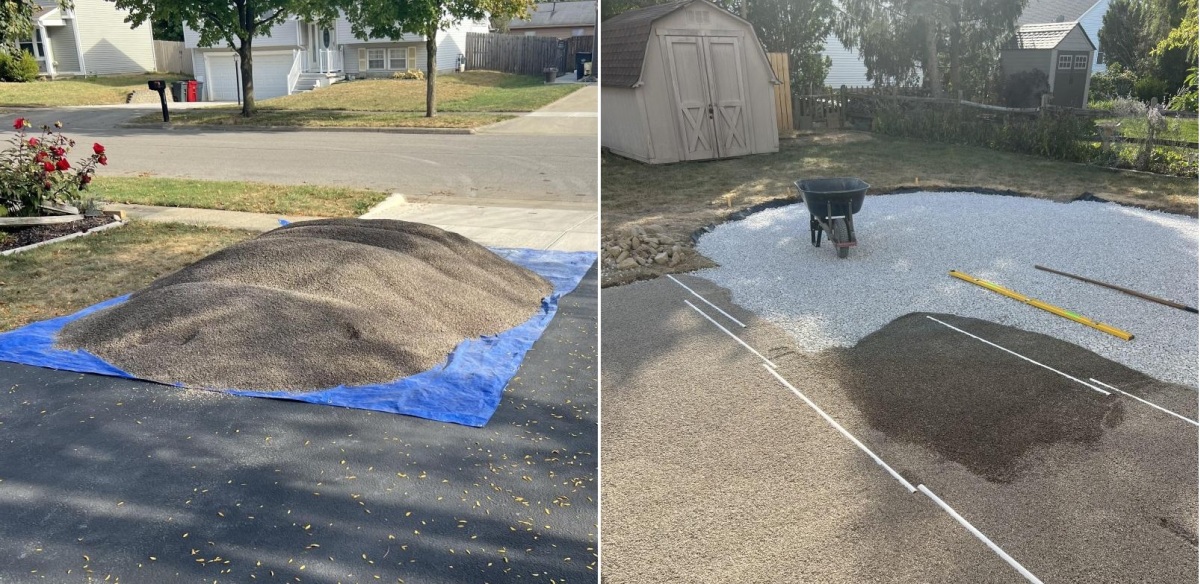
Another delivery brought finer aggregate for the bedding layer beneath the pavers. White pipes placed across the crushed stone acted as screed guides, helping establish a consistent surface for laying the blocks.
White Pipes Helped Establish the Patio’s Slope
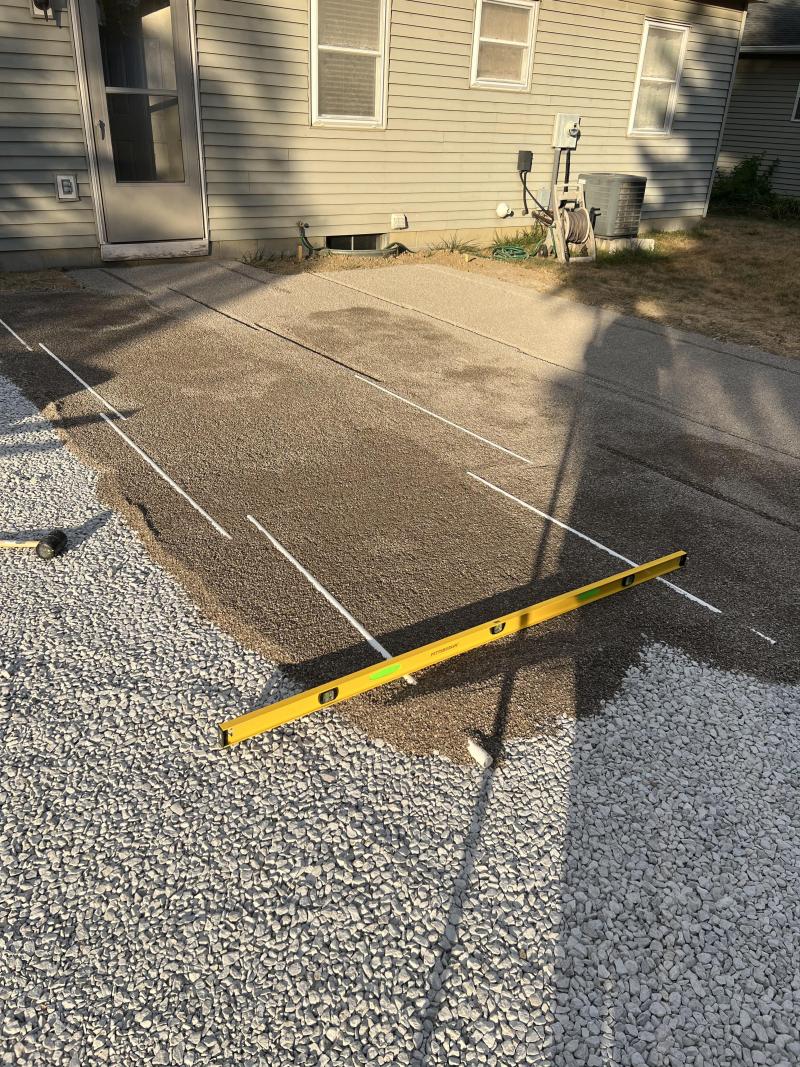
With a long spirit level and screed guides, the homeowner prepared the bedding surface to slope away from the house.
When asked about drainage, he explained:
Amazing, I have never had water collect since it is slightly pitched away from house.
Even the Random Paver Pattern Was Planned in Advance
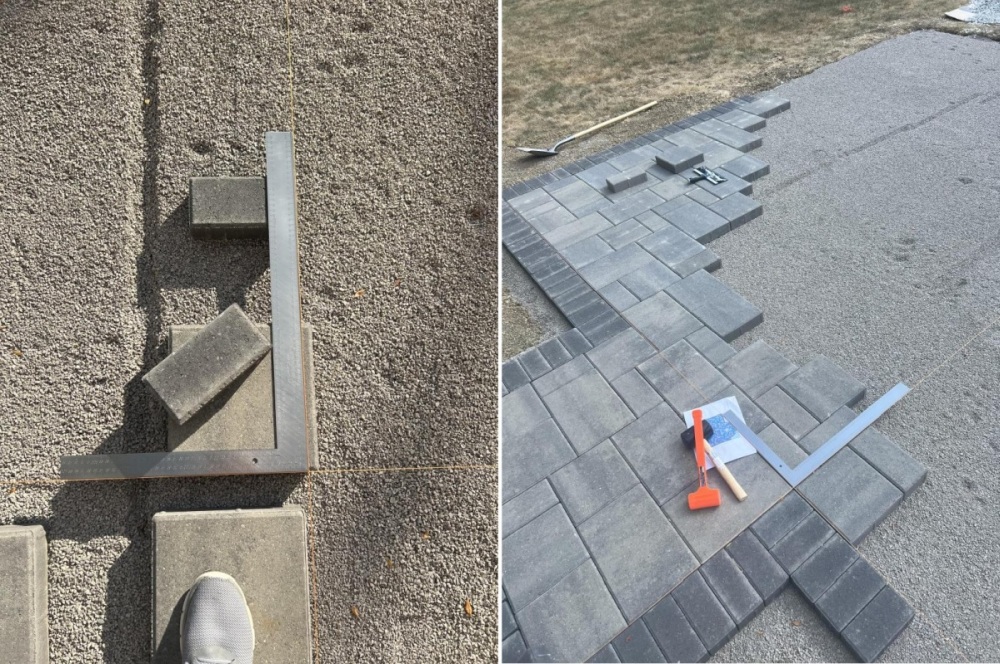
What appears to be a random arrangement of rectangular pavers was designed using Tinkercad before construction began.
He created a color-coded reference sheet to avoid four-corner joints and long runs of identical pavers. Dark rectangular blocks formed a contrasting border around the gray paving.
String Helped Create the Curved Wall Around the Fire Pit
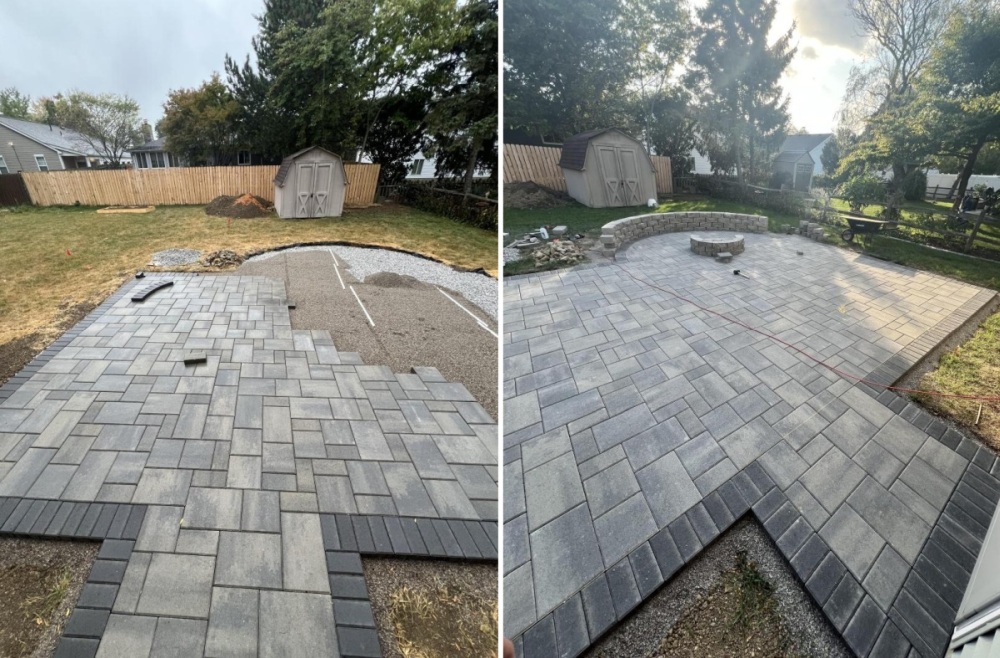
Using string attached to the center point of the fire pit, the homeowner established the radius of the surrounding wall.
Wall blocks with an angled side allowed him to form the curve without cutting each block. Concrete secured the patio edging, while an angle grinder with a diamond blade was used to cut the pavers.
Stone can also define an outdoor seating area without covering the entire garden, as demonstrated in a project where a 3,500-pound boulder became part of a Japanese-inspired backyard retreat.
Four Adirondack Chairs Surround the Fire Pit
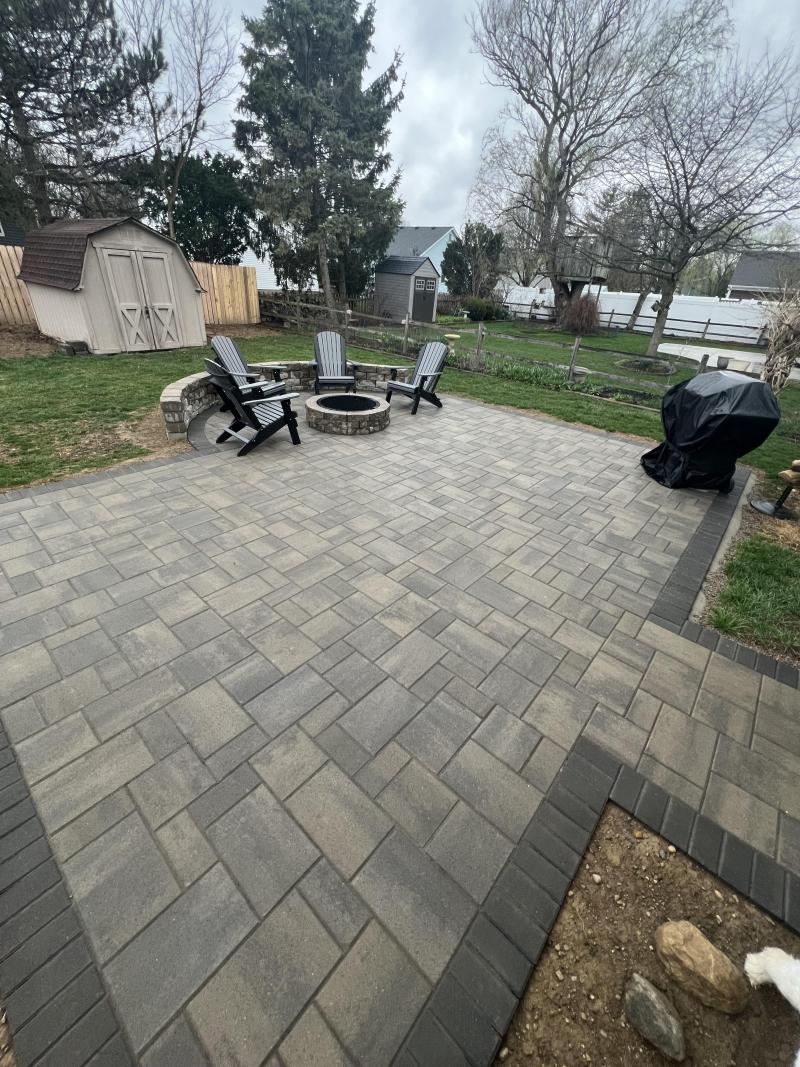
Four gray Adirondack chairs occupy the curved section of the patio, with the low stone wall providing separation from the remaining lawn.
Keeping the fire pit at the far end leaves most of the paved area available for dining furniture, cooking equipment, and movement between the house and garden.
Fifteen Tons of Rock Turned an Empty Lawn Into an Outdoor Living Space
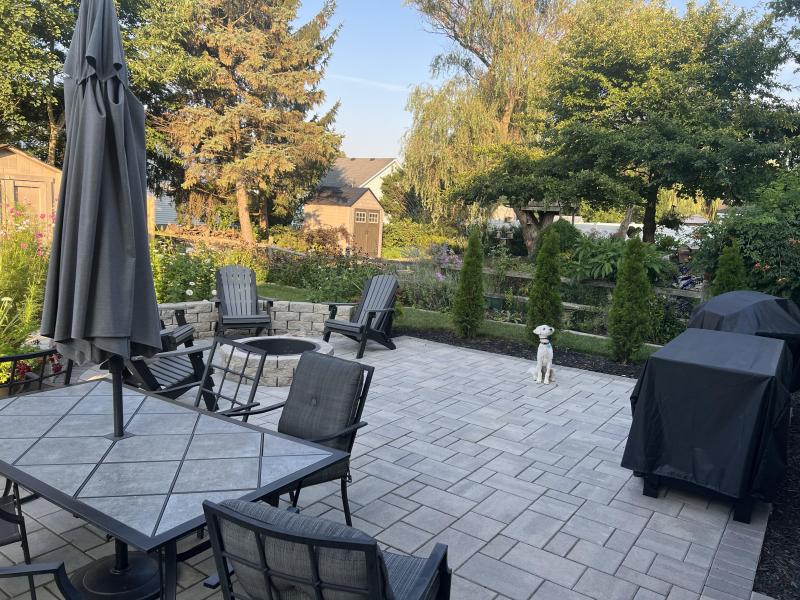
Before construction, a small concrete landing was the only paved surface outside the back door. Gray pavers now extend across the former lawn, with a curved stone wall defining the fire pit area and dark edging marking the patio perimeter.
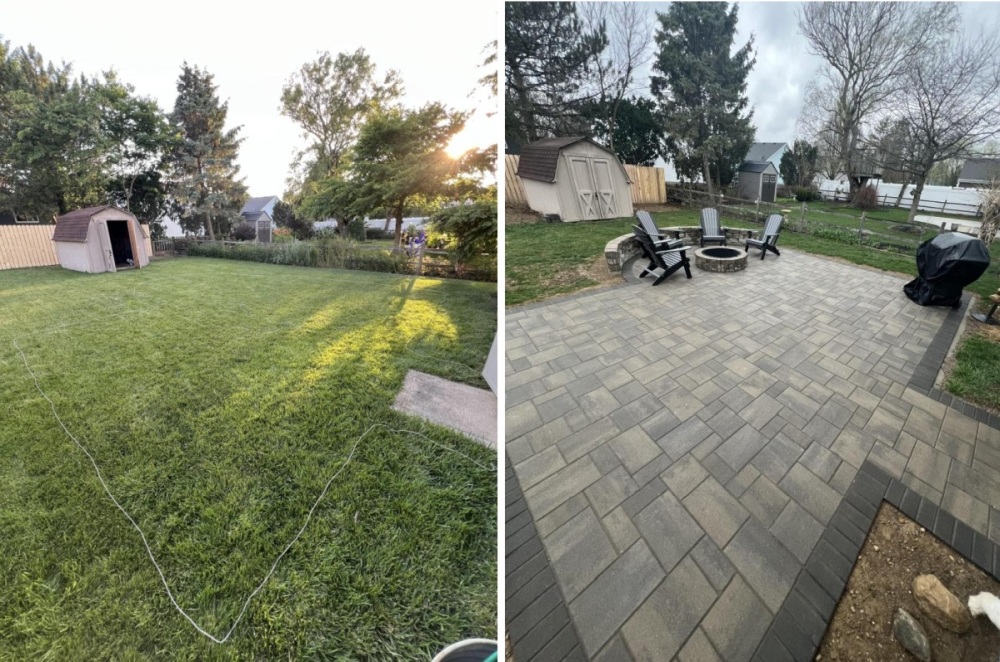
Spending between $4,000 and $5,000 on materials, the homeowner completed the project over a month of evenings and weekends. Doing the work himself also gave him control over everything from the paver pattern to the shape of the retaining wall.
Would you trade a section of your lawn for a patio and fire pit like this?
Image credits go to Reddit user u/DifferentPound9738