Goodbye to Plain Gray Sofas: What Could Take Their Place in 2027


You bought a gray sofa because it seemed like the safest choice. It matched the walls, worked with almost any rug, and left room for changes in the future. But years later, even after switching the cushions and accessories, something about the living room still feels unfinished. Perhaps the piece of furniture that was supposed to go with everything is part of the problem.
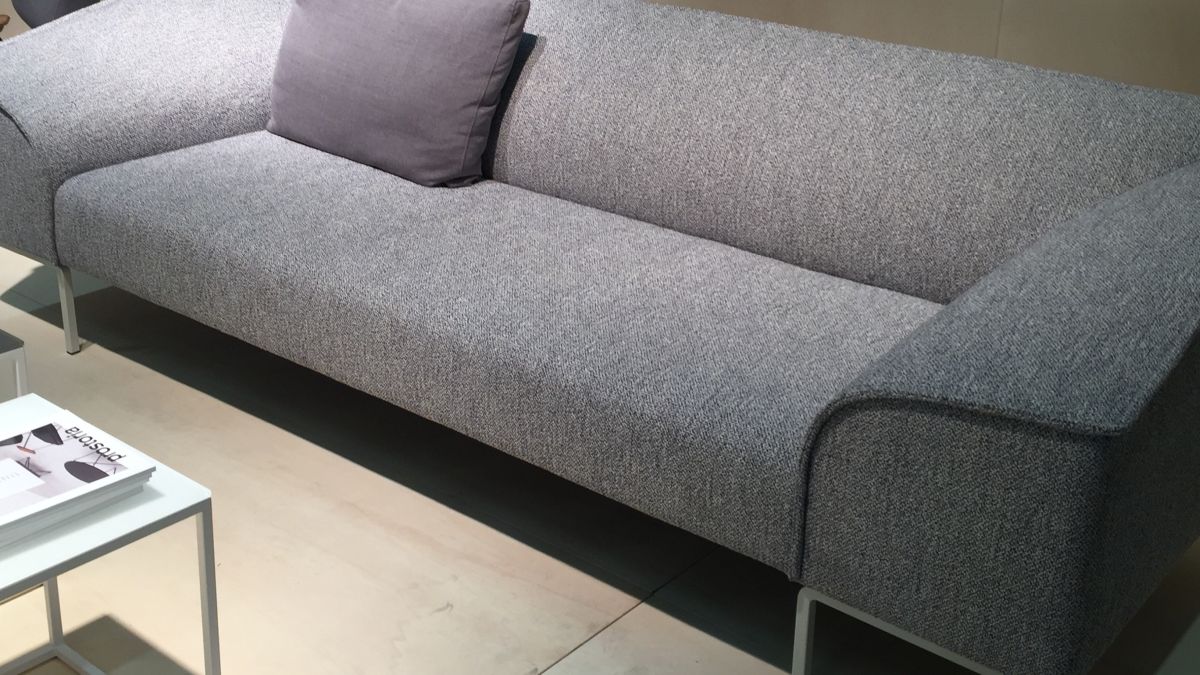
Heading into 2027, there is room to reconsider what a sofa contributes to the living room. Visible wood frames, colored upholstery, curved backrests, and contrasting fabrics offer alternatives to the rectangular couch covered in one neutral fabric.
Drawing from furniture designs photographed by Homedit, these examples offer a look at how color, shape, and construction could influence sofa choices in 2027.
- Moss green, mustard, tobacco brown, and terracotta offer alternatives to gray.
- Button tufting and channel stitching bring back traditional upholstery details.
- Exposed wood frames become part of the sofa instead of disappearing beneath fabric.
- Curved backs and rounded seats offer alternatives to rectangular seating.
- Contrasting fabrics introduce more than one color or texture within the same sofa.
Curved Sofas Change How People Sit Together
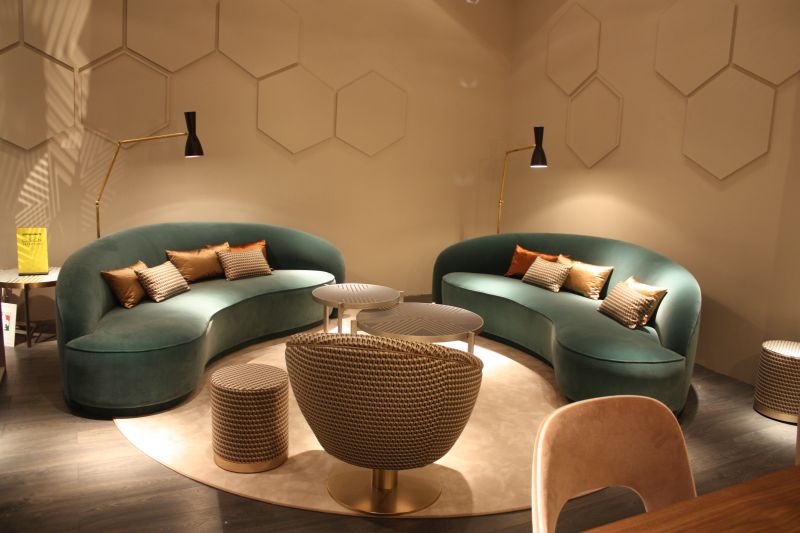
Two crescent-shaped green sofas face a group of circular tables, creating a seating arrangement that encourages conversation. Unlike straight couches positioned against opposite walls, their curved profiles direct seating toward the center of the room.
Moss Green Offers an Alternative to Gray
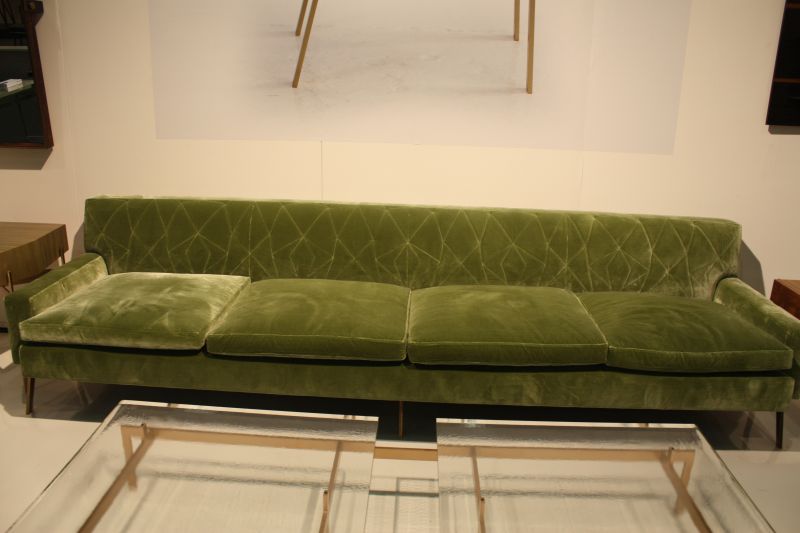
Moss green upholstery covers this low-profile sofa, with geometric stitching across the backrest and four separate seat cushions. Its narrow arms and exposed legs keep the long frame from appearing bulky.
Green works with wood furniture, brass accents, cream rugs, and other materials already found in many living rooms.
Exposed Wood Becomes Part of the Sofa
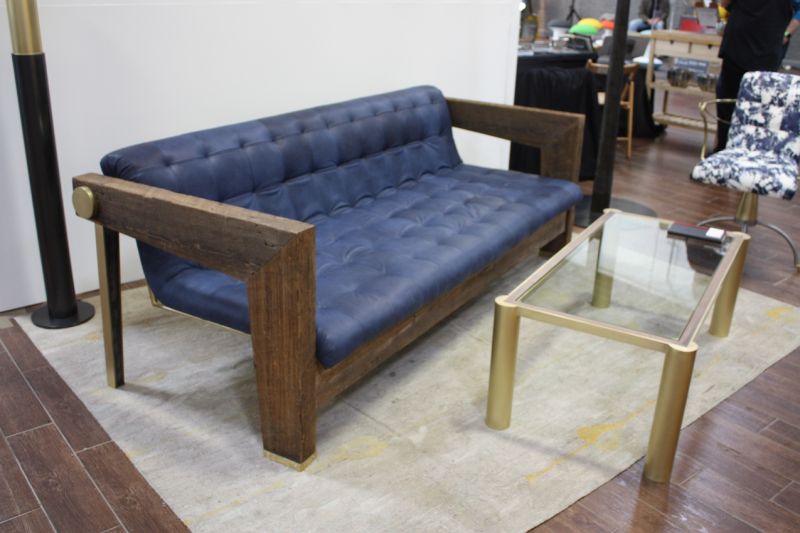
Thick timber sections form the arms and supporting frame around navy blue tufted upholstery. Instead of concealing the structure beneath fabric, this design uses wood as one of its main features.
Visible grain also introduces a material that can connect the sofa with existing coffee tables, cabinets, and hardwood flooring.
Mustard Yellow Takes the Place of Neutral Upholstery
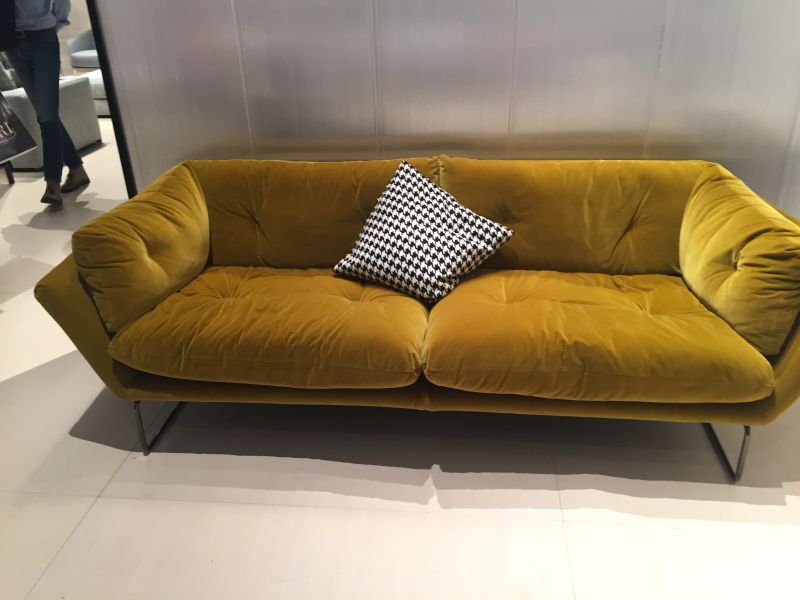
Mustard velvet-style upholstery covers the oversized cushions, backrest, and sloping arms of this sofa. Tufted sections create variations in how the fabric reflects light, while slender metal legs contrast with the broad seating area.
For homeowners accustomed to beige or gray, mustard offers a stronger color that still works with brown wood and black metal.
Chesterfield Sofas Bring Back Button Tufting
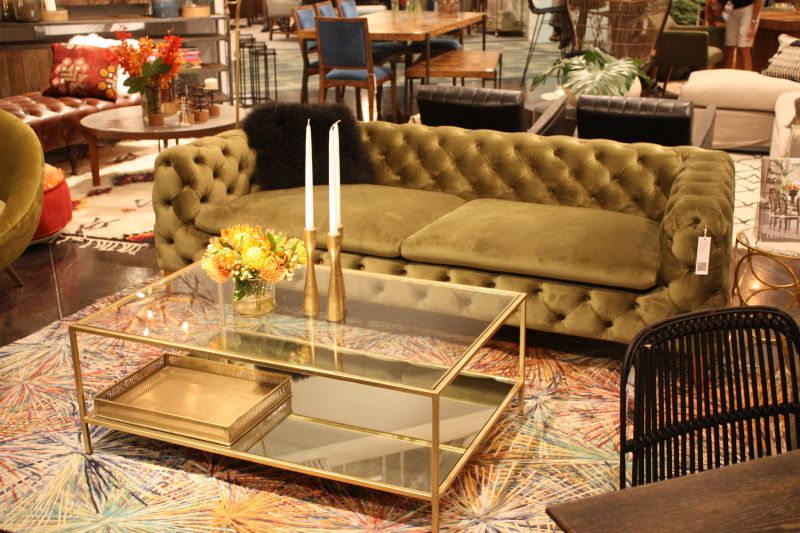
Deep button tufting extends across the backrest, arms, and front of this olive-gold Chesterfield. Two separate seat cushions interrupt the tufted pattern, preserving one of the recognizable features of traditional Chesterfield furniture.
Pairing this type of sofa with a glass coffee table shows how traditional upholstery can work alongside furniture with fewer decorative details.
Blue Upholstery Gives Button Tufting a Different Direction
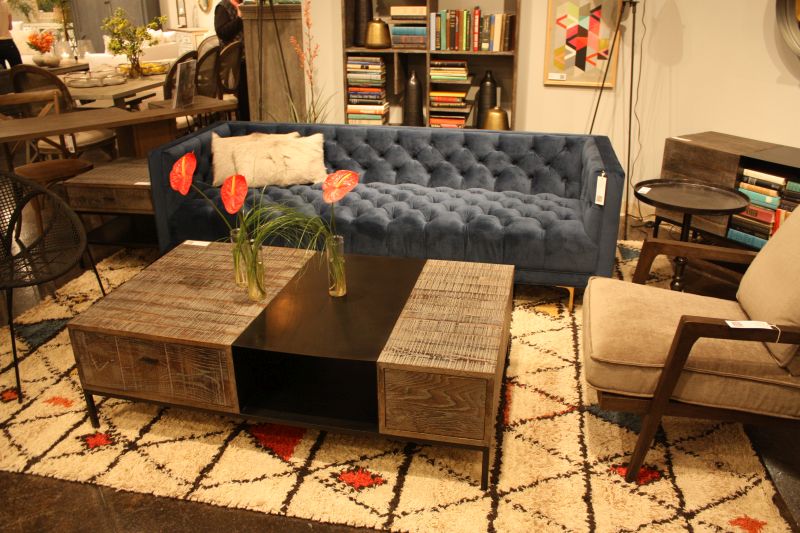
Straight arms and a rectangular frame distinguish this blue sofa from the traditional Chesterfield. Button tufting continues across both the backrest and seating surface, replacing loose cushions with one continuous upholstered arrangement.
Slate blue provides an alternative for homeowners who want color without moving toward mustard or green.
Channel Stitching Replaces Plain Upholstered Backs
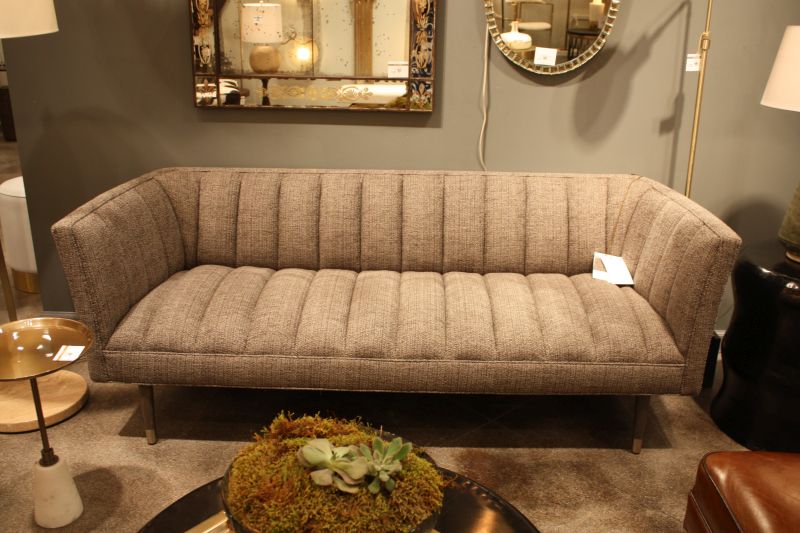
Vertical channels extend across the backrest, arms, and seat of this taupe sofa. Its woven fabric introduces texture without relying on printed patterns or contrasting colors.
For those who prefer neutral furniture, upholstery construction can make more of a difference than changing the color itself.
Beige Sofas Move Beyond Rectangular Forms
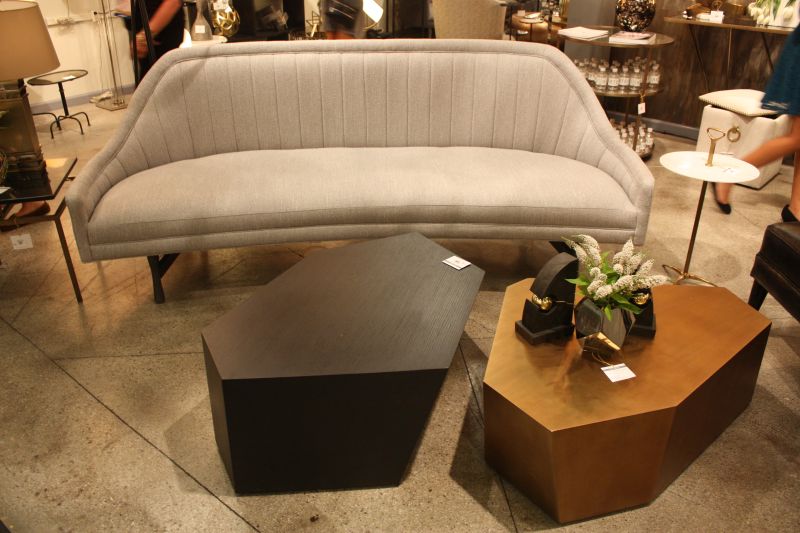
Sloping arms merge with the curved backrest, forming one continuous outline around the seat. Vertical stitching follows the shape of the frame, while a single bench cushion replaces the divisions found on standard three-seater sofas.
Beige remains an option for 2027, but changes in proportion and shape offer alternatives to conventional neutral couches.
Oversized Cushions Put Comfort Ahead of Formal Seating
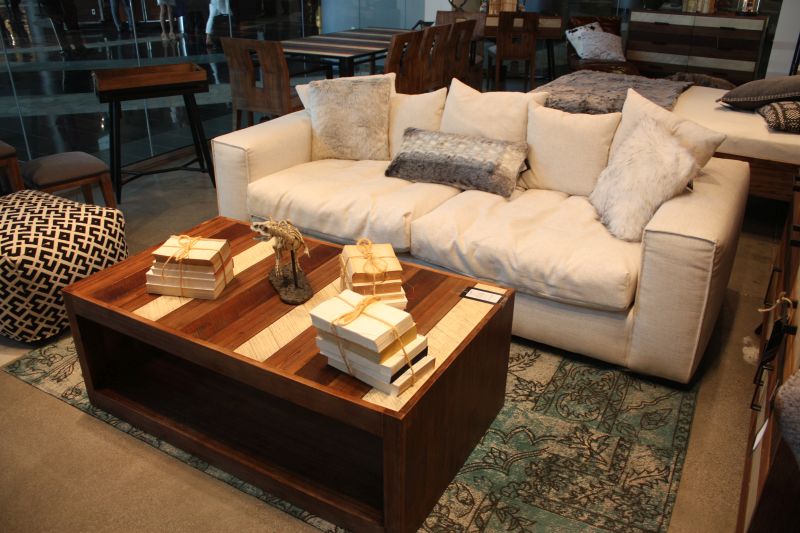
Wide arms, generous seat cushions, and loose back pillows give this ivory sofa the proportions of lounge furniture. Its woven upholstery has a linen-like appearance, with fewer decorative seams across the main surfaces.
This approach suits living rooms where stretching out, reading, or watching television takes precedence over formal seating arrangements.
Patterned Upholstery Extends Beyond Throw Pillows
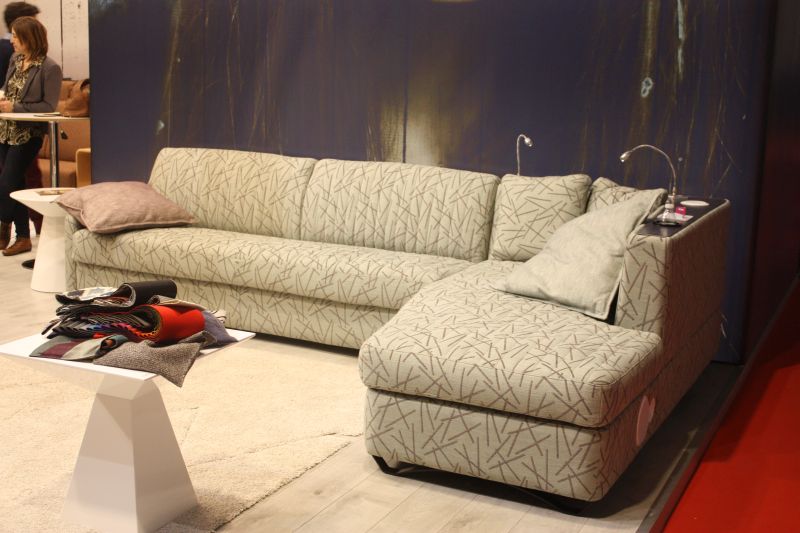
Intersecting gray lines cover the cream upholstery of this L-shaped sectional, including its chaise, back cushions, and arms.
Using a pattern across the entire sofa removes the need to introduce visual interest through cushions alone. Keeping the surrounding furniture and rug free of competing prints can help balance the arrangement.
Terracotta and Beige Share the Same Sofa
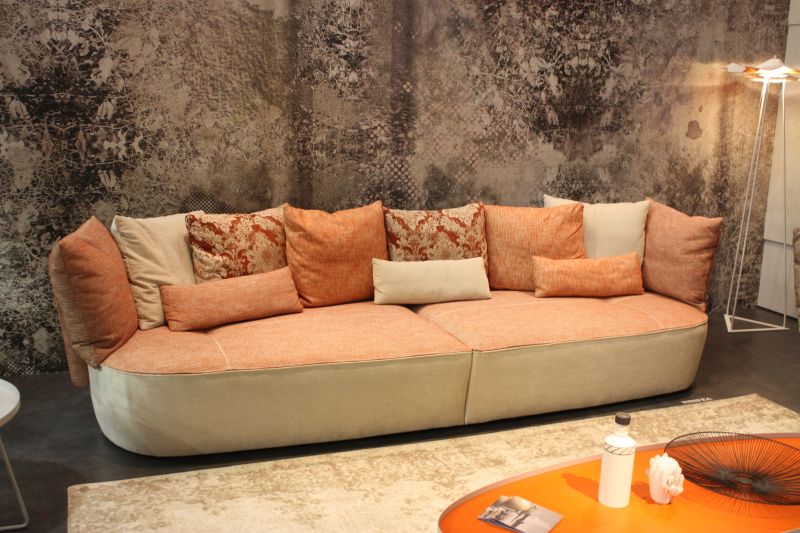
Terracotta-colored seat cushions sit above a beige upholstered base, with matching and contrasting pillows forming the backrest.
Combining two upholstery colors within the same piece offers another option for homeowners who want to move beyond neutral furniture without committing to one strong color across the entire sofa.
Tobacco Brown Leather Offers Another Neutral
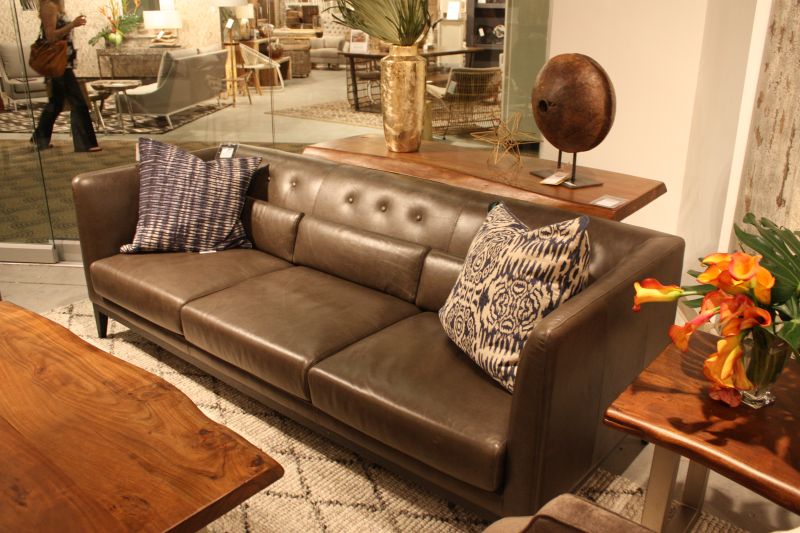
Brown leather-style upholstery, button detailing, and exposed legs give this sofa a mid-century appearance. Separate seat cushions and straight arms retain a familiar configuration without depending on gray fabric.
Tobacco brown can work as a neutral alongside green, blue, cream, and natural wood furnishings.
Different Materials Can Share One Seating Frame
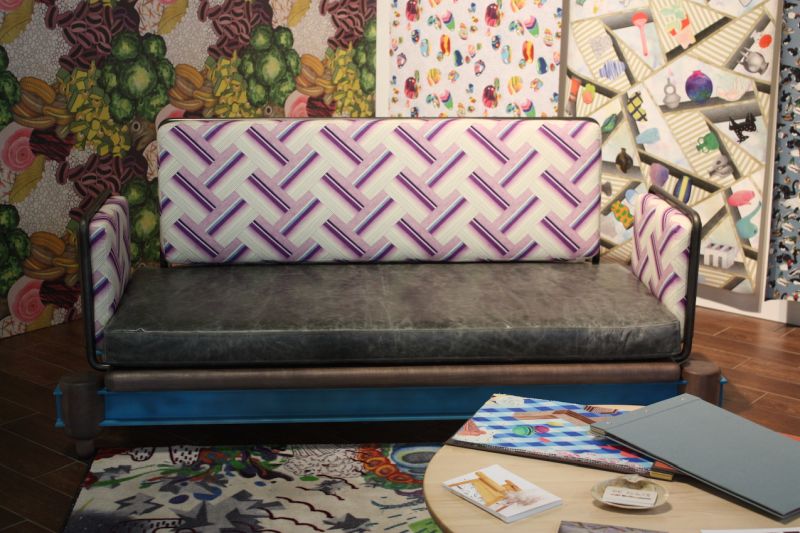
Purple geometric fabric covers the backrest and arms, while a charcoal leather-style cushion forms the seat. An exposed metal frame and blue base introduce further contrast.
This combination challenges the convention that every upholstered section of a sofa must use the same material.
Decorative Borders Return to Sofa Upholstery
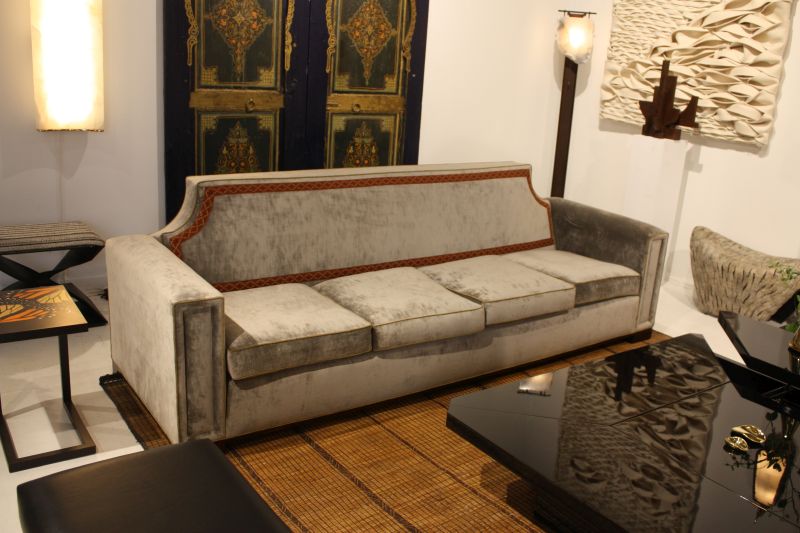
Rust-colored trim follows the outline of the backrest, creating a border against the taupe upholstery. Three seat cushions and broad rectangular arms keep the rest of the sofa’s construction familiar.
Details such as contrasting trim offer another way to distinguish neutral furniture without introducing a printed fabric across every surface.
Wood and Upholstery Form an Asymmetrical Sofa
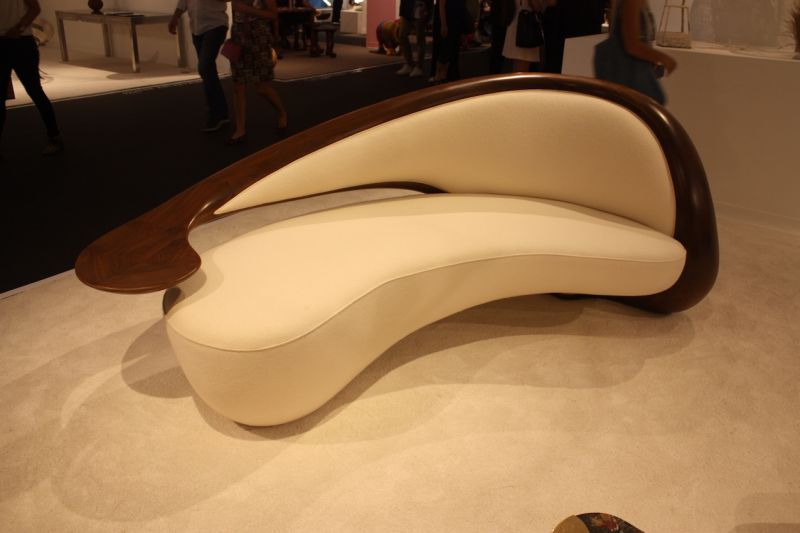
Curved dark wood wraps around cream upholstery, extending beyond one end of the seat to form an integrated surface. Its asymmetrical shape removes the distinction between a conventional backrest and two matching arms.
This design also challenges where a sofa belongs in a room. Positioning it against a wall would conceal part of the woodwork that defines its appearance.
Is the Plain Gray Sofa Still the Safest Choice for 2027?
Gray upholstery is not the problem on its own. Choosing a sofa based on its ability to match everything can mean overlooking details that matter just as much, including seat proportions, fabric texture, frame construction, and comfort.
These furniture designs offer alternatives without requiring homeowners to replace every other piece in the living room. Green, brown, blue, and mustard can work with existing neutral walls and wood furniture, while tufting or exposed frames can give even a beige sofa a distinct appearance.
If you were spending money on a new sofa in 2027, would you still choose gray because it goes with everything, or would you let the sofa determine the colors in your living room?
Image credits Homedit.com