Goodbye to Matching Furniture Sets: The 2027 Home Decor Trend Is Mixing Vintage With Modern


At Homedit, we’ve watched interior design trends come and go since 2008, from matching furniture collections to rooms furnished with pieces from different periods. Coordinated tables, chairs, and cabinets once offered an easy way to furnish a home, but that uniform look is giving way to interiors assembled from furniture with different histories, materials, and finishes.
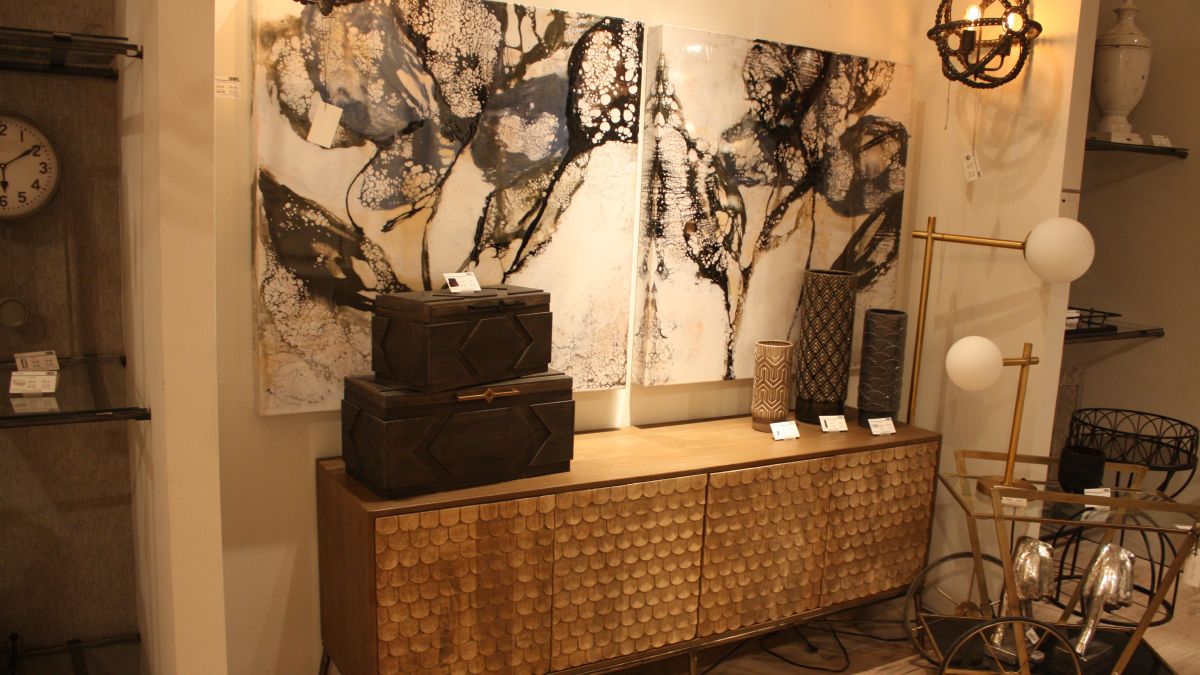
For 2027, the focus is shifting toward collected interiors, where vintage, inherited, secondhand, and contemporary furniture share the same space. Homes & Gardens identifies found objects and pieces with a history among emerging home decor directions, while Decorilla points to personal collections replacing matching sets.
Worn leather chairs, old wooden cabinets, metal trunks, and furniture with unusual hardware are no longer pieces homeowners need to replace to achieve a coordinated room. Mixing them with newer furniture can produce a home that doesn’t depend on one collection or decorating trend. These examples show what to look for when choosing secondhand pieces and how to bring different furniture styles together.
Start With Furniture That Doesn’t Belong to One Collection
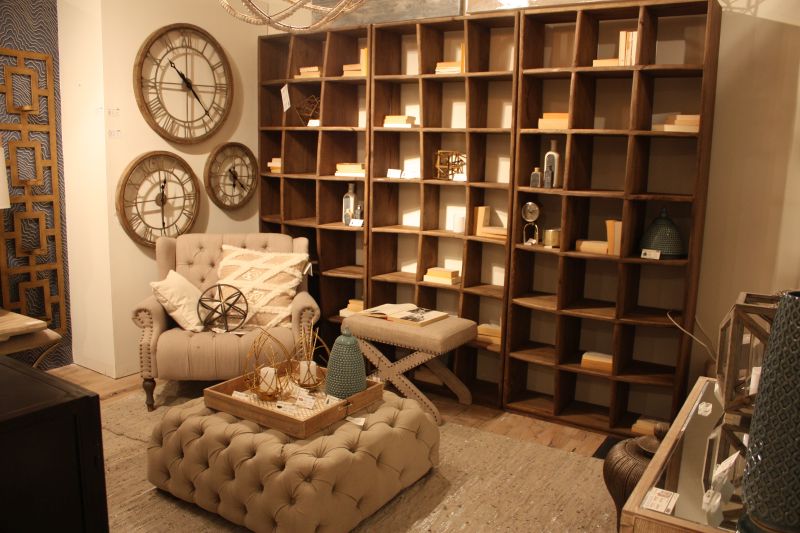
An oversized wooden bookcase, beige tufted armchair, button-tufted ottoman, and three vintage-style wall clocks create a reading area without matching furniture. The tall bookcase has dozens of open compartments, while the armchair brings curved arms, nailhead trim, and turned wood legs into the arrangement.
Books and small objects occupy some of the cubbies, leaving much of the shelving exposed. The mix works because the brown wood, beige upholstery, and muted accessories share a restrained color palette, despite their different shapes.
Worn Leather Can Replace a Matching Accent Chair
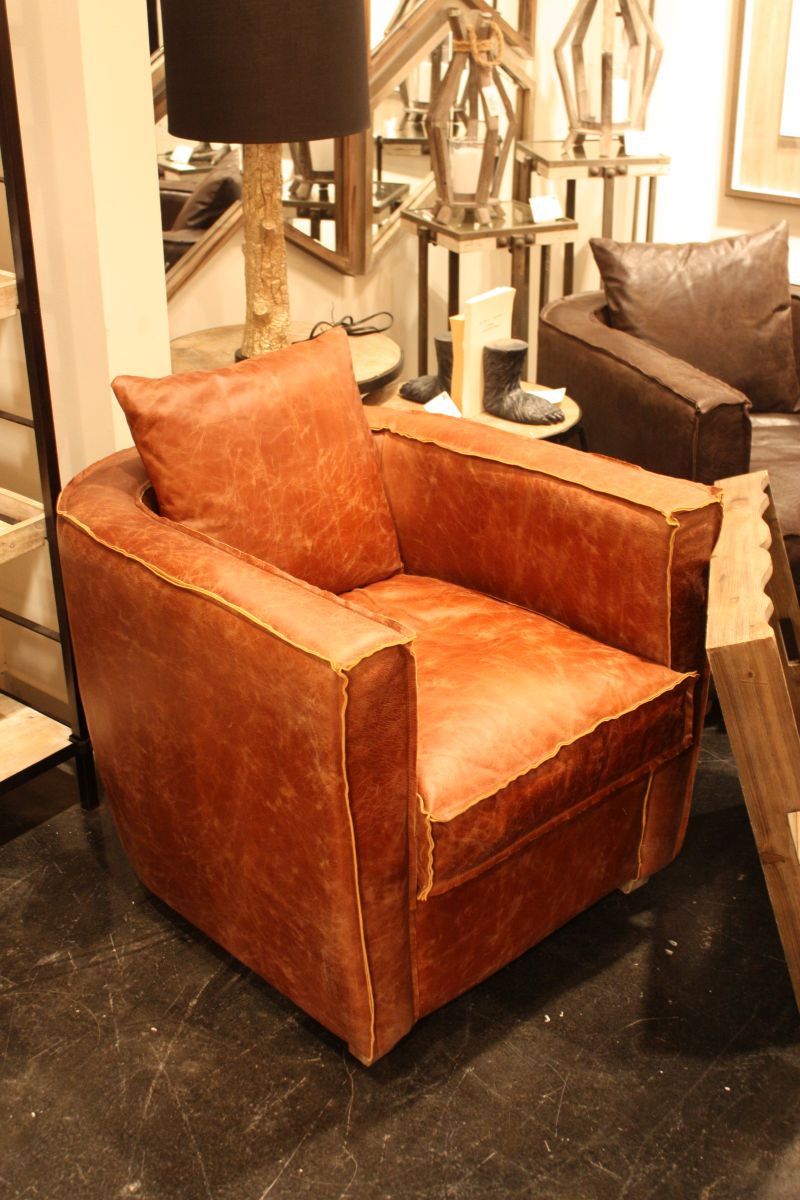
Cognac leather changes the appearance of this box-shaped armchair. Creases, uneven color, and visible seams distinguish it from a chair covered in uniform fabric. The broad arms and deep seat provide enough presence to stand beside a sofa from another collection.
Used leather chairs with sound frames and worn surfaces are worth examining at thrift stores and estate sales. Check the cushions, seams, and leather for cracks or tears before buying.
Dining Chairs Don’t Need to Match the Table
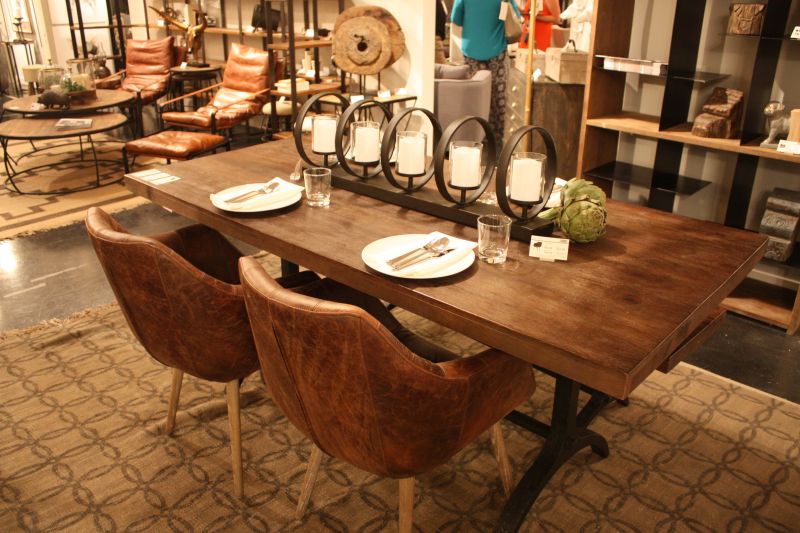
Two brown leather dining chairs with curved backs and slender metal legs sit beside a rectangular dark wood table. Its thick top and black trestle base contrast with the slim chair legs and leather upholstery.
The table could work with chairs from different periods, provided their seat heights and proportions suit it. Leather also introduces a different surface beside the wood without adding another dominant color.
An Older Wood Table Can Work With Upholstered Chairs
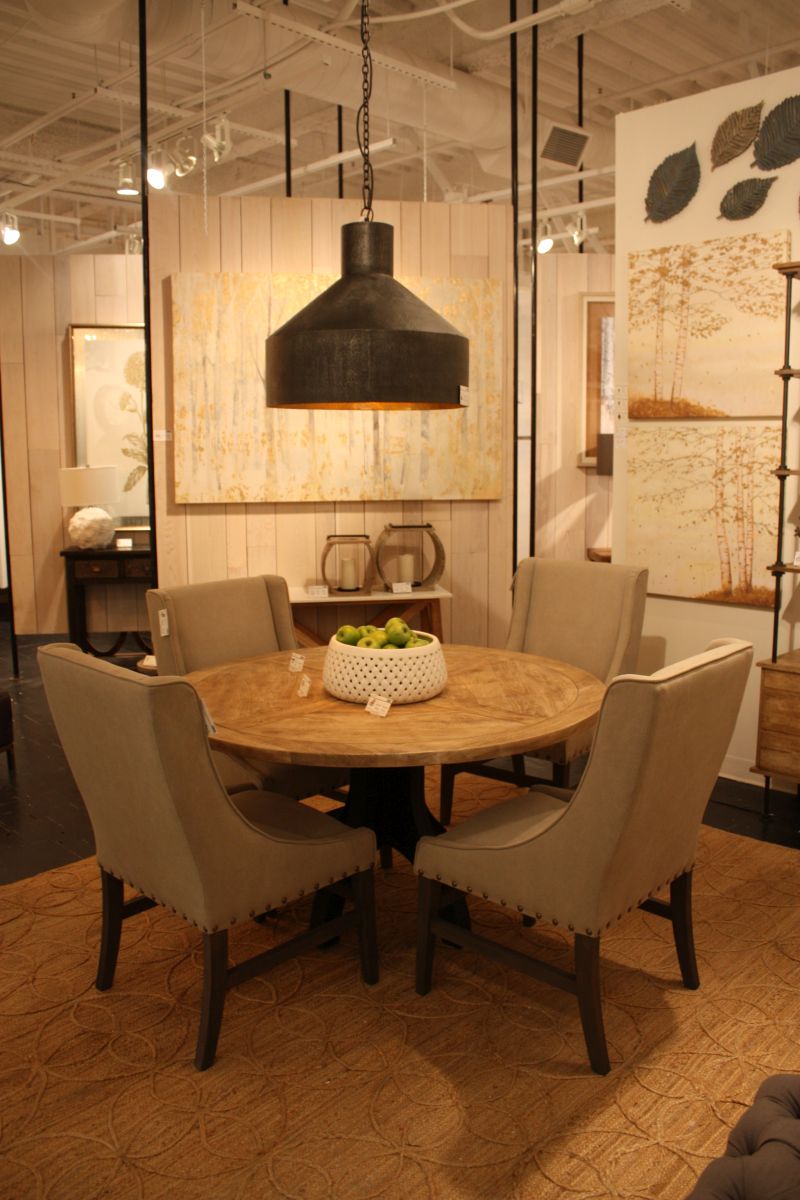
Four beige upholstered chairs surround a round wood dining table with a substantial central base. Their tall backs and nailhead trim contrast with the visible grain and pieced wood pattern across the tabletop.
Overhead, a black metal pendant introduces an industrial finish that doesn’t appear in the seating. The combination shows how an older wood table can work with newer upholstered chairs instead of requiring a matching dining set.
Look for Old Drawer Cabinets Instead of Standard Dressers
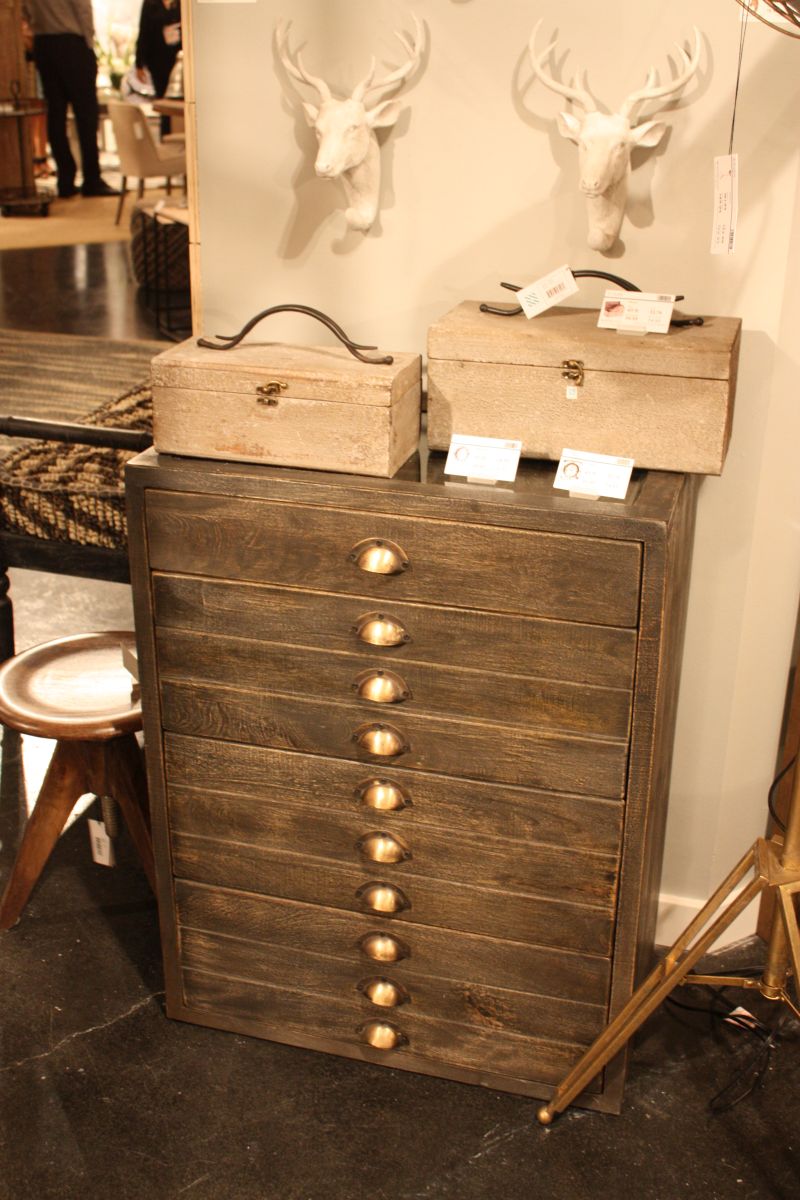
Ten narrow drawers with brass cup pulls give this dark wood cabinet the appearance of an old workshop or document-storage chest. Horizontal wood grain continues across the drawer fronts, while the metal handles form a vertical line down the center.
Such a cabinet could hold papers, craft supplies, linens, or smaller household items. Unlike a standard dresser with three or four broad drawers, the narrow compartments divide storage into separate sections.
Trunk-Style Furniture Brings Storage Into the Mix
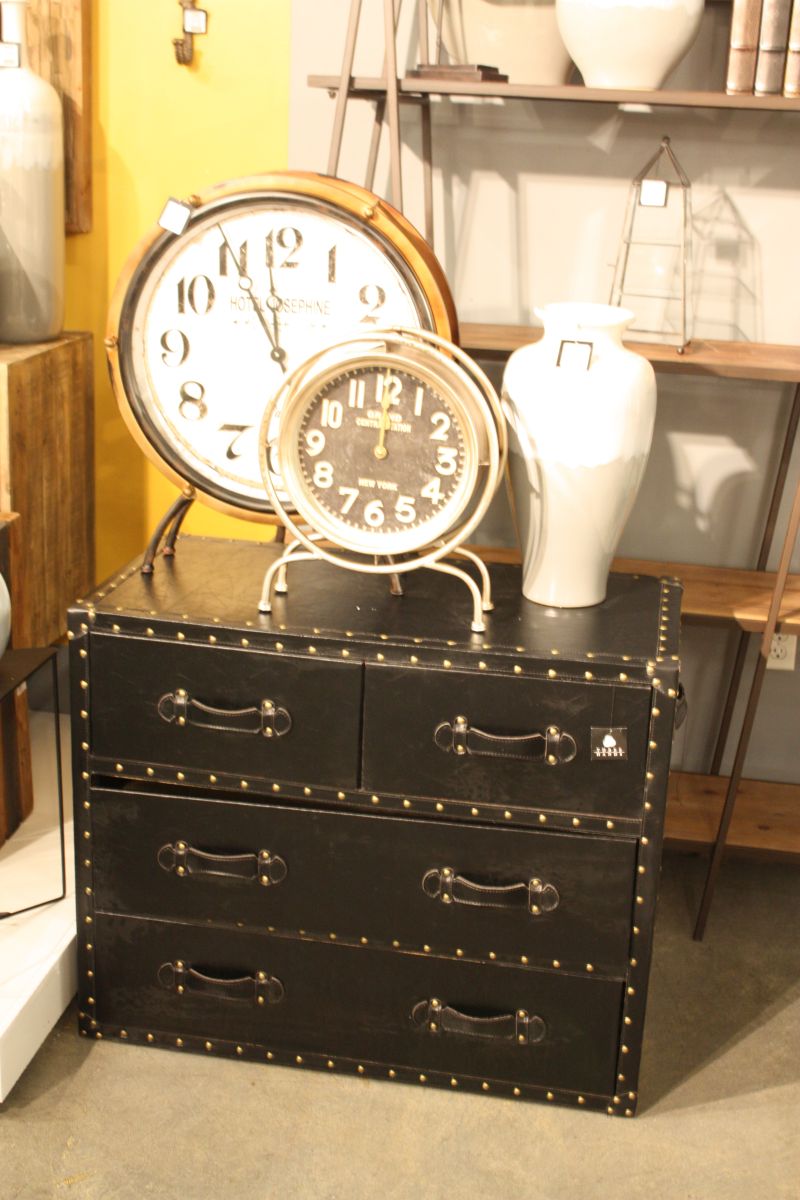
Black leather-look panels, brass-colored rivets, and luggage-style handles distinguish this compact drawer chest from a conventional bedside cabinet.
Two small upper drawers sit above deeper storage, giving the piece uses beyond bedroom furniture. It could serve as an entryway cabinet or an accent beside a reading chair without requiring another black furniture piece.
Old Luggage Can Inspire an Entryway Console
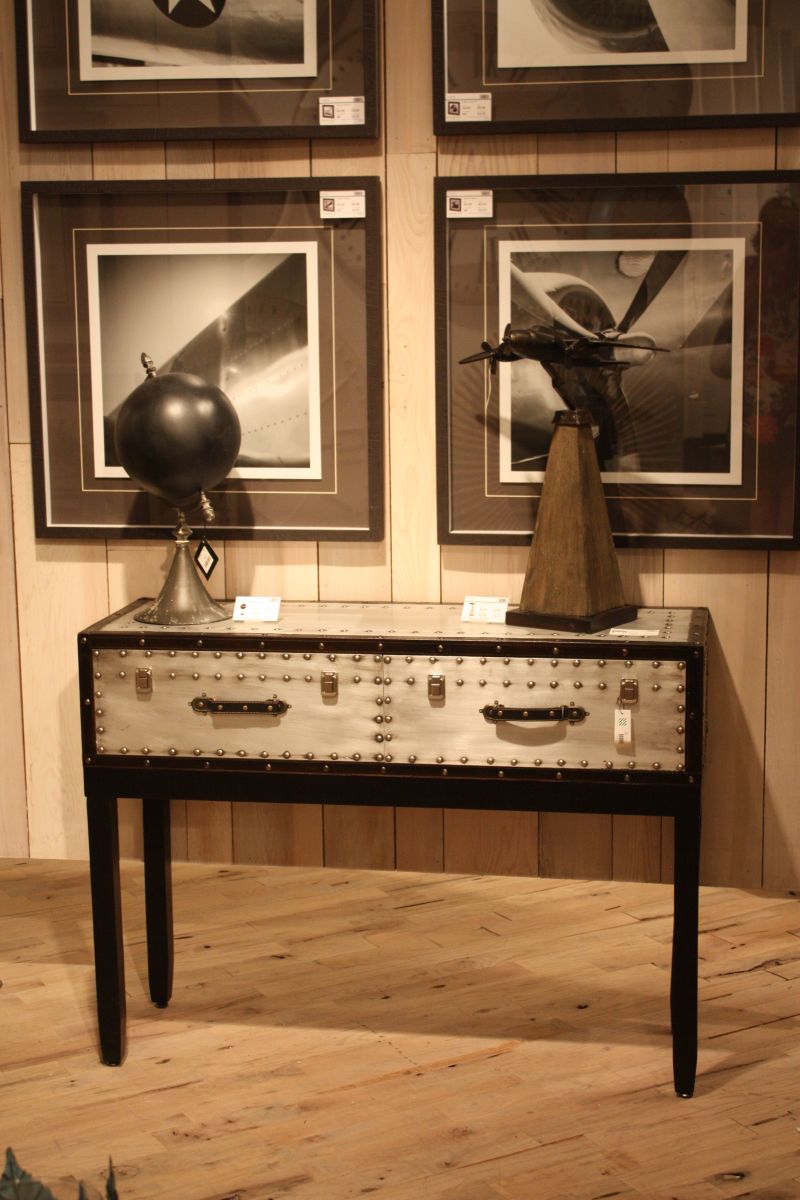
The silver metal front, dark corner guards, rivets, and carrying handles make this narrow console resemble an old travel trunk. Black legs lift the rectangular body off the floor, giving it the proportions of an entryway table.
A secondhand trunk with a sound body could serve a similar purpose, though a wall-mounted support or suitable base may be needed depending on its construction. The attraction is the contrast between a utilitarian storage object and its new place in the home.
Industrial Metal Doesn’t Have to Stay in the Garage
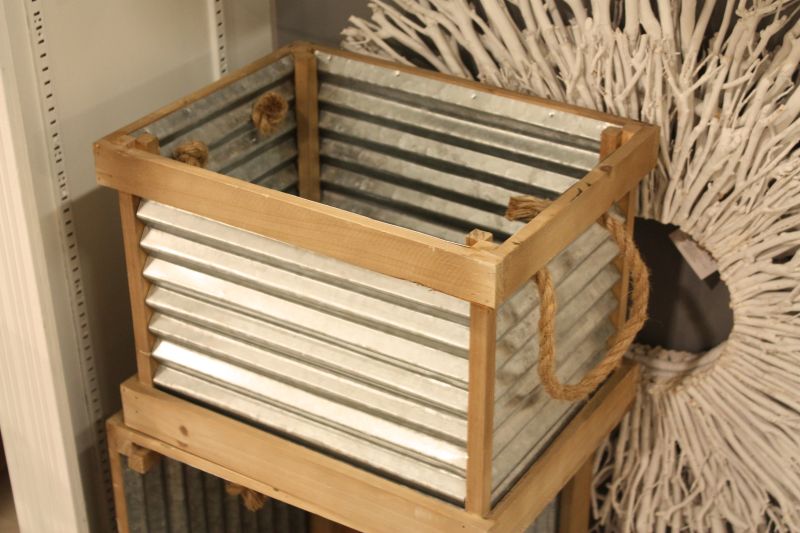
Galvanized corrugated metal forms the sides of this open storage bin, while unfinished wood creates its frame. Thick rope handles complete the crate-like design.
An object with these materials could hold blankets, firewood, or garden supplies, depending on its size and condition. Metal storage pieces found at flea markets can also work beside wood cabinets and upholstered furniture, provided their edges and surfaces are safe for indoor use.
Corrugated Metal Can Appear on Furniture Doors
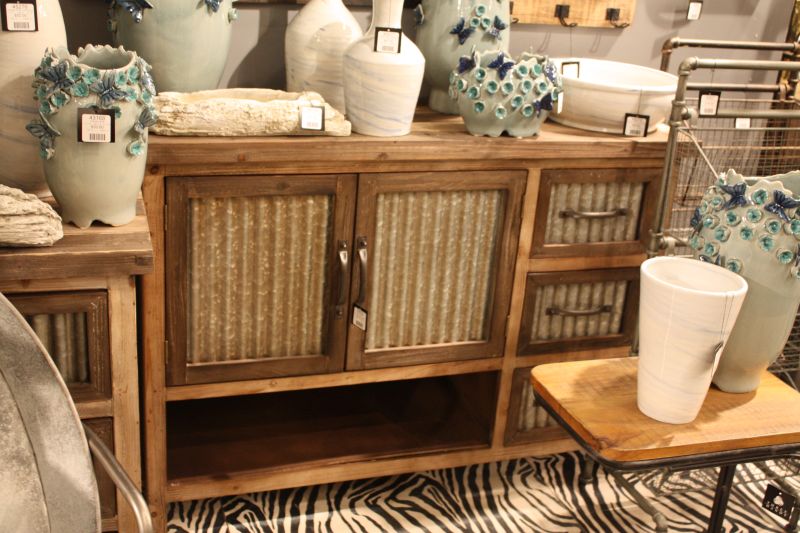
Ribbed metal panels fill the doors and drawers of this low wooden cabinet. Rust-brown wood surrounds the galvanized surfaces, with a long open compartment beneath the central doors.
The metal interrupts the wood finish without requiring paint or decorative hardware. Used in a dining room, a cabinet of this type could store serving dishes and table linens, while its top provides space for lamps or ceramics.
Dark Wood Cabinets Can Stay Alongside Modern Art
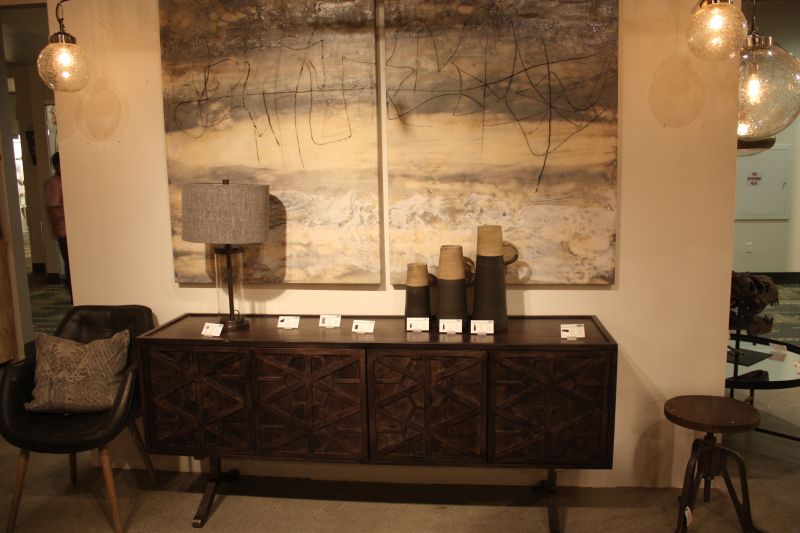
Four geometric cabinet fronts define this long, dark wood sideboard. Angled wood strips create a pattern across each door, while slender black legs leave open floor space beneath the cabinet.
Above it, two large abstract paintings introduce cream, gray, and black tones. Their broad painted surfaces contrast with the detailed woodwork below. There’s no need for traditional artwork to match the cabinet’s older appearance.
Fabric-Covered Furniture Offers Another Secondhand Find
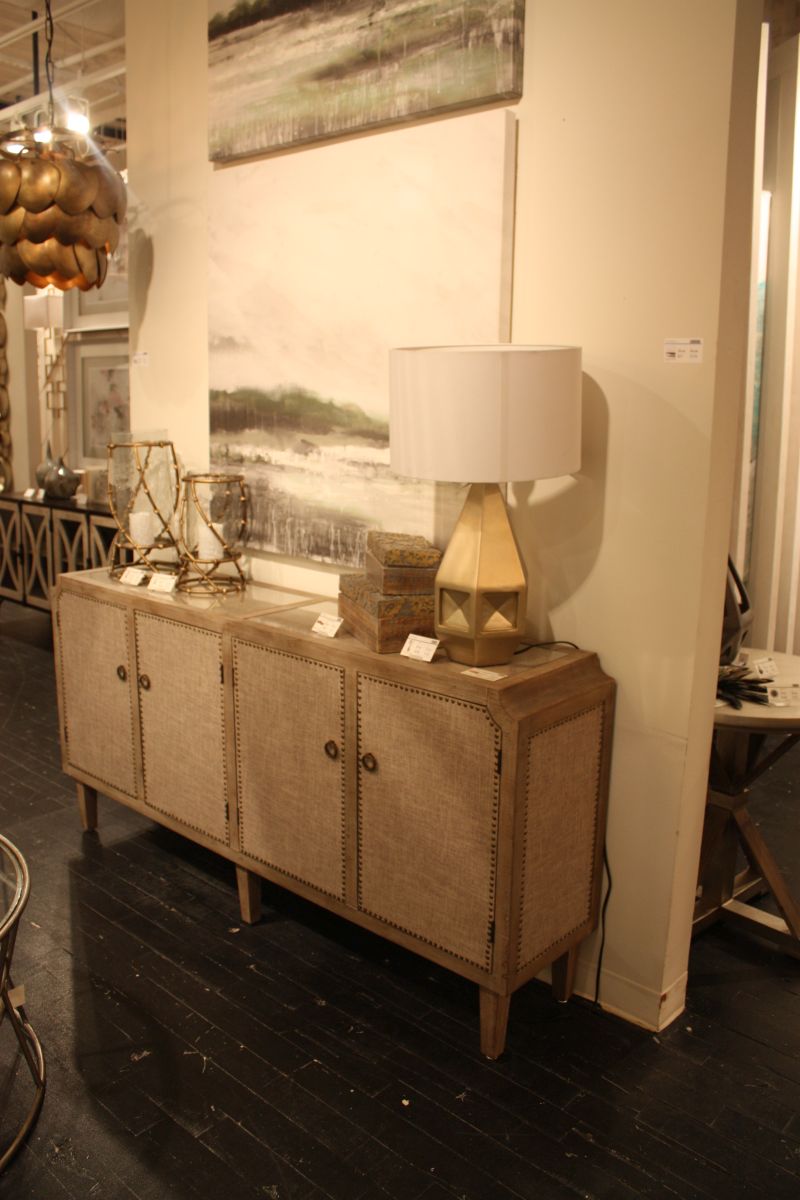
Instead of conventional wood or painted doors, this sideboard has beige woven panels outlined with dark nailhead trim. Four narrow doors sit above tapered wood legs, giving the cabinet a different appearance from the dark wood and metal storage pieces.
The textured fabric works with the pale abstract artwork above, while the geometric gold lamp introduces another finish. A cabinet with sound wood construction could also be updated with fabric panels, provided the material is secured and suited to the furniture’s use.
What Holds a Collected Room Together?
Mixing furniture from different periods doesn’t mean ignoring proportion or color. A large wood cabinet can sit beside a leather chair when the pieces share enough brown tones to connect them. Brass hardware can repeat through a lamp, drawer pulls, and a table base without requiring those items to match.
Secondhand shopping also changes the order of decorating decisions. Instead of choosing an entire collection before bringing anything home, homeowners can begin with a piece worth keeping, then find furniture that complements its size, finish, and purpose.
The result isn’t tied to one furniture collection or shopping season. Chairs can be reupholstered, wood can be refinished, and individual pieces can move between rooms as needs change. That’s what gives the collected look a chance to last beyond 2027.
Would you rather furnish a room with one matching collection or build it around secondhand pieces found over time?