Forget Ordinary Furniture: These Statement Pieces Turn Cabinets, Tables, and Chairs Into Works of Art


Silver tree branches spread across a black cabinet, a glass table rests on what looks like a stack of giant stones, and a wooden bench follows the uneven outline of a tree. None of these pieces looks like the furniture most people expect to find in a dining room or living room.
Look past their unusual shapes, and the differences become more interesting. Branches take the place of cabinet details, glass exposes what would be hidden beneath a table, and materials such as wood, metal, leather, and woven fibers become part of the design rather than a finish applied at the end.
These examples show how far furniture can depart from conventional construction while retaining a purpose in the home.
Silver Tree Branches Spread Across a Black Sideboard
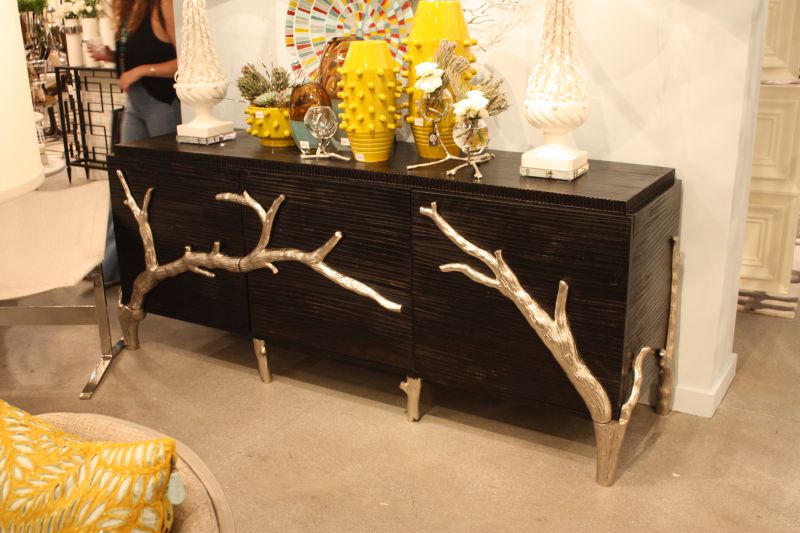
Polished silver branches cross the doors of this long black cabinet, with thick trunks rising from the floor and smaller branches extending across the dark wood. Several metal sections reach toward the center, while branch-shaped supports replace conventional cabinet feet.
The contrast between the dark horizontal grain and the irregular metal forms makes the front resemble a piece of wall art. Even the cabinet’s legs appear to grow from the same branches that cover its doors.
Twisted Metal Replaces Ordinary Cabinet Hardware
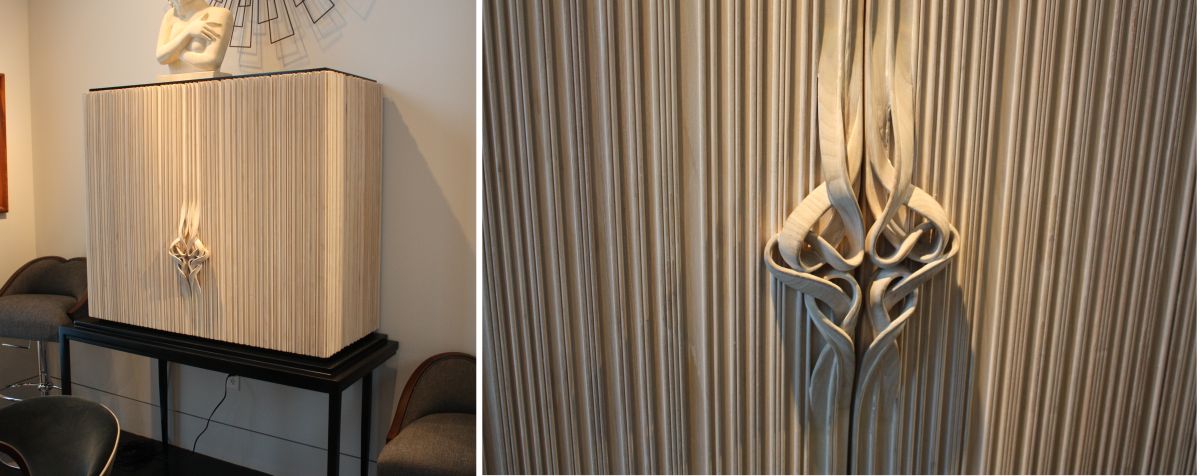
Vertical ridges cover this tall, pale cabinet, but the metal ornament at its center interrupts the straight lines. Narrow metallic strips twist around one another, gathering into an elaborate form that resembles tangled vines.
Instead of competing with the ornament, the cabinet’s plain rectangular body and black metal stand provide a restrained background for it.
Giant Stone-Like Forms Support a Glass Table
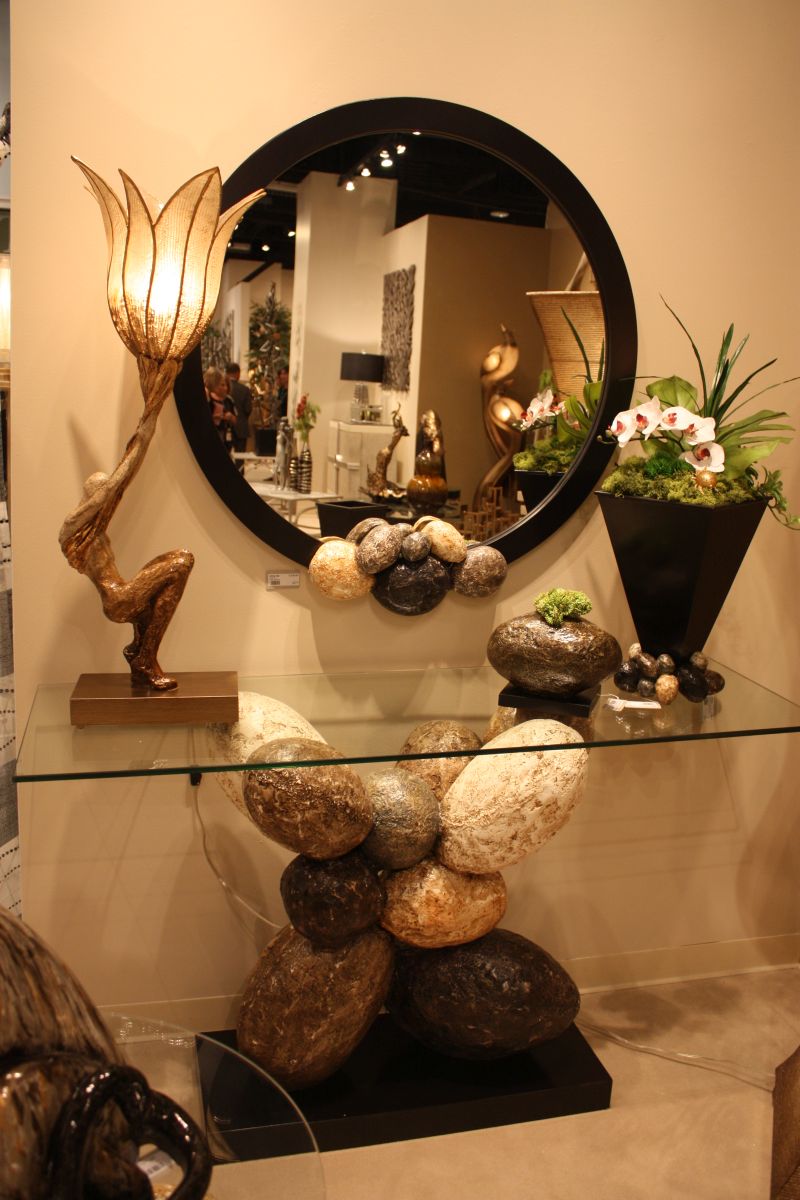
What first appears to be a pile of oversized river stones is the supporting structure beneath a glass console. Rounded forms in bronze, black, cream, and gold tones overlap to form a column rising from a square black base.
Glass leaves the entire arrangement exposed, including the smaller forms near the top that would disappear beneath an opaque tabletop. The round mirror above repeats the idea, with another cluster of stone-like pieces attached to the bottom of its frame.
Natural Wood Edges Replace the Straight Lines of a Bench
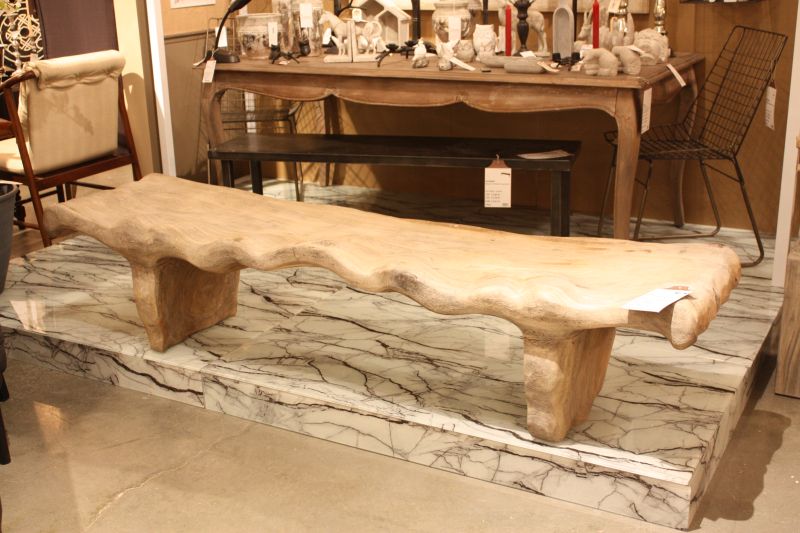
Wood grain runs across the full length of this pale bench, but its edges refuse to follow a straight line. The seat narrows and widens along the timber’s irregular contours, with a series of shallow curves across the front.
Two thick supports rise beneath the seat, sharing the same unfinished-looking form. Knots and changes in the grain remain visible, making the wood itself the main attraction without carved decorations or upholstery.
Red Travel Trunk Becomes a Console Table
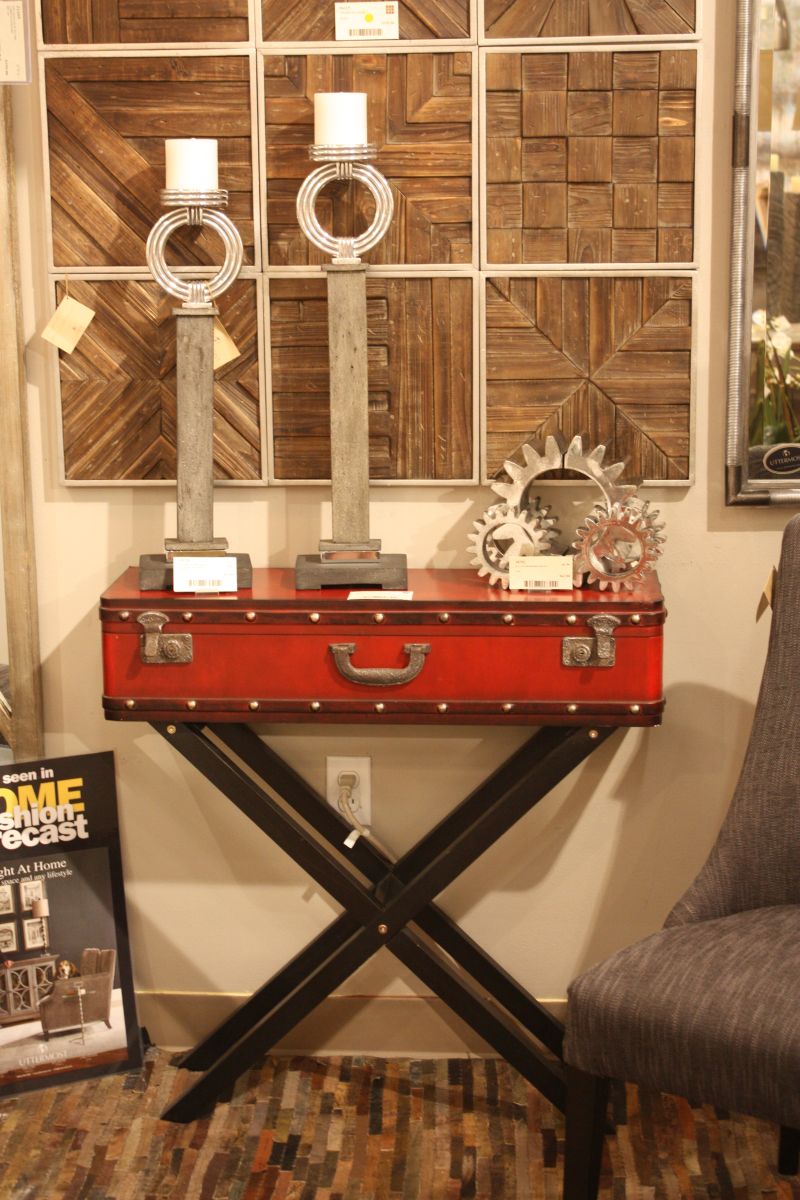
Bright red panels, metal corner guards, rivets, and a central carrying handle give this console the appearance of an old suitcase. Instead of resting on the floor like luggage, the rectangular body sits on a black X-shaped metal stand.
The narrow proportions suit an entryway, where the red trunk-style top could replace a conventional console. Its luggage details remain visible rather than being concealed beneath a wood or painted finish.
Dining Tables With Bases That Deserve Attention
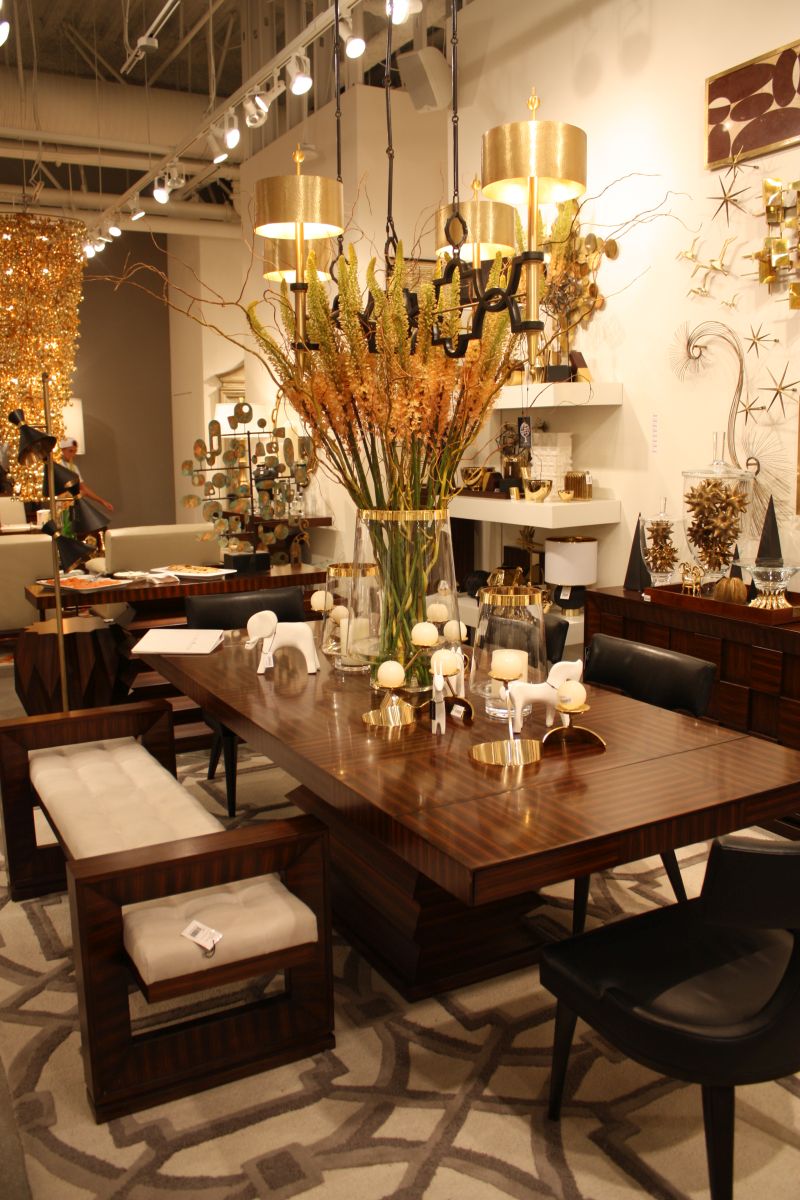
Dark wood forms the broad top of this dining table, while angular sections beneath it create a substantial stepped pedestal. The base changes width from one section to another, forming a geometric structure that can be seen between the surrounding chairs.
Wood-framed seats with cream cushions sit alongside darker chairs, and three gold cylindrical pendant lights hang above the table. The combination of broad wood surfaces and repeated geometric forms gives the dining area its distinctive appearance.
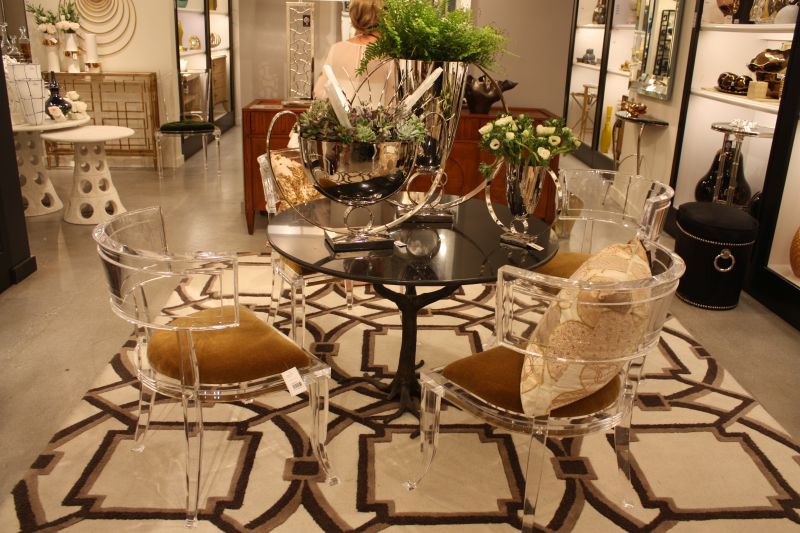
Another dining table takes the opposite approach, replacing the heavy wood pedestal with a narrow, branching dark base beneath a round glass top. Transparent acrylic chairs surround it, leaving the structure visible through their backs, arms, and legs.
The chairs have brown upholstered seats, but their clear frames prevent them from concealing the table. This arrangement puts the construction beneath the glass at the center of the dining area.
Woven Chairs Take Their Shape From the Seat Itself
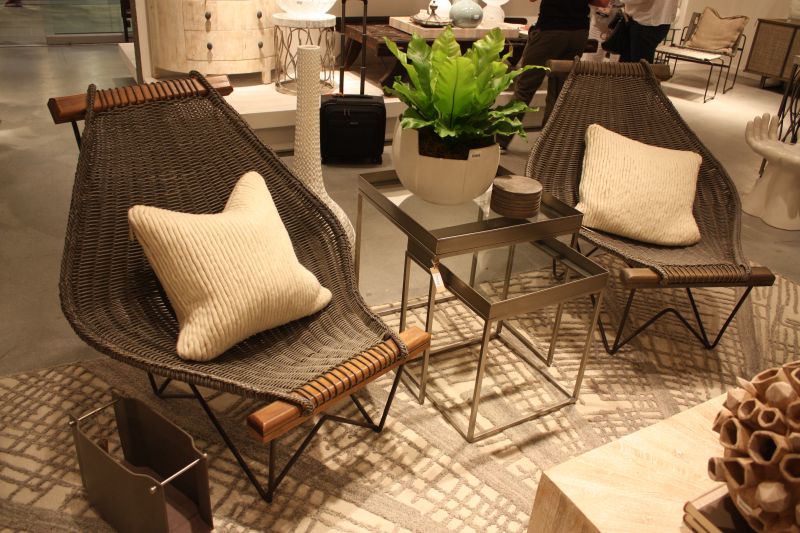
Dark woven material stretches between wooden rails and black metal supports to form these two lounge chairs. Their broad seats curve upward into tall, tapered backs, giving them a basket-like outline without conventional upholstered arms.
The open weave exposes the construction, while cream cushions rest against the dark material. Thin metal nesting tables between the chairs contrast with the curved seats, leaving the woven forms unobstructed.
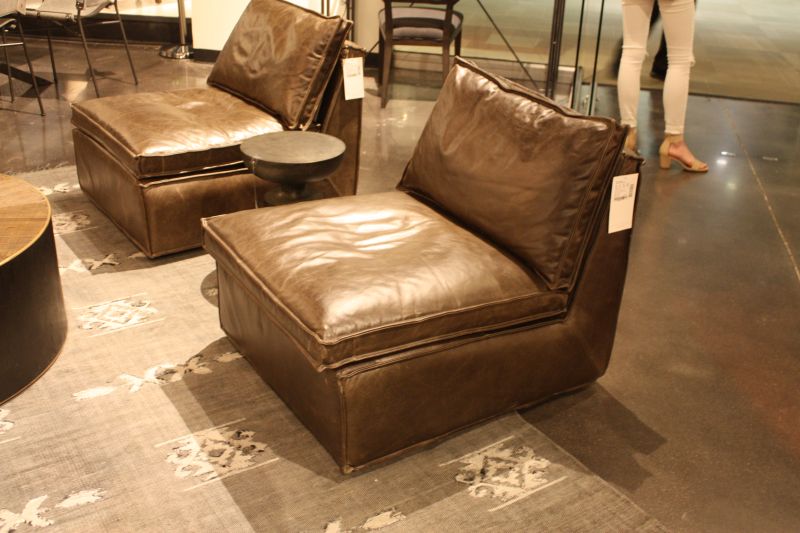
Brown leather creates a different type of lounge chair in the next example. Thick seats rest on low upholstered bases, with large back cushions rising above them and no visible armrests.
Creases across the leather and pronounced seams follow the edges of the cushions, making the seats resemble oversized upholstered blocks rather than conventional framed chairs.
Thick Timber Meets Metal Dining Chairs
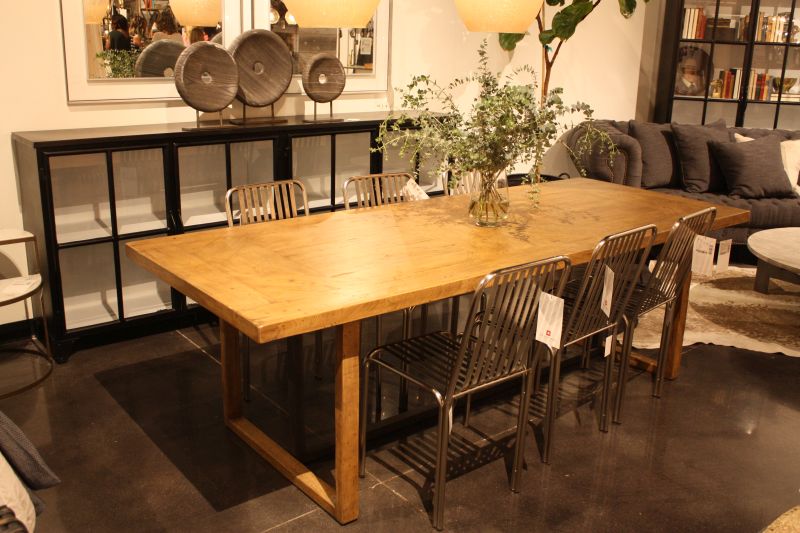
Large sections of pale wood form this rectangular dining table, including two broad supports connected beneath the top. Knots, grain changes, and small marks remain visible across the surface, contrasting with the narrow metal rods of the surrounding chairs.
The metal backs and seats leave open spaces between their bars, allowing the heavy timber structure to remain visible. The table and chairs have almost opposite proportions, yet their combination avoids the need for a matching dining collection.
Folding Panels Create a Backdrop for a Small Desk
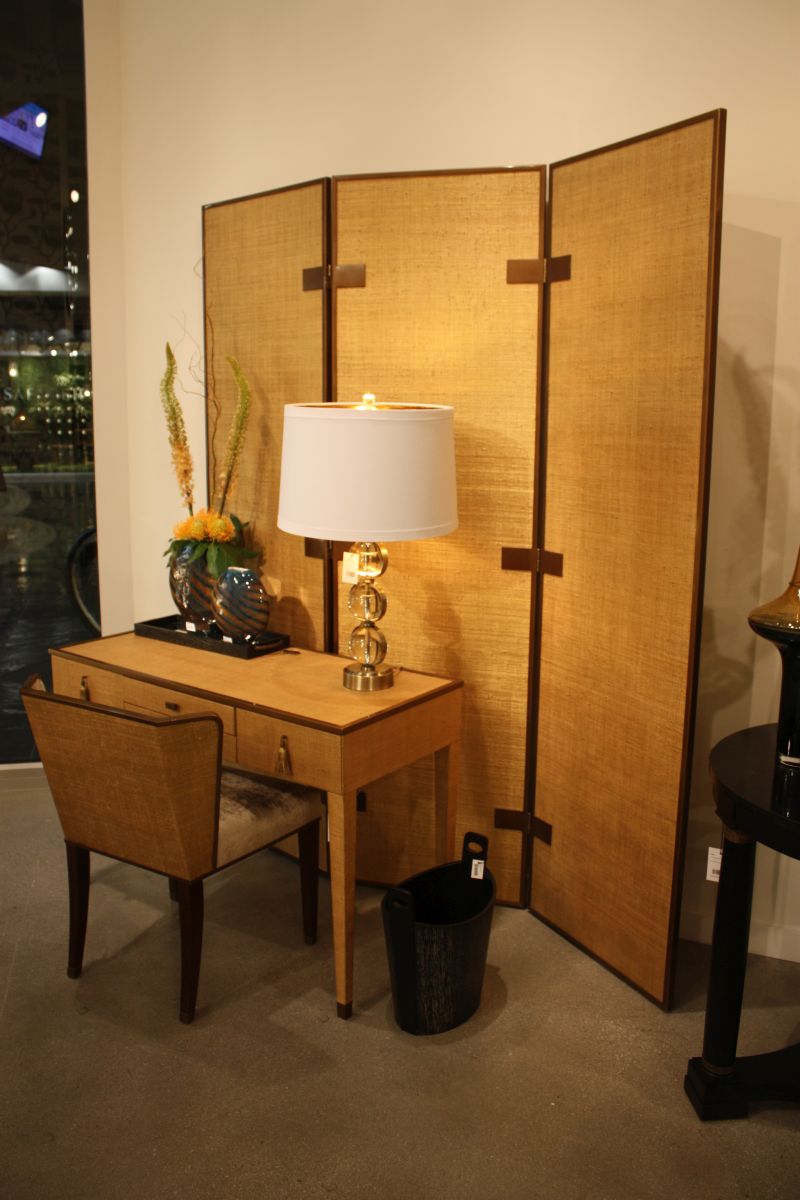
Three tall woven panels stand behind a narrow wooden desk, with dark metal borders and hinges dividing the screen into separate sections. The panels extend well above the table, forming a substantial backdrop without attaching anything to the wall.
The desk and upholstered chair occupy the space in front, while a glass-and-metal lamp introduces a contrasting finish. The folding screen can move or change its angle, giving the arrangement more flexibility than a fixed wall panel.
Metal Flowers Spread Across the Wall Above a Wooden Chest
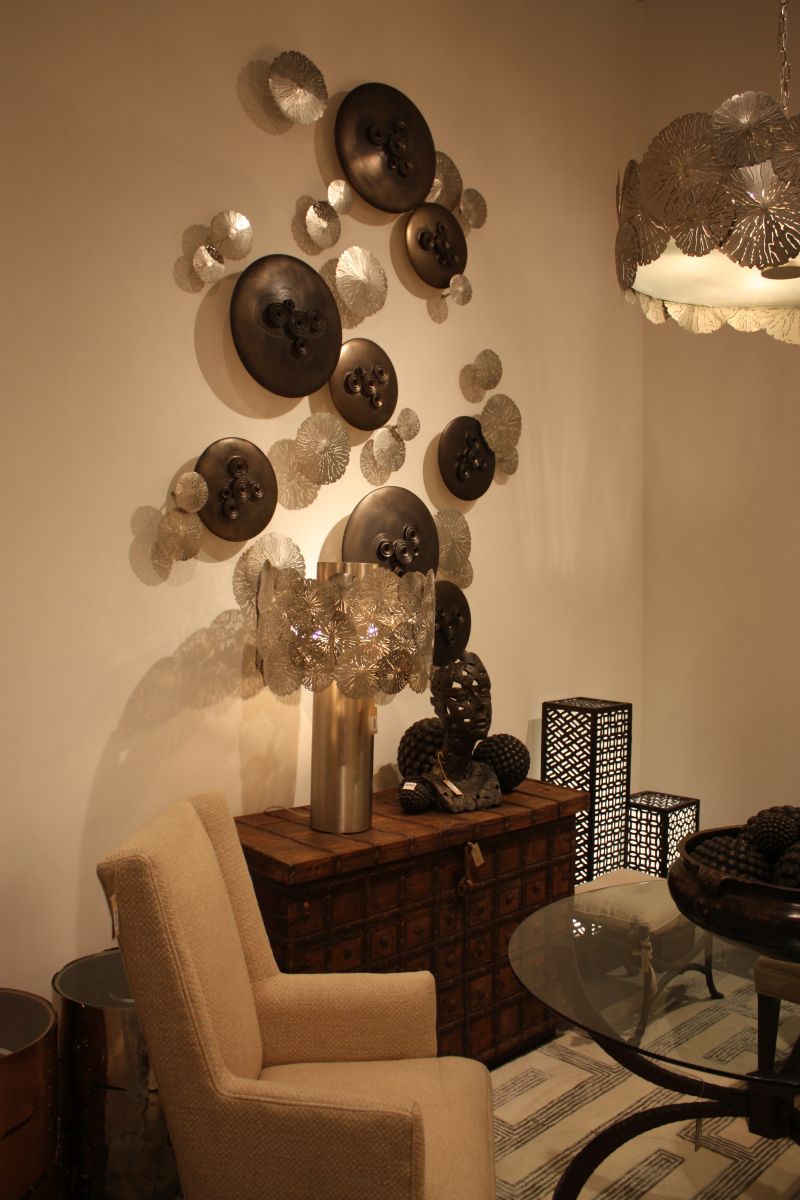
Numerous small drawers cover the front of this dark wooden cabinet, each fitted with a separate metal pull. Above it, bronze discs with raised circular centers mix with pale metal pieces resembling folded flower petals.
The shapes spread across the wall at different heights rather than forming a conventional rectangular artwork. A metal table lamp repeats the petal forms around its shade, bringing part of the wall design down onto the cabinet.
From silver branches covering cabinet doors to giant stone-like table supports, which of these unusual furniture designs would you bring into your home?