Everyone Wants a Sofa That Looks Expensive, but Most People Choose the Wrong One


Sofa prices can climb into the thousands, yet an expensive piece can still look out of place once it reaches the living room. Fabric quality matters, but the first impression comes from something buyers often overlook while comparing upholstery samples: the sofa’s shape, proportions, and construction.
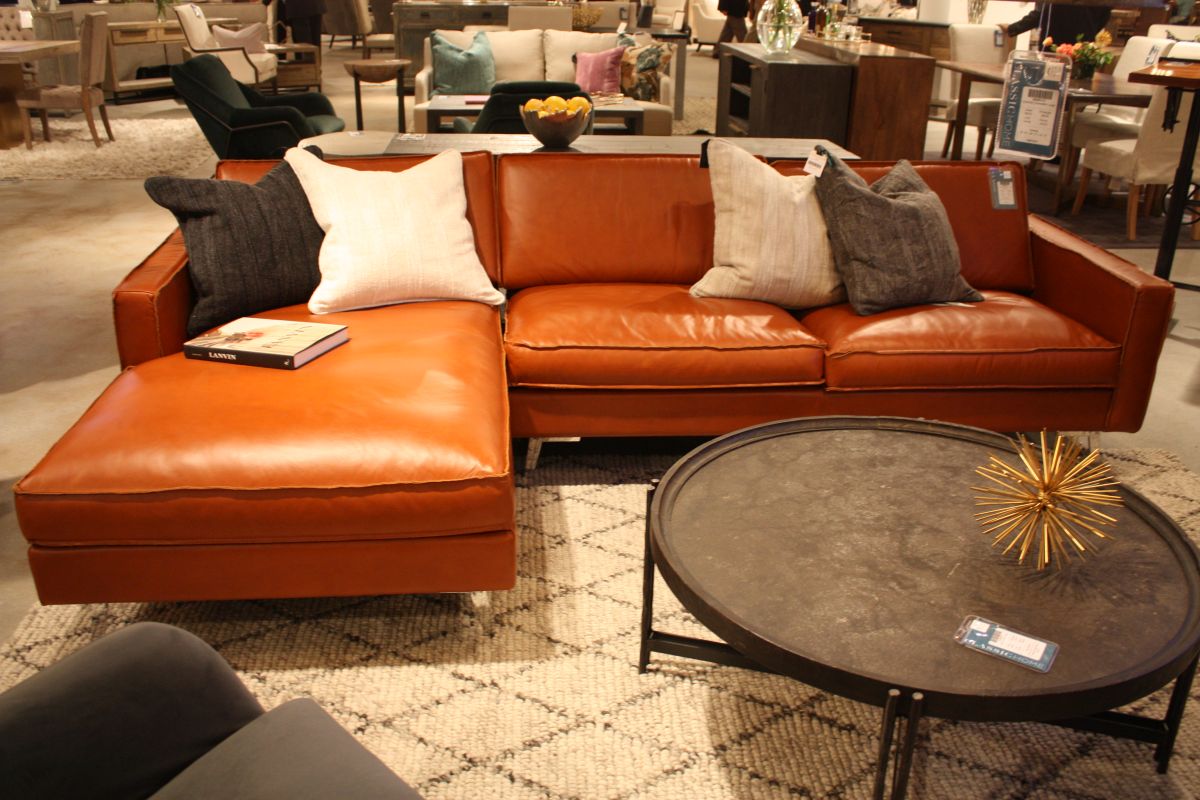
Two beige sofas can have little in common beyond their color. One might have a curved back with stitched channels, another oversized rolled arms and deep buttons, while a third hides its frame beneath loose cushions. Each creates a different visual weight, even before pillows, rugs, and tables enter the arrangement.
These furniture showroom photographs capture those differences across velvet, leather, woven upholstery, and several sofa styles. Some designs draw attention through their construction, while others depend on the surrounding furniture to complete the look.
Curved arms give a plain gray sofa its character
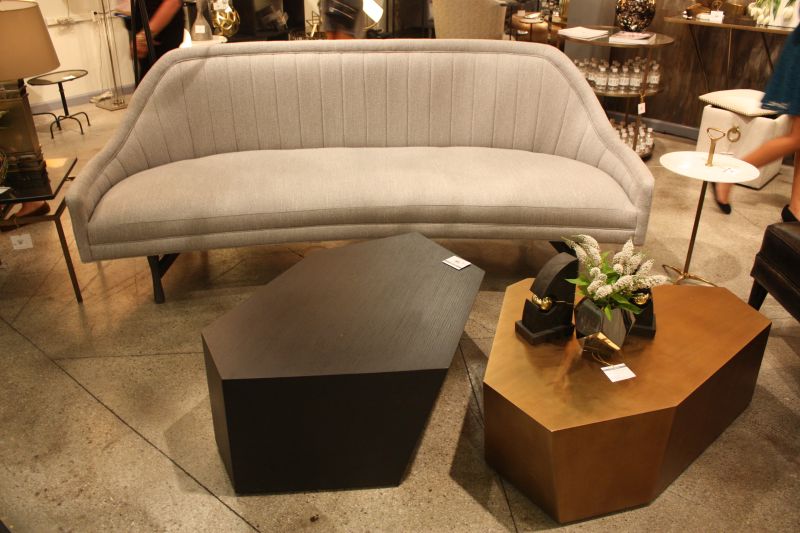
The pale gray Arteriors sofa has no loose back cushions, decorative buttons, or patterned upholstery. Its back curves downward into sloping arms, with narrow vertical stitching following the shape. The seat remains smooth, leaving the curved outline as the dominant feature.
Black tapered legs lift the upholstered body above the floor. Without those exposed supports, the broad seat and continuous back would appear much heavier.
Channel stitching changes how fabric catches the light
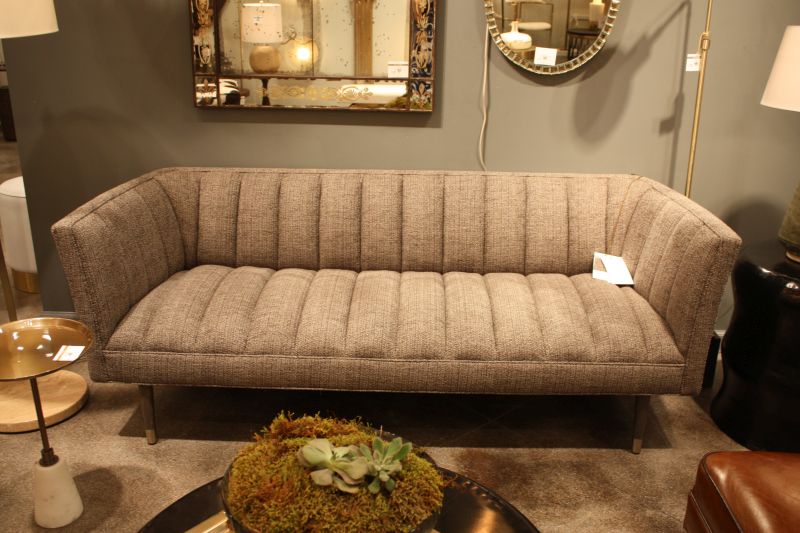
On the second Arteriors sofa, vertical channels run down the inside back and continue across the seat. The stitching creates narrow padded sections that remain visible despite the muted brown-gray fabric.
Its arms are higher and more angular than those of the first sofa. The combination gives the piece a structured appearance without using a printed pattern or contrasting trim.
Velvet, tufting, and nailheads can turn a sofa into the room’s focal point
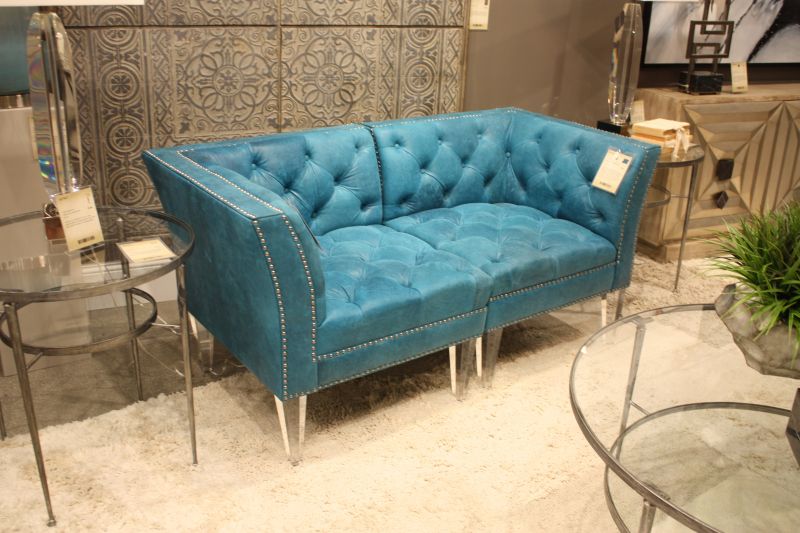
Turquoise upholstery makes this ArtMax sofa impossible to overlook, but its construction deserves as much attention as the color. Deep buttons pull the velvet into diamond-shaped sections across the back and seat, while rows of metallic nailheads trace the arms and lower frame.
Transparent legs introduce another unusual element, making the upholstered body appear to float above the pale rug. With so many decorative features concentrated in one piece, the sofa needs little help from patterned pillows or elaborate surrounding furniture.
Deep cushions create comfort without a tailored appearance
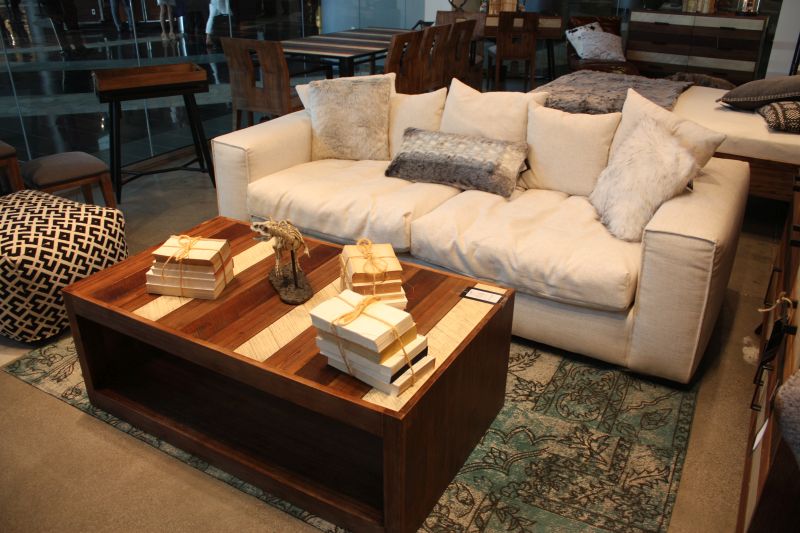
Thick seat cushions, broad square arms, and an assortment of cream and gray pillows give this CDI sofa a relaxed profile. The upholstery folds across the seating area instead of remaining stretched into a precise shape.
The contrast becomes apparent beside the substantial wooden coffee table. Both pieces occupy considerable visual space, creating a setting built around large furniture rather than delicate detailing.
For a smaller room, the arm width and overall depth would matter more than the neutral upholstery.
Chesterfield upholstery makes the frame part of the decoration
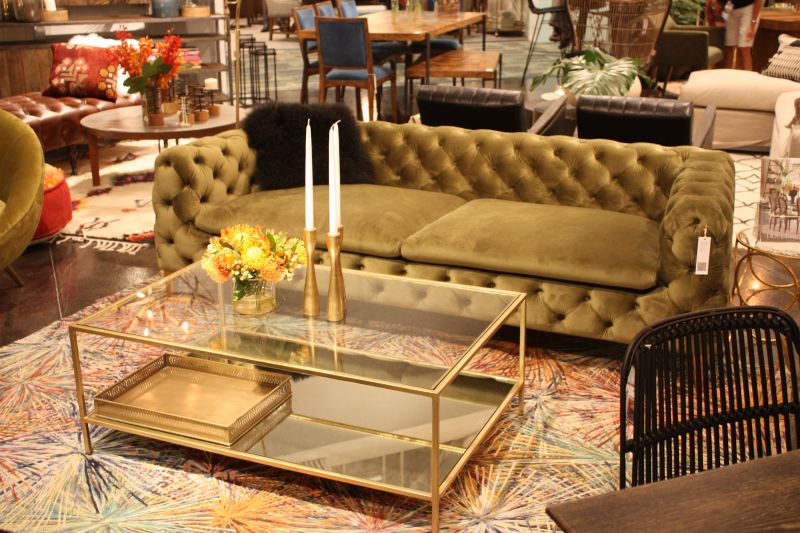
Olive-green velvet covers the rolled arms and button-tufted back of this Dovetail Chesterfield. Unlike the turquoise sofa, its seat cushions remain smooth, allowing the diamond tufting around them to stand out.
The arms rise to meet the back, creating a continuous padded enclosure. Its traditional construction contrasts with the thin gold-framed glass coffee table, which leaves the floor and patterned rug visible beneath it.
Nailhead trim can define a sofa without covering it in buttons
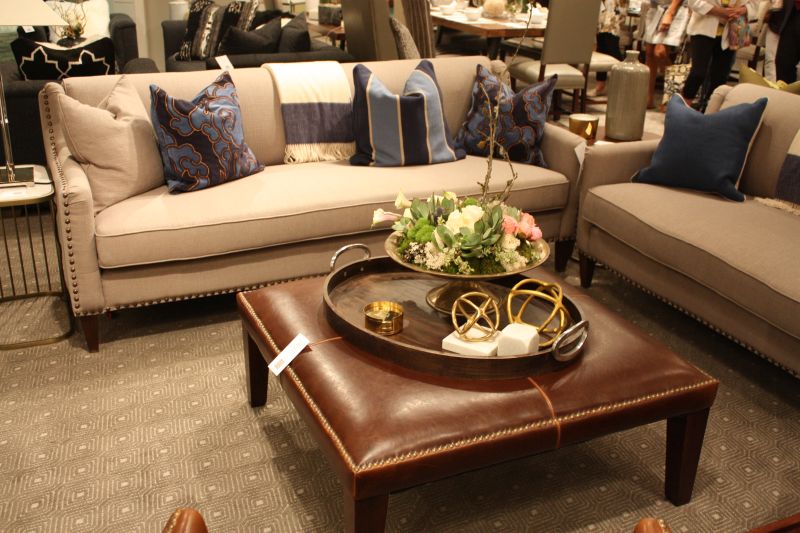
Small metallic studs trace the front edges and arms of this beige sofa, while dark wooden legs support a slim upholstered frame. The back and bench-style seat remain smooth, interrupted by patterned blue pillows and a folded throw.
The large brown leather ottoman in front introduces a different material without requiring another upholstered chair to match the sofa. Its scale also allows it to serve as a coffee table when topped with a tray.
Dark fabric does not have to produce a heavy-looking sofa
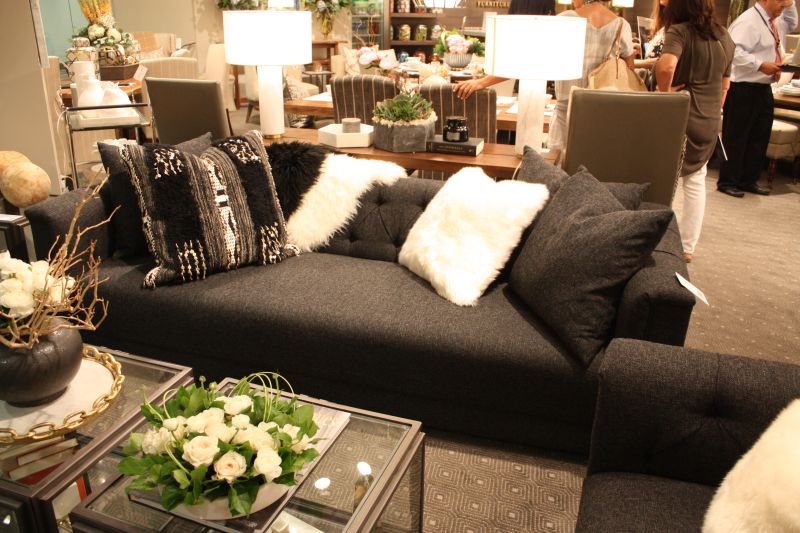
Charcoal upholstery covers this sofa, with oversized black-and-white pillows and furry accents arranged across the back. The fabric has a visible weave, preventing the broad dark surfaces from appearing completely flat.
The pale pillows break up the seating area, while the glass-topped tables in front reflect light and reveal parts of the rug beneath them. The arrangement shows how surrounding materials can change the appearance of a dark sofa without replacing its upholstery.
Leather color becomes part of the room’s palette
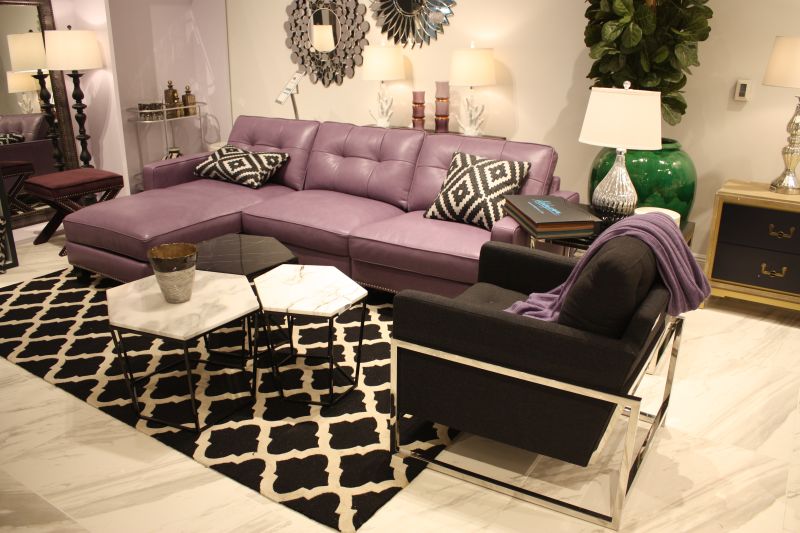
Muted purple leather gives this sectional an unexpected finish, paired with a chaise extending from the left side. Broad seat cushions, stitched back panels, and substantial arms create a low, lounge-oriented profile.
Black-and-white geometric pillows and a matching patterned rug introduce stronger contrast than the leather itself. The dark chair opposite the sectional prevents the purple upholstery from becoming the only substantial color in the seating area.
Matching leather furniture can still have a distinct outline
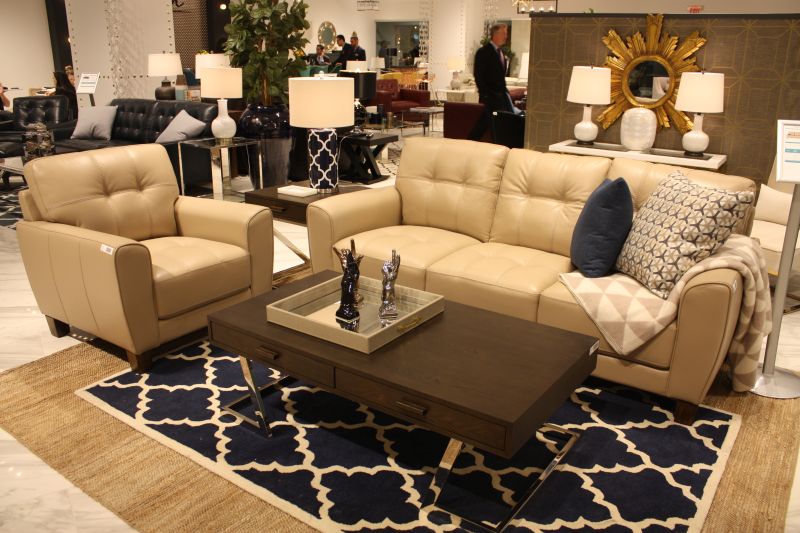
Cream leather covers both the sofa and armchair in this coordinated arrangement. Their padded backs feature broad stitched sections, while the arms are squared and substantial.
The dark wooden coffee table, navy patterned rug, and gold sunburst mirror keep the matching furniture from dominating the entire display. Without those contrasting pieces, the cream seating would occupy most of the visual attention.
Buying a matching set solves the problem of coordinating upholstery, but it does not guarantee an interesting room.
Rolled arms and deep buttons give beige upholstery a traditional profile
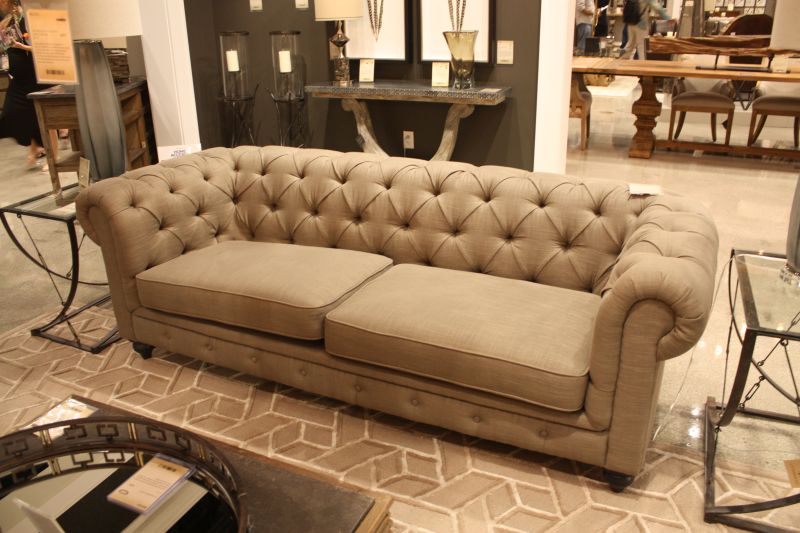
The beige Chesterfield uses deep diamond tufting across its back, oversized rolled arms, and two separate seat cushions. Small upholstered buttons continue along the lower front, repeating the detailing found above.
Its generous arm dimensions make the frame appear substantial even though the upholstery color is restrained. This is the opposite of a sofa with narrow arms and exposed legs, where more of the overall width is devoted to seating.
A sofa can look tailored without decorative tufting
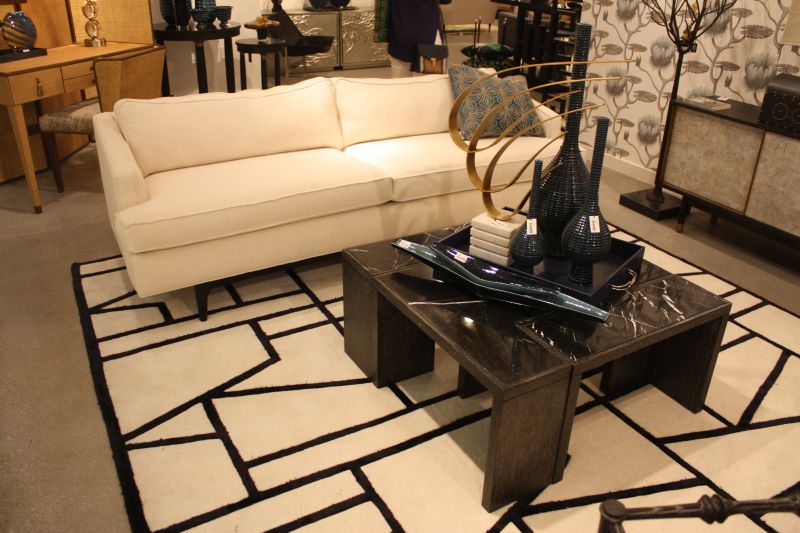
Cream upholstery stretches across the long, straight cushions of this sofa, with narrow arms and a back formed from two upholstered sections. Dark tapered legs leave a visible gap beneath the frame.
The black marble-topped coffee table and geometric rug bring sharper lines into the setting. Against those strong patterns, the sofa’s plain upholstery provides a quieter surface rather than another competing detail.
Exposed wood can become more prominent than the upholstery
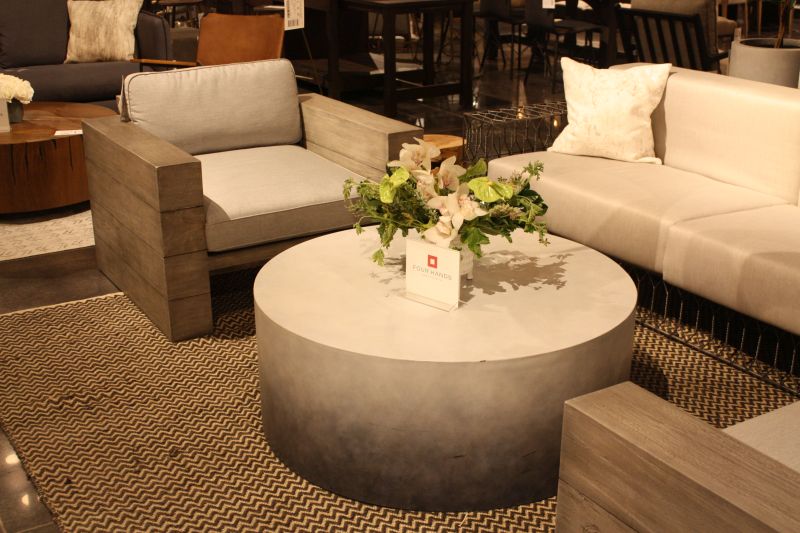
Thick rectangular wooden arms frame the gray upholstered chair in this Four Hands display. The exposed wood extends down the sides, giving the chair a block-like shape that contrasts with the white sofa beside it.
The round concrete-look coffee table introduces another substantial form. Instead of relying on patterned fabric, the arrangement uses differences between wood, upholstery, and solid surfaces to create contrast.
Leather sectionals can look substantial even with simple stitching
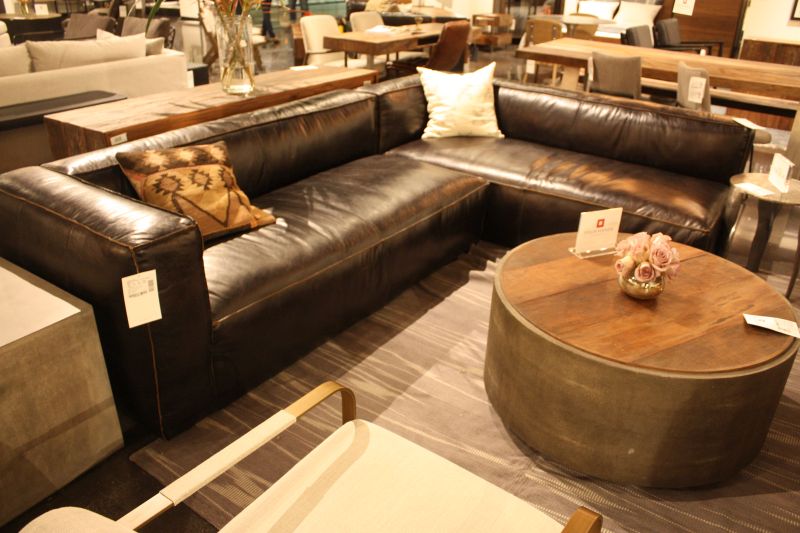
Dark brown leather covers this L-shaped sectional, with broad arms, low backs, and long seat cushions. The upholstery shows creases and changes in sheen across the seating surfaces.
Its footprint takes up much of the arrangement, leaving the round wood-and-metal coffee table positioned inside the sectional’s open corner. This kind of seating needs room for its return section, not just enough wall space for the longest side.
Long sofas can appear lighter when the frame stays low
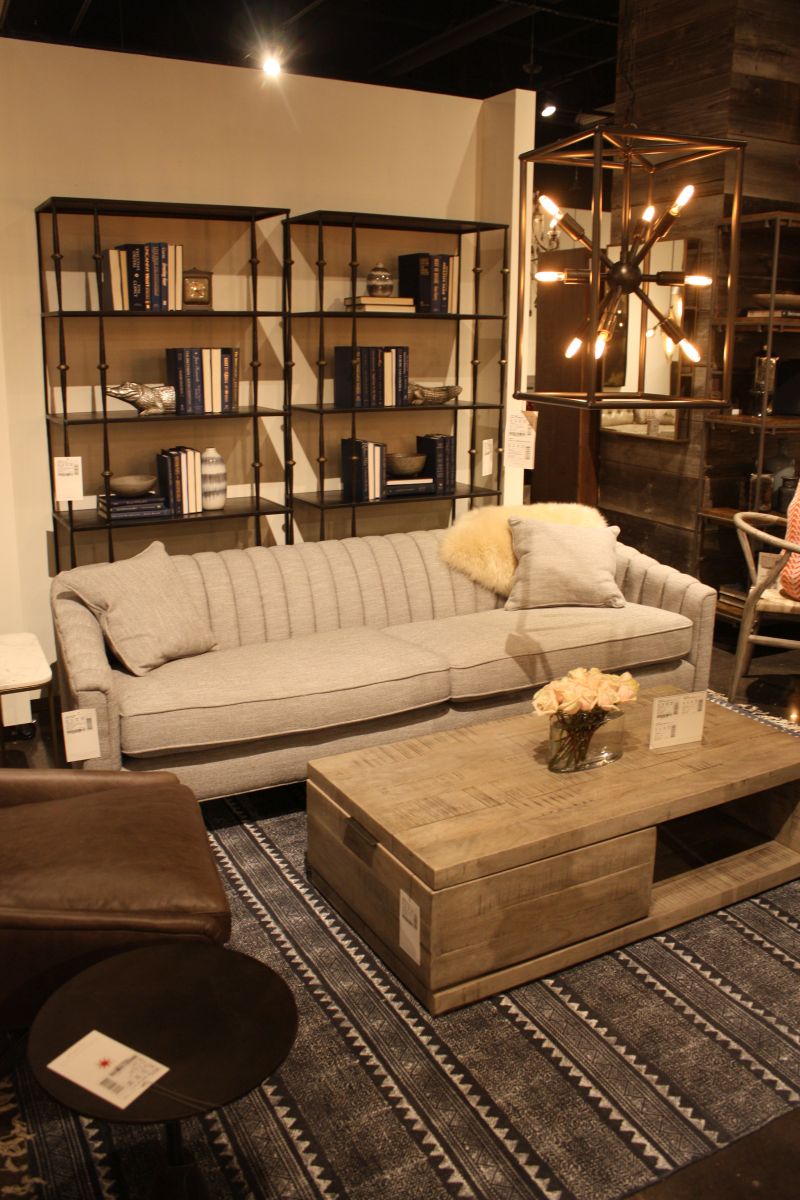
Pale woven upholstery and narrow vertical channels give this long sofa a more restrained appearance than the deeply tufted Chesterfields. Two large seat cushions sit above a low base, while the arms curve inward without adding much height.
The black open shelving behind it creates a strong vertical backdrop. In front, the large wooden coffee table occupies the center of the seating area without hiding the sofa’s lower frame.
A single seat cushion can make a sofa look less conventional
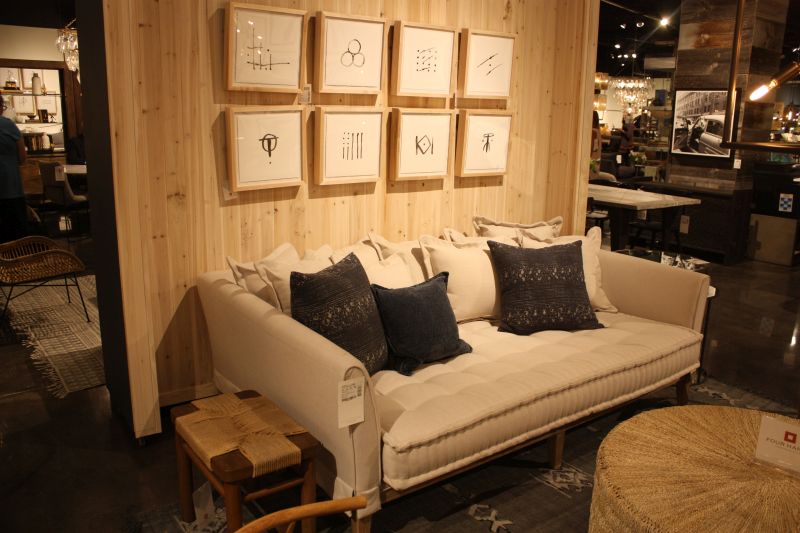
One long tufted seat cushion stretches across this cream Four Hands sofa, eliminating the usual divisions between individual seats. Loose back pillows soften the appearance, while the narrow exposed wooden base keeps the upholstered section raised above the floor.
The pale wood-paneled wall and framed artwork create a simple backdrop for the sofa’s low profile. Its construction sits somewhere between a traditional sofa and a daybed, making the continuous cushion more noticeable than the neutral fabric.
What to examine before choosing upholstery
The differences between these sofas become apparent when color is taken out of the decision. Rolled arms add width, tufting introduces shadows, loose cushions soften the outline, and exposed legs reveal more floor beneath the furniture.
Those details also affect everyday use. Deep seats may be comfortable for lounging but awkward for upright sitting, fixed cushions cannot be rearranged, and elaborate upholstery creates seams and recesses that need attention during cleaning.
Before paying more for velvet, leather, or a premium fabric, compare the sofa’s actual dimensions, seat depth, arm width, cushion construction, and frame. A well-proportioned sofa in ordinary upholstery can suit a room better than an expensive piece chosen for its material alone.