Don’t Toss Your Old Sweaters: Turn Them Into Fall Pumpkins With Just Stuffing and Tree Branches


Old sweaters don’t have to end up in the donation pile when their fabric can become fall decorations. An orange ribbed sweater and a cream cable-knit were cut into circles, filled with pillow stuffing, and gathered around pieces of tree branches to create two soft pumpkins without carving or buying decorative fabric.
In a DIY project shared on Homedit, the creator used the different knit patterns to give each pumpkin its own appearance. The orange sweater became a round pumpkin with folds running toward its wooden stem, while the cream knit produced a smaller version with a raised cable pattern across its surface.
The finished pumpkins sit beside a glass vase on a stack of vintage books, resembling the fabric decorations sold in home decor stores. Their shapes come from gathering the sweater material rather than cutting and sewing separate pumpkin panels.
Old Sweaters and Tree Branches Replaced Store-Bought Materials
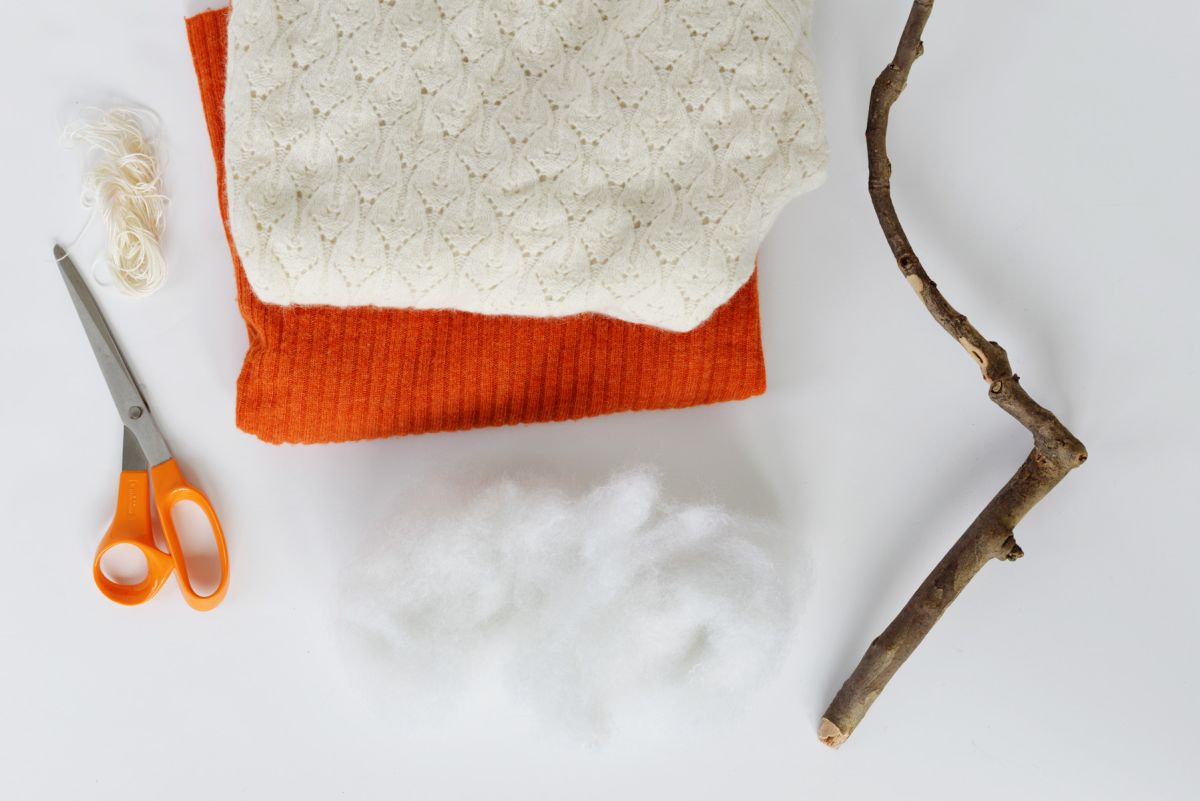
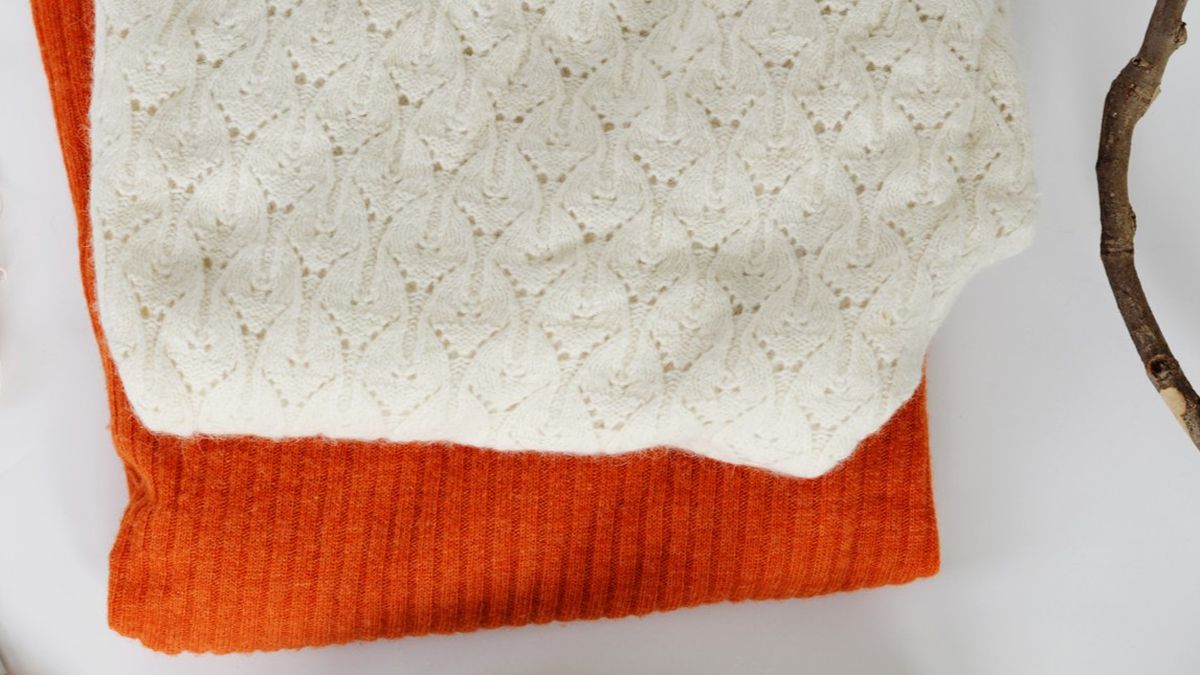
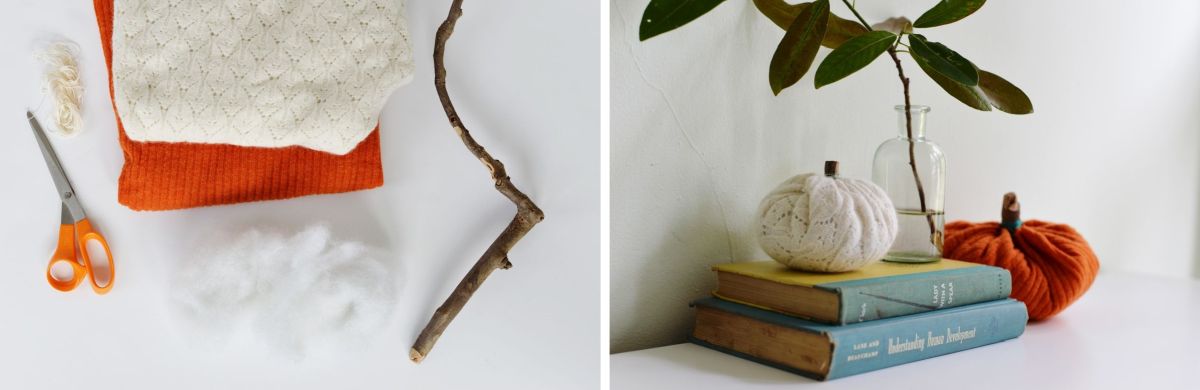
The project began with an orange ribbed sweater, a cream cable-knit sweater, polyester pillow stuffing, embroidery thread, scissors, a needle, and a branch collected for the stems.
The knit fabrics provided the color and texture, while the stuffing gave each pumpkin its rounded shape. Thread would hold the gathered material around the wooden stems without requiring a sewing machine.
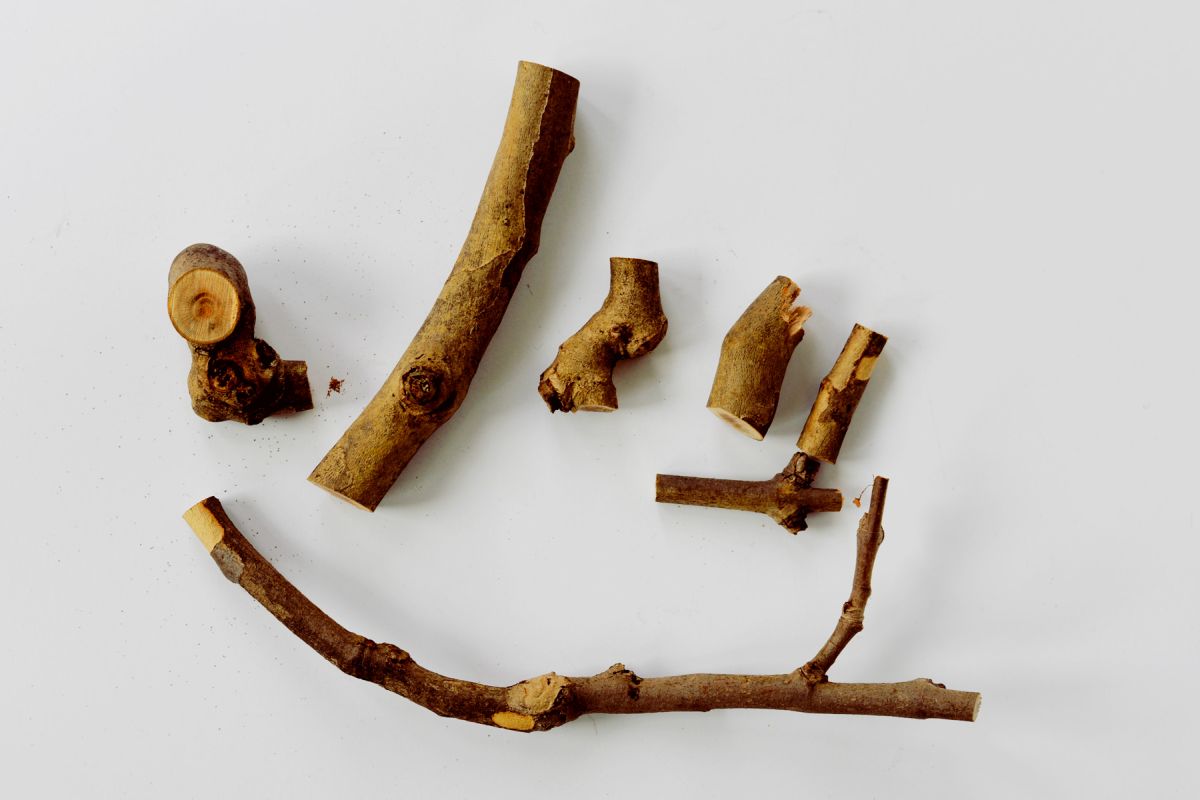
The branch was cut into shorter pieces of different thicknesses. A thicker section suited the larger orange pumpkin, while a narrow piece worked for the smaller cream version.
The creator kept the bark and knots intact, giving the fabric pumpkins stems that resemble those found on real pumpkins.
Sweater Fabric Was Cut Into Circles and Filled With Stuffing
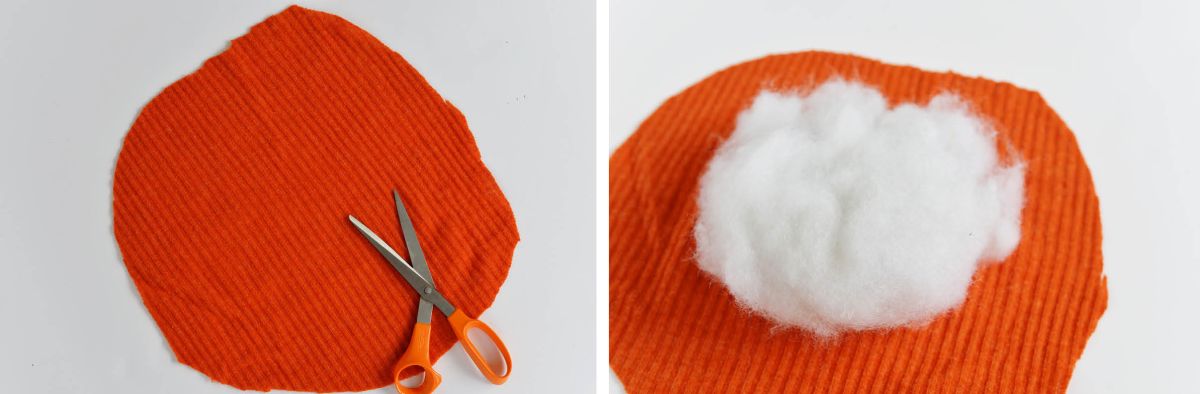
The orange sweater was cut into a rough circle, with the ribbed pattern running across the surface. A mound of white pillow stuffing was placed in the center, leaving enough material around the edges to wrap over the filling.
The circle didn’t need a perfect outline because its edges would disappear into the gathered top. The amount of stuffing determined how full the pumpkin would become once the fabric was pulled together.
Thread Pulled the Knit Into a Pumpkin Shape
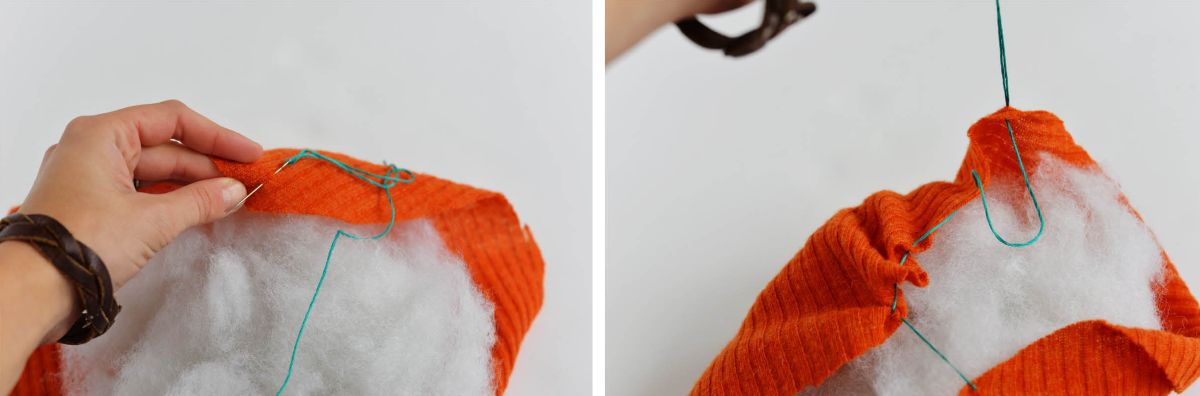
Using a needle and green embroidery thread, the creator began stitching around the edge of the orange fabric. Large stitches passed through the knit, allowing the material to be drawn inward over the stuffing.
Instead of joining separate fabric sections, the stitching brought the edges of one circle toward a central opening.
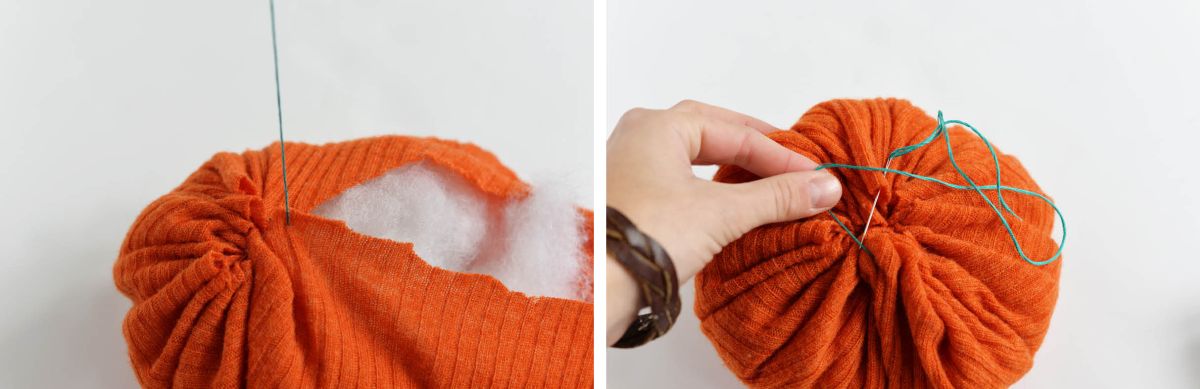
As the thread tightened, the orange ribbing folded into deep pleats around the top. Additional stitches secured the gathered fabric, creating a recessed center for the stem.
The folds followed the direction of the sweater’s ribbed texture, forming pumpkin-like sections without cutting grooves into the material.
A Piece of Branch Became the Stem
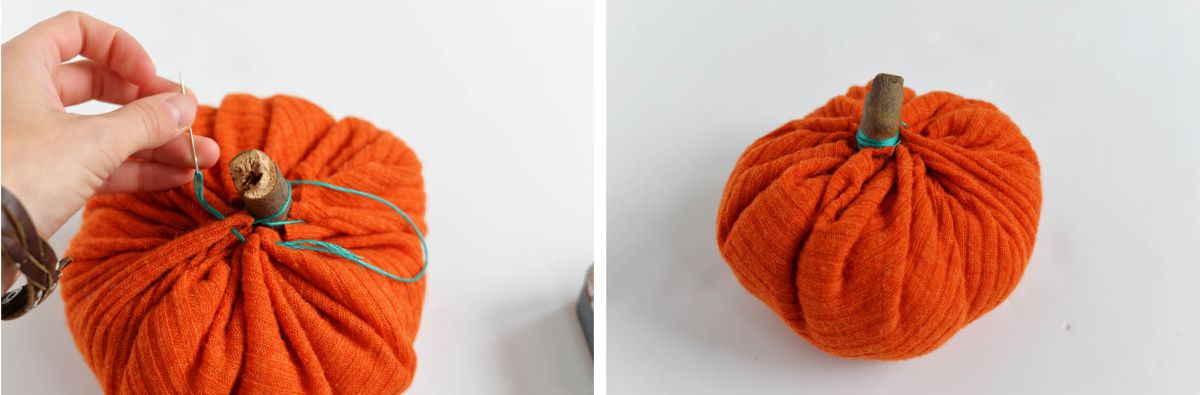
The creator inserted a short wooden branch into the gathered opening, then stitched the fabric around its base. Green thread wrapped around the stem to hold the wood against the stuffed pumpkin.
The branch’s rough bark contrasted with the soft knit, while the gathered folds formed the pumpkin’s rounded top. After securing the thread, the excess was trimmed.
The Two Knit Textures Created Different Fall Pumpkins
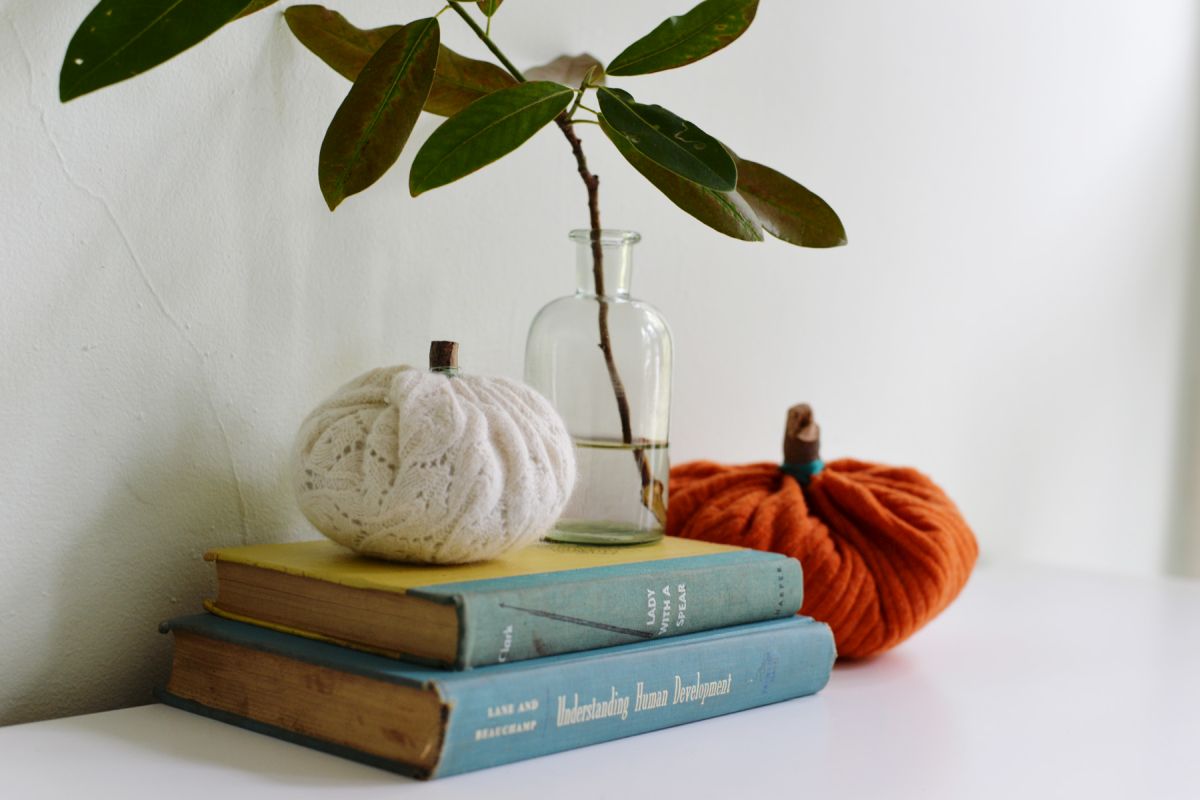
The finished pumpkins were arranged on a stack of yellow and blue vintage books beside a clear glass vase holding a leafy branch. The cream pumpkin rested on the books, while the larger orange version sat beside them.
Their different fabric textures created distinct finishes without changing the construction method.
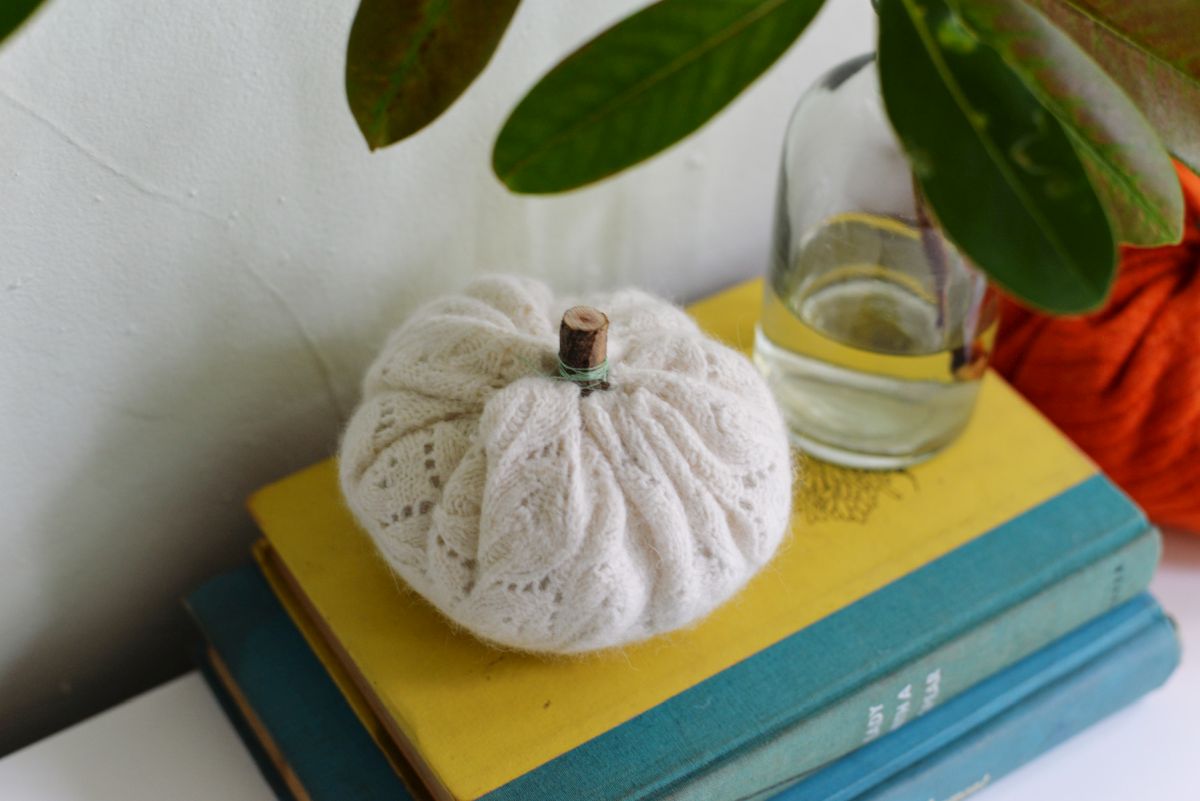
The cream pumpkin retained the sweater’s cable-knit pattern, with raised twists and openwork details covering its rounded surface. Gathered sections meet around a narrow wooden stem secured with green thread.
The pale knit gives this version a softer appearance suited to neutral fall arrangements.
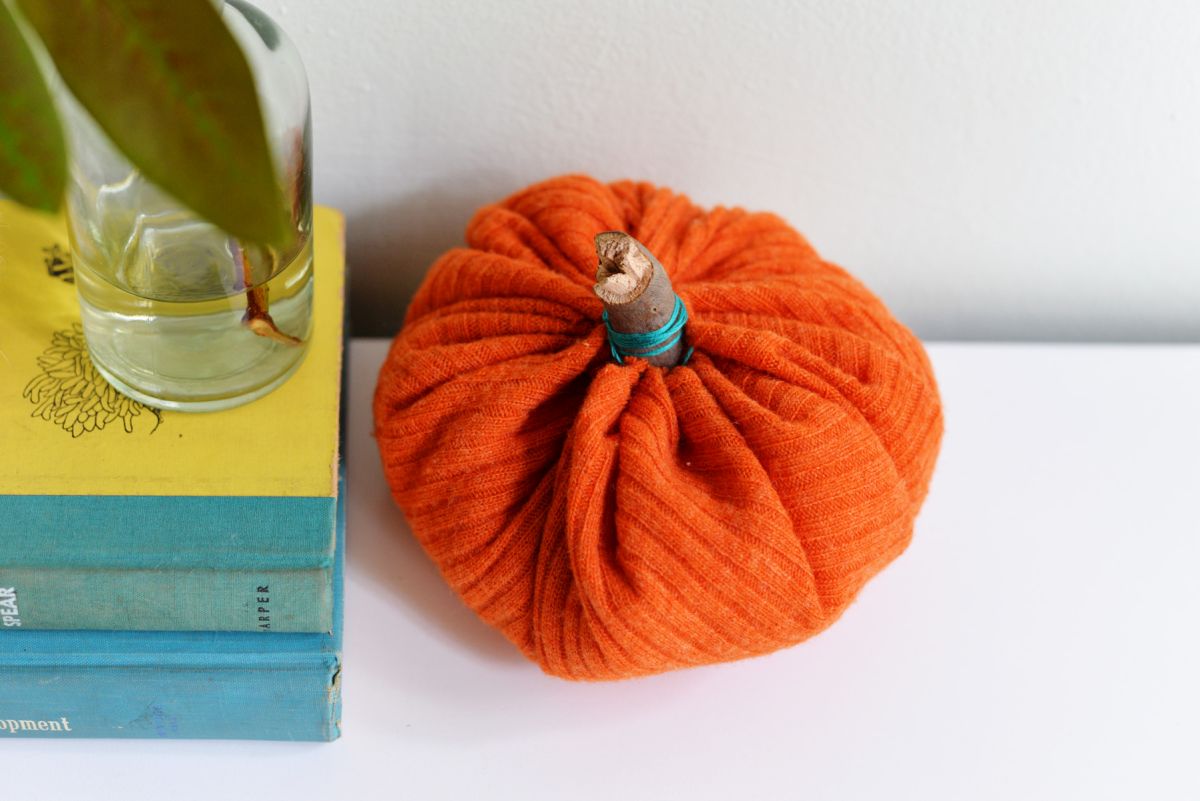
The orange pumpkin has deeper folds created by the sweater’s vertical ribbing. Its short, thick branch stem rises from the center, with green thread wrapped around the base.
Both pumpkins use sweater fabric, pillow stuffing, thread, and cut branches, turning clothing that no longer needs to be worn into reusable fall decorations.
Would you turn old sweaters into fabric pumpkins, or keep using traditional pumpkins for fall decor?
Project and photography: Homedit.