These Bathtubs Aren’t Tucked Against the Wall: They Give the Whole Room Something to Work Around


Bathtubs often occupy the edge of a bathroom, with their sides concealed behind tile or fitted panels. Bringing the tub forward exposes its shape and changes what surrounds it, from the position of the faucet to the furniture used for towels and toiletries.
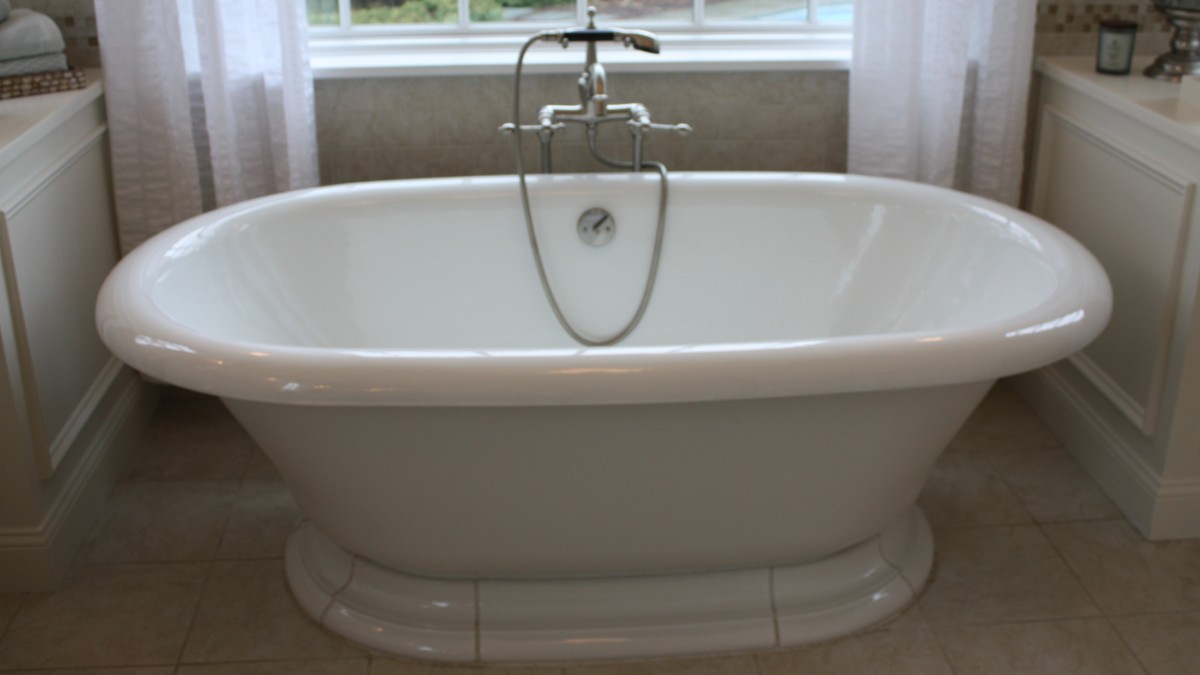
Here, a gray oval tub stands in front of a long black vanity, with flooring visible around its curved sides. Its white interior contrasts with the darker exterior, while a floor-mounted faucet supplies the bath without connecting it to the cabinet behind.
Freestanding placement also makes the tub’s exterior part of the room’s design, whether it rests on wood feet, carries a dark veined finish, or forms a sharp white rectangle. These displays explore that choice through shelving, lighting, mirrors, and seating arranged around the bath.
Wood Feet Connect a White Tub With Nearby Storage
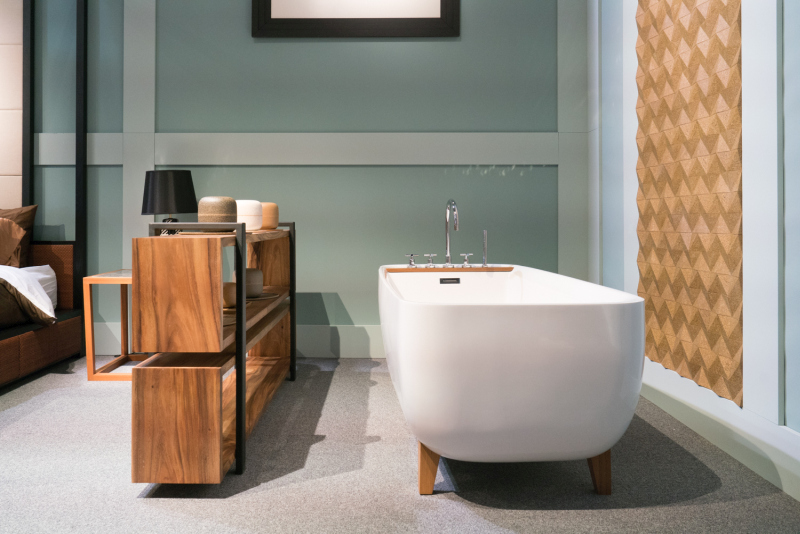
Short wood feet lift this white bathtub above the floor, connecting its base with the warm wood storage beside it. Chrome fittings sit along a wood-toned strip at the far end, keeping the controls together within the tub’s outline.
Open shelves and box-shaped compartments provide space for accessories without enclosing the bath. Behind them, pale green wall framing and a large geometric panel give the white fixture a backdrop beyond the usual tiled surround.
Claw Feet and an Ornate Mirror Establish a Traditional Setting
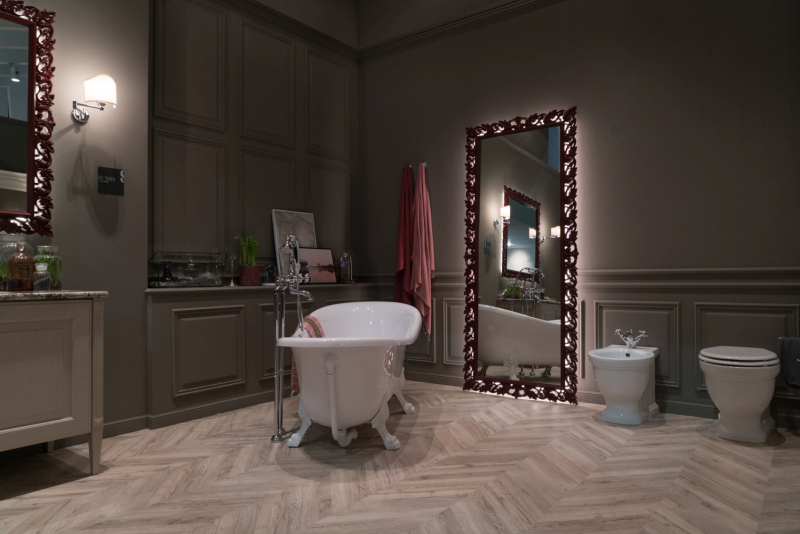
Decorative white feet support a rolled-rim tub positioned in front of paneled gray walls. A tall chrome bath filler stands beside the rim, leaving the tub separate from the ledge behind it.
An oversized burgundy mirror leans against the neighboring wall and reflects the bath from another angle. Its carved frame, shaded wall lights, and pale herringbone flooring give the fixture the setting of a furnished room, while pink towels introduce color beside the white enamel appearance.
Staggered Globe Pendants Mark the Bathing Area
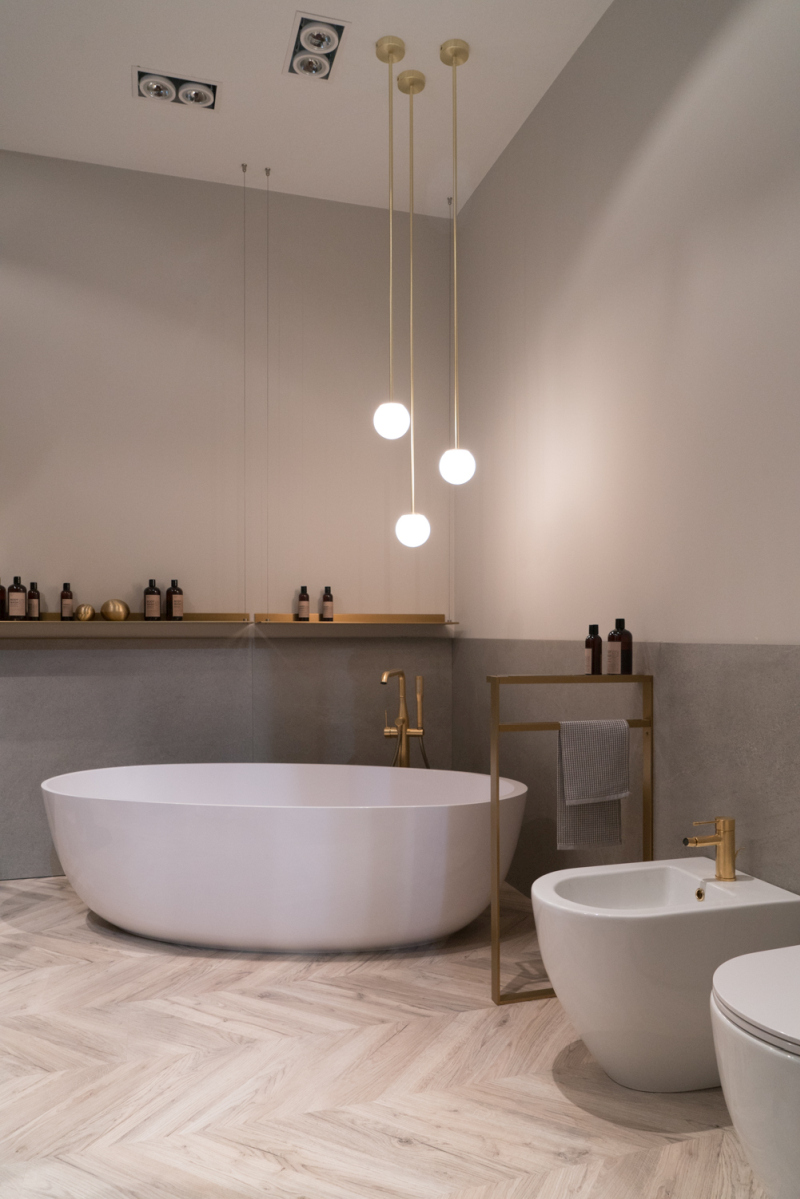
Three globe pendants hang at different heights above the end of this low oval tub, drawing attention to the space around the bath. Brass-toned stems coordinate with the floor-mounted filler, narrow wall shelf, and freestanding towel stand.
The towel stand sits between the tub and bidet, placing a towel and bottles near the bath without adding a cabinet. Pale herringbone flooring continues beneath the fixtures, while gray lower walls provide contrast around their white forms.
Dark Veining Links the Tub With Two Vessel Basins
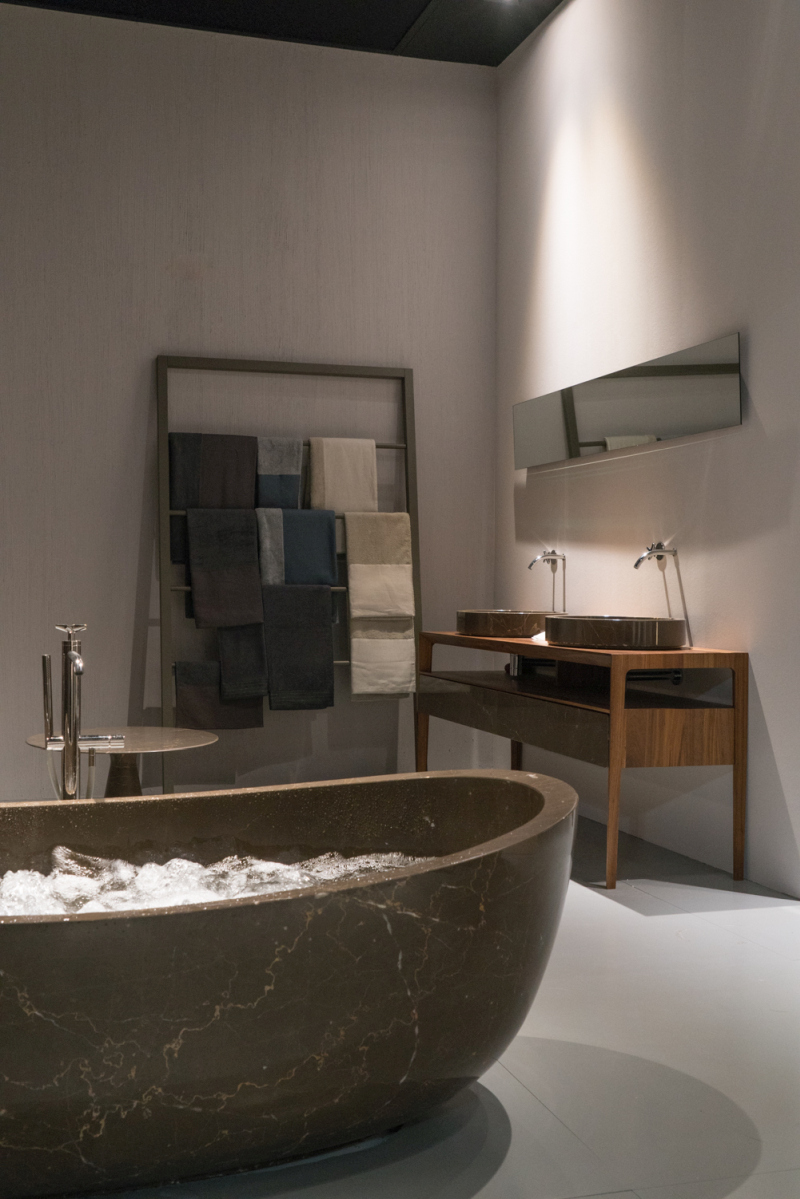
Fine pale veining crosses the dark exterior and thick rim of this bathtub, making its broad curved side a prominent surface in the room. Behind it, two vessel basins repeat the dark veined finish on a wood console.
A tall towel rack occupies the neighboring wall, with several rails holding towels at different heights. Repeating the finish across the bath and basins connects the fixtures even though the tub stands apart from the vanity.
A Rectangular White Tub Creates a Sharp Outline Against Dark Walls
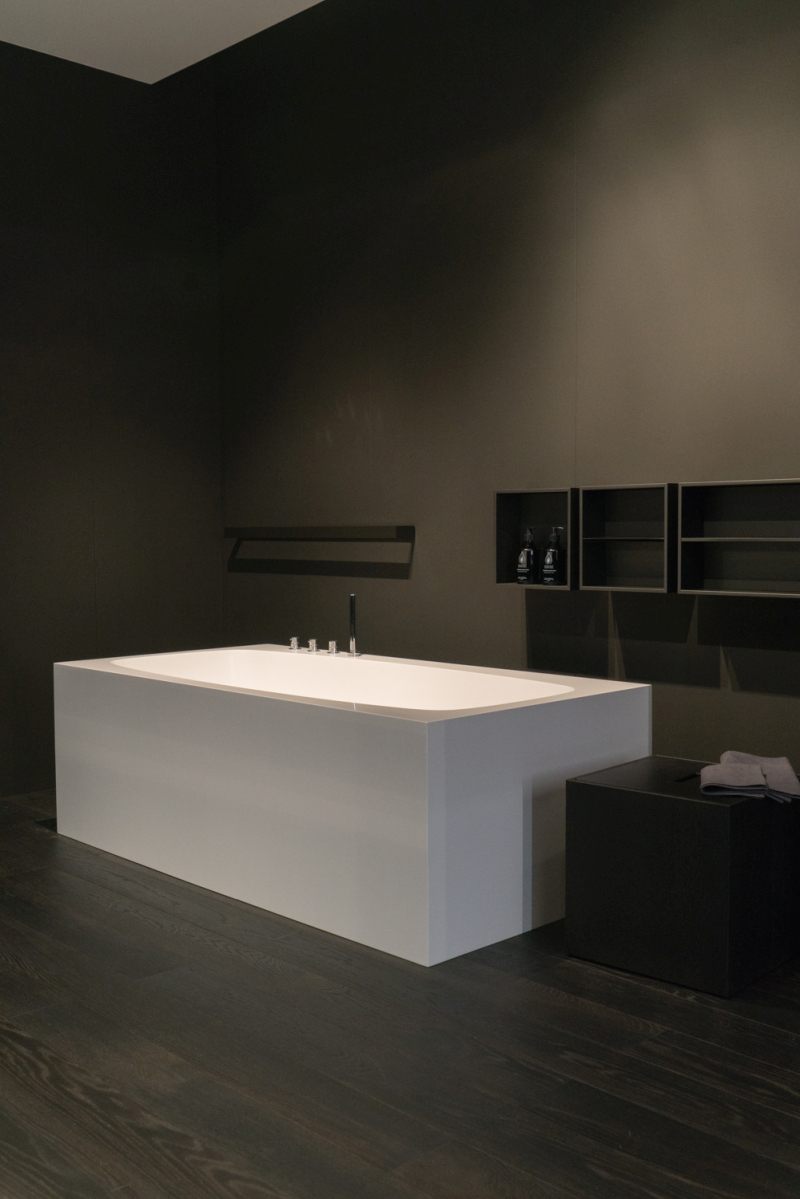
Straight sides and a broad rim give this bathtub a different presence from the curved models, forming a white rectangular volume against dark walls and flooring. Chrome controls sit along the rear rim, with the bathing well recessed inside the surrounding ledge.
Black wall shelves hold bottles above one end, while a low storage piece sits beside the tub with a towel on top. The surrounding dark finishes leave the bath’s corners and upper edge exposed, making its geometry the strongest contrast in the display.
Faceted Tub Shares Its Setting With a Bed
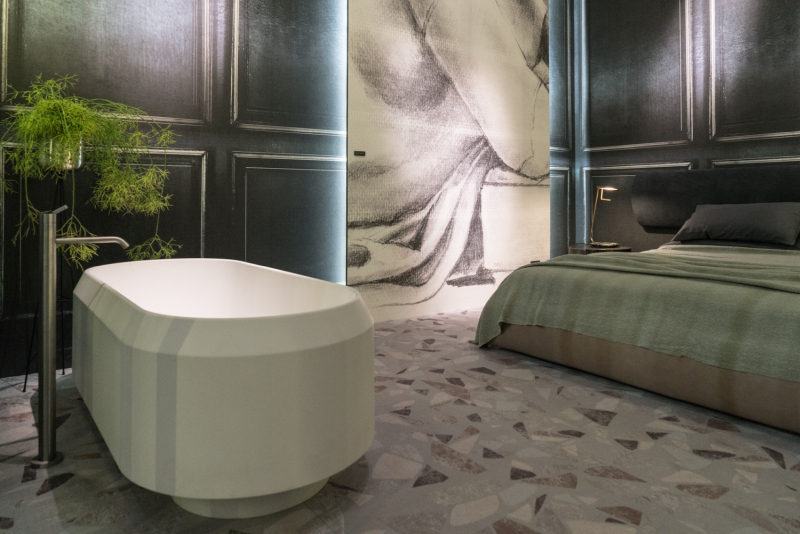
Angled exterior panels distinguish this white bathtub from the upholstered bed beside it, while a floor-mounted faucet stands at the tub’s outer edge. Dark wall panels, green bedding, and a large illustrated wall panel connect the bathing and sleeping areas within one display.
Unlike the enclosed bathroom arrangements, this setting leaves the bath visible from the bed without a partition between them. It presents a different layout choice, where the tub becomes part of the bedroom composition and privacy depends on how the wider space is enclosed.
A Lounge Chair Adds a Place to Sit Beside the Bath
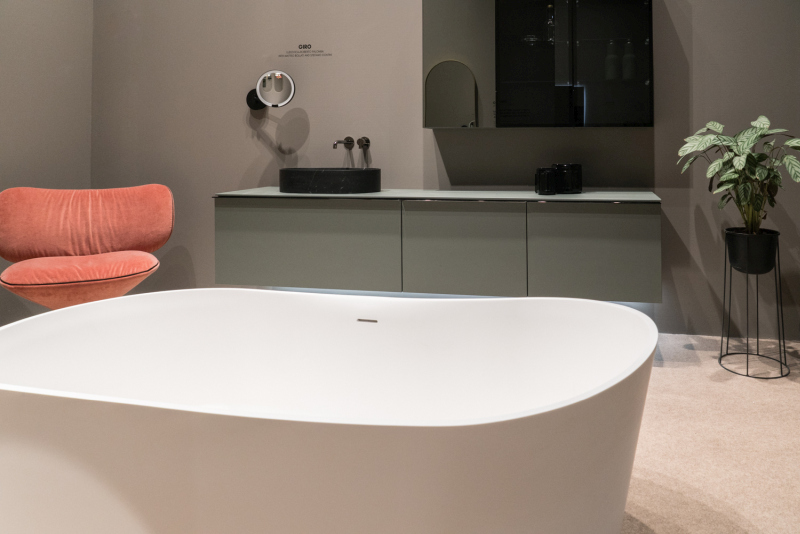
A coral upholstered chair stands beside this white oval tub, introducing a seating position outside the bath itself. Behind it, a long floating vanity carries a black vessel basin, with a plant on a slender stand at the opposite end.
Muted cabinet fronts keep the background restrained, allowing the chair’s color and the tub’s curved rim to stand out. The arrangement leaves the bath separate from the vanity rather than extending the countertop or cabinetry around it.
Turquoise Glass Shelves Surround a White Oval Tub
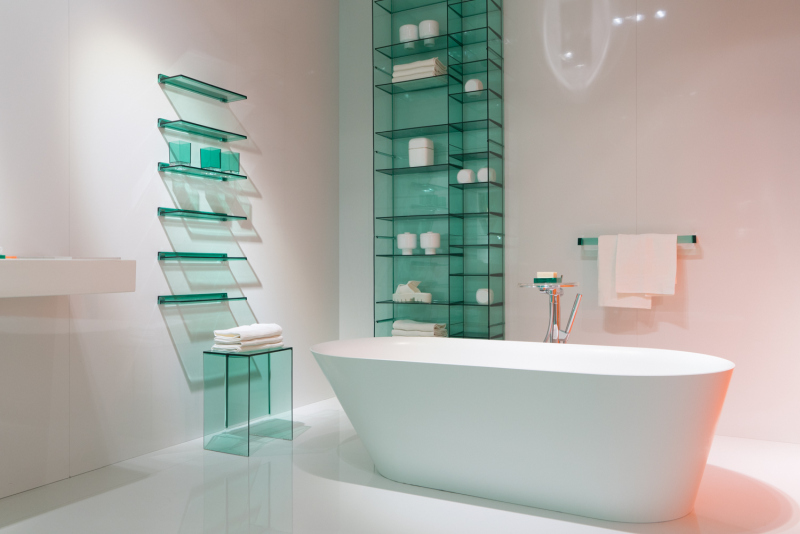
Transparent turquoise glass forms a tall storage tower, wall shelves, a towel rail, and a small stand beside this bathtub. White towels and containers remain visible through the shelves, adding storage around the bath without a bank of opaque cupboard fronts.
A chrome floor-mounted filler stands behind the tub, while the white floor and walls emphasize the colored glass edges. The tub’s smooth exterior remains exposed, with separate accessories supplying the nearby surfaces that a fitted bath surround might otherwise provide.
Would you let a freestanding tub shape the room’s layout, or keep the bath against a wall to leave more open floor space?