She painted the dated oak vanity Mouse’s Back, and people asked if the countertops were new


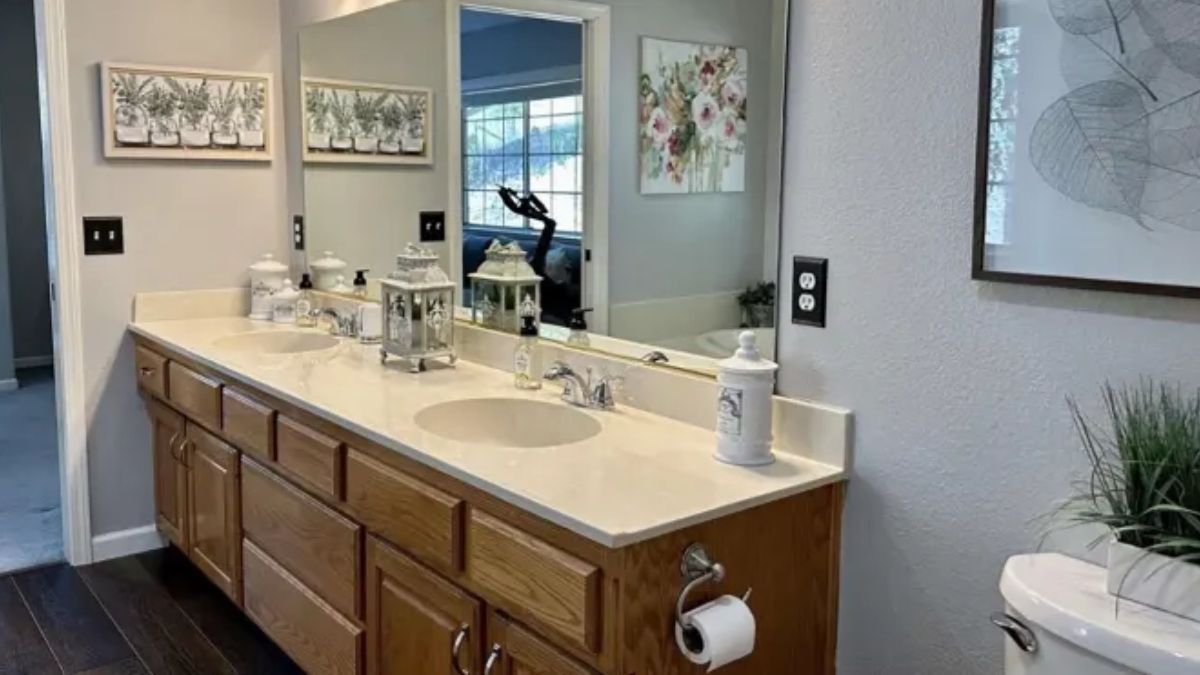
It was the bathroom every 1991 house seems to have. Oak cabinets, a long sheet mirror, paneling behind the vanity and dark brown faux wood planks on the floor. It was Ericka Gularte’s kids’ bathroom, and none of it was broken. It just looked tired, and a full remodel wasn’t in the plan.
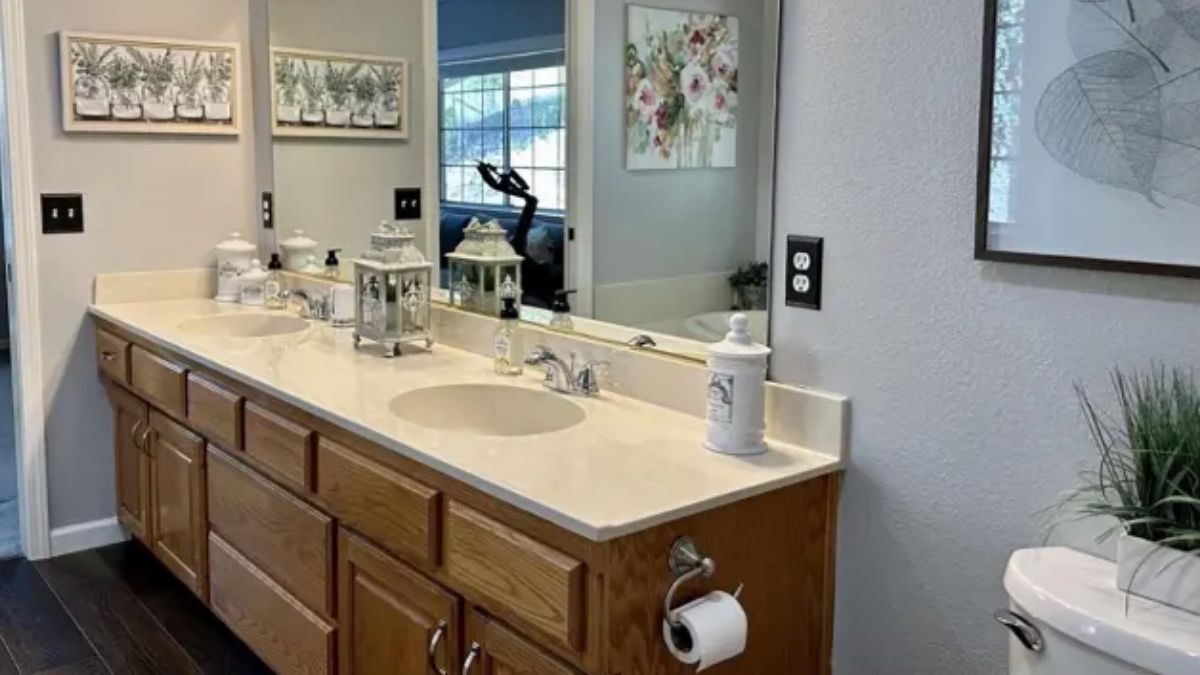
“We knew we weren’t ready for a gut-job remodel,” Ericka says. The tub and the countertop were in good shape, so they stayed. What changed was everything around them, and that turned out to be enough to fool visitors.
The color that made an old countertop look new
Voir cette publication sur Instagram
A countertop never sits alone. It is read against the cabinet below it, the wall behind it and the floor under it. Next to dingy oak, brown floors and a dated mirror, even a countertop in good shape belongs to the same era. Change its neighbors, and it suddenly looks like part of a newer room.
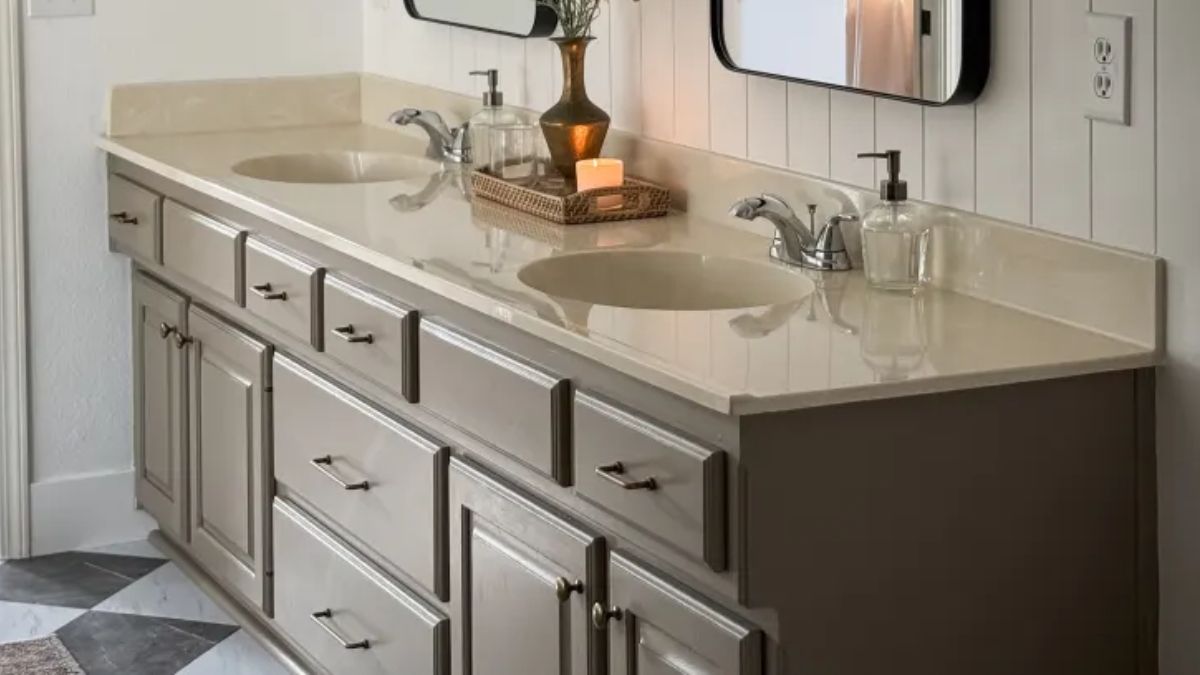
Ericka painted the vanity Farrow & Ball Mouse’s Back, a gray-brown that keeps some warmth without the yellowed look of old oak. The walls and paneling went bright white in Dunn-Edwards Cool December, and the trim went gray in Dunn-Edwards Whisper Gray. “We are very proud that we made the countertops look new with the proper paint choice for the cabinets and walls,” she says. “People kept asking if we replaced them.”
A painted vanity can carry a small bathroom on its own. In one builder-grade bath, a gray vanity painted Benjamin Moore Barberry, a muted red-violet, became the focal point once the grout and chrome were turned black around it.
A no-demo update for under $1,000
Paint did the heavy lifting, but it wasn’t the only change. Here is everything the family did, for a total just under $1,000:
- Painted the oak vanity Mouse’s Back and added antique brass bar pulls. “The quality was great for the price point,” Ericka says.
- Painted the walls and paneling Cool December and the trim Whisper Gray.
- Took down the long sheet mirror, which was “surprisingly very easy to remove with no breaking,” and hung mirror-fronted medicine cabinets with rounded edges, which add storage.
- Mounted a pair of gold sconces with pleated shades, $36 for both, above the mirrors.
- Laid gray and white marble-look peel-and-stick tiles in a checkerboard right over the brown planks, sealed the edges by the tub and shower, and installed new baseboards with her husband.
The floor was the step that worried her most. “I was a little nervous about placing the [flooring], but it was way easier than expected, and it’s holding up very well,” she says.
Moisture is the real test in a kids’ bathroom
Paint and peel-and-stick tiles are cheap and quick, but a bathroom used by children gets splashed, steamed and soaked. Water that sits along the tub edge or under a vanity door will find any weak spot in a painted or stick-on surface. Seal edges carefully, wipe up standing water, and check those seams after the first few weeks.
Keep the room dry, too. The CDC advises using exhaust fans that vent outside, keeping indoor humidity no higher than 50% and fixing leaks quickly so mold has nothing to grow on. If you find soft wood, swelling or mold inside the vanity, deal with that before any paint goes on.
And remember what this update didn’t touch: plumbing, the tub and the countertop itself. If any of those are failing, paint will only hide the problem for a while.
“This was such a low-cost update, and it made a huge difference to our kids’ spaces,” Ericka says. That’s the trick.