She Painted Her Old Flowerpots White and Didn’t Like the Result, So She Reached for Sandpaper


Two square flowerpots had spent about seven years on a front porch, with tan glazed tops and dark, worn lower sections. Their owner wanted to refresh them without buying replacements, so she covered the old surfaces with leftover off-white paint. The new coat concealed the original colors, but the plain finish wasn’t what she had in mind.
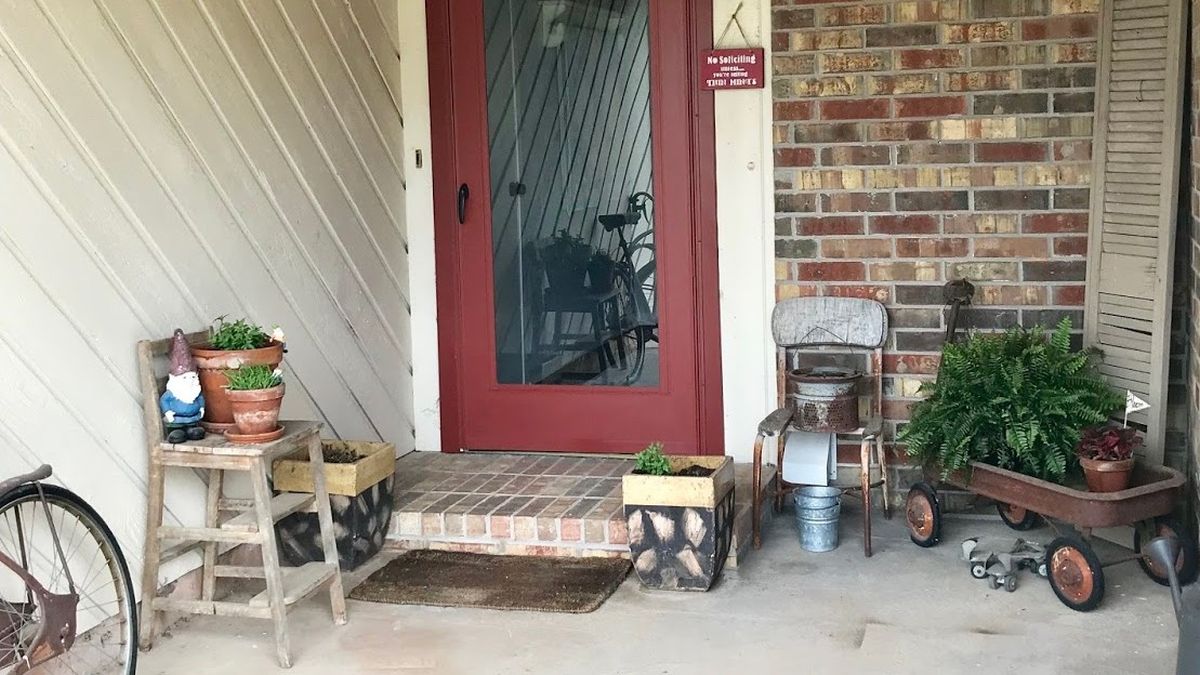
DeeDee from Clover House went back to her paint collection and found a red shade matched to the house trim. She brushed it across the upper portion of each pot, then used 120-grit sandpaper to remove parts of the fresh paint and expose the finish beneath.
The result was a distressed red-and-white design with patches of the original glaze showing through. Both pots returned to the front entrance, filled with yellow and orange flowers and positioned on opposite sides of the doorway.
Seven-Year-Old Flowerpots Had Two Different Finishes
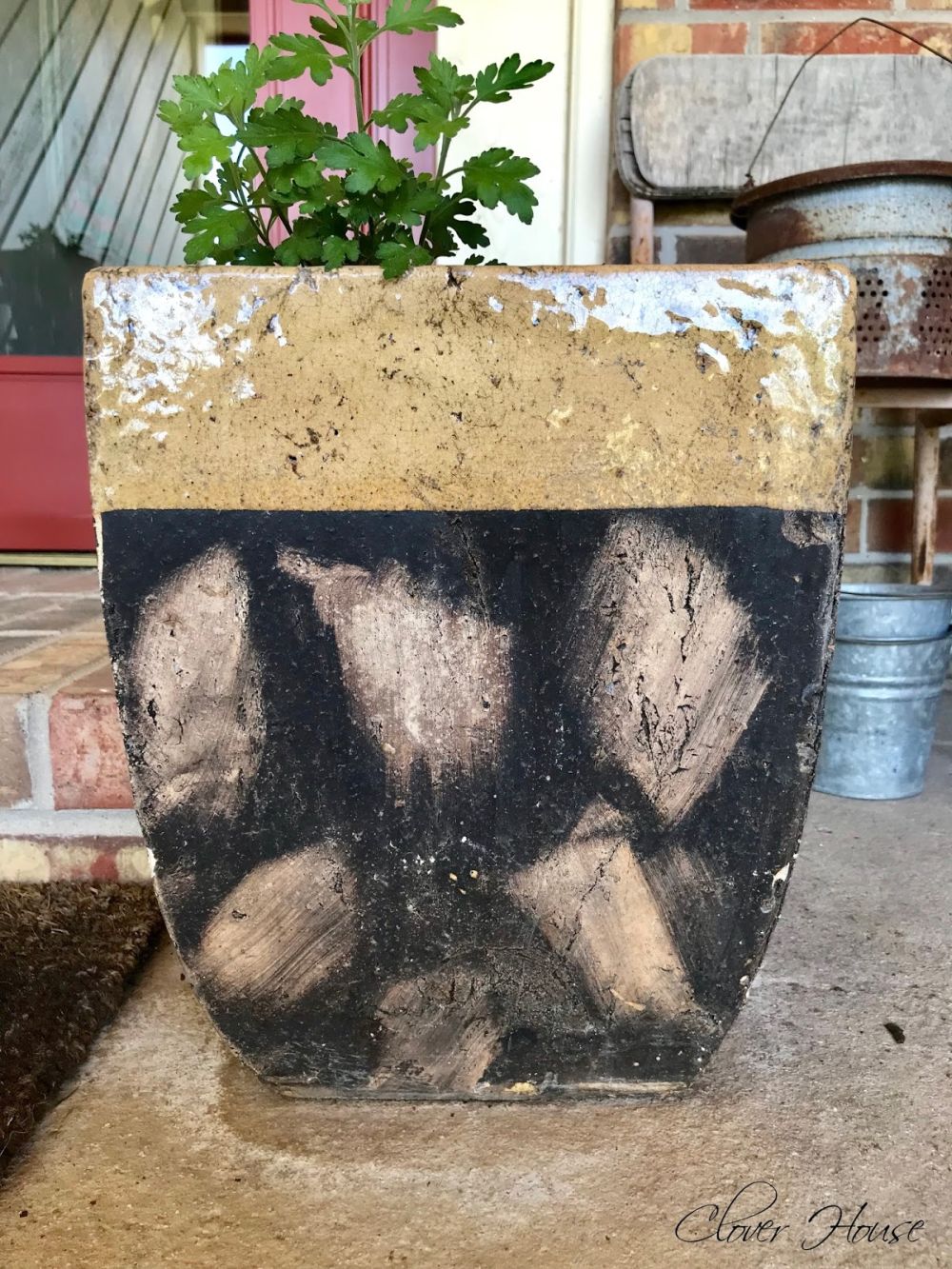
The original square planter had a tan glazed upper section and a dark charcoal-colored base marked with pale patches and rough impressions. Parts of the glaze had worn away around the rim, while the lower surface showed scuffs and scratches.
DeeDee had bought the pair about seven years before the makeover. Both remained usable, so replacing the finish offered a way to keep them on the porch without purchasing new containers.
Off-White Paint Covered the Original Surface
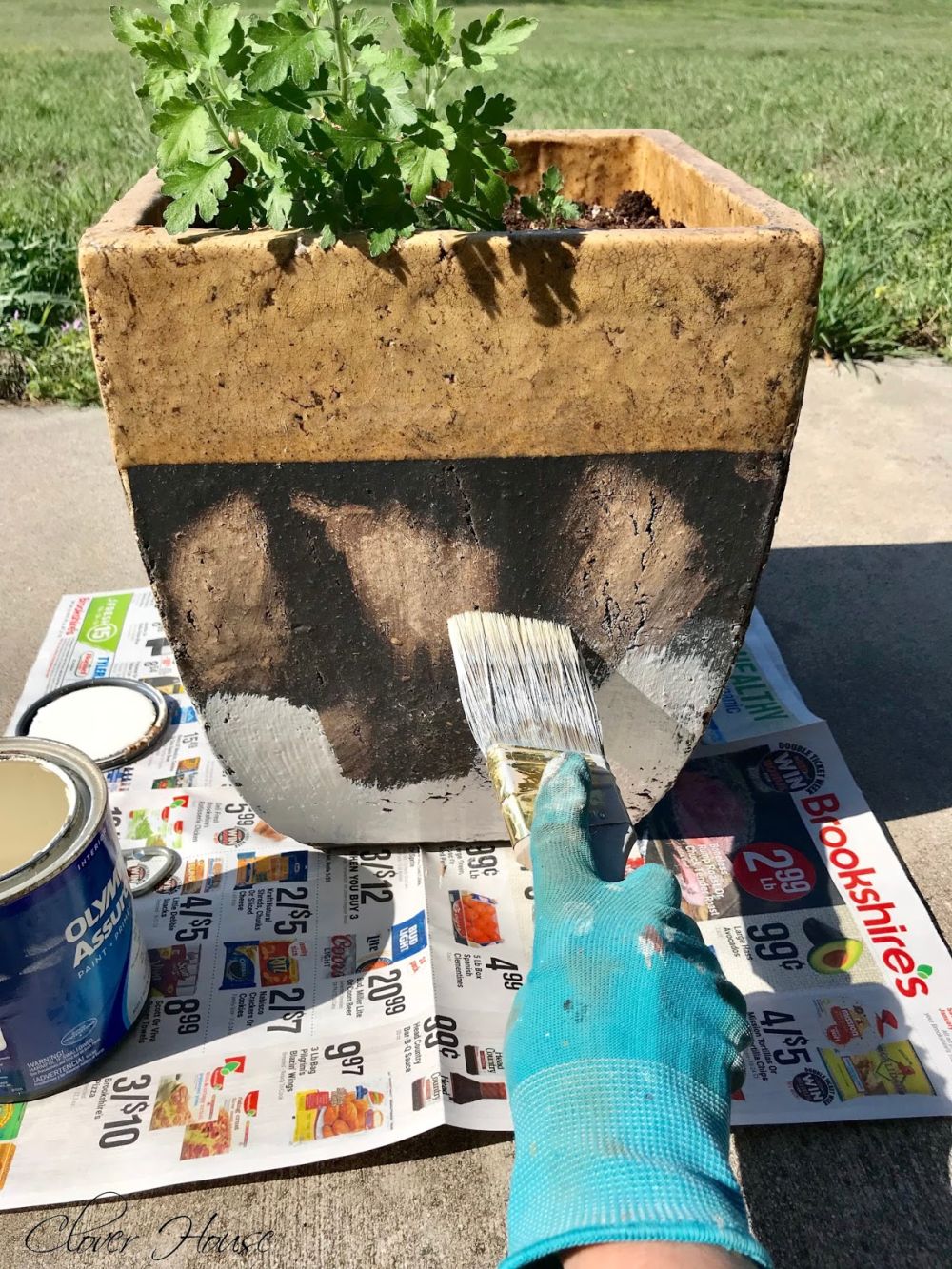
She placed the planter on newspaper outdoors and began brushing off-white paint across the lower section. The paint came from her existing supplies and was intended for indoor use, but the pots would remain under a covered porch.
The first strokes covered the dark surface while leaving the planter’s rough texture visible beneath the paint.
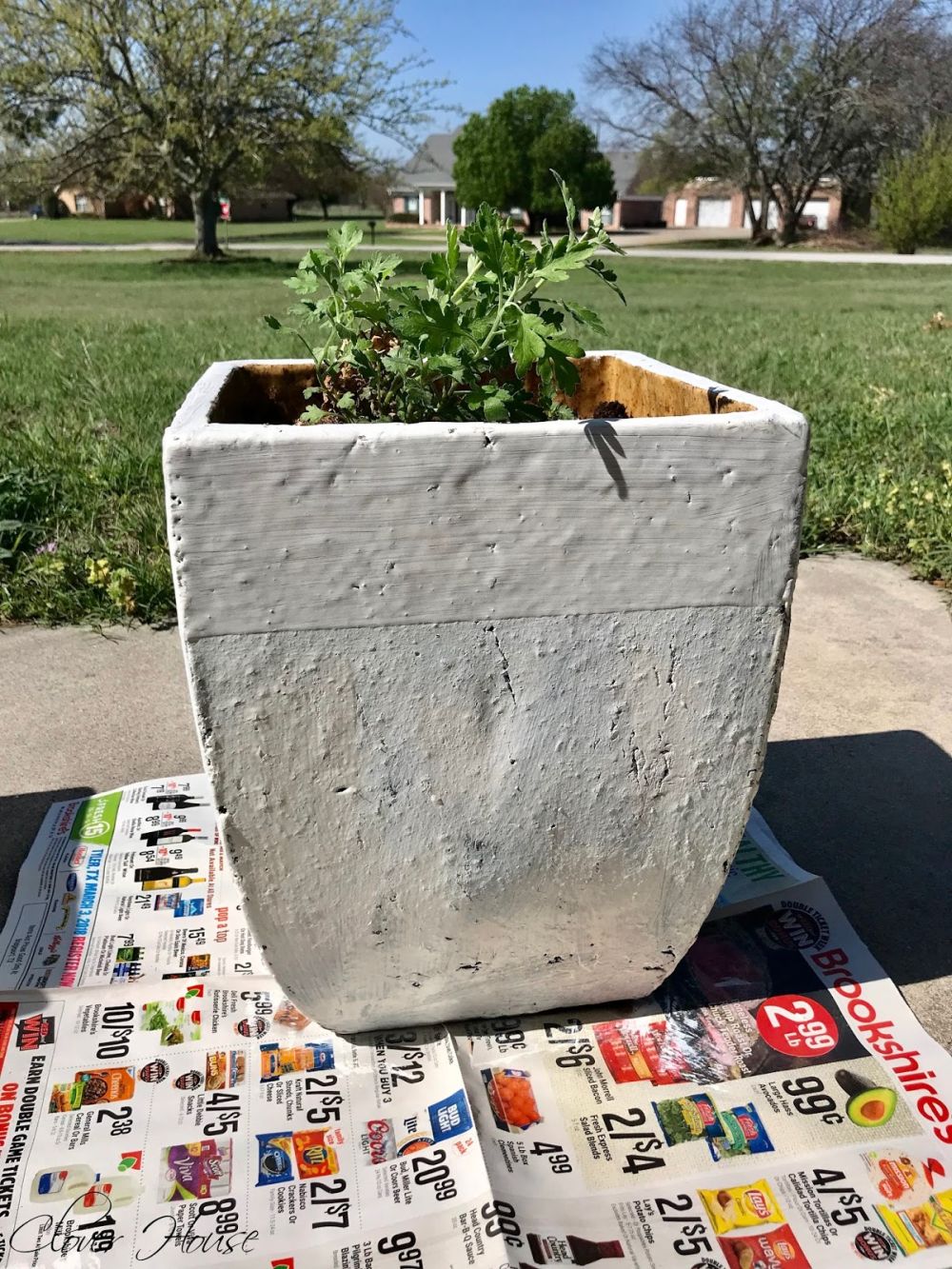
After the exterior received its off-white coat, the pot had a uniform pale finish from the rim to the base. Cracks, small pits, and raised marks remained visible across the surface.
DeeDee found the result too plain and decided to add another color rather than leave the container white.
Red Paint Changed the Upper Band
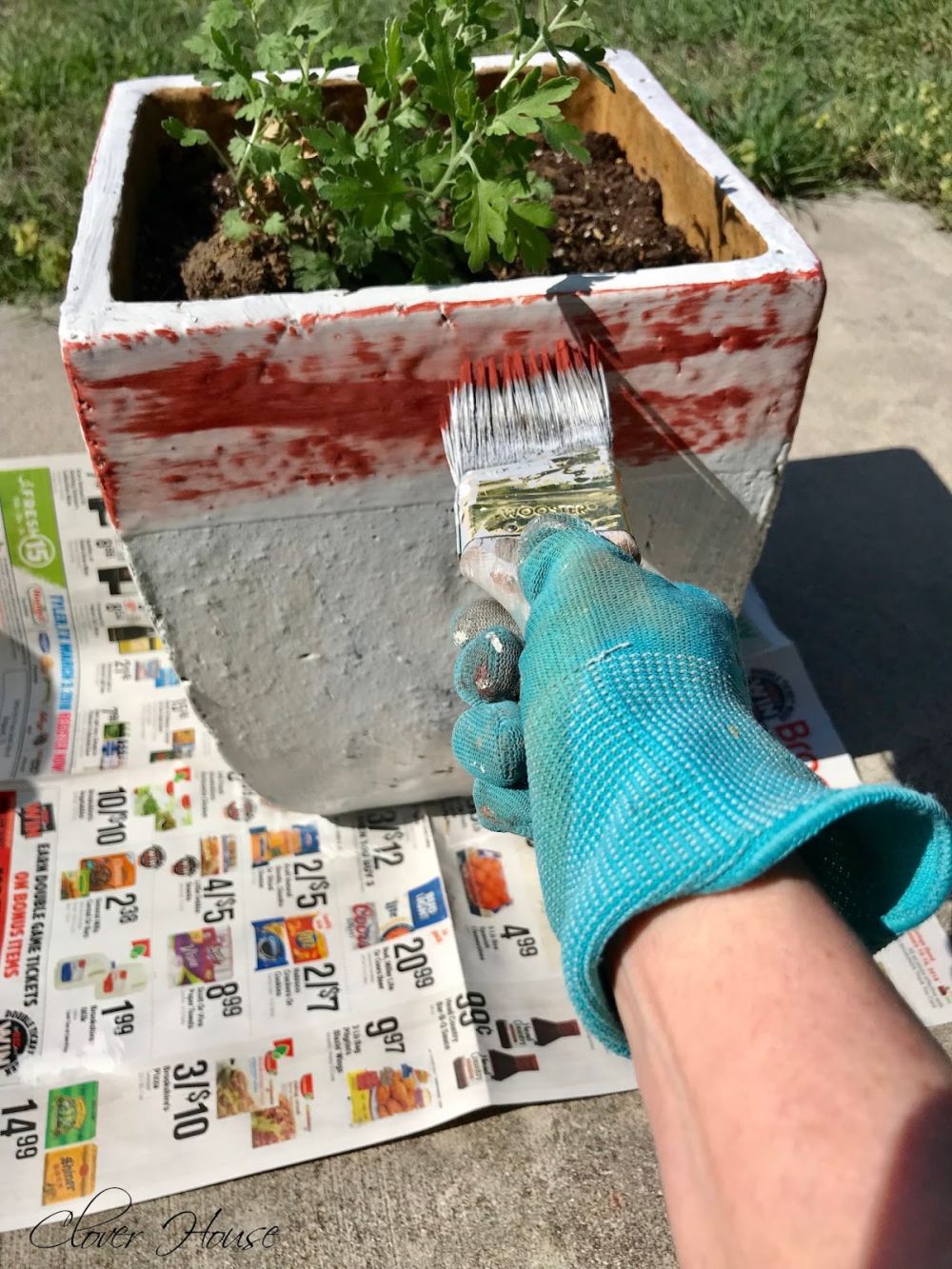
She selected leftover paint matched to the home’s red trim and applied it to the upper section with a dry brush. Instead of loading the brush with enough paint to produce a solid coat, she used a small amount and dragged it across the surface.
The red caught the raised areas while leaving sections of white exposed between the strokes.
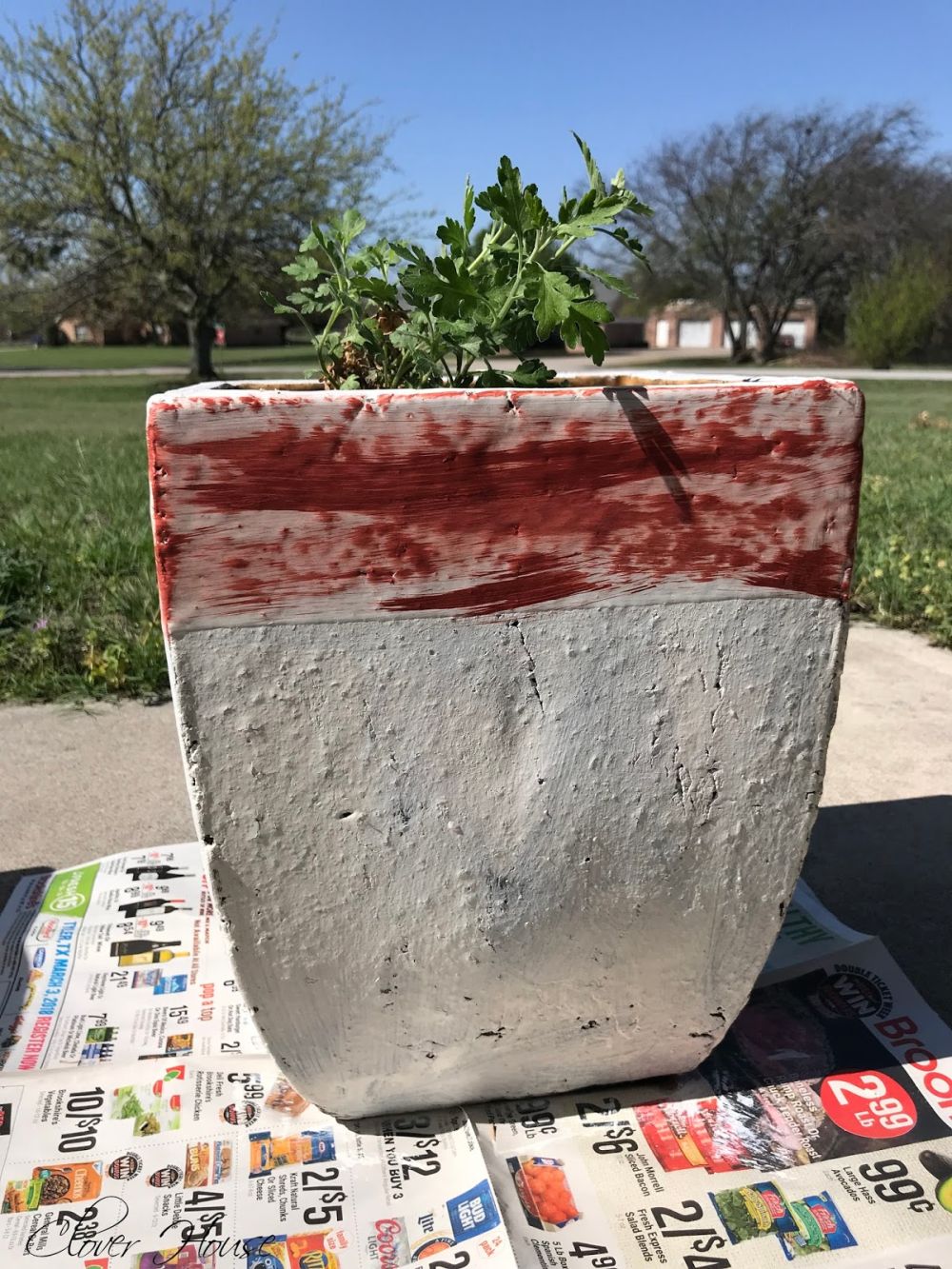
The upper band developed streaks of red over the pale base, with uneven coverage around the corners and rim. The lower section remained off-white, creating a division between the two parts of the planter.
At this stage, DeeDee was still dissatisfied with the finish and reached for sandpaper.
Sanding Brought the Old Glaze Back Through the Paint
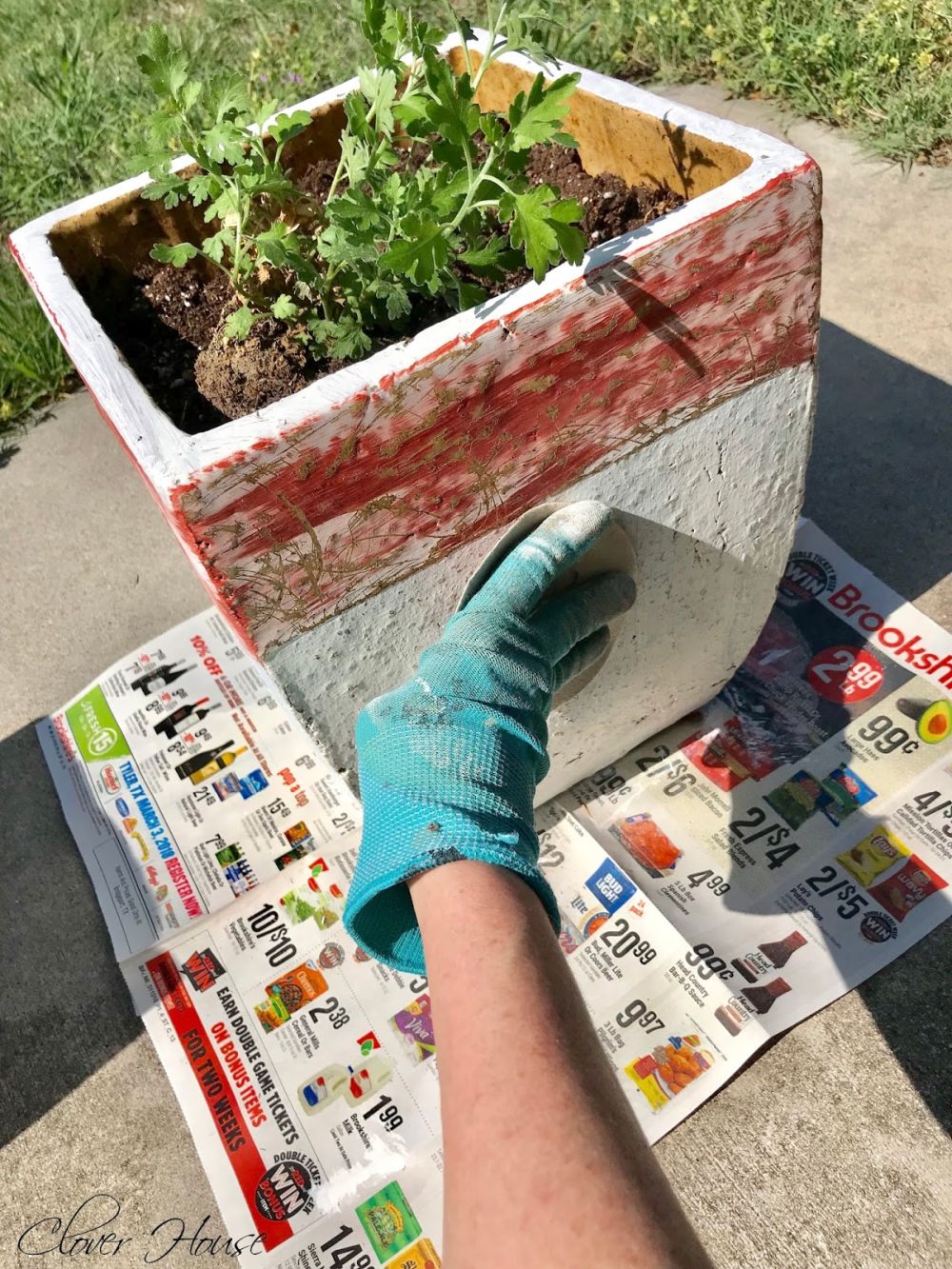
Using a worn piece of 120-grit sandpaper, she rubbed the painted surface in circular motions. The abrasion removed sections of the red and white coats, exposing portions of the original material beneath them.
The sanding affected the raised marks and rough areas more than the recessed sections, producing variations across the upper band.
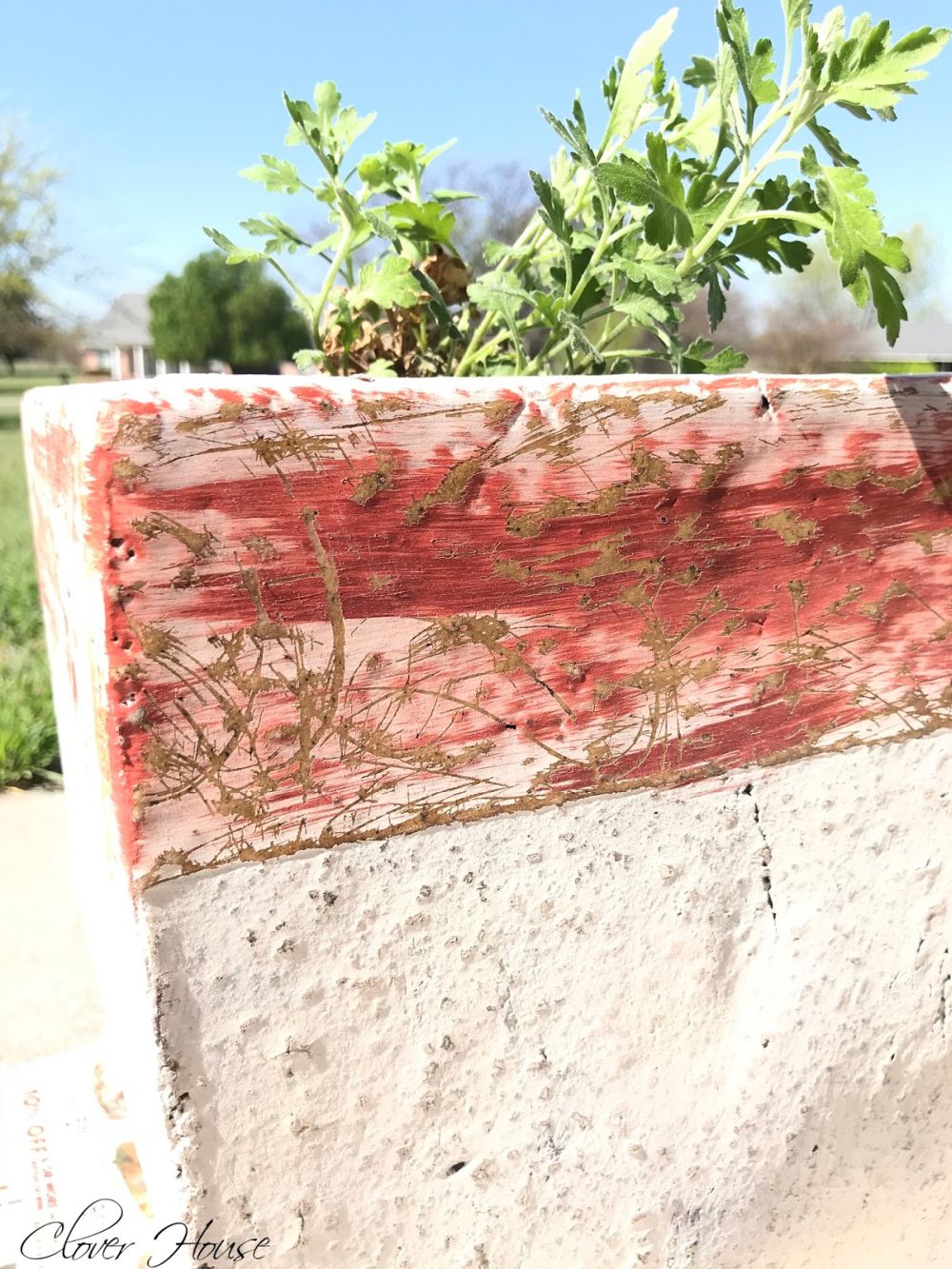
The close-up shows red paint, white undercoat, and tan glaze appearing across the same surface. Some areas have thin scratches, while larger patches reveal the older finish.
DeeDee hadn’t expected the original glazed section to contribute so much to the result. Sanding exposed its sheen beneath the new paint, giving the upper band a worn finish that the brush alone hadn’t produced.
The Finished Planters Returned to the Porch
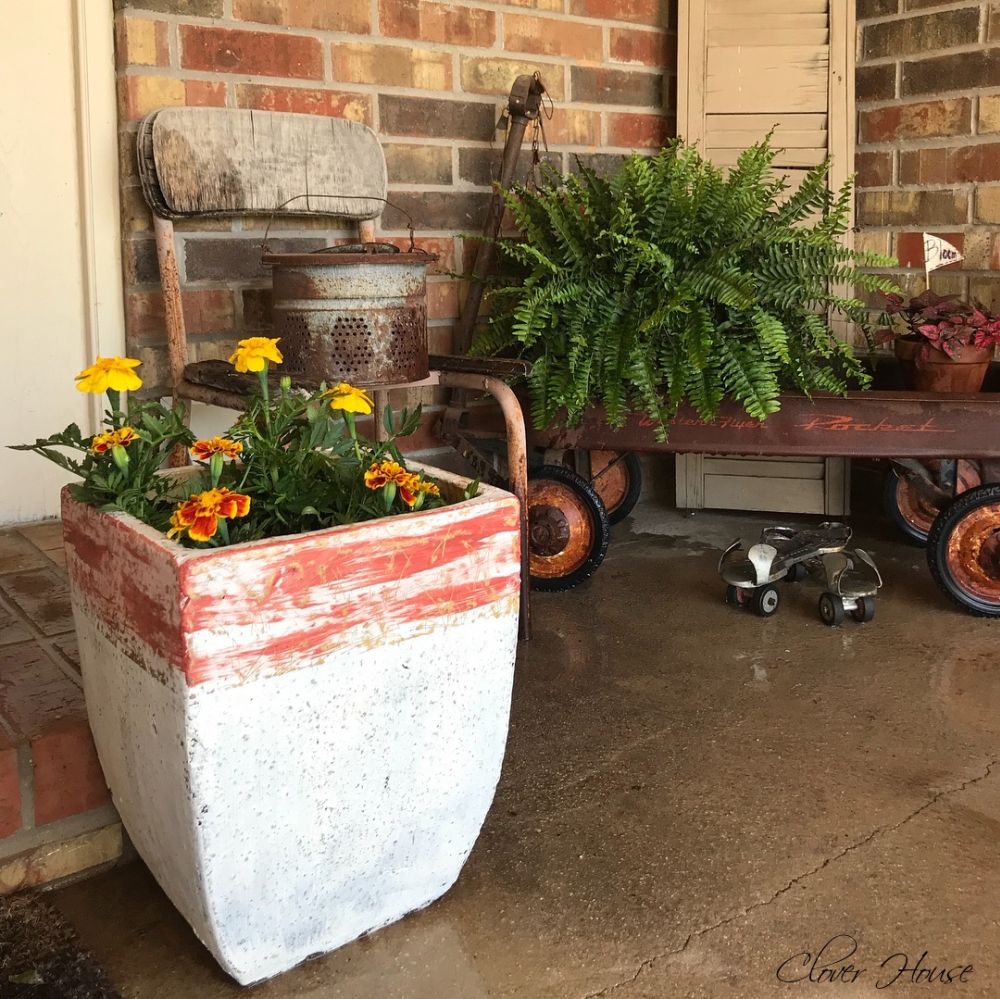
One completed pot sits near a brick wall, filled with yellow and orange flowers. Red marks run across its upper section above the off-white base, with the distressed finish visible along the rim and corners.
An old metal chair, galvanized container, and fern-filled garden wagon surround the planter, matching the weathered appearance of the new paint treatment.
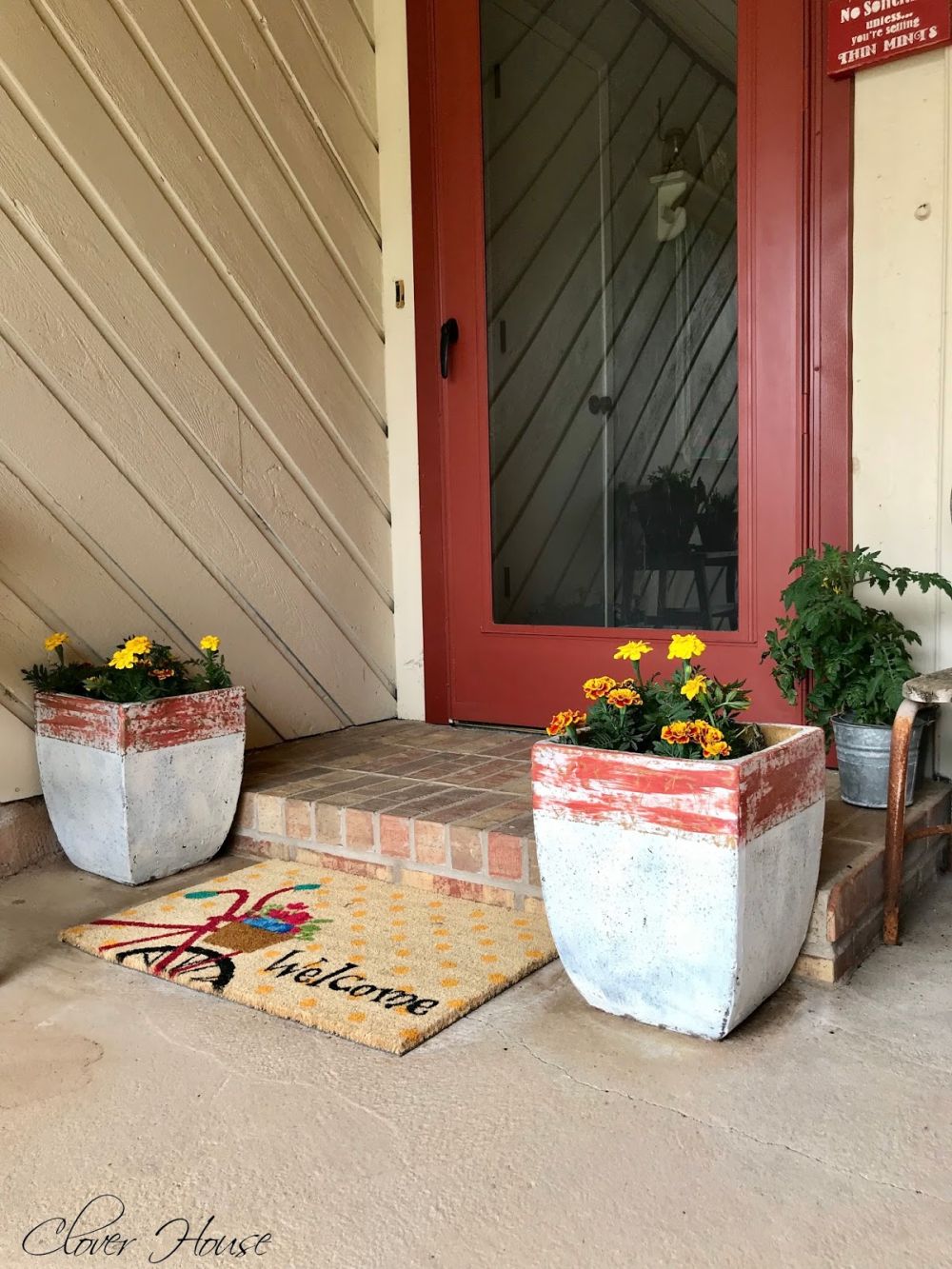
Both planters were placed beside the front entrance, framing a red glass-panel door. A welcome mat sits between them, while the plants add yellow, orange, and green against the white containers.
The red upper bands connect the pots to the door color without covering the entire surface in the same shade.
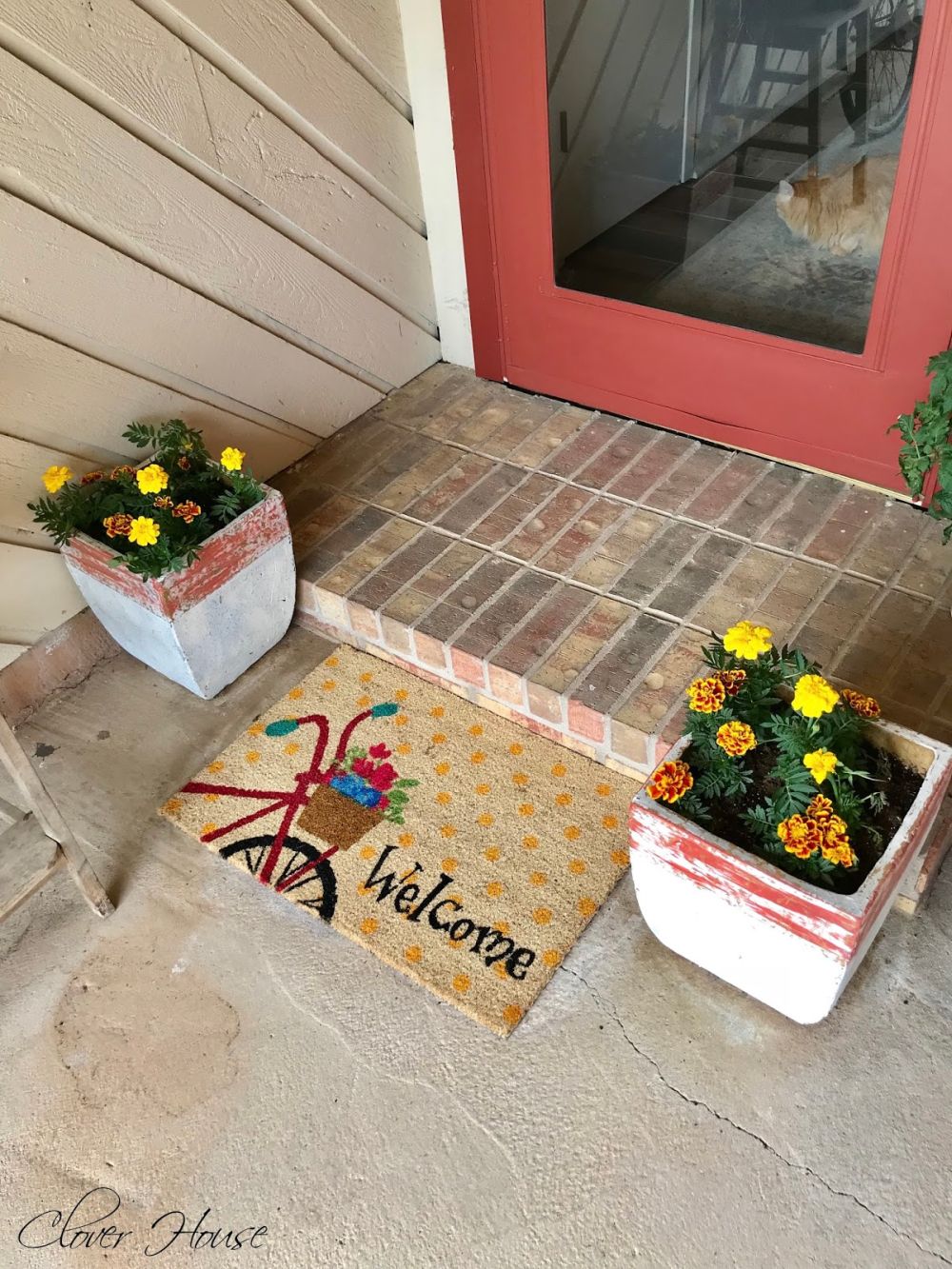
From above, the two planters show their square openings, fresh soil, and flower arrangements beside the brick doorstep. The smaller container occupies the left side, while the larger planter stands near the right corner of the welcome mat.
The makeover used paint and sandpaper DeeDee already owned, leaving the original pots in place with a finish created through three stages: an off-white base, red dry-brushing, and sanding.
Would you have kept the flowerpots white, or used sandpaper to bring back some of their original finish?
Project and photographs: @cloverhouse