She Made a Halloween Tombstone From One Piece of Plywood: The Name Isn’t Permanent

Halloween tombstones often come with names carved into foam or printed across plastic, leaving the same inscription on display each October. But one piece of plywood can become a tombstone with a name that changes whenever Halloween comes around. No carving is needed for the lettering, and the same decoration can display several different names.
Homedit DIY creator Brittney Smart started with a rectangular plywood board, cut two corners, and covered the surface with chalkboard paint. Instead of committing to one inscription, she used white lettering to create a series of humorous gravestones, each with a different name.
The finished piece looks like a black tombstone with a weathered surface and white border. Its secret is the paint beneath the writing, which allows the decoration to take on a new identity without cutting another board.
Two cuts give the plywood its tombstone shape
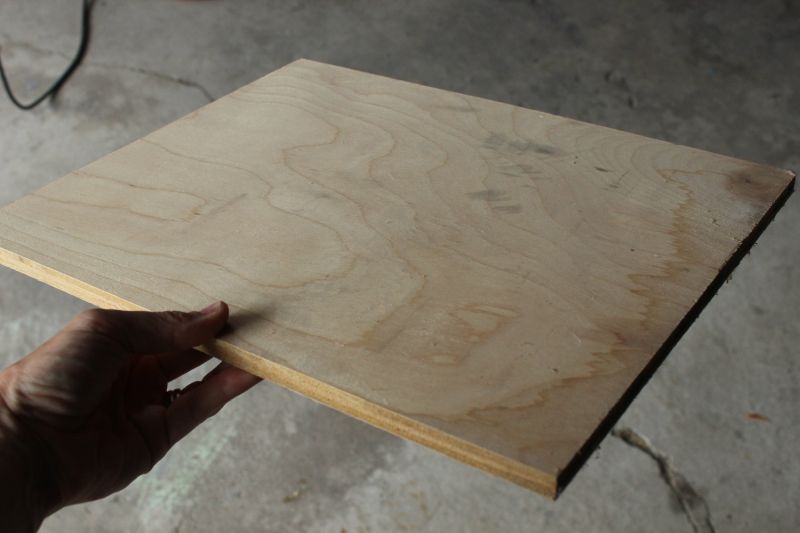
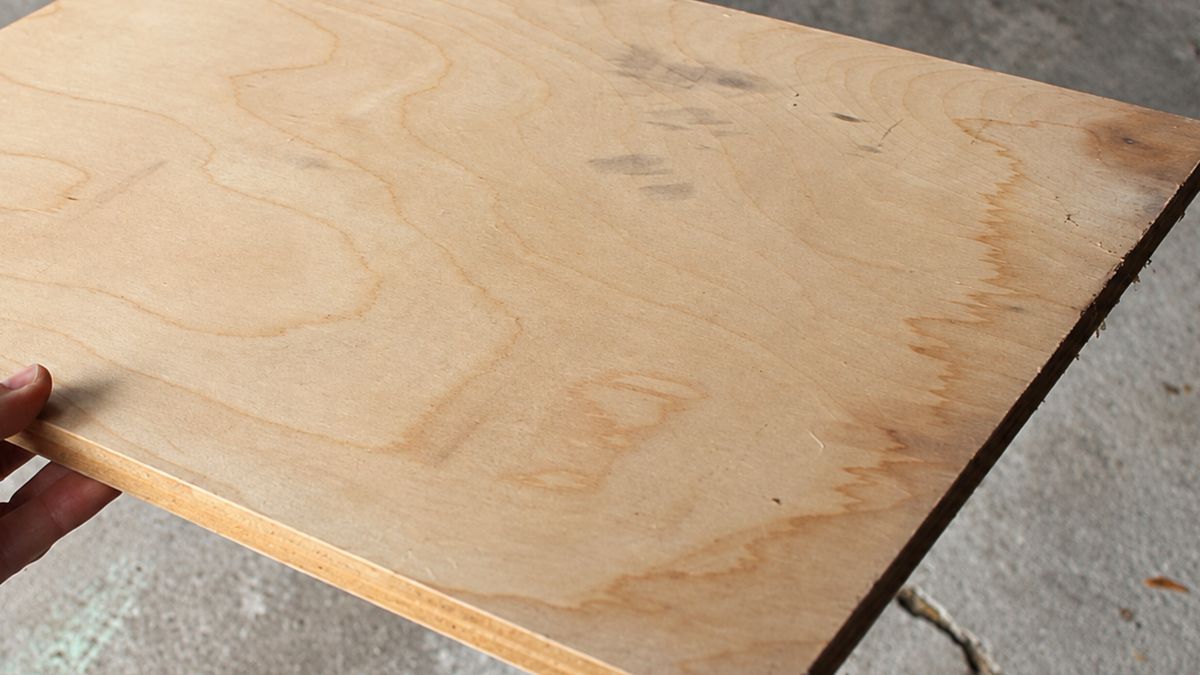
The project begins with a rectangular plywood board about half an inch thick. Its flat surface provides enough space for a large inscription, while the straight bottom edge allows it to rest against a wall or display.
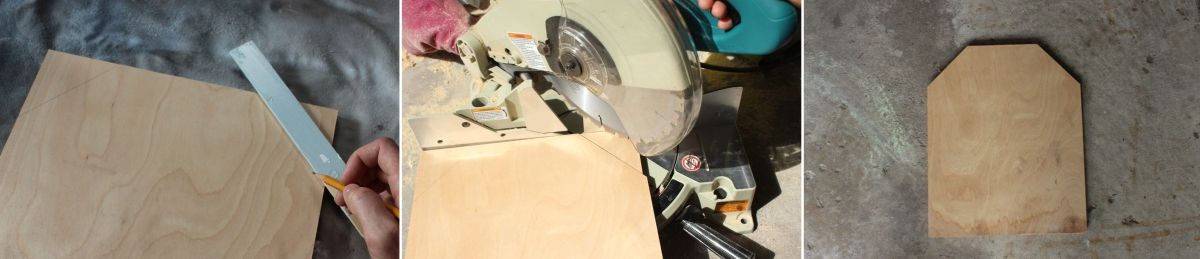
Matching angles are marked across the two upper corners, with cuts measuring about three inches along the edges. A miter saw removes the corners at 45 degrees, creating sloping shoulders and a short, flat top.
Sanding and paint hide the original wood
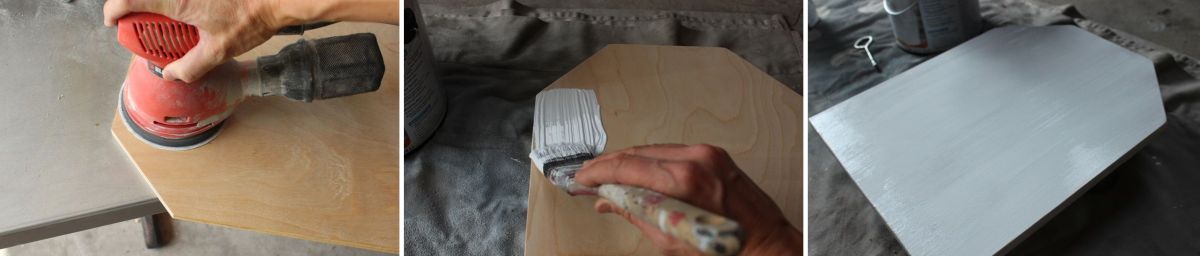
The cut plywood receives a pass with 120-grit sandpaper to smooth its face and edges. Primer goes across the front and sides, followed by another sanding with finer 220-grit paper after the coating dries.

Rust-Oleum chalkboard paint covers the prepared wood. The coating appears blue-black while wet before drying into a dark surface that conceals the plywood grain.
The angled outline now resembles a gravestone, but the paint gives it another function: the surface can accept new writing after the previous inscription has been removed.
Chalk goes on before the first name
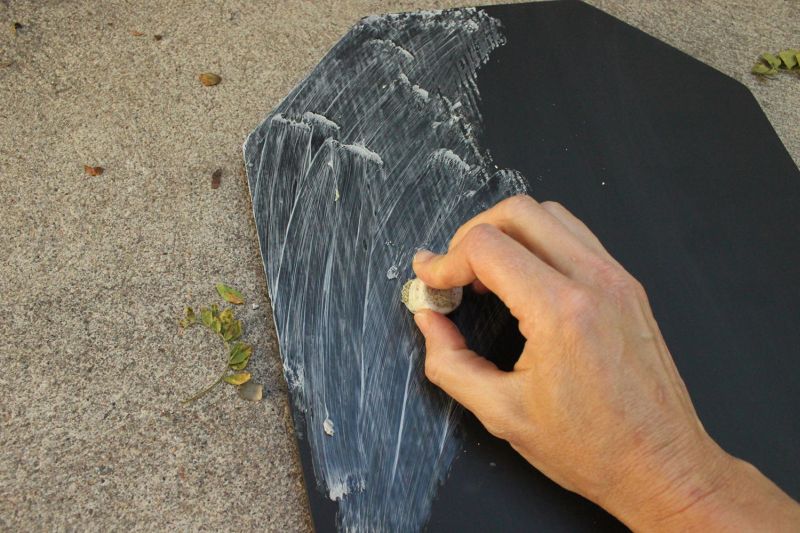
Instead of writing on the fresh paint, she covers the board with ordinary chalk. The chalk is rubbed across the surface in one direction, then across the opposite direction.
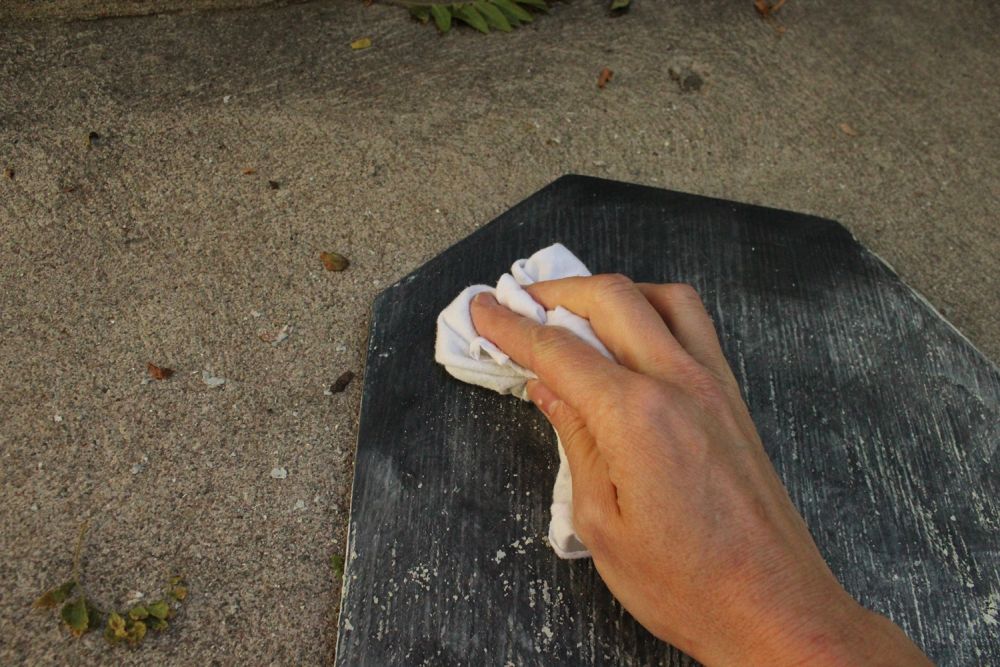
A cloth removes the chalk, leaving faint gray marks across the black background. This preparation, known as seasoning a chalkboard, helps prevent the first inscription from leaving persistent shadows in the paint.
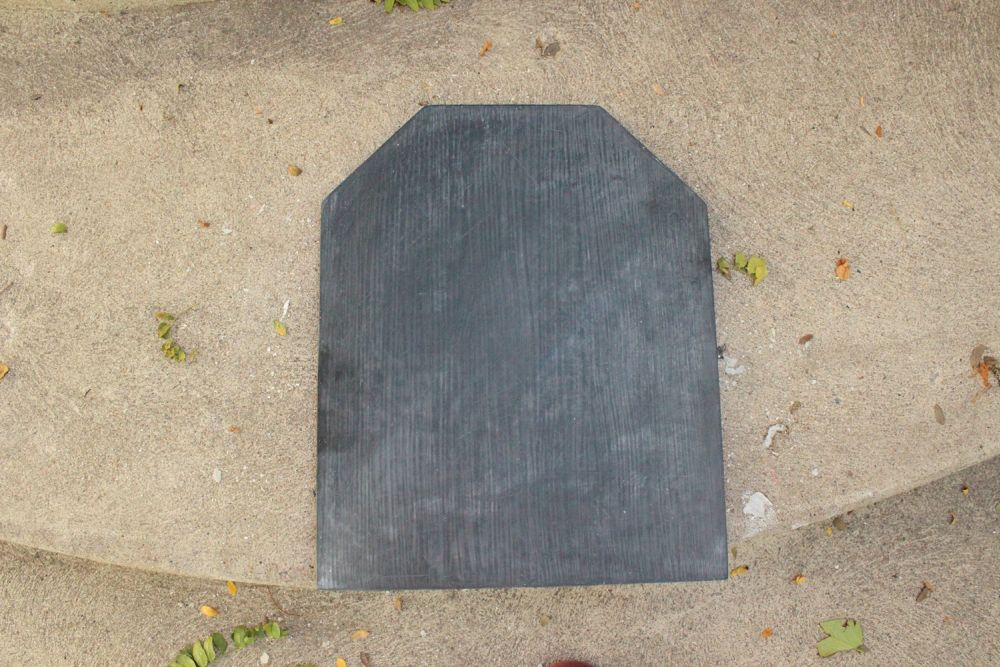
The result has a worn appearance, with streaks that resemble weathering on an old gravestone. The surface is ready for chalk markers and a new name.
One tombstone gets three different inscriptions
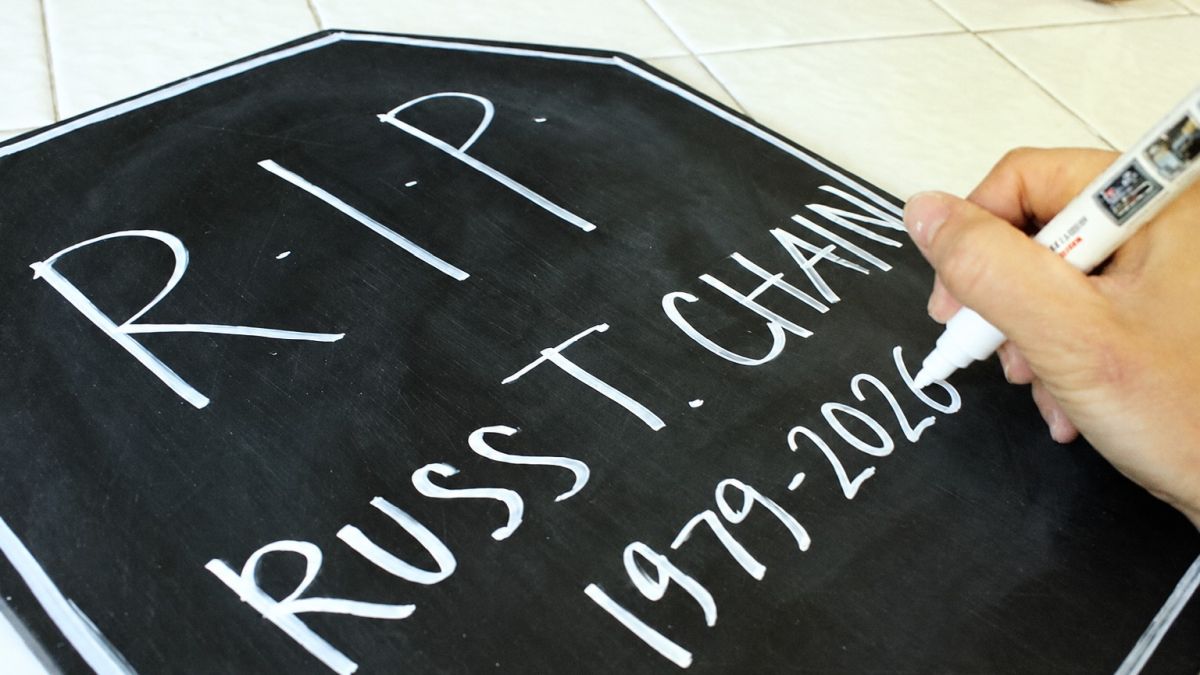
White lettering forms a border around the edges, followed by the first inscription: “R.I.P. Russ T. Chain,” with the dates 1979–2026 beneath it.
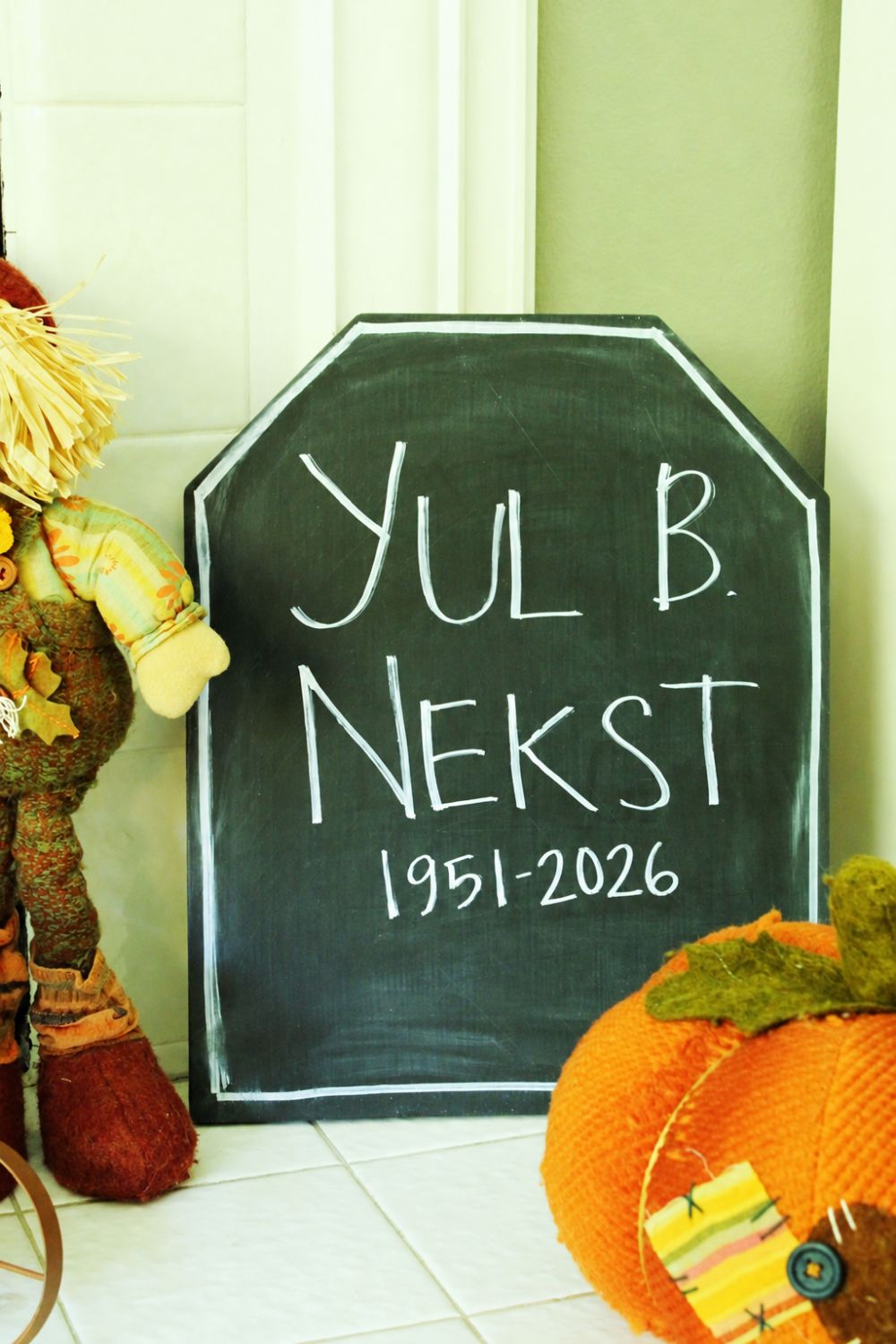
Another version reads “Yul B. Nekst,” dated 1951–2026. The same board sits beside a scarecrow and fabric pumpkin, with no changes to its shape or finish.
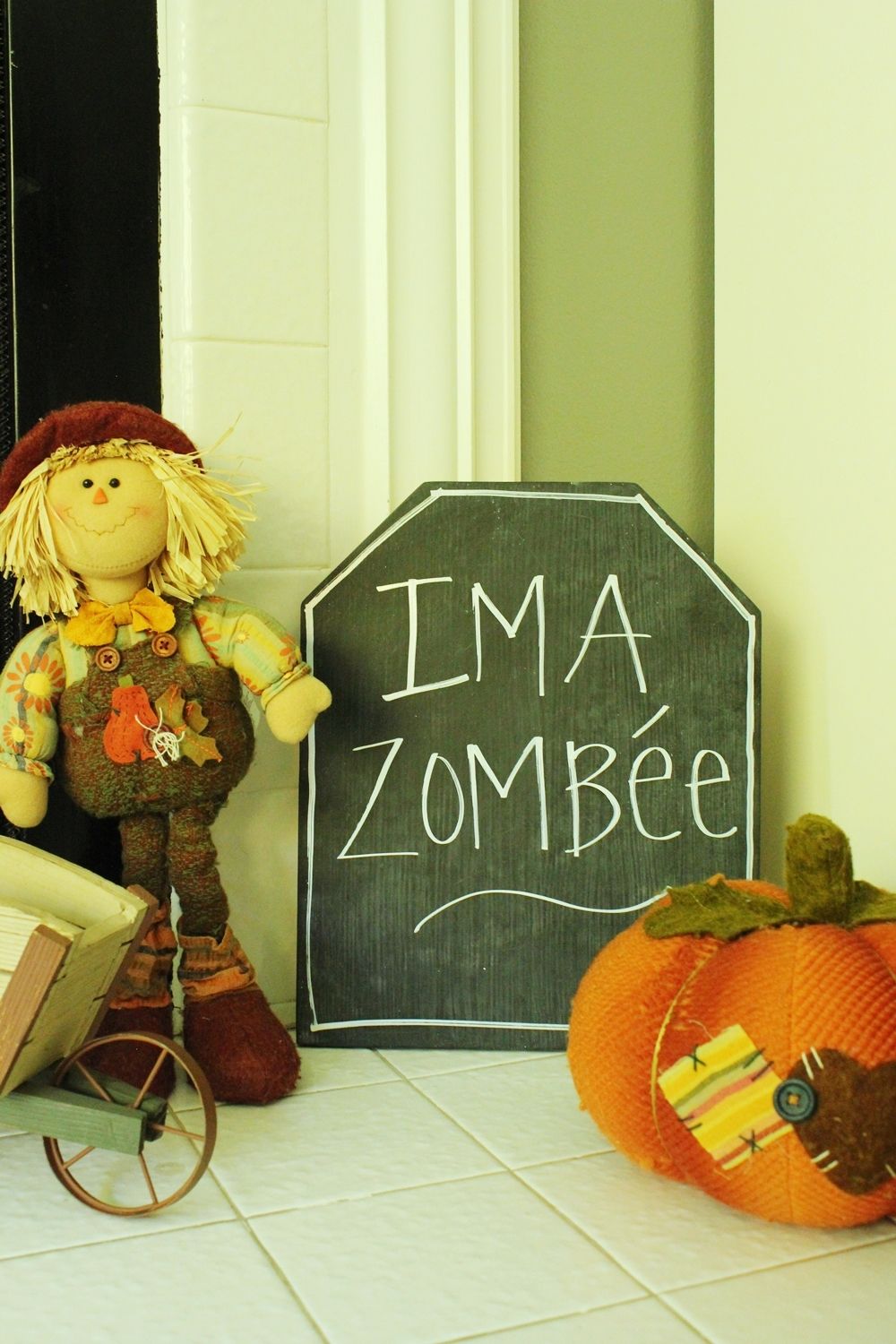
The next inscription turns the gravestone into “Ima Zombée.” Its white lettering stands against the dark surface, with a curved line beneath the name.
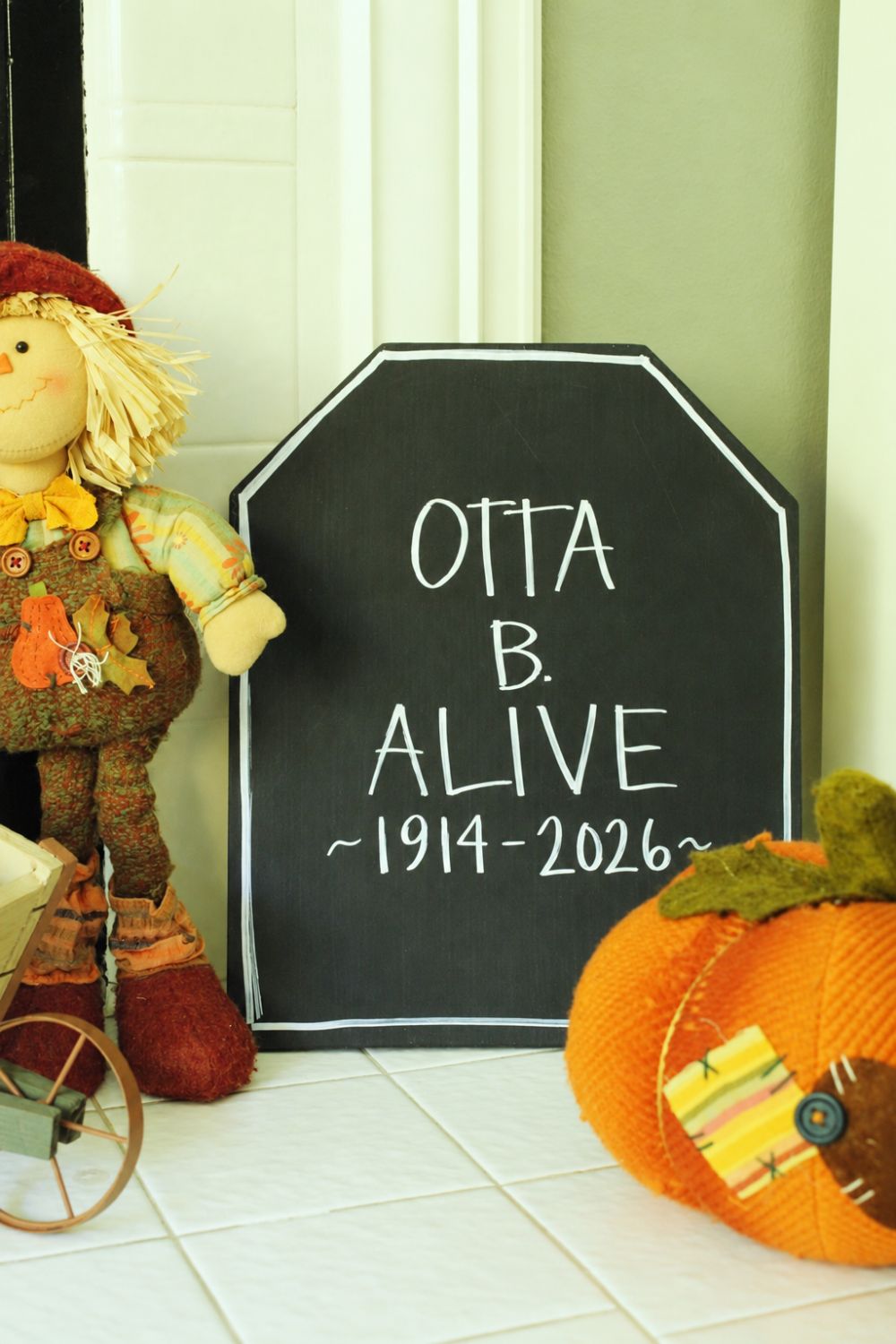
A final version reads “Otta B. Alive,” dated 1914–2026. The border remains in place while the name changes, demonstrating how the decoration can be reused for another Halloween display.
The plywood tombstone works as an indoor decoration or on a covered porch protected from rain. Its chalkboard surface gives the owner a choice that carved tombstones don’t offer: a different name without making another gravestone.
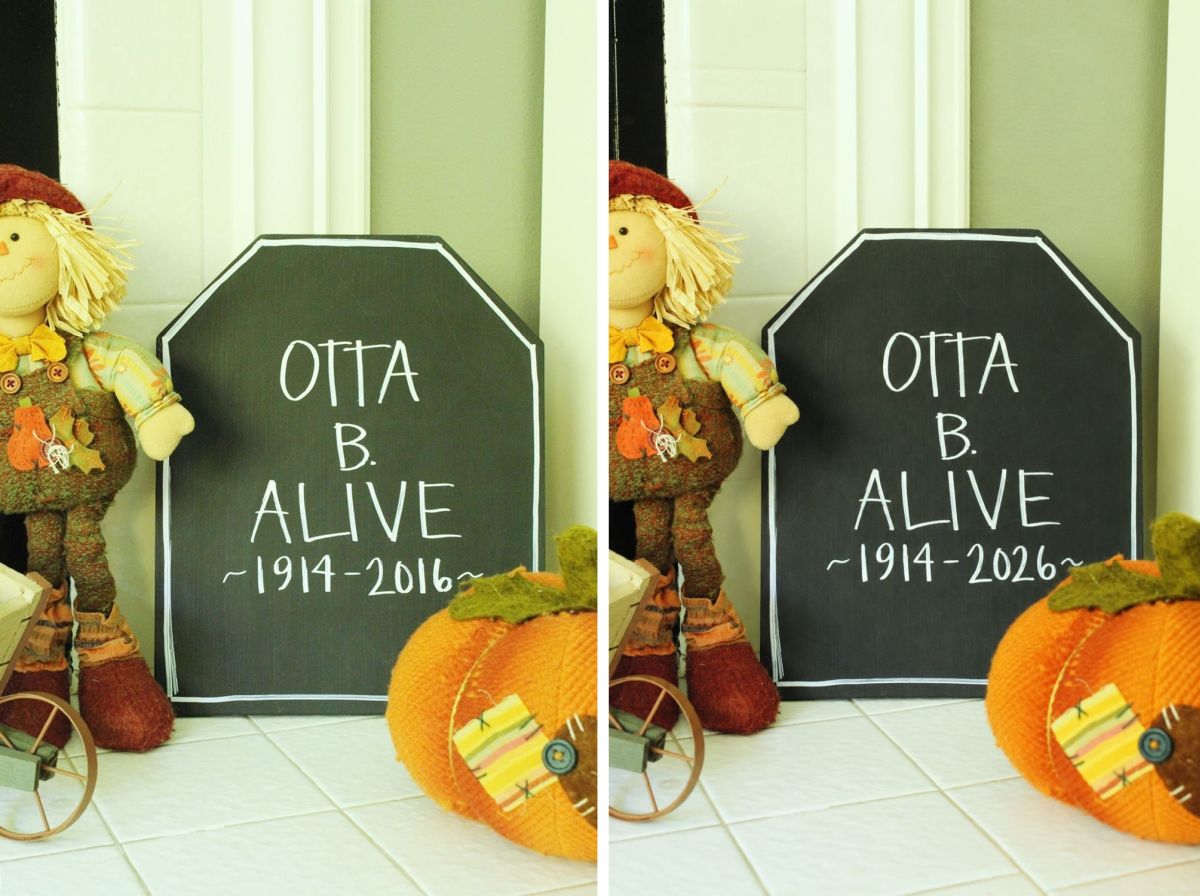
The chalkboard tombstone can be reused every Halloween, with the name and dates changed each year without making a new decoration.
Which Halloween name would you put on it: Russ T. Chain, Yul B. Nekst, Ima Zombée, or Otta B. Alive?