Matching Bedroom Furniture Can Create a Showroom Look: Where Coordination Goes Too Far


Buying matching pieces removes the guesswork from decorating a bedroom, since the lamps, cushions, and headboard arrive with their colors and finishes already connected. But when the same details appear on every surface, the room can start to resemble the display that sold the furniture.
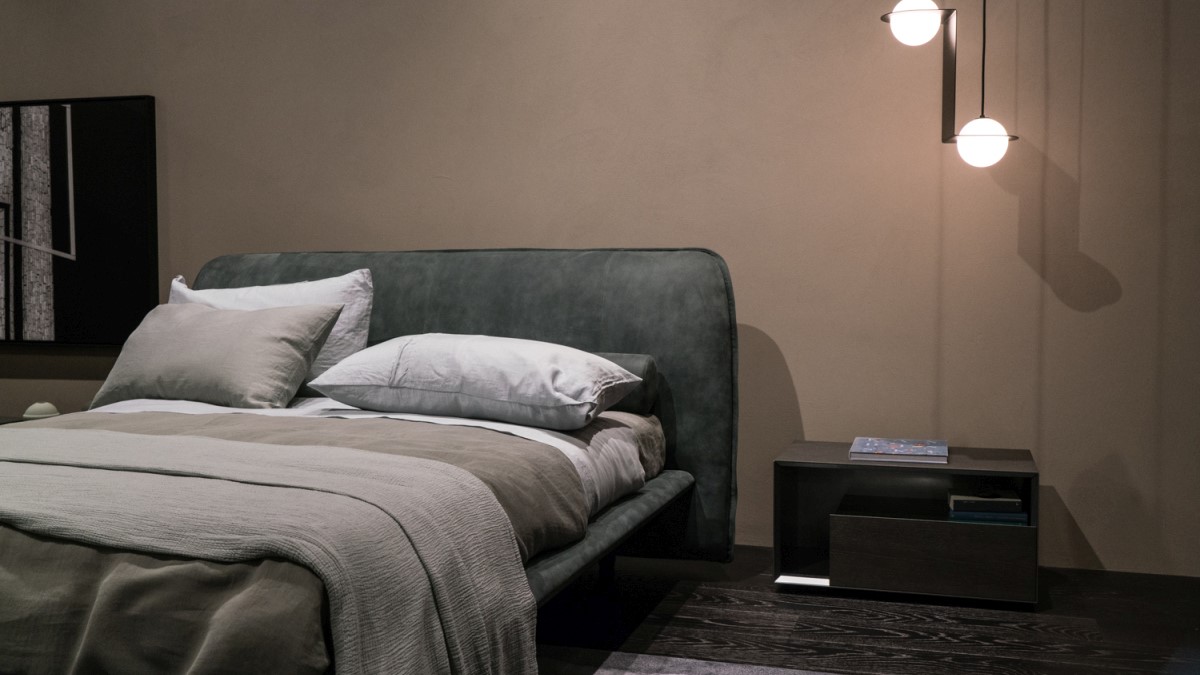
Diagonal upholstery fills this headboard and returns in both lamp bases, while paired shades and stacked cushions repeat the arrangement on either side. Each piece reinforces the next, leaving little variation between the bed and its surroundings.
Matching lamps can still provide useful light, and paired bedside tables can give both occupants the storage they need. The choice worth reconsidering is how much the accessories repeat the furniture, especially when a change of cushions or lighting could give the existing bed a different setting.
Quilted Lamp Bases Repeat the Headboard’s Outer Panels
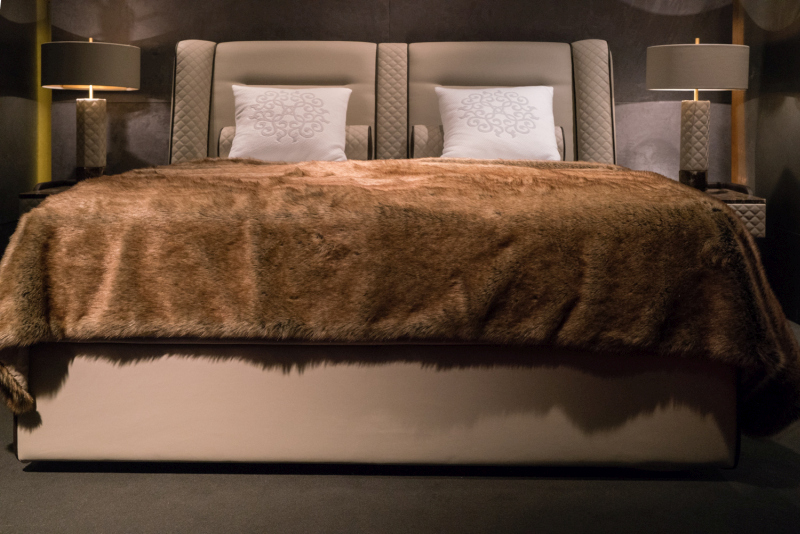
Diamond quilting covers the narrow upholstered sections of this headboard and continues onto both bedside lamp bases. Matching drum shades frame the bed, while two embroidered white cushions repeat the same motif across the center.
Brown, fur-textured bedding introduces a less regular surface across the lower half of the arrangement. Its loose folds soften the rigid pairing above, showing how a change in texture can interrupt repetition without changing the furniture.
Keeping the lamps would preserve equal lighting on both sides, while replacing one decorative cushion with a different fabric could reduce the sense that every detail belongs to a set.
Matching Lamps Can Frame a Bed Without Copying Its Details
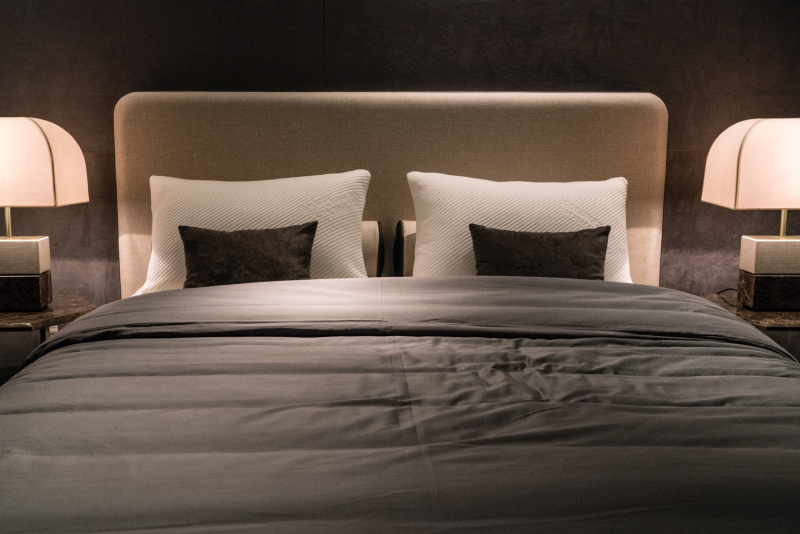
Rounded rectangular shades sit beside a broad upholstered headboard, with pale pillows and smaller dark cushions arranged in pairs. Compared with the quilted display, the lamp bases and headboard share fewer decorative details.
Smooth gray bedding stretches across the foreground, leaving the contrast between light pillows and dark cushions to define the bed. Coordination comes through color and placement rather than a motif repeated across every surface.
For someone who prefers a centered bedroom, this distinction matters because symmetry can remain while the furniture and lighting carry separate designs.
Repeated Cushions Reinforce an Already Divided Headboard
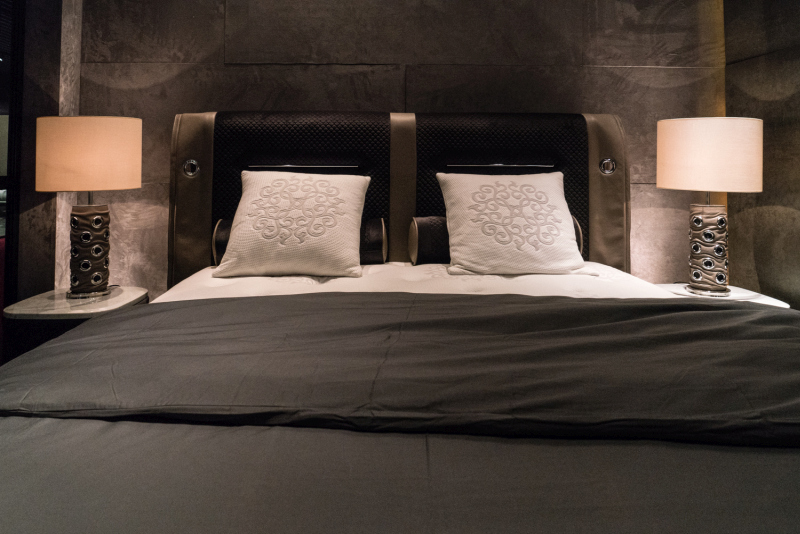
Black quilted panels divide this headboard into two sections, each framed by taupe upholstery and finished with metallic details. Identical embroidered cushions sit in front, with matching lamps positioned on curved bedside tables.
Circular openings decorate the lamp bases, adding another repeated element at either edge of the bed. Between the divided headboard, paired cushions, and coordinated lighting, the arrangement gives each side almost the same information.
Removing the decorative cushions would expose more of the upholstery and metal details already built into the headboard. Keeping the existing lamps and tables would still leave a clear frame around the bed.
Gold Accents Connect the Headboard, Cushions, and Lamps
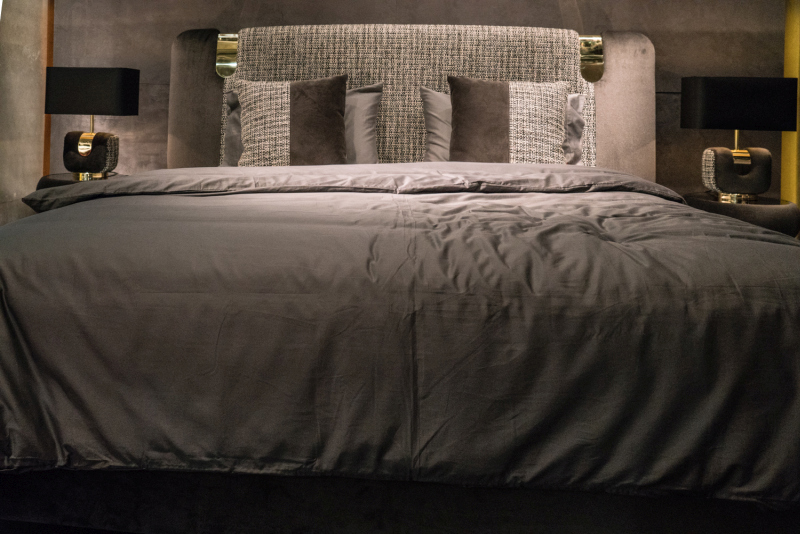
Textured fabric fills the center of this headboard, bordered by dark upholstered sections and gold-toned fittings. Matching cushions repeat the fabric combination, while both lamp bases echo the dark surfaces and curved metallic accents.
Black shades extend the coordinated palette across the bedside tables, leaving few elements outside the established material scheme. Readers who enjoy a complete furniture suite may prefer that continuity, while others may find the repetition stronger than the individual pieces.
Changing the front cushions to a fabric absent from the headboard would introduce variation without replacing the larger furnishings. Choosing a different lamp design would make a greater change because the lamps frame the whole arrangement.
Break One Repetition Before Replacing the Furniture
Bedrooms need room for reading, charging devices, storing glasses, and reaching a light from either side of the bed. Matching lamps or bedside tables can support those routines, so the first change can come from decorative pieces that repeat details already present elsewhere.
Start with the cushions, then assess whether the headboard and lamps still compete through the same fabric or motif. A centered bed can retain its balance even when the objects around it differ in texture, shape, or finish.
Would you keep the matching bedside lamps and change the cushions, or choose different lighting for each side of the bed?