15 Home Bar Design Ideas 2026 Worth Stealing Before Your Next Remodel

Home bars in 2026 are no longer about display. They are built into cabinetry, framed by architecture, and designed to work as part of the room rather than a feature added later. The strongest examples rely on proportion, material consistency, and lighting instead of decoration.
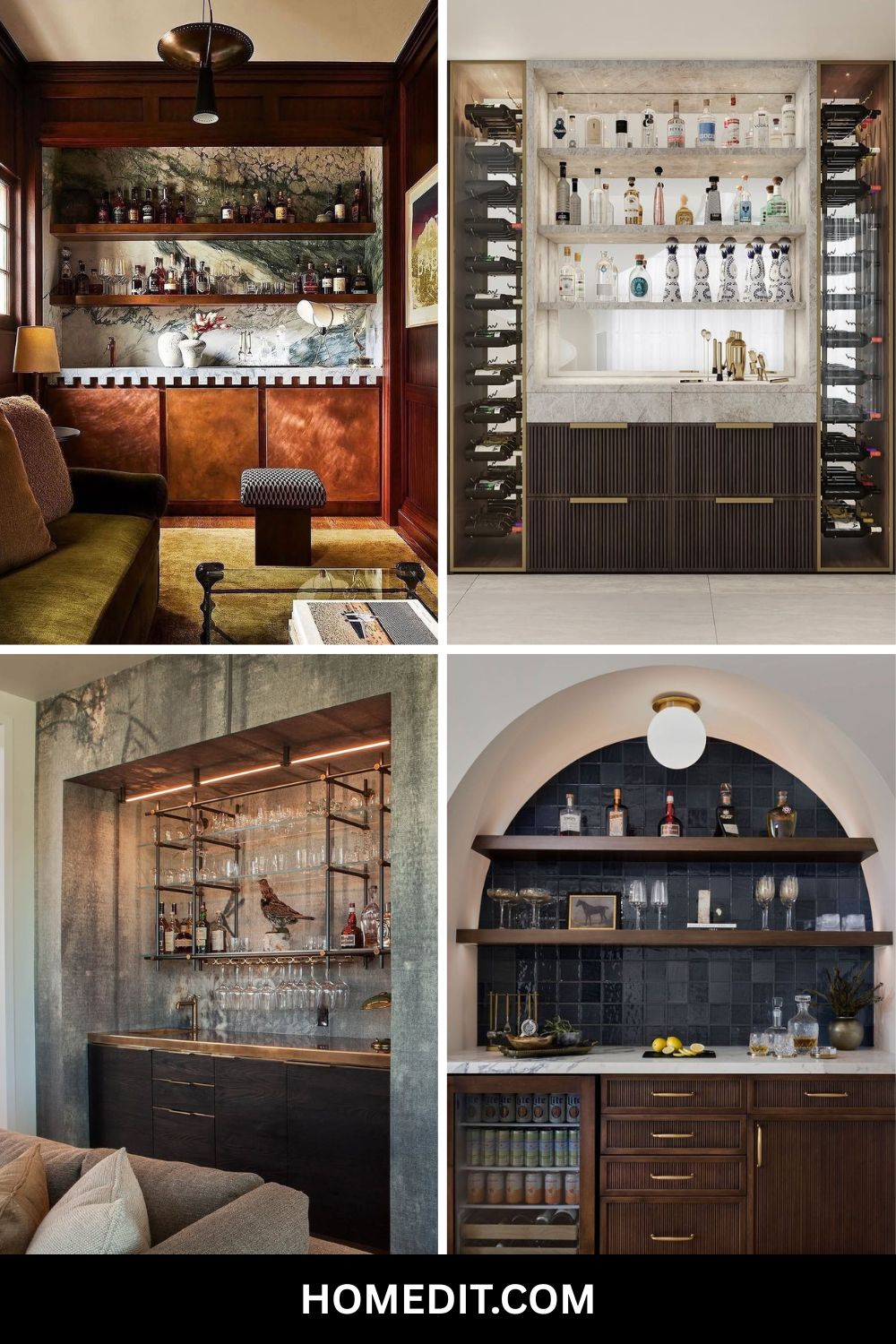
These home bar design ideas focus on layouts designers actually use. From recessed niches and island bars to concealed cabinets and wine-integrated walls, each one shows how a bar can feel intentional, functional, and permanent without competing with the rest of the space.
1. Architectural Cabinet Bar With Framed Storage

This bar reads as part of the wall. The arched framing sets boundaries, while the reeded glass softens the elevation and controls visibility.
The lighting highlights the stone back panel and shelf depth. Nothing competes for attention. The design works because every element has a clear role.
2. Built-In Living Room Bar Disguised as Millwork

This bar blends into the room through matching wood tones and clean cabinet lines. The mirrored back expands depth without turning the bar into a display feature.
Designers use this approach when a bar needs to live in a formal space without pulling focus from seating or artwork.
3. Island Bar Designed for Seating and Use

This setup treats the bar as a destination. The island thickness, stool spacing, and shelf height are planned around how people gather.
The marble surface carries visual weight, while the shelving stays restrained. The bar feels social without feeling staged.
4. Curved Niche Bar With Soft Geometry

The curved enclosure changes how the bar sits in the room. Hard materials feel lighter when edges are rounded.
This shape works well in dining spaces because it avoids sharp transitions and keeps the bar connected to the room rather than boxed off.
5. Kitchen Bar With Display-First Shelving

Open shelves put the bottle collection forward, while lower cabinets handle storage. Brass brackets and stone create a clear horizontal rhythm.
This design only works when the collection is edited. Designers use it when the bar needs to feel active and visible.
6. Dark Cabinet Bar With Internal Lighting

The deep cabinet color anchors the wall. Integrated lighting defines shelf depth and separates bottles from the background.
This approach works best in rooms that already have contrast. The bar gains presence without added decoration.
7. Full-Height Cabinet Bar Behind Doors

Closed, this reads as storage. Open, it functions as a complete bar. Vertical height compensates for limited width.
This format suits smaller rooms or transitional areas where a permanent open bar would feel intrusive.
8. Relaxed Wine Bar With Open Storage

This bar favors access over formality. Open shelves, hanging glass racks, and a grounded base cabinet keep it usable.
Designers use setups like this in spaces meant for daily use rather than special occasions.
9. Integrated Kitchen Bar With Material Continuity

Cabinet fronts, shelving, stone, and fixtures match the kitchen palette. The bar feels like an extension rather than a feature.
Consistency keeps the space from fragmenting. The bar works because it follows the same rules as the kitchen.
10. Recessed Bar With Metal Framework

This bar sits inside a framed opening, which controls its visual footprint. Metal shelving and warm lighting add structure.
The design succeeds because the bar respects the surrounding space instead of trying to dominate it.
11. Symmetrical Bar Wall With Integrated Wine Storage

This bar is built around symmetry. Wine storage frames the center section, turning bottles into structure instead of decoration. The stone niche anchors the composition and keeps the bar from reading as a loose collection of shelves.
This works because everything is aligned. Lighting, shelving depth, and cabinet rhythm stay consistent, which gives the bar a permanent, architectural feel rather than a decorative one.
12. Sculptural Island Bar With Curved Wood Detailing

The curved wood front changes how this bar is experienced. It softens the island mass and pulls seating closer without sharp edges breaking the flow. The stone backdrop adds contrast and visual weight.
This is a bar designed for presence. It sits in the room like furniture, not cabinetry, which makes it feel intentional and social rather than functional only.
13. Arched Recess Bar With Dark Tile Backdrop

The arched opening defines the bar zone without walls. Dark tile creates depth and absorbs light, which pushes bottles and glassware forward visually.
Designers use this approach when they want the bar to feel contained but visible. The arch signals purpose while keeping the space connected to the room.
14. Library-Style Bar With Layered Materials

This bar sits inside a wood-paneled room and respects it. The stone back wall adds texture, while the copper-toned base introduces warmth without gloss.
The bar feels grounded because it matches the room’s scale. Nothing here tries to stand out. The materials do the work through contrast and depth.
15. Dark Cabinet Bar With Brass Rail Detailing

This bar relies on contrast and control. Dark-stained wood sets a heavy base, while brass rails define shelf edges and keep glassware secure without adding visual noise. The layout stays tight, vertical, and efficient.
What makes this work is discipline. Every material has weight, every finish repeats, and nothing feels added for effect. This is the kind of bar that feels planned from the first drawing, not adjusted after installation.