He Built an Outdoor Dining Table From Discarded Wood: The Gap in the Middle Wasn’t a Mistake


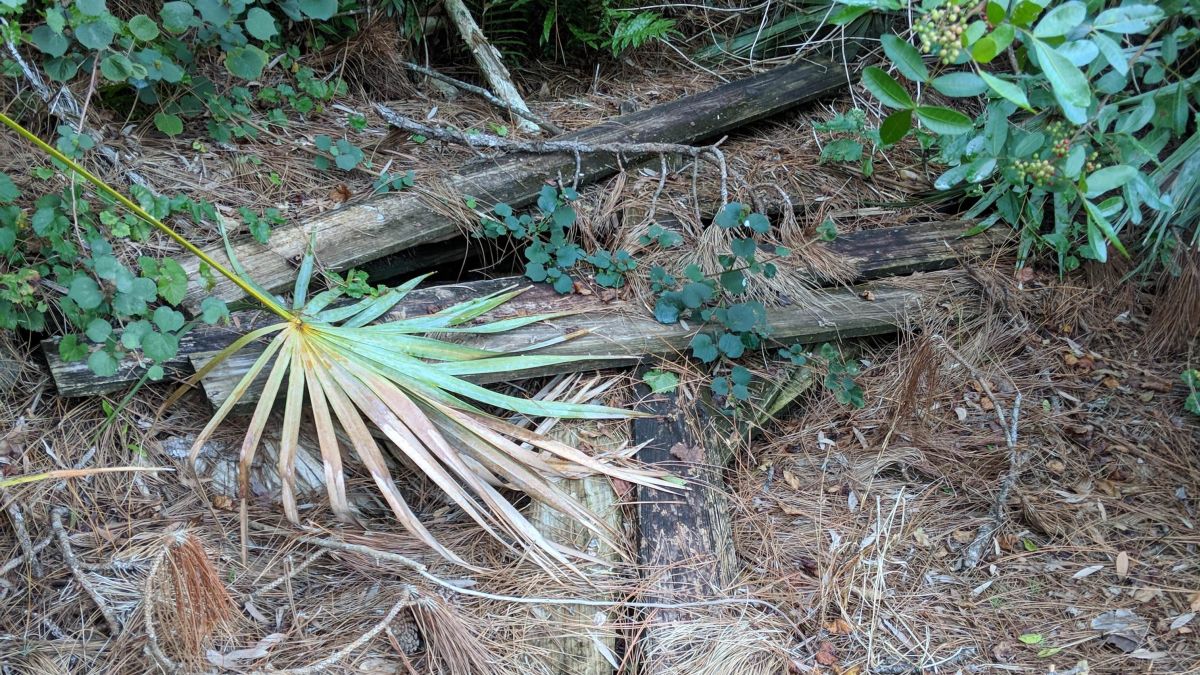
Weathered wooden boards lay abandoned among pine needles, fallen branches, and thick vegetation. Their surfaces had turned gray and dark brown from exposure, with cracks, knots, and worn edges that made them look more like debris than furniture material.
Imgur user GrantGrillo recovered the wood and used it to build an outdoor dining table. Rather than covering the damaged-looking grain or cutting every board into matching lengths, he kept much of its weathered character and arranged the planks into a broad tabletop.
One detail interrupted the construction: a long, irregular opening through the center. Instead of filling it with another board, he turned that space into a planter for succulents, making the plants part of the table rather than a centerpiece placed on top.
Weathered boards became the starting material
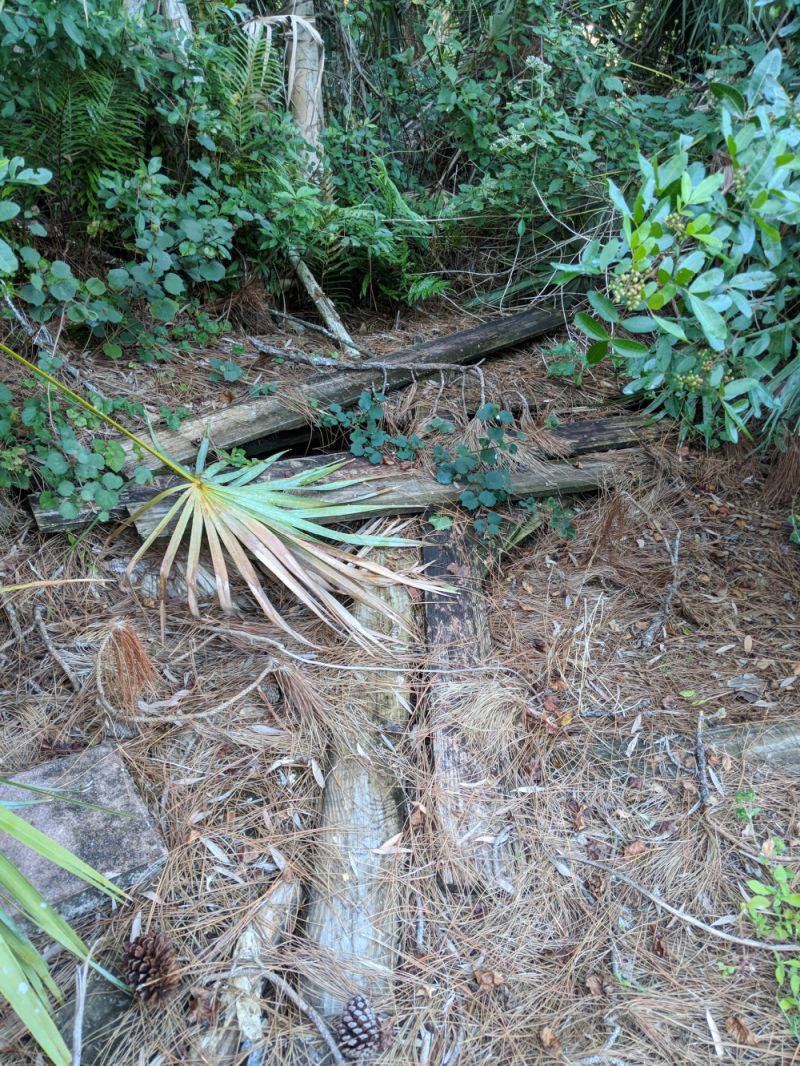
Discarded planks sat among leaves and fallen timber, with vegetation growing around them. Their exposed surfaces showed the wear that would remain visible in the finished project.
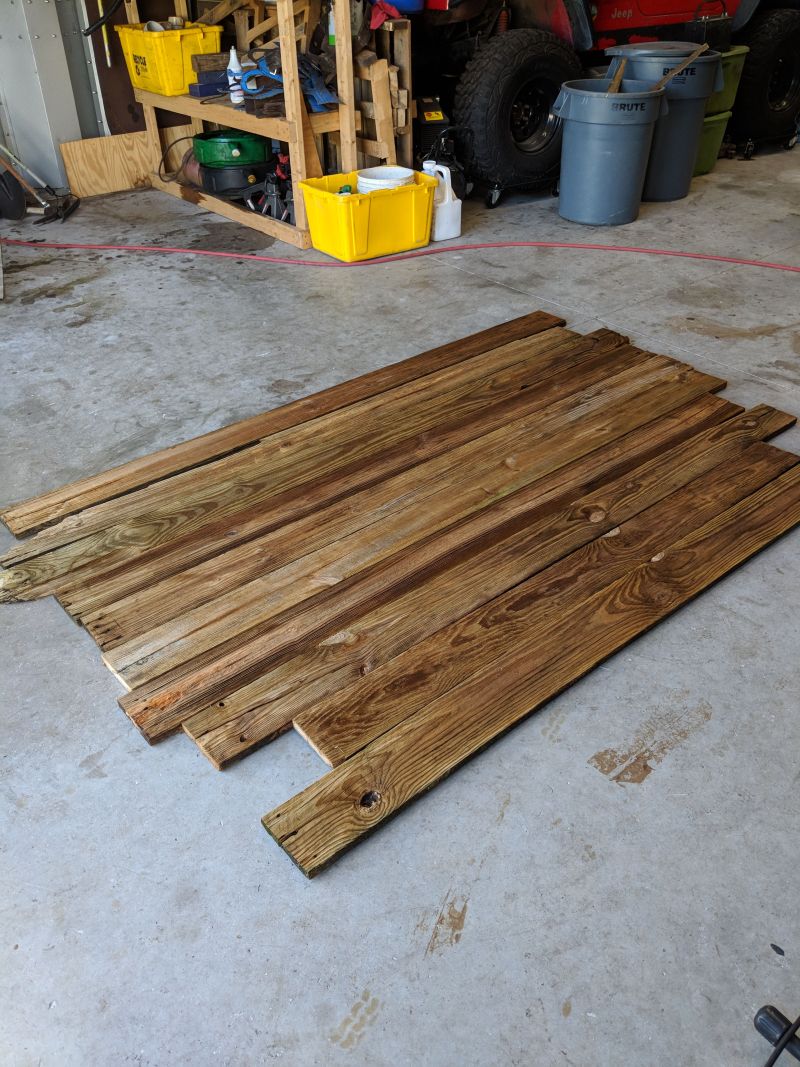
After collection, the boards were laid across the garage floor. Differences in width, grain, and color gave the material a mixed appearance, with some planks showing dark streaks and others retaining warmer brown tones.
The tabletop took shape around an opening
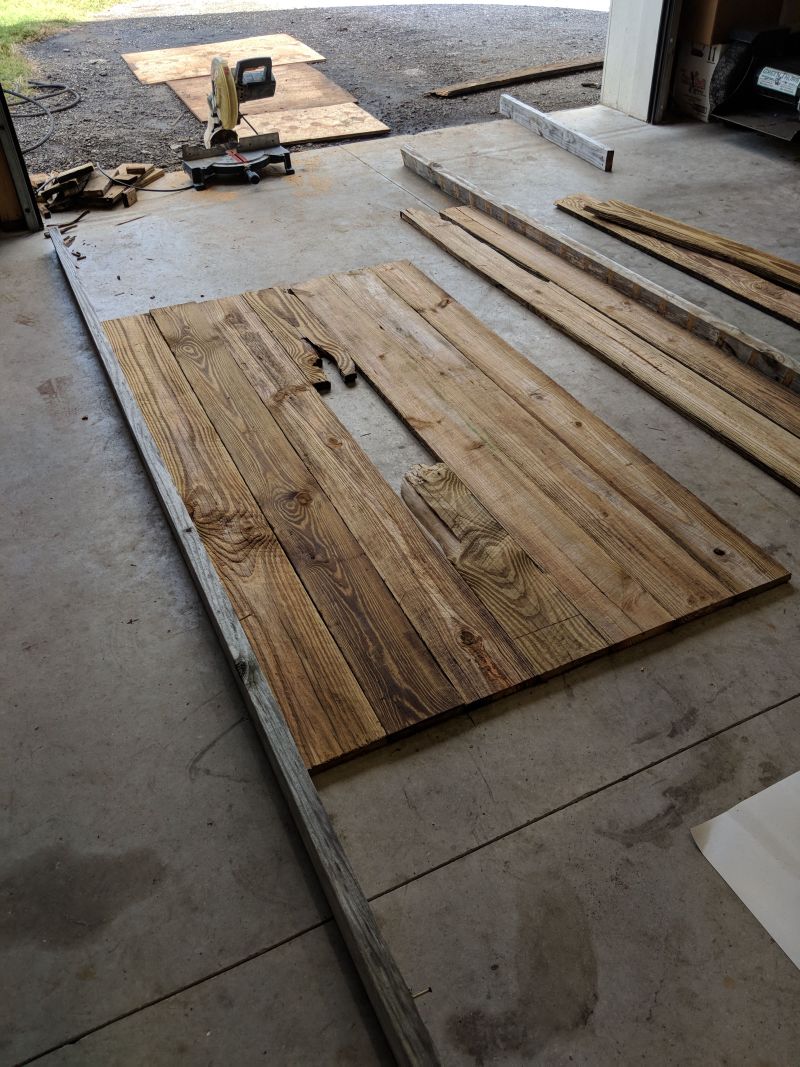
The builder arranged the boards into a broad rectangular surface, leaving irregular gaps where damaged edges and missing sections interrupted the wood. One opening ran through the central area rather than along the outside edge.
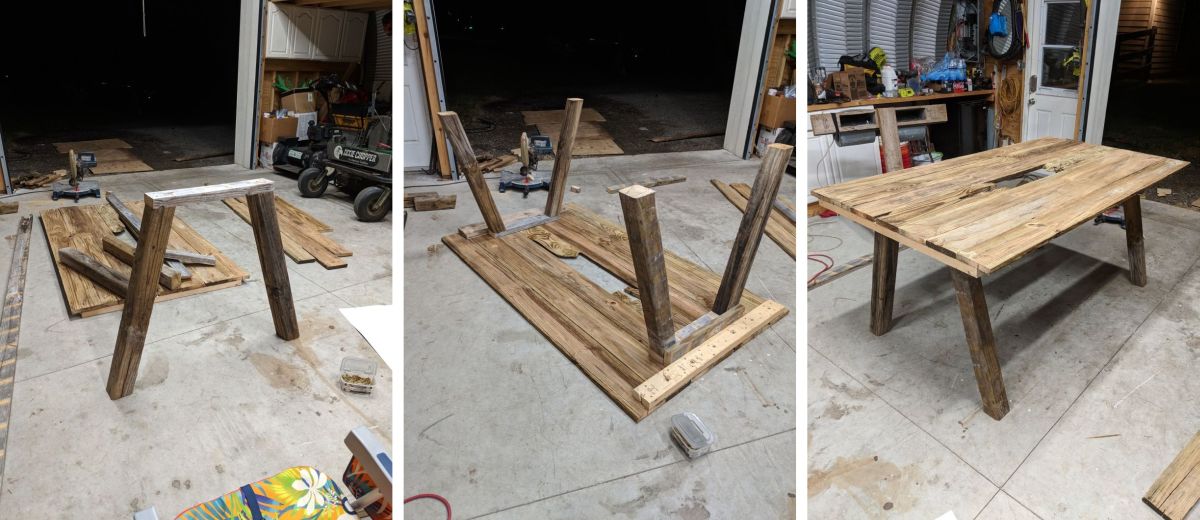
Angled timber legs were assembled beneath the tabletop. The construction photographs show the supports before attachment, the table turned upside down, and the structure standing on its legs.
The legs use thick rectangular timber, giving the broad top support without adding a solid base beneath the seating area.
Sanding exposed the grain without removing every mark
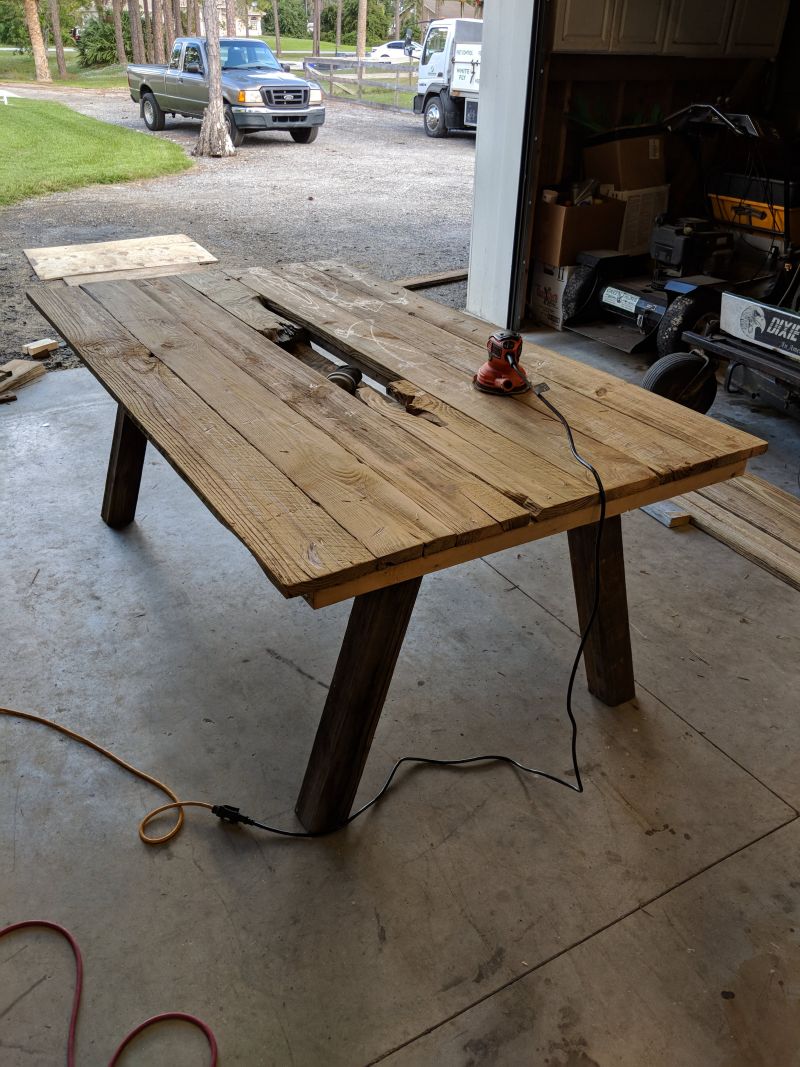
An orbital sander passed across the assembled surface, removing rough material from the top while leaving the deeper cracks, knots, and gaps visible.
The uneven boards created changes in texture across the tabletop. Some sections showed tight grain patterns, while others contained splits that had formed before the wood was recovered.
Dark stain changed the appearance of the reclaimed wood
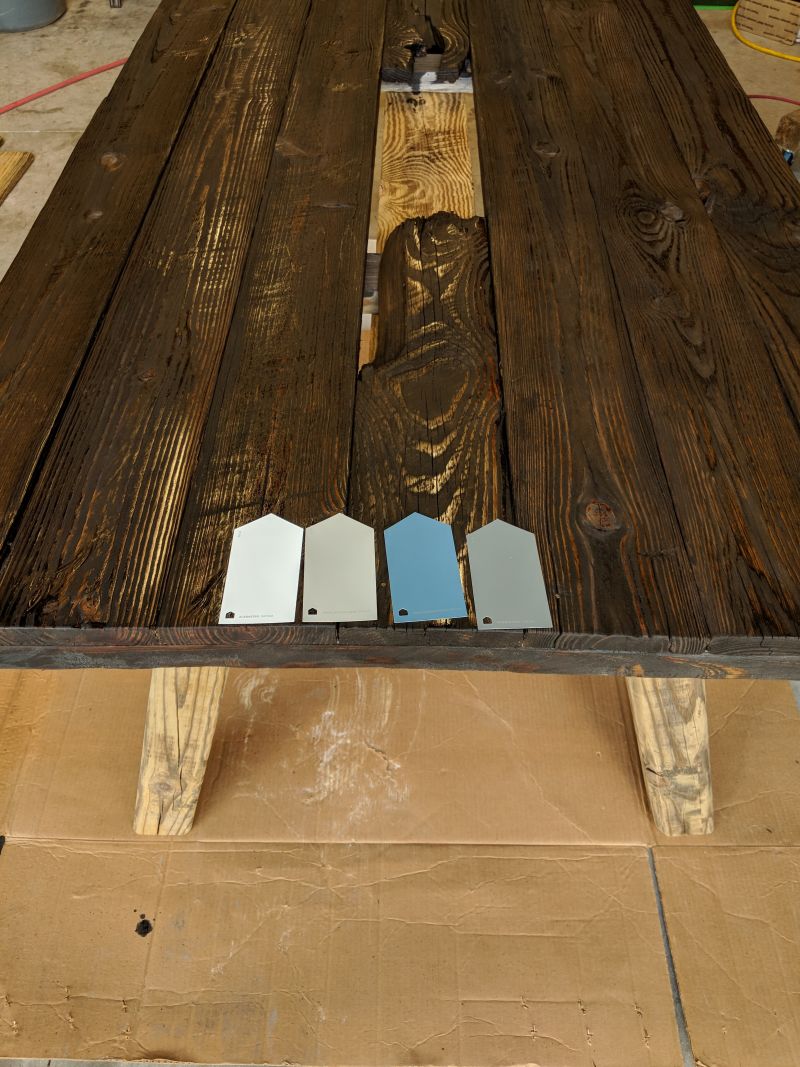
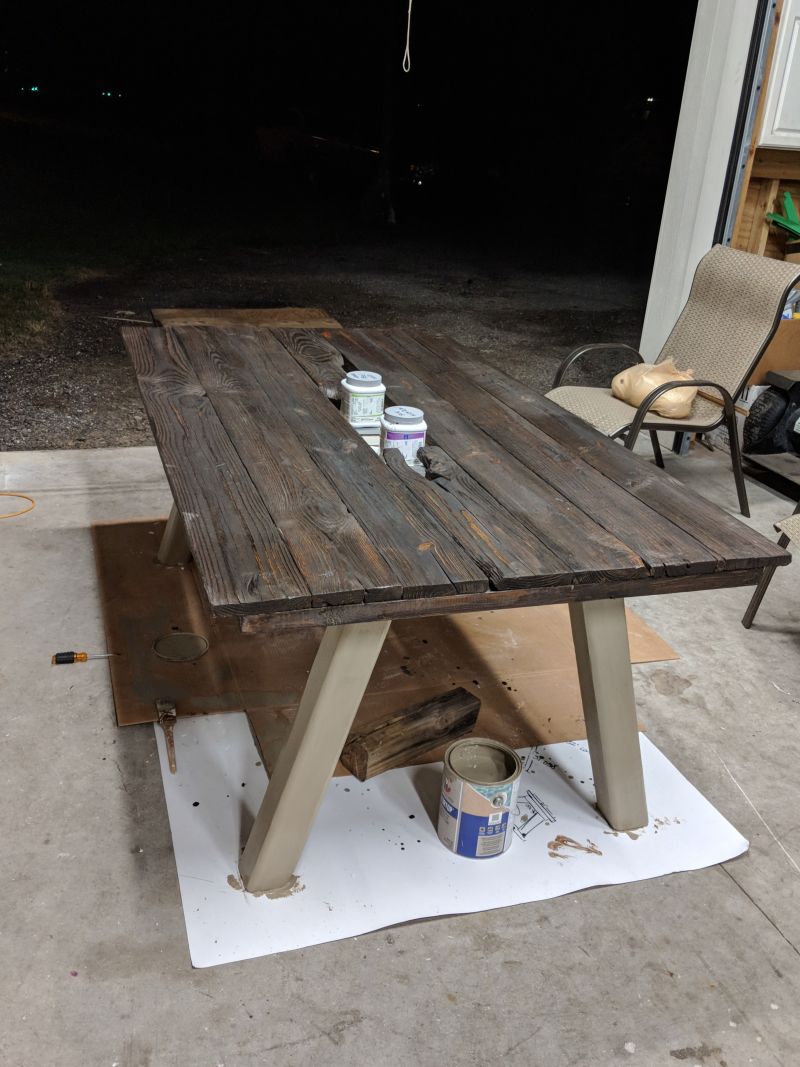
A dark finish covered the tabletop, turning the brown planks into a near-black surface while emphasizing their raised grain and worn edges. Four color samples rested near the opening during the finishing process.
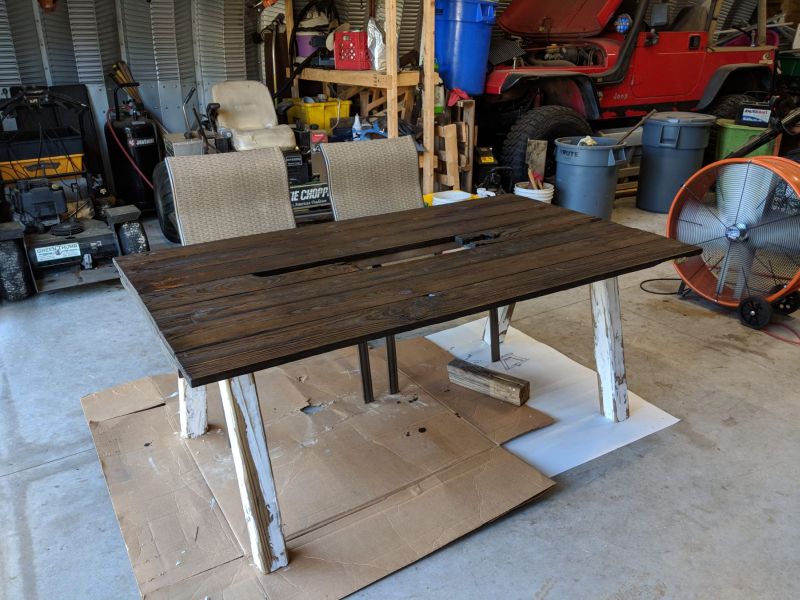
The legs received a contrasting light finish. Against the dark tabletop, their angled shape became more prominent, separating the support structure from the reclaimed surface above.
The unfinished opening became a planted centerpiece
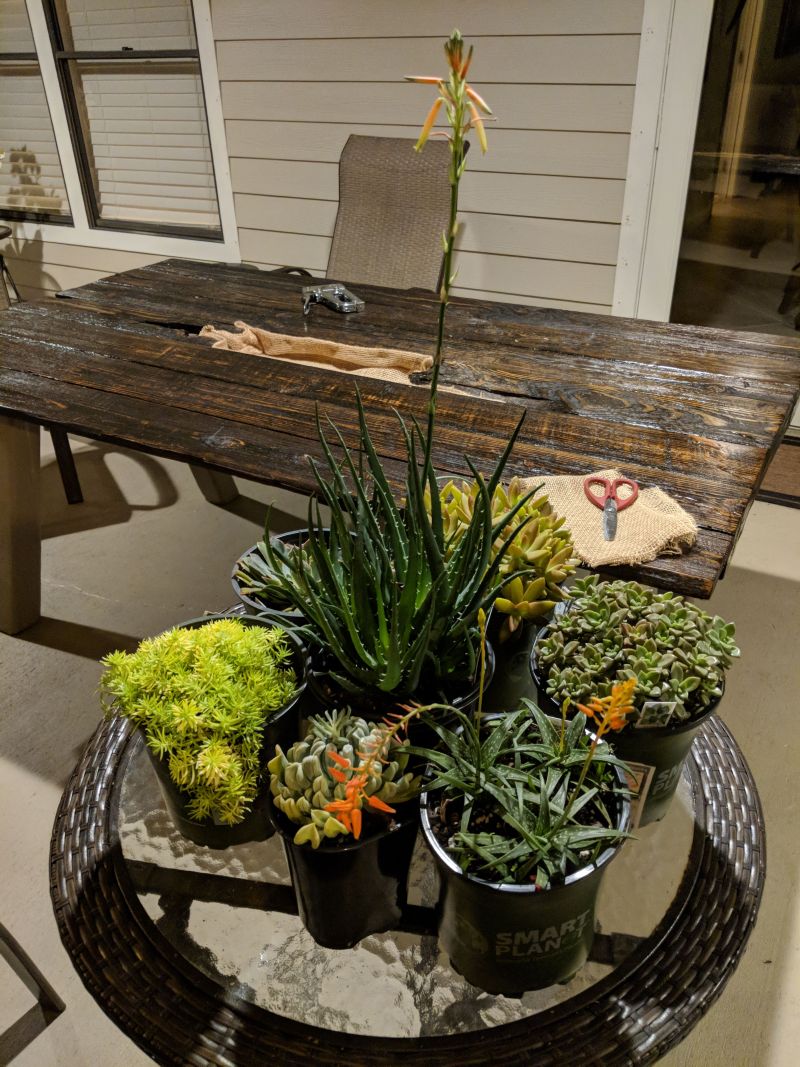
Potted succulents were arranged beside the table before being transferred into the opening. Their different heights, leaf shapes, and shades of green created a planting arrangement that followed the gap rather than covering the tabletop.
The first arrangement placed a tall aloe-like succulent near the center, surrounded by smaller rosettes and trailing plants. The narrow opening allowed the foliage to spread across the wood without occupying the main dining surface.
Succulents filled the space between the boards
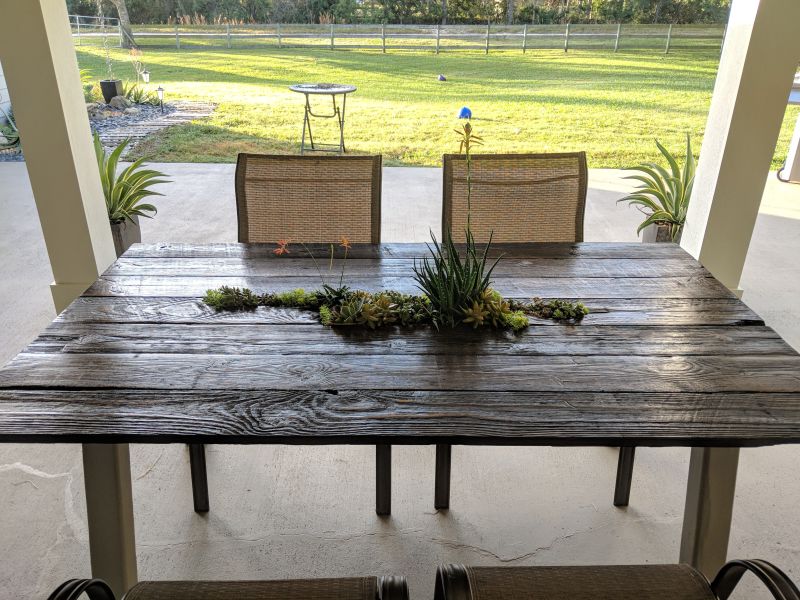
The completed planting runs through the center of the tabletop, with clusters of succulents emerging between the weathered planks. Small plants fill the narrow sections, while taller leaves rise above the surface near the middle.
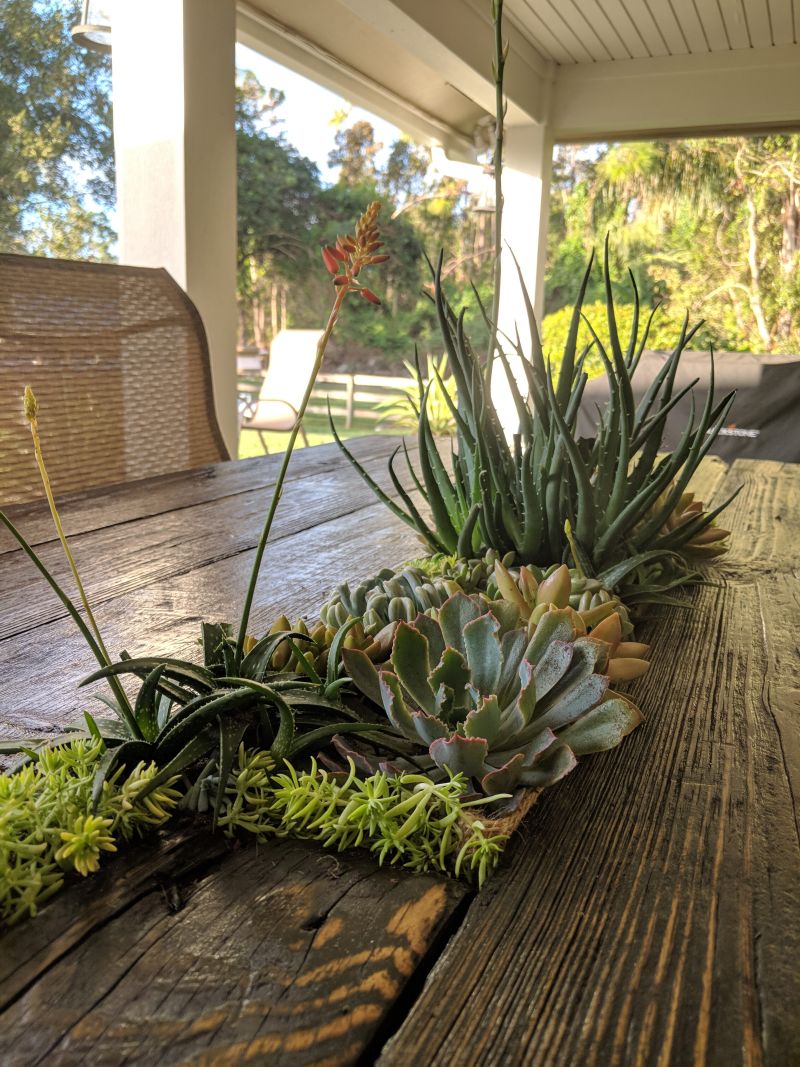
From above, the arrangement follows the irregular shape of the opening. The dark wood frames the plants, and the green foliage contrasts with the deep brown finish without hiding the cracks and grain around it.
The finished table became part of the covered patio
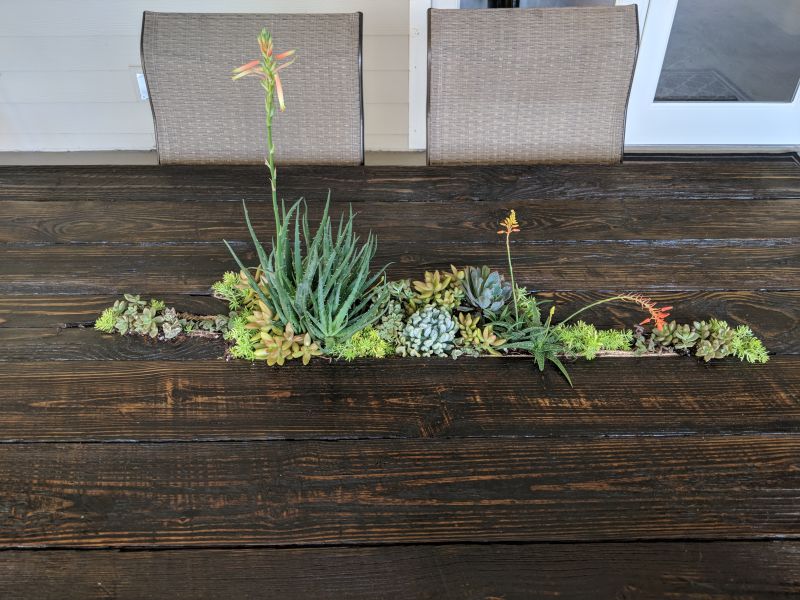
The outdoor dining table sits beneath a covered patio, surrounded by metal-framed chairs. Its light-colored angled legs contrast with the dark tabletop, while the succulent arrangement occupies the center.
The open section leaves space for plants between the diners instead of requiring pots or a large centerpiece on the surface.
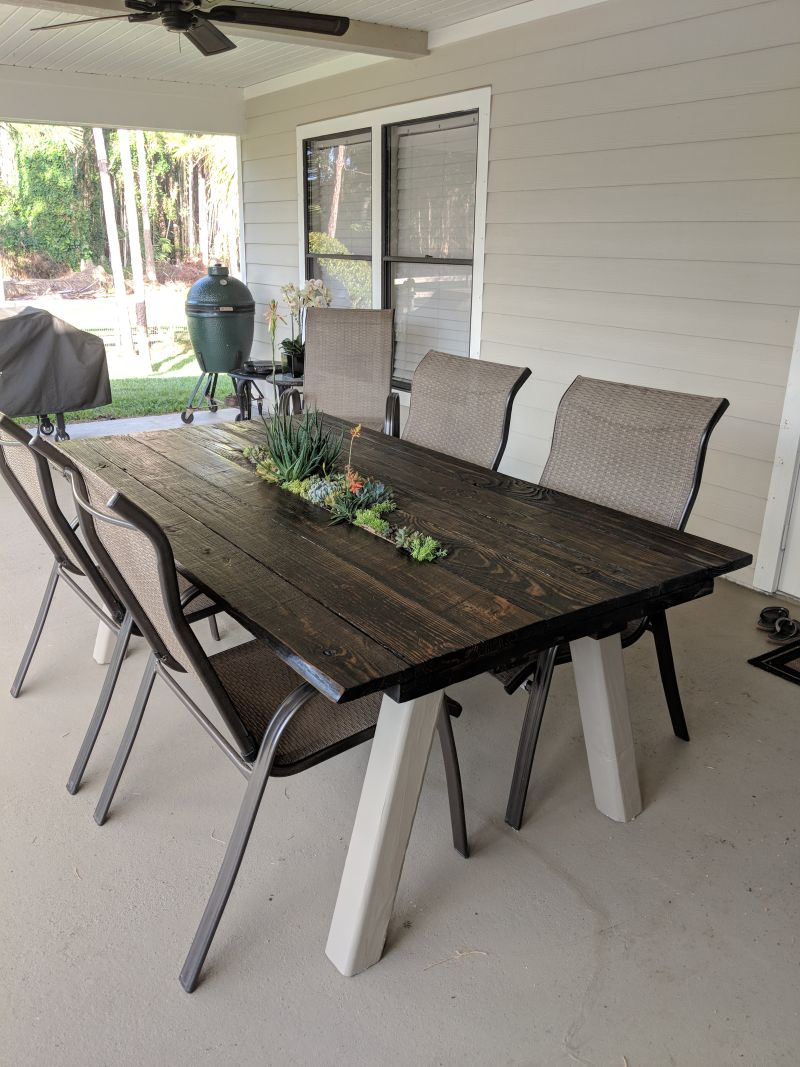
The final view shows the full table beneath the porch roof, with seating arranged along both sides. The weathered boards retain their uneven grain and worn edges, but the dark finish connects them into one surface.
The central planter changes how the reclaimed wood is used. A gap that could have been filled with another plank now holds a living arrangement, giving the table a feature that wouldn’t exist in a conventional solid-wood top.
Would you keep the opening for succulents or use the reclaimed boards to build a solid tabletop?
Image credits go to Imgur user GrantGrillo