Before painting this old secretary desk Slate Green, she found money in a secret compartment


The secretary desk had clearly lived a full life. It was a stout, Chippendale-style piece, and Larissa didn’t sugarcoat its condition: “It has a few issues: missing veneer, gouges, and wear here and there.” Scuffed and patchy, it was the kind of desk that ends up pushed into a corner and ignored.
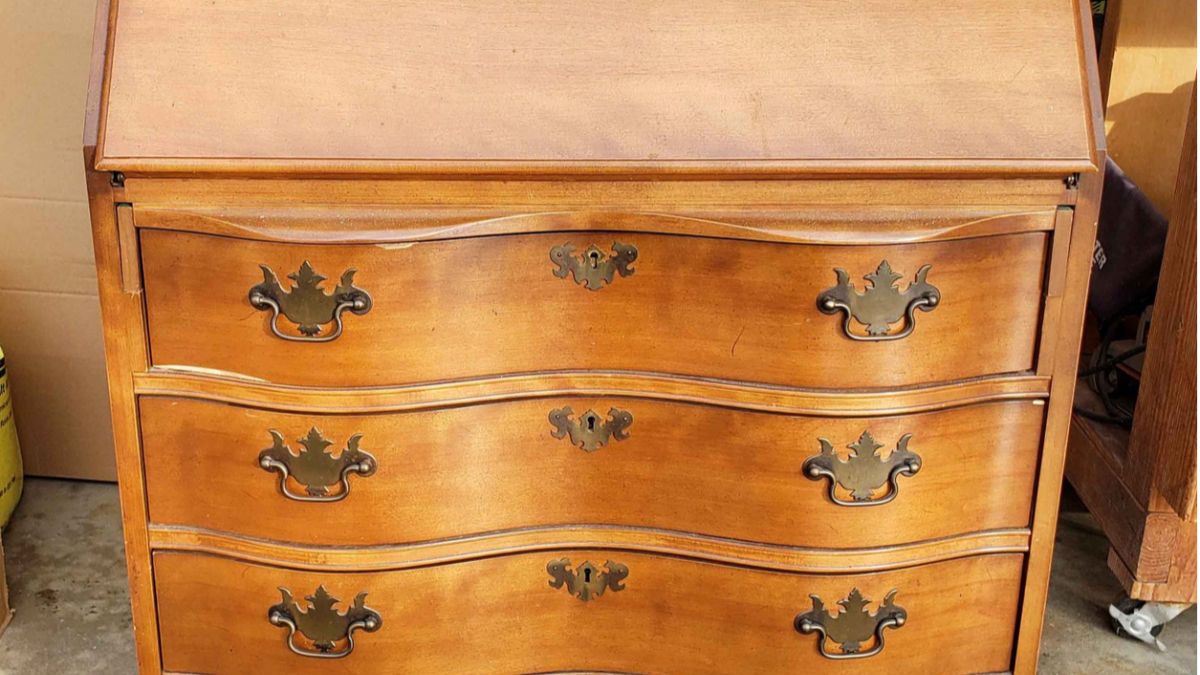
But the bones were good. “Overall, it’s stout and well-built to last the test of time,” she writes. It still carried its original manufacturer stamp from Jasper Cabinet Co. The desk wasn’t the problem. The tired finish was. And before any paint went on, the desk had one more surprise.
The money went back to its owner first
“While cleaning it up, I found a bit of dough in a secret compartment,” Larissa writes. She doesn’t say how much.
Her first move was to return it. She reached out to the desk’s original owner and offered to send the money back. The answer came with a holiday greeting, “Oh my word. Merry Christmas!”, and the owner insisted that Larissa keep it.
So she put it back where she found it, this time as a game. “I had fun tucking the money back in and letting each of my children see if they could find it,” she writes. Old desks with drop fronts, cubbies and small drawers often have spaces that are easy to miss, so it is worth checking every one before you start sanding.
How she painted it two colors without the old ink showing through
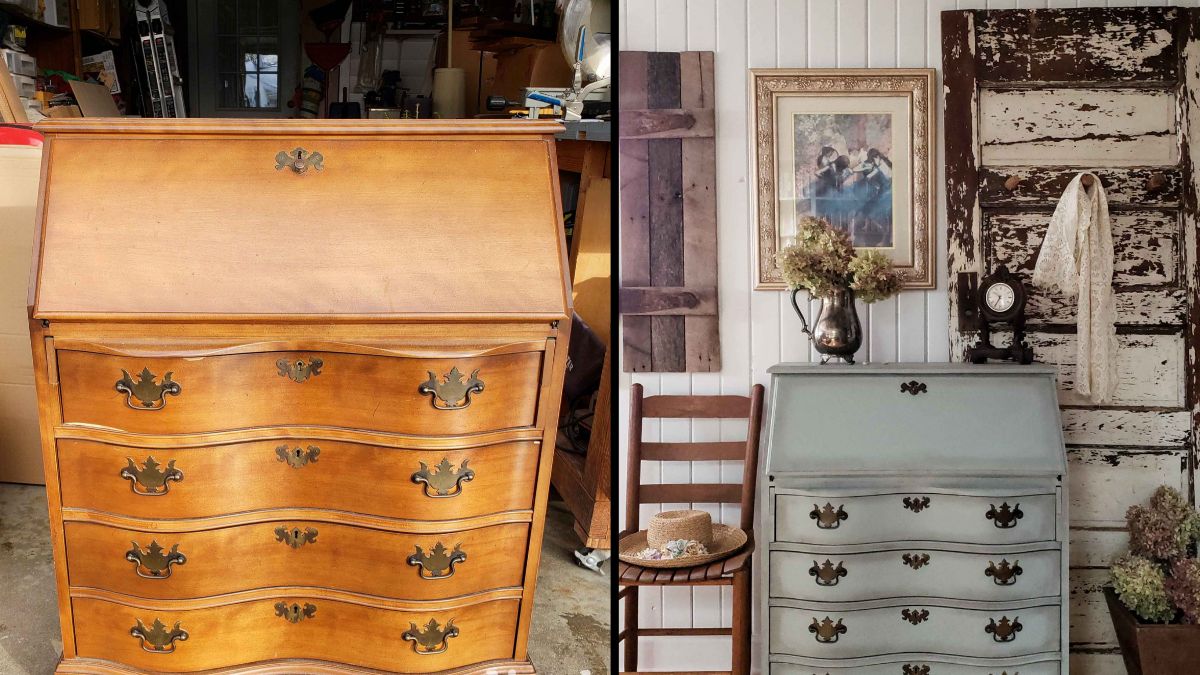
Larissa kept the job simple and saved the original brass hardware. Here is how she did it:
- Fill the holes and gouges with wood filler, then sand lightly.
- Wipe the whole desk down with a mix of vinegar and water.
- Paint the outside Glidden Slate Green, the same color she uses in her own home, using an angled brush.
- Let the outside cure before you start on the inside.
- Paint the inside a soft antique white. On her desk, old ink in the wood bled through the first coat, so she used a stain blocker as the second coat and finished with a third coat of paint.
- Rub brown wax onto edges and details for shading and depth.
- Clean the original brass hardware and put it back on.
The stain blocker is the plan B worth keeping on hand. Old desks can hold ink and other stains in the wood, and those marks can keep bleeding through light paint coat after coat. A stain-blocking coat seals them in first.
A drop-front desk is the one piece of furniture where the inside can be a whole different color. On one mottled brown writing desk, the outside went dark blue and the cubbies and writing surface went pink, so the second color only shows when the front comes down.
Before you sand a desk of unknown age
Larissa doesn’t say how old her desk is, and that matters. Lead was used in house paint until 1978, and older furniture can carry it too. The Vermont Department of Health’s guide to lead in vintage items advises treating uncertain pieces as if they contain lead until tested, working wet by spraying water on surfaces you sand or scrape, and not using a power sander. A lead test kit or a certified lab can settle the question before you start.
Paint also has limits on a damaged piece. It will hide color, but not missing veneer or deep gouges. Those need to be filled level first, or they will show right through the new finish. If veneer is lifting or the structure is loose, fix that before you paint. That’s the trick.