She Started With a Piece of Linen and Used a Foam Stamp With Gold Paint, but the Thanksgiving Tablecloth Looks Store-Bought


A piece of cream linen lay across a dining table, with no pattern, finished edges, or decorations. Rather than buying printed fabric for Thanksgiving, the project began with gold acrylic paint and a small round foam stamp, materials that could turn the fabric into a tablecloth with a polka-dot design.
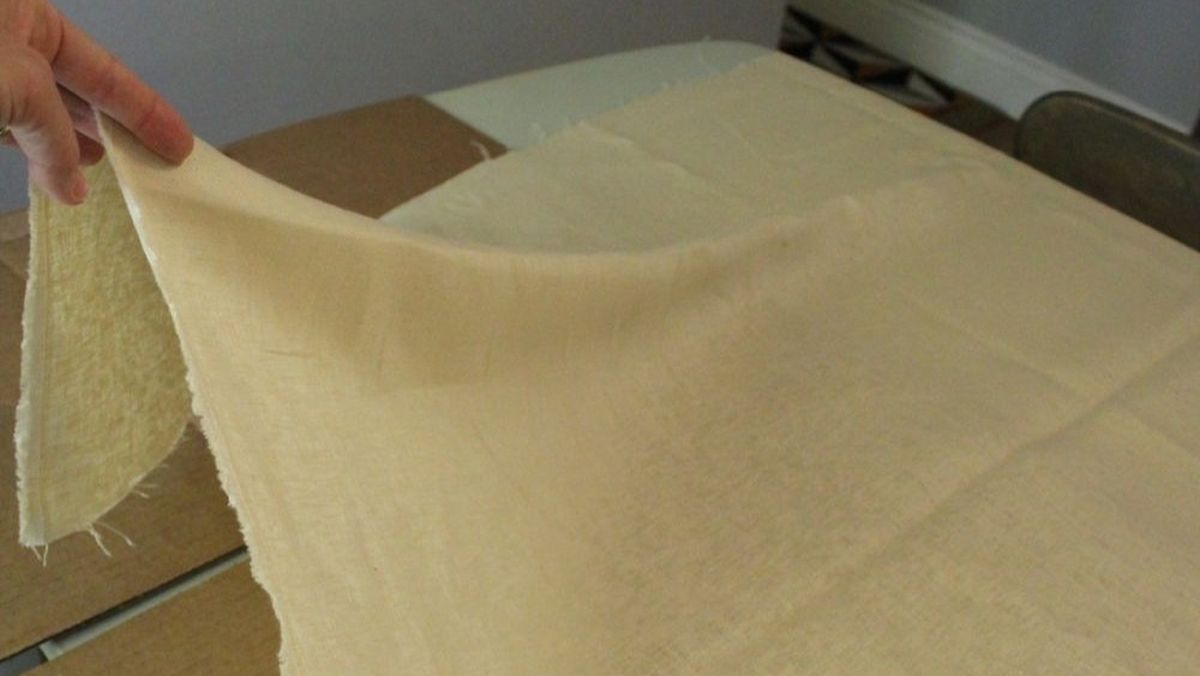
The technique uses individual paint impressions instead of a printed pattern, with gold circles spaced across the linen. Cardboard protects the table beneath the fabric, while the foam stamp gives each dot a round shape without cutting a stencil or drawing circles by hand.
Homedit contributor Brittney Smart created the Thanksgiving tablecloth using a one-inch foam pouncer, gold acrylic paint, and cream linen. After stamping the fabric, she sewed the unfinished edges and set the table with white dishes, glassware, and a centerpiece.
A Piece of Cream Linen Became the Starting Point
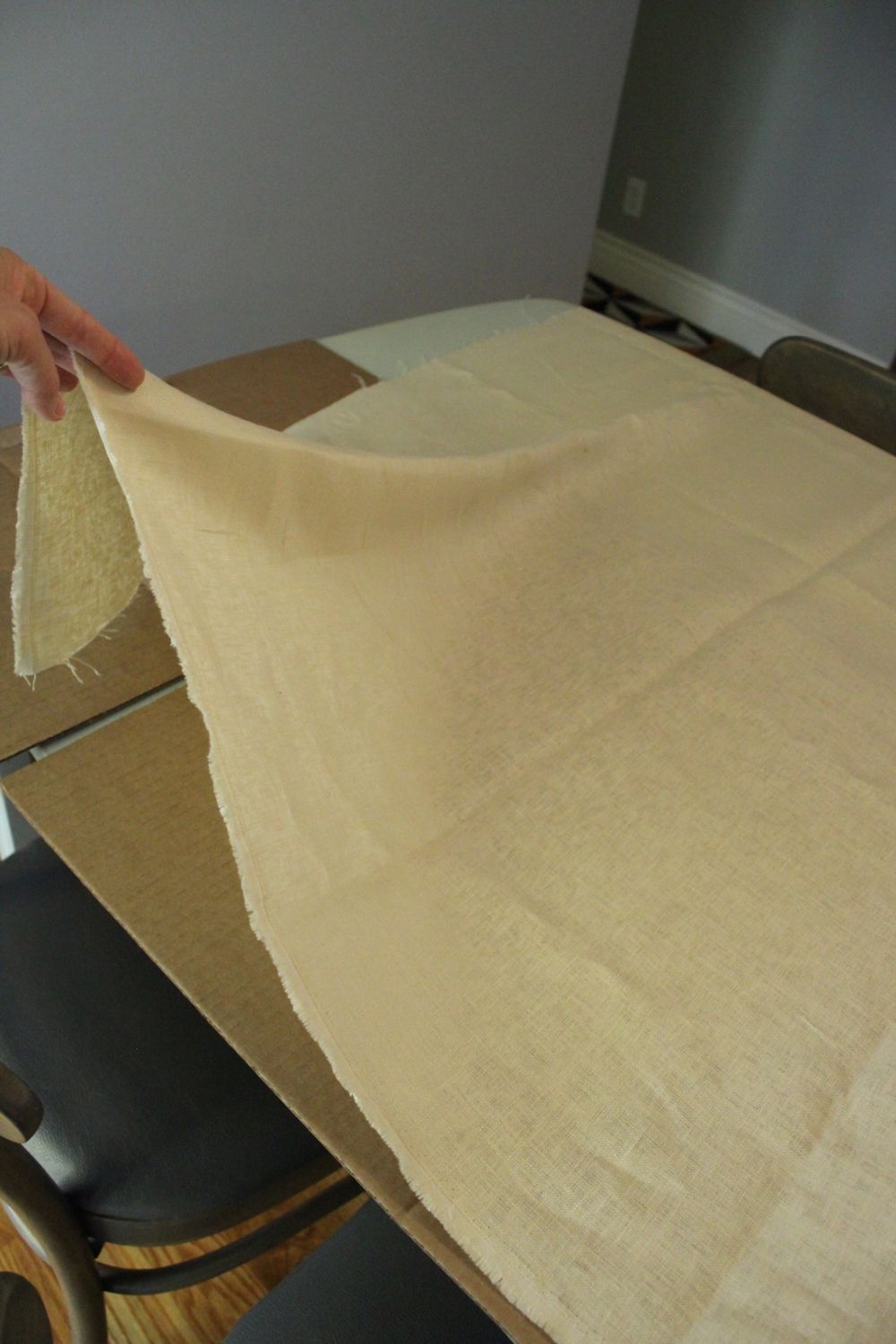
The project began with linen cut to fit the dining table, leaving enough fabric to hang over the sides. Brittney’s original instructions recommend adding two feet to both tabletop measurements to allow approximately one foot of overhang on each side.
She spread the linen across cardboard before applying paint, protecting the surface beneath it from pigment passing through the fabric’s open weave.
Gold Acrylic Paint and a Foam Stamp Created the Pattern
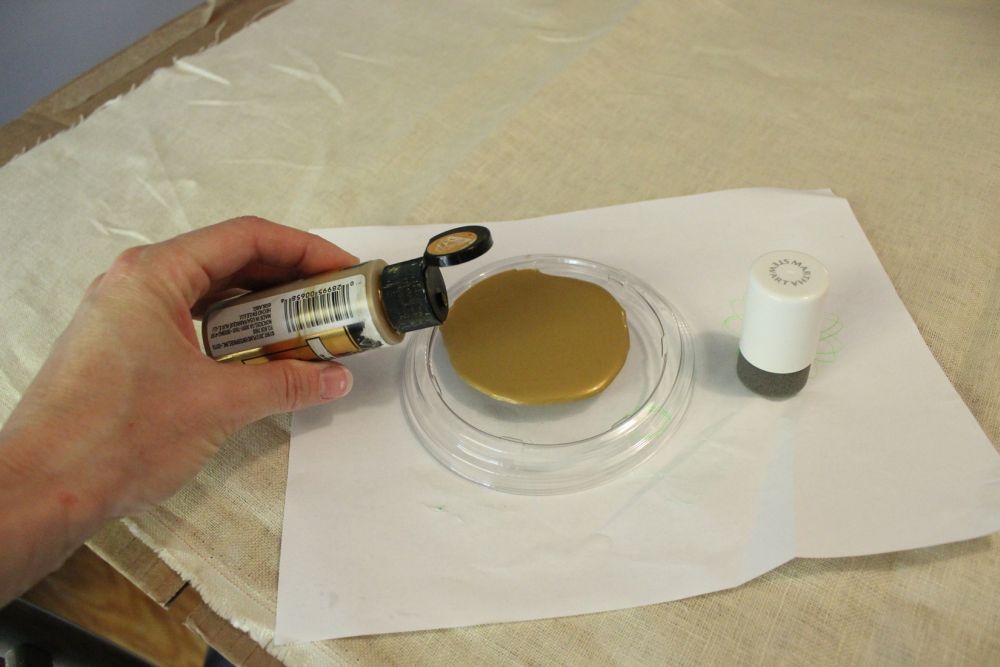
Gold acrylic paint was poured into a plastic lid to create a shallow container for dipping the stamp. The project used a round foam pouncer measuring one inch across, producing circles of the same size without a separate template.
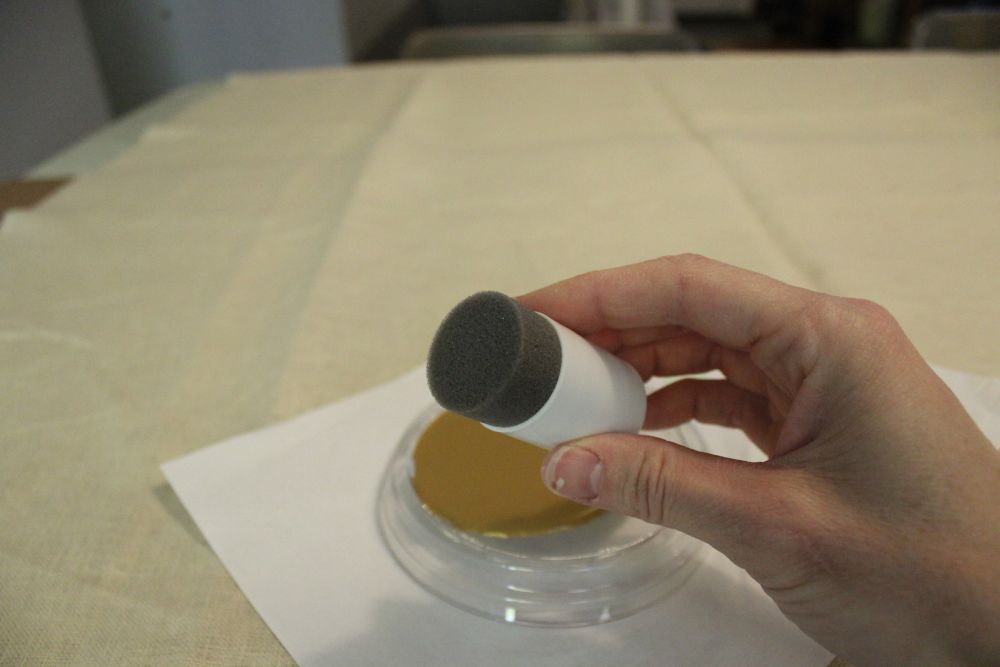
The foam surface was dipped into the paint until the round end was coated, then pressed against the linen. The amount of paint mattered because an overloaded stamp could leave thick marks or allow excess pigment to spread through the fibers.
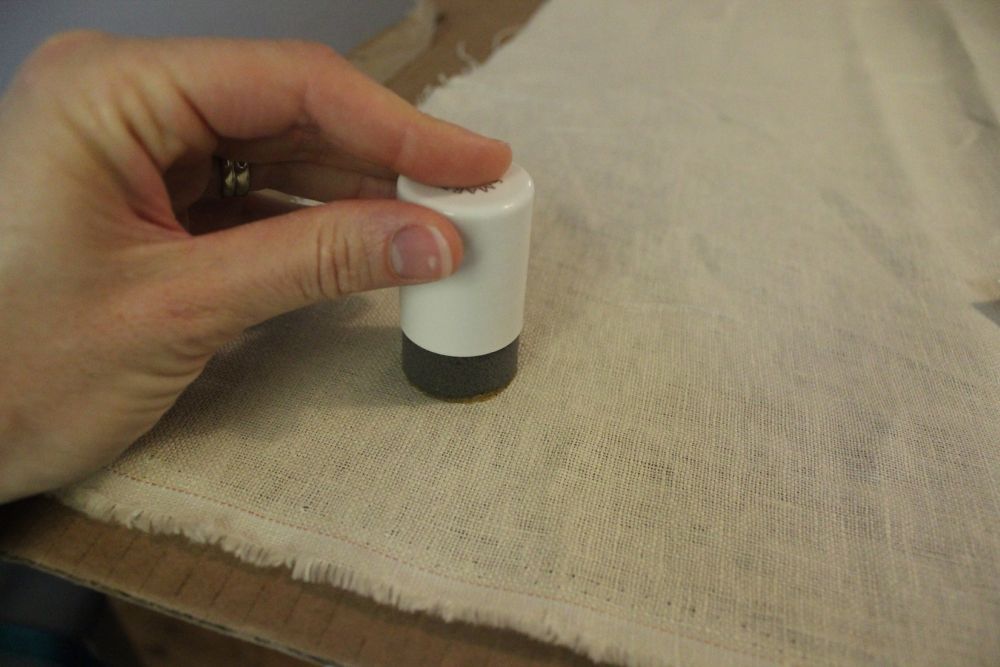
Brittney began near one corner of the cloth and worked outward, pressing the stamp against the fabric before lifting it to leave a circular impression.
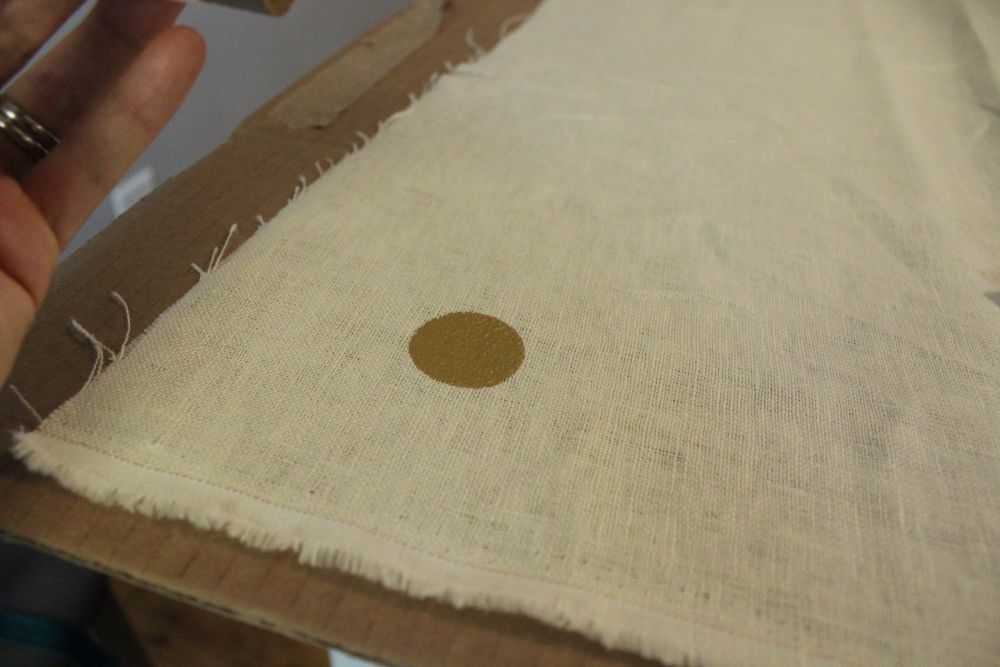
The first impression formed a gold circle against the cream fabric. If a dot had gaps, the stamp could be pressed against the same area again, although adding too much paint risked making the circle uneven.
The Gold Dots Spread Across the Tablecloth
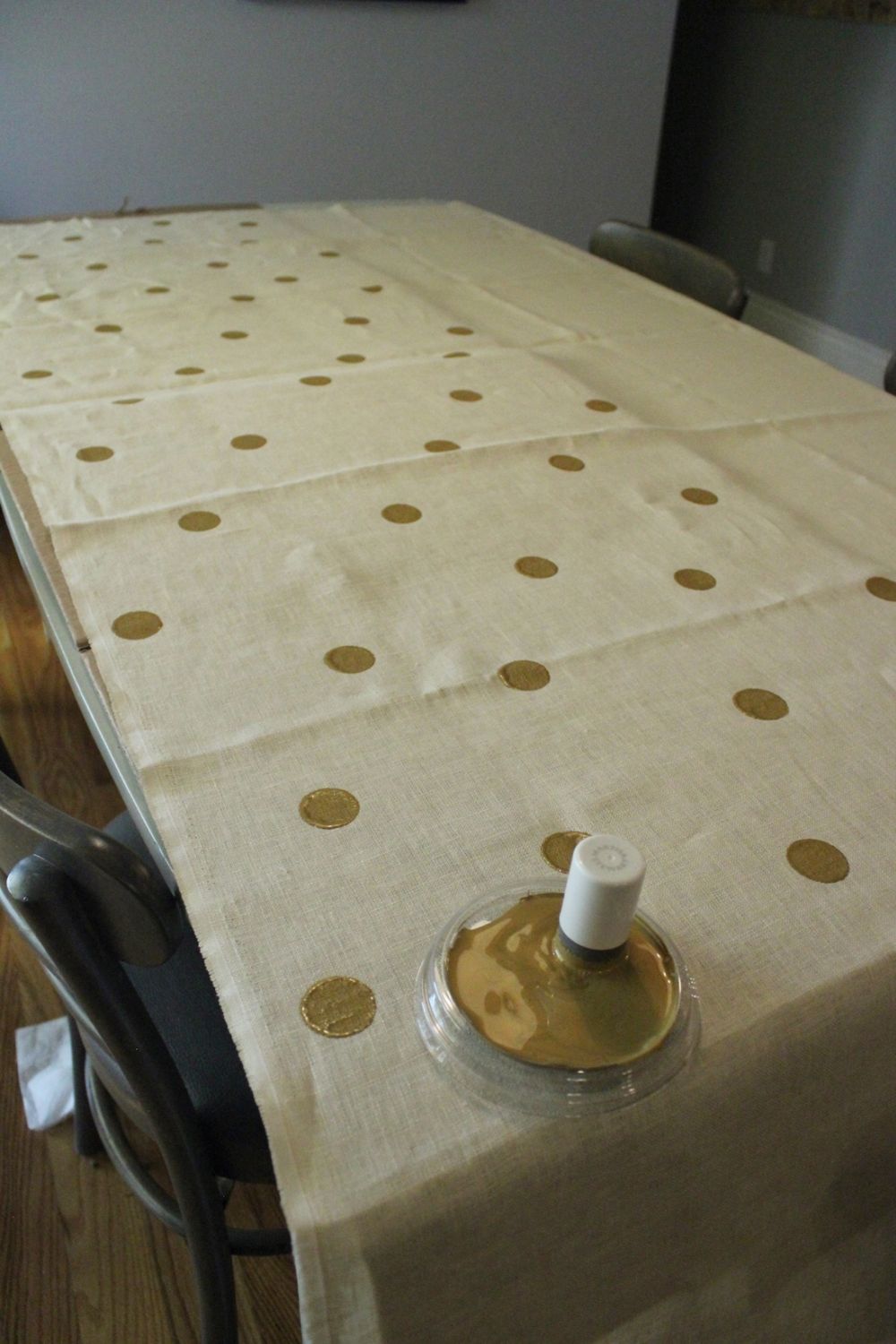
The stamping continued across the fabric, with space left between the circles instead of covering the linen with a dense pattern. Depending on how much paint remained on the foam, each dip produced between two and five impressions.
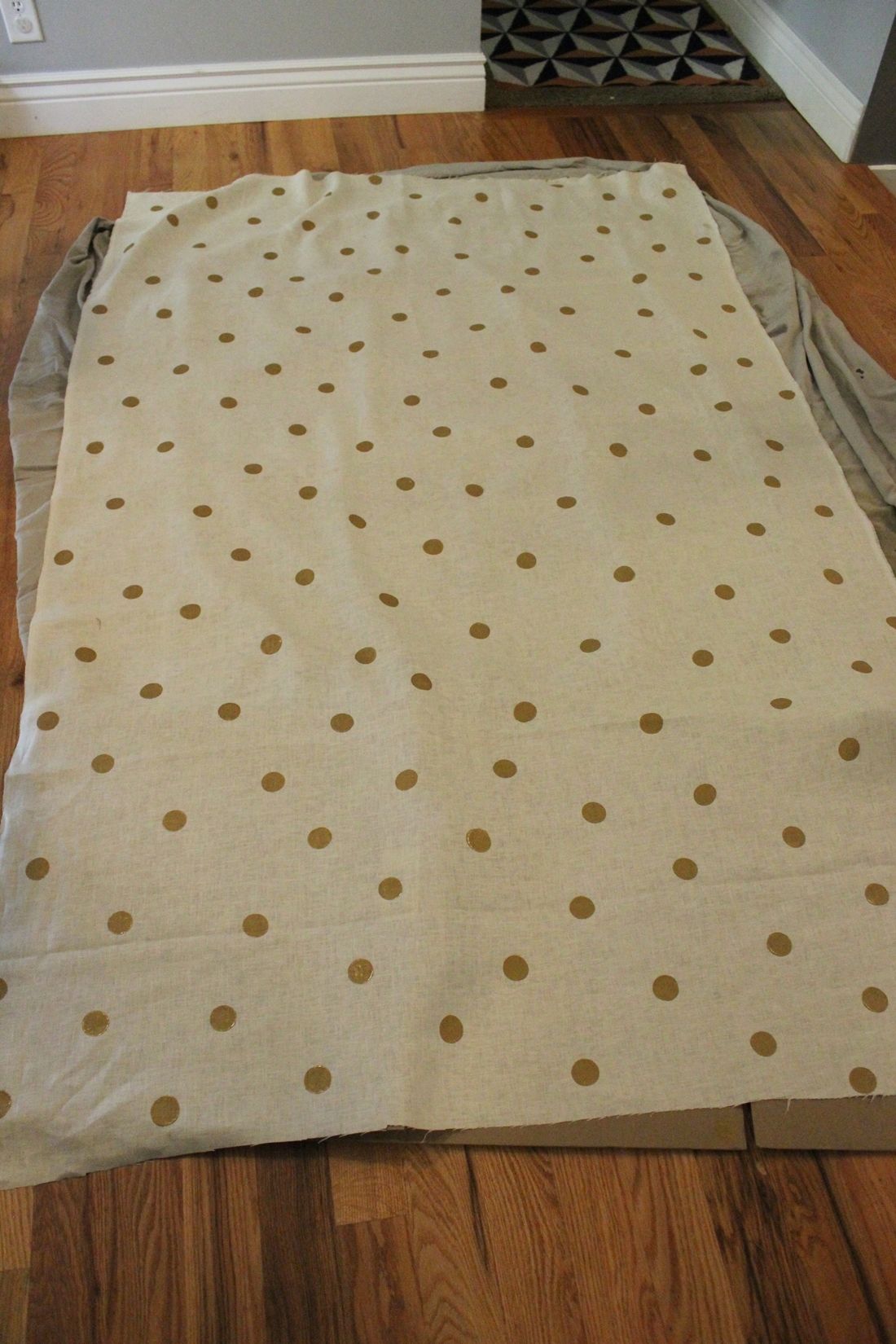
Once the first section was covered, Brittney moved the fabric onto a drop cloth on the floor to finish the remaining area. She also advised leaving small accidental paint drips alone rather than wiping them, which could spread the stain across the linen.
The gold paint was left to dry before the cloth was moved to the sewing stage.
The Raw Edges Were Folded and Sewn
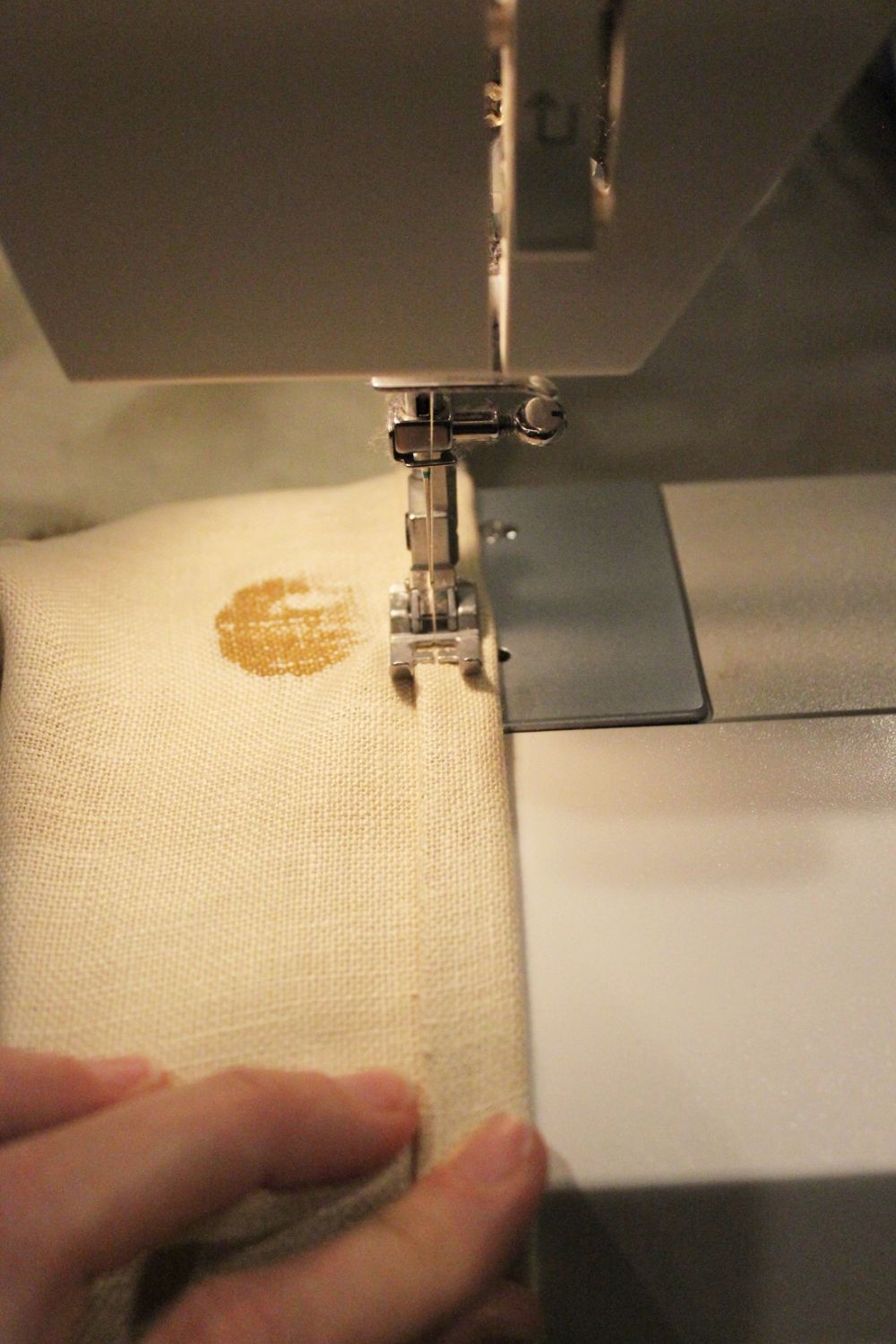
After the paint dried, the fabric edges were folded inward twice to conceal the raw linen, then sewn around the perimeter. This created a finished border without leaving loose threads along the sides of the dining table.
The sewing completed the tablecloth, with the stamped pattern extending across the center and over the hanging edges.
The Finished Tablecloth Has Gold Dots Across Cream Linen
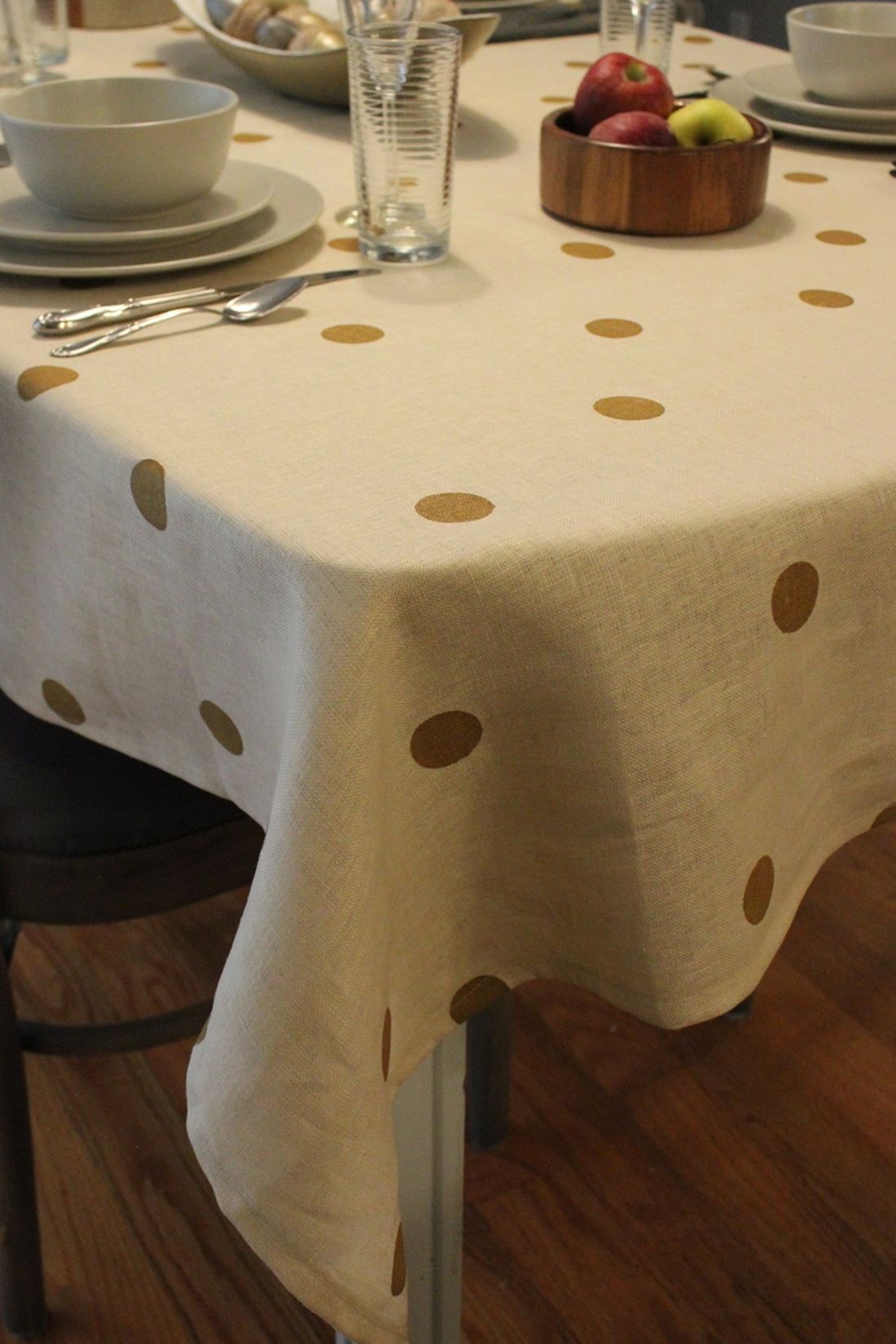
The finished cloth has gold circles spread across the cream background, with the pattern continuing down the sides. The linen hangs over the table corners, while the metallic dots stand out against the fabric without covering its woven surface.
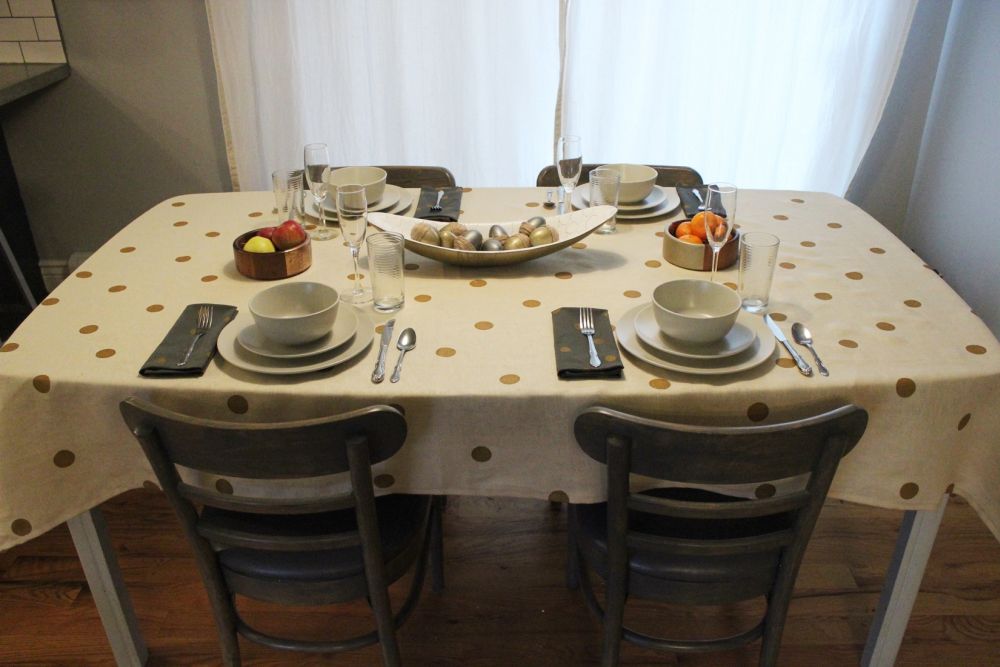
White plates, bowls, drinking glasses, and serving dishes sit over the painted pattern. A wooden fruit bowl and a long centerpiece occupy the middle, leaving portions of the gold dots visible between the place settings.
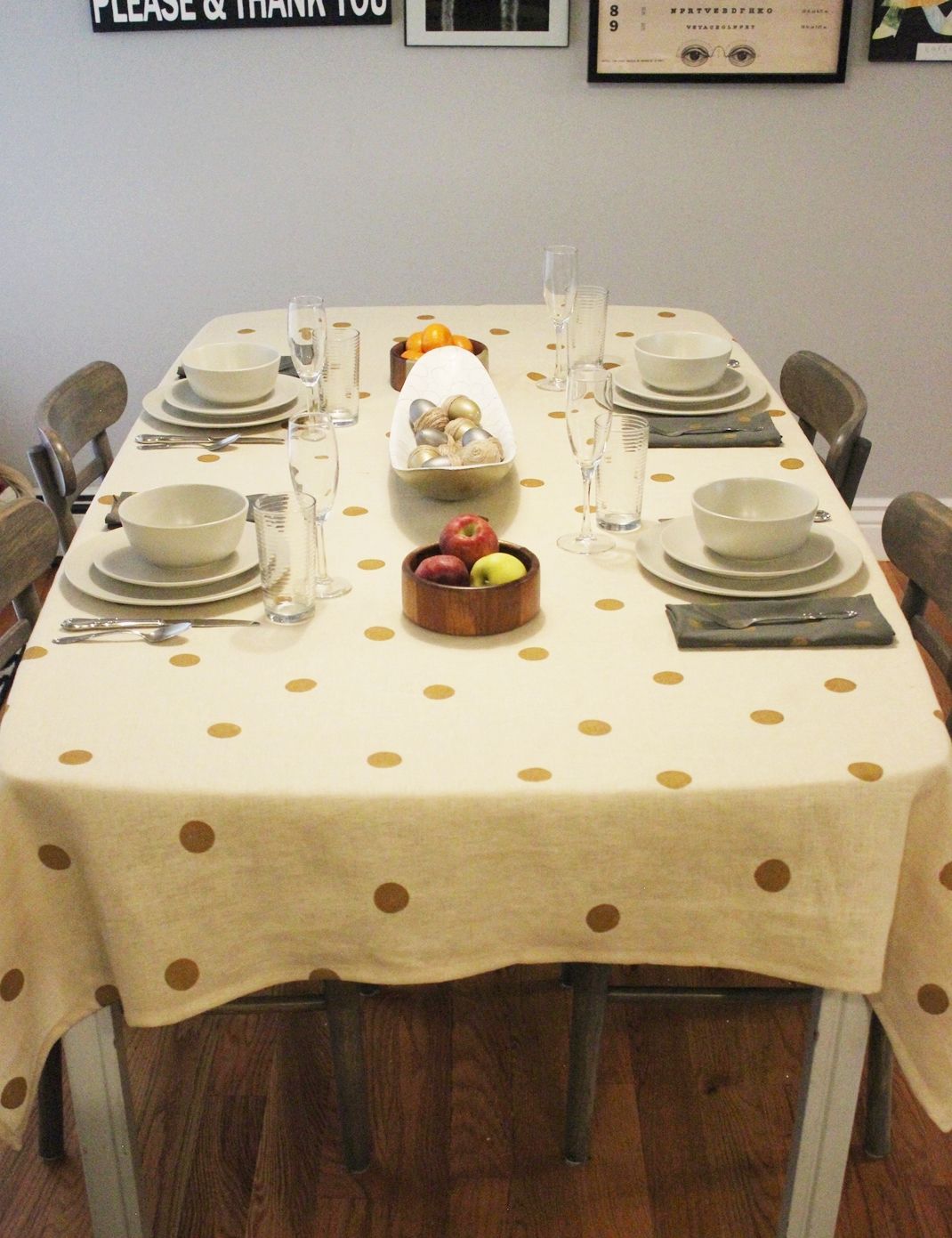
The full table shows how the spaced circles remain visible after the dishes, napkins, and glasses are arranged. The design works with white dinnerware and neutral accessories, while the gold paint gives the linen a printed appearance without using patterned fabric.
The project required no screen printing or fabric stencil, although the edges were sewn after painting. The original tutorial does not establish whether the acrylic paint withstands machine washing, so testing the paint and fabric before laundering would be important.
Would you stamp gold polka dots onto linen for Thanksgiving, or choose a printed tablecloth?
Image credits belongs to Homedit.com