Neither vinegar nor a degreaser: the pantry staple that lifts sticky grease off kitchen cabinets


You wipe the cabinet doors by the stove, and an hour later your fingers still catch on them. The edges around the handles feel tacky, the tops of the upper cabinets are coated in a gray, gummy film, and every new spray seems to smear the mess around instead of removing it.
Your cabinets aren’t dirty because you don’t clean them. Cooking sends a fine mist of grease into the air, it settles on every surface near the stove, and dust sticks to it. What’s left isn’t loose dirt you can wipe away. It’s a film that needs a little time and a little grit to let go, and the answer is already in your pantry: baking soda.
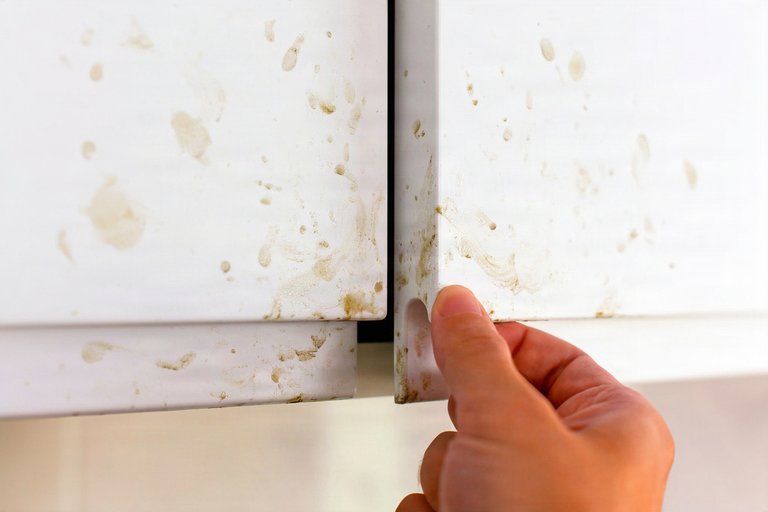
Why a spray alone keeps leaving the cabinets tacky
It’s tempting to reach for vinegar or a spray degreaser, and either can handle a light film. The thicker, sticky layer around handles, edges and cabinet tops is different. A spray hits it and runs off before it has time to work.
A paste stays put. New Mexico State University Extension lists baking soda as a mild abrasive in its homemade cleaner alternatives. Mixed with water, it clings to the sticky spots long enough to soften them, then gives you just enough scrubbing power to lift the film without a harsh scouring pad.
How to clean sticky cabinets with baking soda
Start with the gentlest step and move up only if you need to:
- Do a soap pass first. Add a few drops of dish soap to a bowl of warm water, dampen a soft cloth, wring it until it’s barely wet and wipe. On light grease, that may be all you need.
- Mix the paste. Stir baking soda with just enough water to make a spreadable paste.
- Target the sticky spots. Spread it on the areas around handles, the edges of the doors and the tops of the upper cabinets.
- Wait 5 to 10 minutes. Then rub gently in small circles with a soft cloth or sponge.
- Wipe and dry. Remove every trace of paste with a clean damp cloth, then dry the surface with a towel so no water sits on the wood.
The tops of the upper cabinets usually hold the thickest layer, since nobody sees them. Use a step stool and give them a second round if the first one leaves a dull film.
Residue is what makes a clean surface feel sticky again. The same thing happens underfoot: wood floors that feel sticky after mopping often have leftover cleaner or grease on the finish, so adding more product only makes it worse.
Before you scrub painted or glossy doors
Baking soda is gentle, but it is still an abrasive. High-gloss cabinet fronts can scratch, so skip the paste there and stick to the soap-and-water pass.
Painted cabinets deserve the same caution. Try the paste on a hidden spot first, such as the inside edge of a door, and use light pressure with a soft cloth only.
Keep water to a minimum on wood. Wring cloths well and dry each door as you go so moisture doesn’t soak into seams or edges.
If the finish is already worn through to bare wood, cleaning won’t bring it back. That calls for refinishing, not more scrubbing.
A spoonful of baking soda, ten patient minutes and a dry towel. That’s the trick.