7 Bunker-Style Home Designs for 2026 That Make Ordinary Houses Feel Fragile


“Apocalypse homes” may sound dramatic, but the principle behind them is practical: protection. In a world shaped by pandemics, political instability, and war, architecture is shifting toward privacy, structural strength, and controlled access without sacrificing design or comfort.
This is not about paranoia. It is about preparation. From reinforced concrete shells to remote cabins and repurposed military structures, these projects show how security can be embedded into modern residential design.
Below, we explore homes that treat safety as a core architectural strategy, not an afterthought.
Modern Fortresses: When Residential Design Meets Resilience

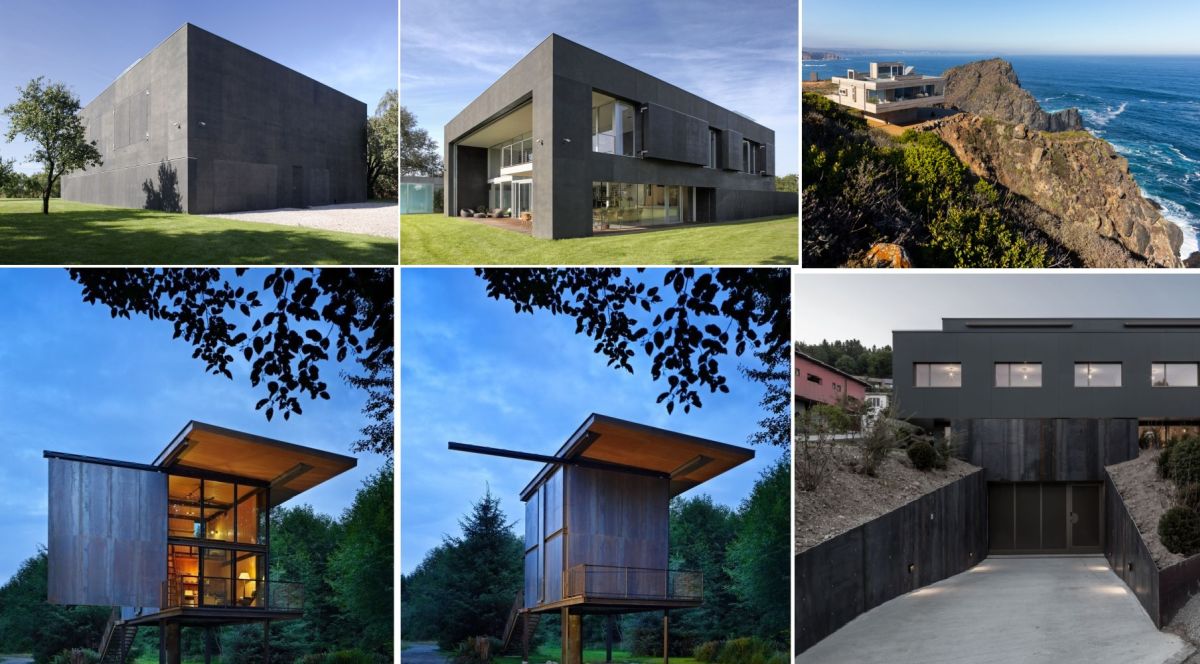
Designed by architecture studio Robert Konieczny – KWK Promes, the Safe House redefines residential security through transformation. From the outside, it reads as a monolithic concrete block, sealed and impenetrable, with concealed openings and sliding perimeter walls that erase any visual clues about the interior.
Massive panels shift, gates retract, and a drawbridge-style stair activates, gradually revealing a bright, glass-filled courtyard at its core. When fully closed, the house becomes a protective bunker. When opened, it transforms into a transparent, open-plan home connected to the garden. It is not just fortified architecture, but adaptable architecture—capable of shifting between defense and domestic comfort within minutes.
A Napoleonic Defense Tower Reborn as a Coastal Retreat

Originally built in the early 19th century as part of Britain’s coastal defense system, this Martello tower in Suffolk has been transformed into a refined contemporary home while preserving its formidable brick shell. The circular fortress, once designed to withstand invasion, now encloses a crisp, modern interior organized around a dramatic central column and vaulted brick ceilings.
Carefully restored and adapted by Duncan Jackson of Billings Jackson Design and Stuart Piercy of Piercy & Company, the conversion respects the historic masonry while inserting clean lines, warm wood floors, and panoramic glazing at the roof level.
What was once a military outpost overlooking the sea is now a private coastal sanctuary, where thick defensive walls frame open living spaces and uninterrupted views of the surrounding landscape.
Cold War Infrastructure Turned Private Underground Residence

Hidden within the Adirondack Mountains of New York, this property transforms a former Cold War missile silo into a dual-layered residence that combines conventional living with hardened infrastructure. Above ground, a 2,000-square-foot home presents a familiar cabin-style aesthetic, blending into the natural landscape. Below, a 2,300-square-foot reinforced concrete structure houses additional living quarters, including bedrooms, bathrooms, and open common areas, all accessed through a secure basement entry.
The underground levels retain the cylindrical geometry of the original silo, organized around a central structural core and connected by protected corridors. A tunnel links the residence to the original missile chamber, preserving the site’s military origins while adapting it for domestic use. With its remote setting and private runway, the property functions as both a secluded retreat and a self-contained stronghold embedded within the terrain.
A Cliffside Concrete Observatory Over the Pacific

Perched high above the Chilean coastline in Valparaíso, the Mirador House by Gubbins Arquitectos transforms exposed terrain into a commanding architectural platform. Inspired by Le Corbusier’s Villa Savoye, the structure lifts its primary living level above the ground on a compact base, creating strong horizontal lines and pronounced cantilevers that frame uninterrupted views of both land and sea.
Constructed in raw concrete, the house reads as a protective volume against wind and coastal conditions. Accessed by a gradual ramp, the main floor opens into a large double-height living space connected to terraces on opposite sides—one facing the ocean, the other the countryside. A spiral staircase rises to a rooftop terrace that functions as a lookout point, reinforcing the home’s identity as both refuge and observatory embedded within the landscape.
A Stone-Clad Stronghold Embedded in the Mexican Highlands

Designed by Elías Rizo Arquitectos, this residence in Tapalpa, Mexico, merges bunker-like solidity with refined domestic comfort. Set into the landscape rather than placed upon it, the house integrates directly with the site’s topography, using local stone and dark concrete volumes to create a low, fortified profile against the open terrain.
From a distance, the exterior reads as a protective shell, heavy and grounded. Inside, the atmosphere shifts. Warm timber surfaces, textured stone walls, and expansive openings toward the valley soften the defensive character. The living areas extend onto sheltered terraces, maintaining a visual connection to the surroundings while preserving privacy. The result is a home that feels both anchored and protective, balancing isolation with understated luxury.
A Sunken Steel Garden Studio Designed as a Private Retreat

Designed by RISE Design Studio, this compact garden structure in London reinterprets the idea of a bunker at a domestic scale. Clad entirely in hot-rolled steel that has been left to weather and rust naturally, the exterior forms a protective shell that contrasts sharply with the surrounding greenery and brick boundary walls. Partially sunk into the garden, the studio lowers its profile and enhances the sense of enclosure and separation from the main house.
Inside, the atmosphere shifts. Plywood lines the walls and ceiling, introducing warmth and softness against the industrial exterior. A skylight set into the pyramidal roof draws light from above while limiting outward views, reinforcing the feeling of privacy. Built-in seating and storage maximize the compact footprint, creating a focused space for work or retreat that feels insulated from the surrounding urban environment.
A Steel-Clad Cabin That Opens and Seals Shut

Designed by Olson Kundig, this remote cabin in Beaver, United States, balances exposure with protection. Elevated on steel stilts to guard against flooding in the damp forest climate, the compact structure lifts its living space above the ground, minimizing its footprint while reinforcing its defensive posture.

The most defining feature is the oversized pivoting steel shutter. When open, it reveals a double-height glass façade, connecting the interior to a small terrace and the surrounding woodland. When closed, the shutter transforms the cabin into a sealed metal box, shielding it from weather and intrusion. The design operates as a simple but effective mechanism: open for light and landscape, closed for security and resilience.