These Velvet Furniture Designs Have One Thing in Common: The Color Never Looks the Same Twice

Velvet can make a single color appear to have several shades, even when every cushion and upholstered panel uses the same fabric. Silver turns charcoal across a sofa, mustard takes on a gold sheen, and deep red shifts between bright highlights and dark folds as light moves across the surface.
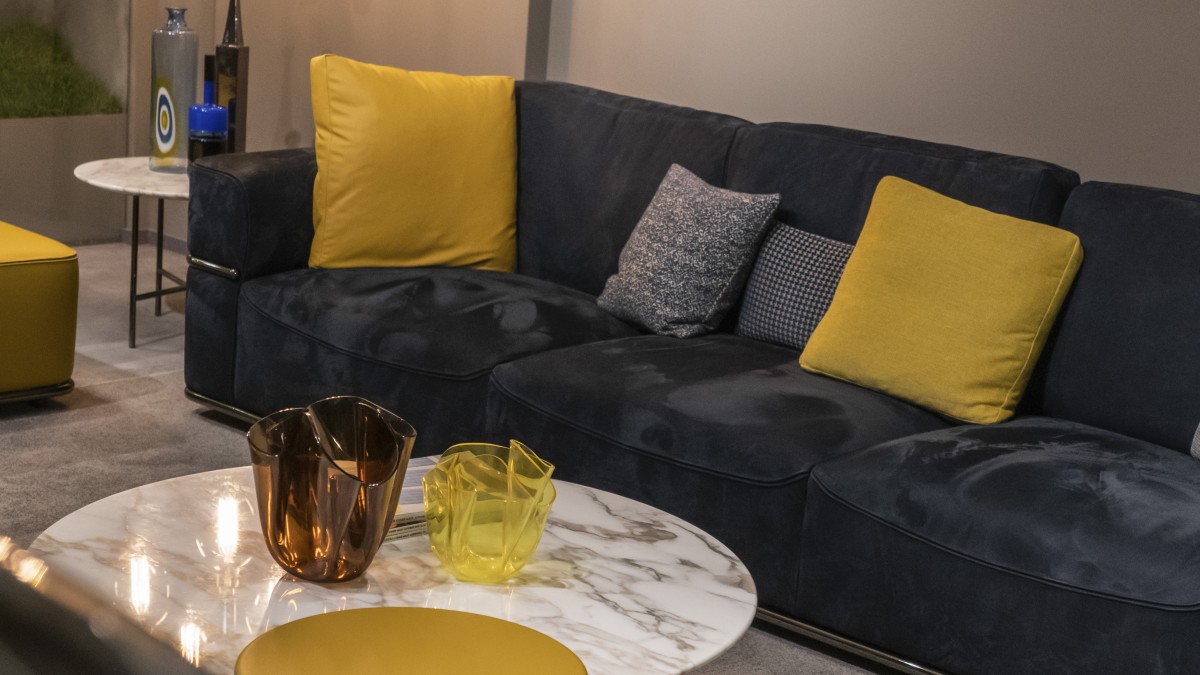
The effect comes from velvet’s raised pile, which reflects or absorbs light depending on the direction of its fibers. Pressure from sitting, brushing, or touching the upholstery can change the direction of that pile, leaving areas that appear lighter or darker without changing the fabric’s color.
These furniture designs from Homedit show how the same material behaves across different colors, from pale gray seating to dark bedroom upholstery. Each piece reveals another way velvet changes under light.
Silver Velvet Turns Charcoal Across the Same Sofa
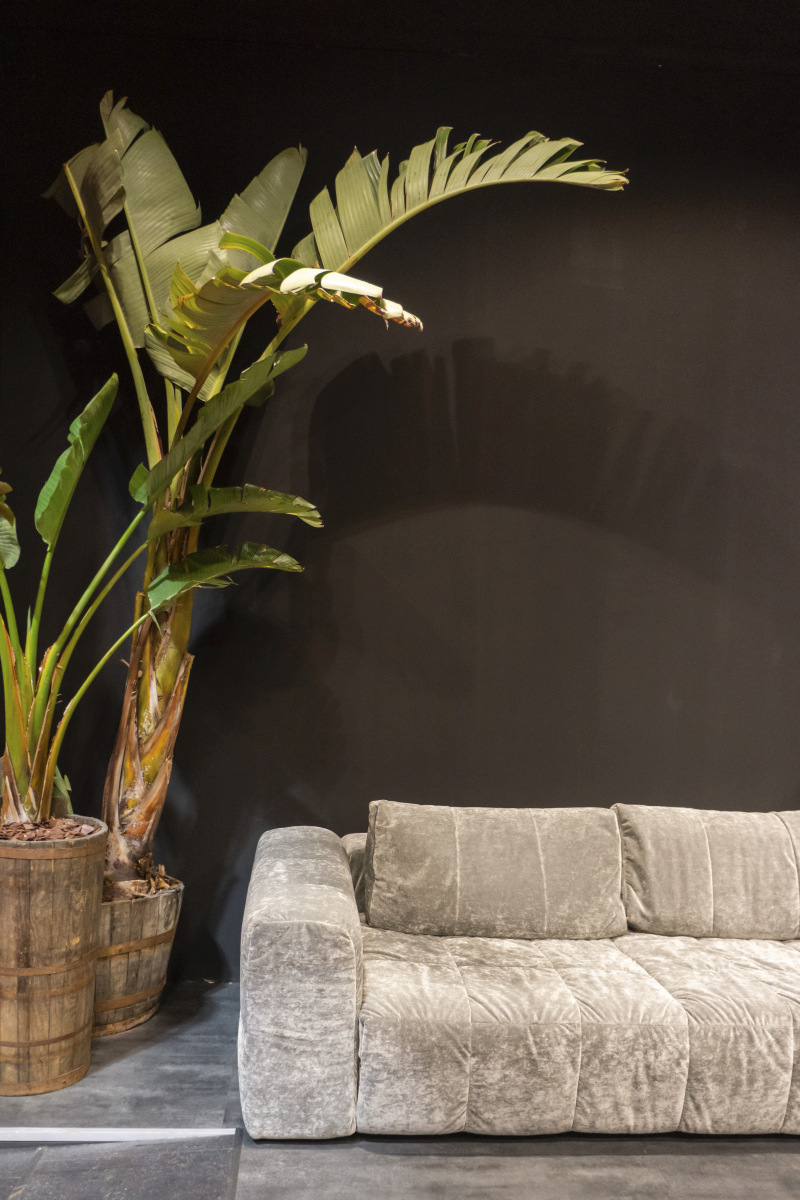
Pale gray upholstery covers the low sofa, with broad stitched sections running across the seat and back cushions. Light catches the raised areas in silver tones, while the fabric along the seams and cushion edges appears darker.
The seat panels show irregular patches of light and shadow rather than one consistent gray. Those variations come from the velvet pile, giving the sofa a mottled appearance without printed patterns or contrasting fabric.
Charcoal Velvet Takes on a Metallic Sheen
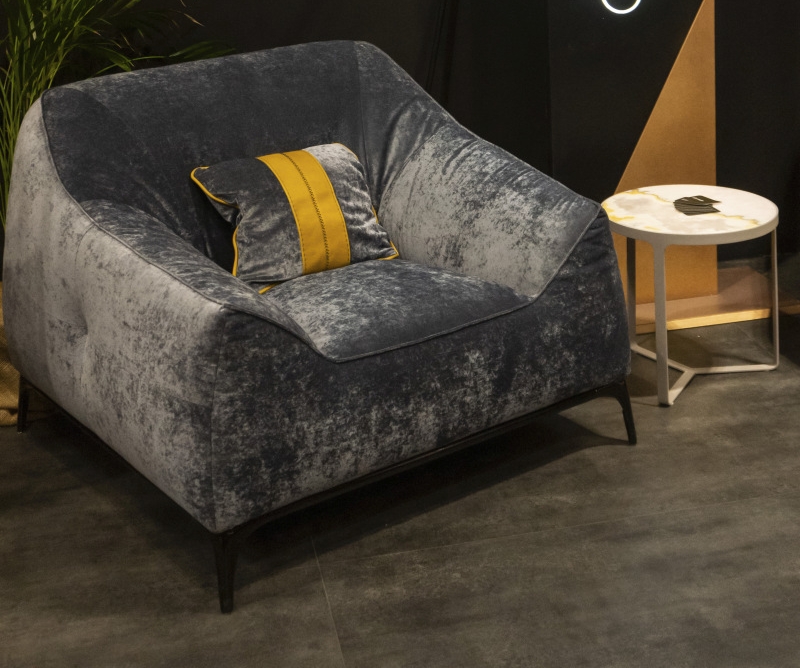
Dark charcoal velvet covers the oversized armchair, with a broad seat, sloping arms, and a deep backrest. Across the outer sides, the upholstery shifts from near-black to pale gray where the pile catches the light.
The seat cushion has a darker center framed by lighter edges, while a gray-and-mustard pillow introduces a flat stripe against the changing surface. Black metal legs keep the chair raised above the floor without interrupting the upholstered body.
Mustard Velvet Looks Like Burnished Gold
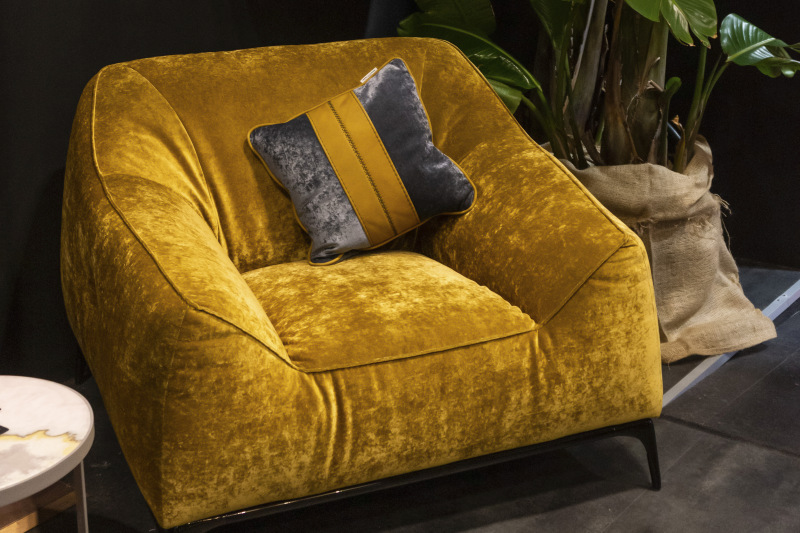
Golden mustard fabric covers the rounded armchair, with darker patches appearing across the seat and outer arms. The pile reflects light along the upper edges, producing a sheen that resembles polished gold in some areas and deep ochre in others.
The wide seat cushion shows the strongest variation, where changes in the fabric’s direction create streaks across the surface. A charcoal pillow with a mustard center stripe connects the upholstery color to the darker accents.
Olive Velvet Absorbs Light Across a Low Lounge Seat
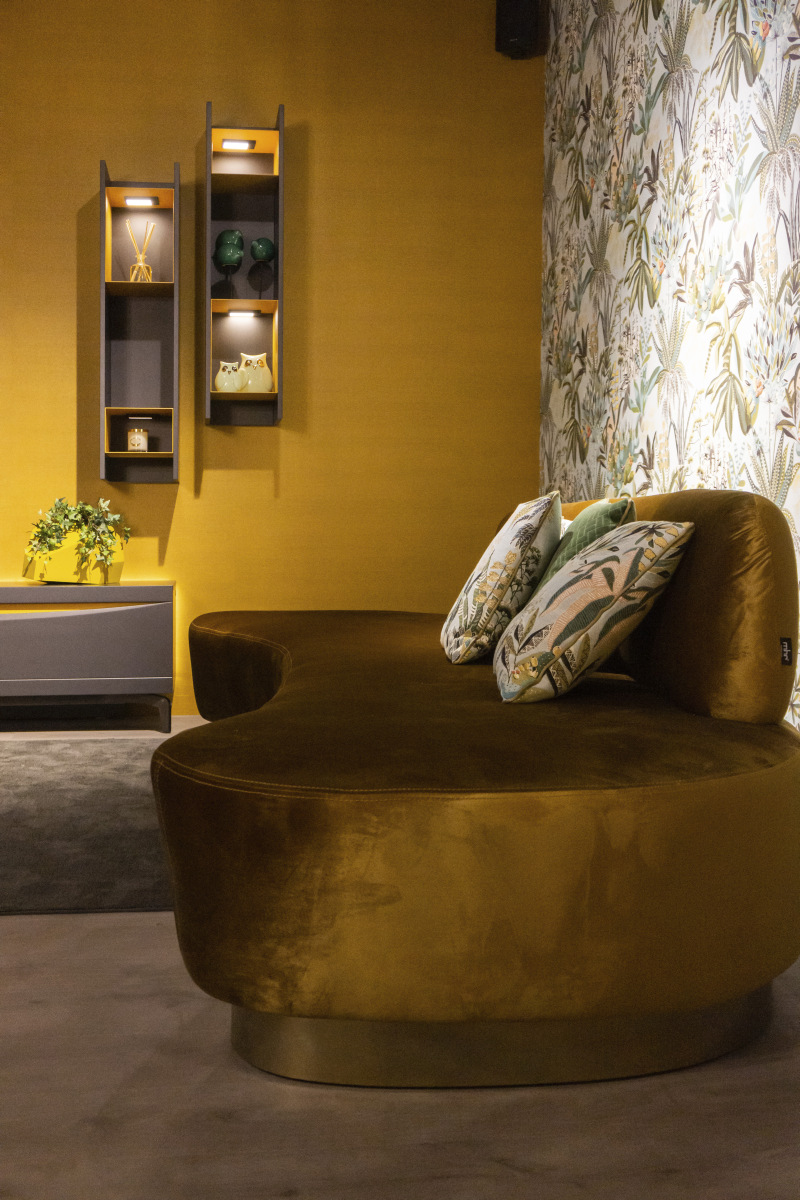
Deep olive velvet covers the broad circular seat and upright backrest, creating a darker surface than the mustard wall behind it. Light reaches the upper cushion edges, while the center of the seat retains a muted brown-green tone.
Two botanical pillows interrupt the solid upholstery with pale leaves and green patterns. The velvet’s short pile gives the large seat subtle tonal variation without the strong silver highlights seen on the charcoal chair.
Dusty Pink Velvet Changes Along the Pleated Back
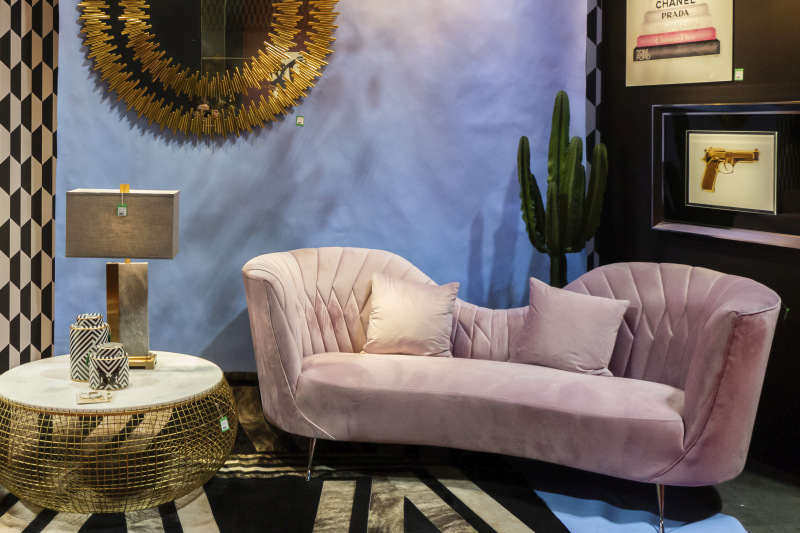
Soft pink velvet covers the compact loveseat, with vertical pleats rising through its two rounded back sections. Each fold catches light on one side and casts a darker band on the other, creating several pink tones across the same upholstery.
The seat cushion has a smoother finish, making its color appear more consistent than the pleated back. Slim metal legs expose the floor beneath the loveseat, while pale pillows soften the contrast between the folds.
Quilted Mustard Velvet Creates Shadows Inside Every Diamond
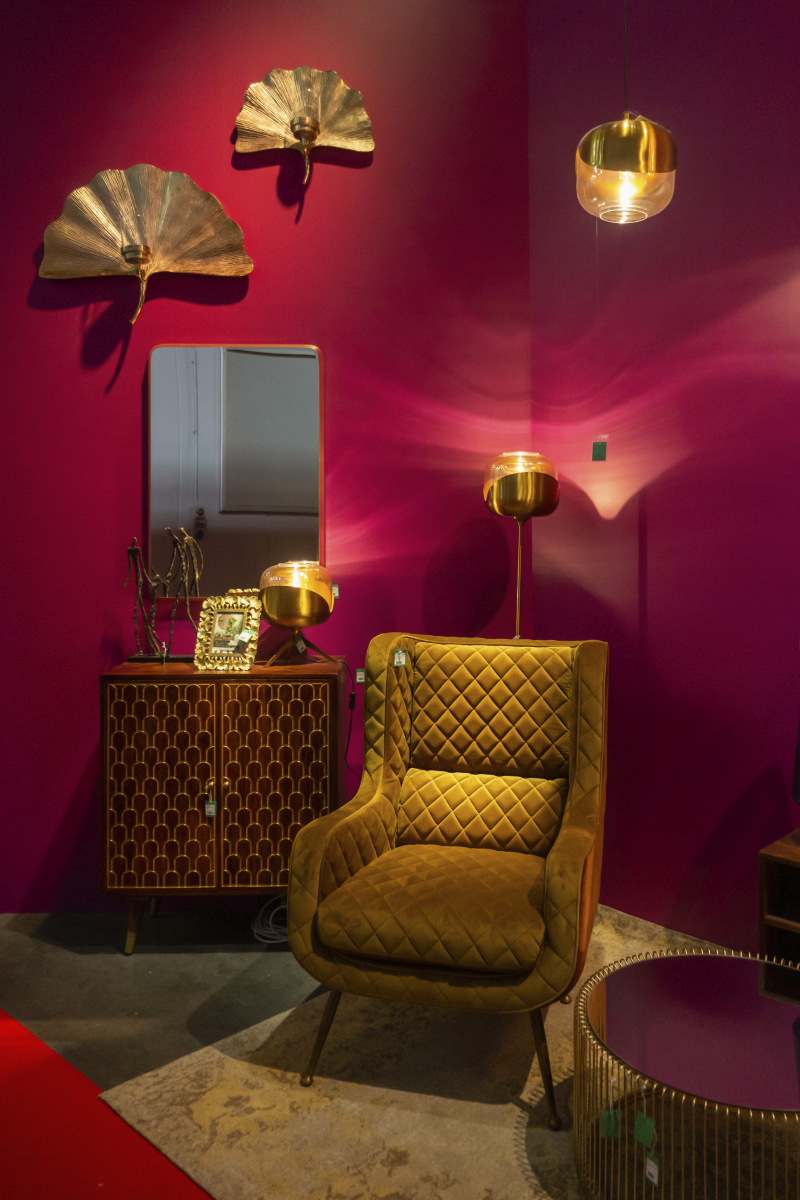
Mustard velvet covers the high-back armchair, with diamond quilting running across the backrest and seat. Raised stitching forms a grid of padded sections, each reflecting light from a different angle.
The fabric appears brighter across the upper edges of the diamonds and darker where the seams pull the upholstery inward. Against the burgundy wall, the gold tones become more pronounced, while the quilted texture adds depth without another fabric pattern.
Red Velvet Holds Several Shades Across One Curved Sofa
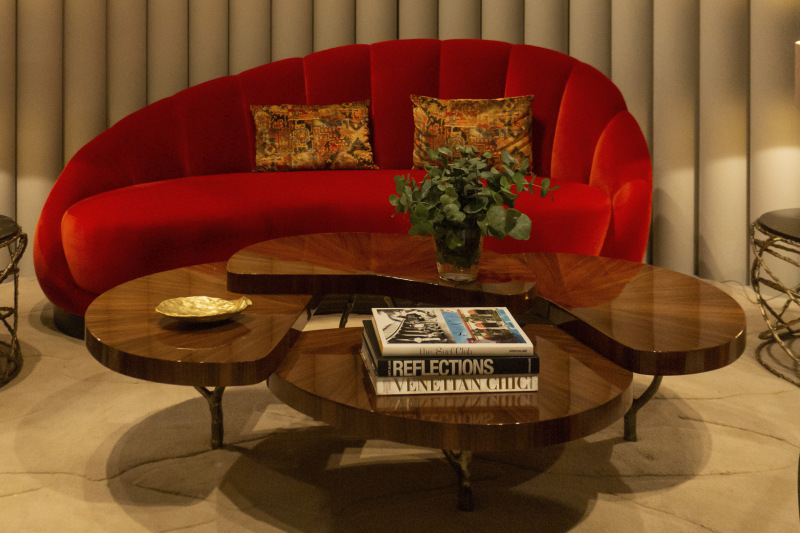
Saturated red velvet covers the sofa’s continuous back and seat, with vertical sections dividing the upper upholstery. Light catches the front edges in bright red, while the folds between panels deepen toward burgundy.
The long seat has fewer seams, allowing broader areas of color to remain uninterrupted. Patterned cushions add small accents, but the changing velvet surface remains the dominant feature against the neutral wall.
Dark Bedroom Upholstery Uses Light Instead of Pattern
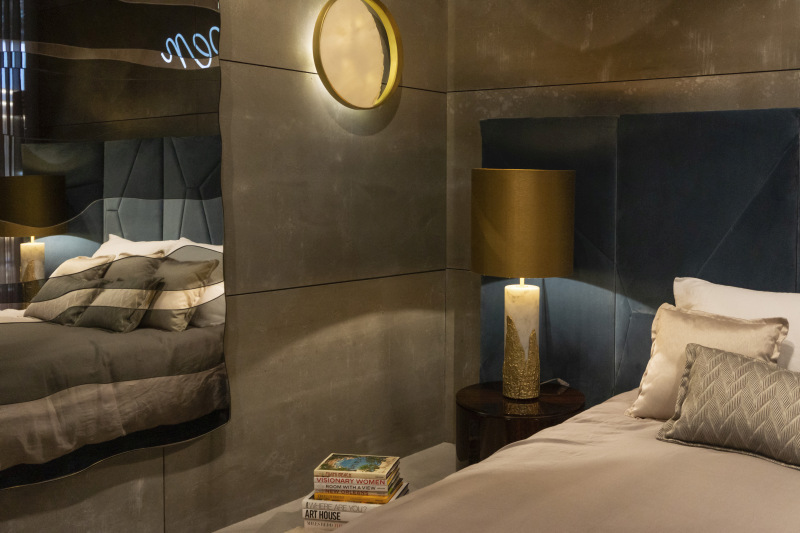
Charcoal upholstered panels surround the bed, creating a dark backdrop behind pale pillows and bedding. The padded headboard sections have a soft, matte appearance, with light falling across their edges and leaving the recessed areas in shadow.
Unlike the brighter seating designs, the bedroom uses dark upholstery to reduce contrast across the wall. The fabric’s surface and panel seams provide texture without introducing another color or printed pattern.
Rust Velvet Shifts From Copper to Deep Brown
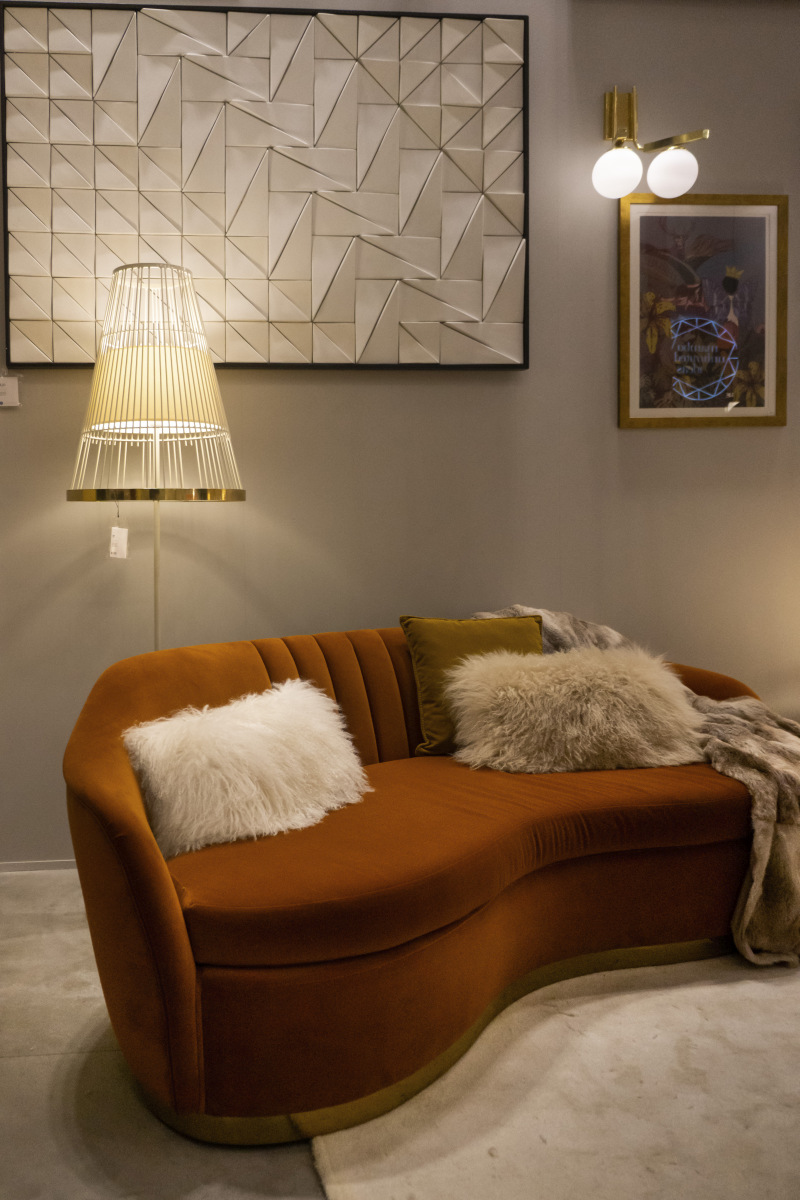
Rust-colored velvet covers the sofa’s broad seat and curved back, with the strongest highlights appearing along the upper cushion edges. Areas facing the light take on a copper tone, while the lower sections appear closer to dark brown.
The seat shows fine streaks where the pile changes direction, creating variations across the upholstery. Pale fur pillows and a mustard cushion stand against the rust fabric, making its warm undertones more visible.
Velvet’s shifting appearance comes from the direction of its pile rather than a change in dye. Brushing the surface one way can make it appear darker, while reversing the direction can reveal a lighter sheen.
Would you choose velvet for its changing shades, or prefer upholstery that keeps the same color from every angle?