I Tried the “Natural” Weed Killer Everyone Swears By — Here’s What Actually Happened


For years I ignored homemade weed killer recipes. Then I kept seeing the same three ingredients repeated everywhere:
- White vinegar.
- Salt.
- Dish soap.
The claim is simple. Spray it once and weeds collapse within a day.
Some people insist it is safer than commercial herbicides. Others warn it destroys the soil underneath.
Instead of guessing, I tested it side by side with two other popular natural methods in my own yard.
The results were not as straightforward as the recipe suggests.

What I Did First
I chose one controlled problem area: weeds growing through driveway cracks and between decorative river rocks. I avoided garden beds because I wanted to see how aggressive each method really was.
I tested three approaches:
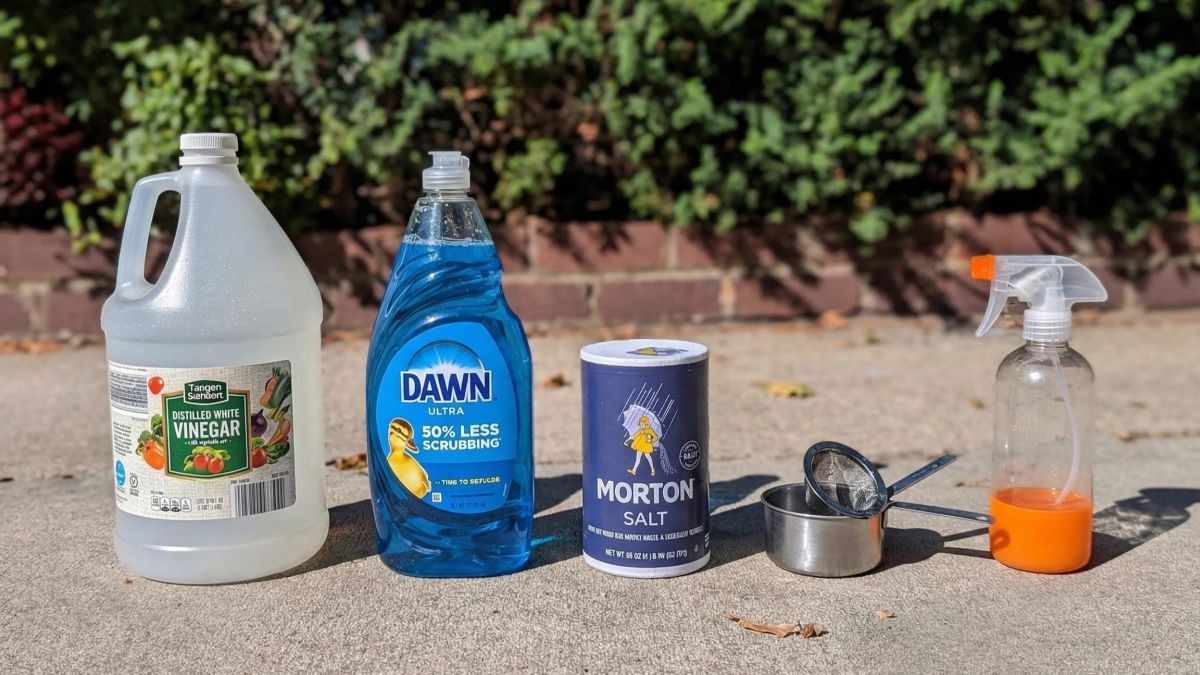
- Vinegar + salt + dish soap
- 20% horticultural vinegar without salt
- Boiling water
All were applied on hot, dry days to similar weeds.
That made the differences clear.
Where I Used the Vinegar + Salt Mix
I mixed:
- 1 gallon white vinegar (5%)
- 1 cup salt
- 1 tablespoon dish soap
I sprayed it directly into driveway seams.
Within 24 hours, the foliage darkened and collapsed. Grass in cracks dried almost completely. The visual effect was immediate and convincing.
Two weeks later, the smaller weeds were gone. Larger weeds with deeper roots began pushing new growth from the base.
What did not return was anything new. The treated cracks stayed bare.
That is when I understood the real impact. The salt was not just killing weeds. It was altering the growing conditions.
In driveway seams, that can be useful. In planting areas, it becomes a problem.
Where Stronger Vinegar Performed Better
Next I tested 20% horticultural vinegar without salt.
The foliage burn happened faster than with household vinegar. Under direct sun, leaves shriveled within hours.
Some deep-rooted weeds eventually returned, but the soil itself did not stay barren. New seedlings still appeared in nearby untreated areas.
It behaved like a strong contact herbicide. It damaged what it touched, but it did not create long-term sterility.
For hard surfaces where I wanted control without long-term soil damage, this felt more precise.
Gloves and eye protection are necessary with high-acidity vinegar.
What Surprised Me Most
Boiling water produced the cleanest results in narrow cracks.
I poured it directly onto weeds between sidewalk joints.
Small weeds collapsed immediately and did not return. Larger weeds needed a second treatment, but most did not regrow.
There was no residue, no lingering smell, and no visible soil impact beyond the immediate root zone.
It worked best in tight areas where roots stay shallow.
It is not practical for large gravel spaces, but for targeted control it was the most consistent method I tested.

Where I Stopped Using the Salt Mix
After seeing how long treated cracks remained barren, I did not use the vinegar and salt mix anywhere near garden soil.
Salt does not disappear quickly. It accumulates. It changes how soil holds water and nutrients.
If the goal is permanent suppression in concrete seams, it works.
If the goal is controlled weed management in soil, it is too aggressive.
What I Do Now
I stopped looking for one universal solution.
For driveway cracks and pavers, I use boiling water or strong vinegar.
For gravel beds, I use vinegar without salt and repeat when necessary.
For soil areas, I rely on manual removal and mulch coverage to prevent germination.
The popular three-ingredient mix does work. It just works by doing more than most people realize.
Choosing the method based on the surface matters more than the recipe itself.
FAQs
Does vinegar kill weeds permanently?
Vinegar works as a contact herbicide, which means it damages the leaves and exposed plant tissue. It does not usually kill the entire root system, especially in larger or deep-rooted weeds. As a result, many weeds will regrow from the base and require repeated treatments.
Will rain reduce the effectiveness of vinegar weed killers?
Yes. Vinegar solutions work best when applied on hot, dry days because the liquid needs time to stay on the foliage and break down plant tissue. If rain falls soon after application, much of the solution can wash away before it has time to work.
Is dish soap necessary in homemade weed killer?
Dish soap acts as a surfactant. It helps the vinegar solution stick to the leaves instead of beading up and running off. This allows the vinegar to stay in contact with the plant longer, improving the burn effect on the foliage.
Can vinegar damage nearby plants?
Yes. Vinegar does not distinguish between weeds and desirable plants. If the spray touches nearby flowers, grass, or garden plants, it can burn their leaves as well. It is best used only in targeted areas such as driveway cracks, sidewalks, and gravel surfaces where overspray will not harm other plants.